




Glass Cloche Clock
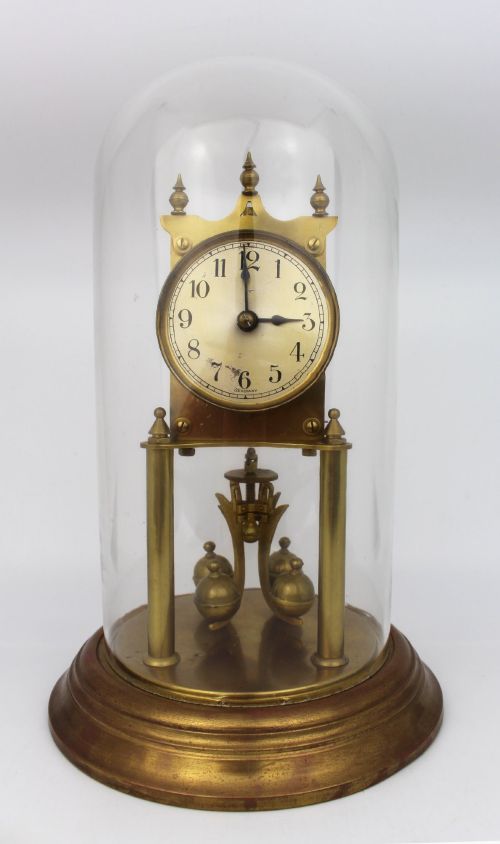
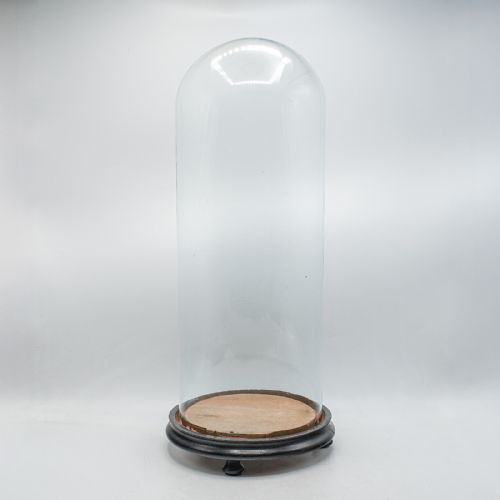
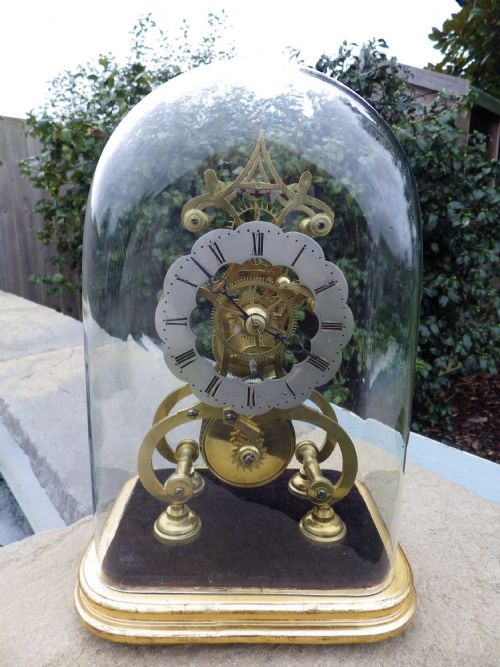
A glass cloche clock brings together delicate horology and protective clear blown glass, offering a clear view of intricate internal movements.
Glass Cloche Clock
A glass cloche clock combines a timekeeping mechanism with a protective transparent cover, shielding the delicate wheels and escapements from dust and air currents. When exploring a glass cloche clock, you will encounter Victorian and Edwardian examples alongside French mantel pieces and traditional horological items.
The selections span various forms, from tall display domes protecting skeleton movements and carriage clocks to oval and ovoid glass cases housing botanical specimens or taxidermy alongside timepieces. Many items feature original glass covers paired with timber, ebonised wood, or brass bases.
Originating predominantly from English and French workshops, these pieces range from mid-nineteenth-century fusee skeleton clocks to later electric movements. The primary focus remains the union of a functional clock and a transparent protective enclosure.
Materials and construction methods
The construction relies heavily on blown glass for the protective dome, paired with sturdy bases made from timber, ebonised wood, or brass. These materials provide a stable platform and a tight seal to protect the internal mechanisms from environmental wear.
Clock movements utilise traditional brass wheel work, fusee mechanisms, and intricate gear trains, often mounted on wooden or fabric-lined platforms within velvet or felt settings. The glass covers are mouth-blown, resulting in characteristic subtle ripples and variations inherent to period production.
Glass Cloche Clock Retail Price Guide 2026
Typical asking prices for glass cloche clock among the pieces listed under this phrase on Sellingantiques today, from the lower quarter to the upper quarter. They describe what is for sale here now, not the wider market.
Listings feature periods spanning the nineteenth century through the Edwardian era and into the mid-twentieth century, utilising glass, brass, timber, and ebonised wood.
Distinctions in quality and execution
Quality rests upon the clarity and integrity of the glass dome, with superior pieces showing minimal distortion and original blown characteristics. The presence of the original matching base, whether ebonised wood or polished timber, significantly elevates the integrity of the piece.
The sophistication of the internal movement dictates the tier of the clock, distinguishing standard mantel timepieces from complex skeleton clocks with multi-spoke wheel work and fusee movements. Finer examples maintain crisp metalwork and intact original components without modern replacements.
BULLE
The Glass Cloche Clock Glossary
- Cloche
- A bell-shaped glass cover used to protect delicate objects and clock mechanisms from dust. It sits directly upon a wooden or fabric-lined base.
- Fusee
- A conical pulley used in mechanical clocks to maintain even tension on the gear train as the mainspring unwinds. This mechanism is often visible in skeleton clocks housed under glass domes.
- Skeleton clock
- A timepiece designed with an open frame that exposes the entire gear train and wheel work. These are frequently displayed beneath a glass dome to showcase the internal mechanics.
- Garniture set
- A set consisting of a central clock accompanied by matching decorative side pieces, sometimes housed together under glass domes. They were popular in nineteenth-century French interiors.
- Ebonised wood
- Timber treated with a dark stain or finish to imitate ebony. It is commonly utilised for the circular or oval bases of Victorian display domes.
Glass Cloche Clock: Frequently Asked Questions
What is a glass cloche clock?
A glass cloche clock is a timepiece enclosed beneath a transparent glass dome, which protects the delicate internal mechanism from dust and disturbance.
These pieces range from Victorian skeleton clocks with exposed gear trains to French garniture sets and Edwardian carriage clock displays.
How do you clean the glass dome?
Lift the glass dome carefully from its base using both hands and clean it gently with a mild glass cleaner and a soft cloth. Ensure the dome is completely dry before placing it back over the clock.
Avoid using harsh abrasives or chemical sprays near the antique wooden or brass bases to prevent surface damage.
Are the glass domes usually original?
Many surviving pieces retain their original blown glass domes, which often exhibit period-appropriate bubbles and subtle thickness variations.
Checking the fit against the wooden or ebonised base helps determine whether the glass and the clock have remained together over time.
Where should I place these clocks?
Position the clock on a stable, level surface away from direct sunlight, drafts, and high humidity to protect both the movement and the wooden base.
A mantelpiece, sturdy side table, or dedicated display cabinet offers a secure environment where the mechanism can be viewed clearly.