
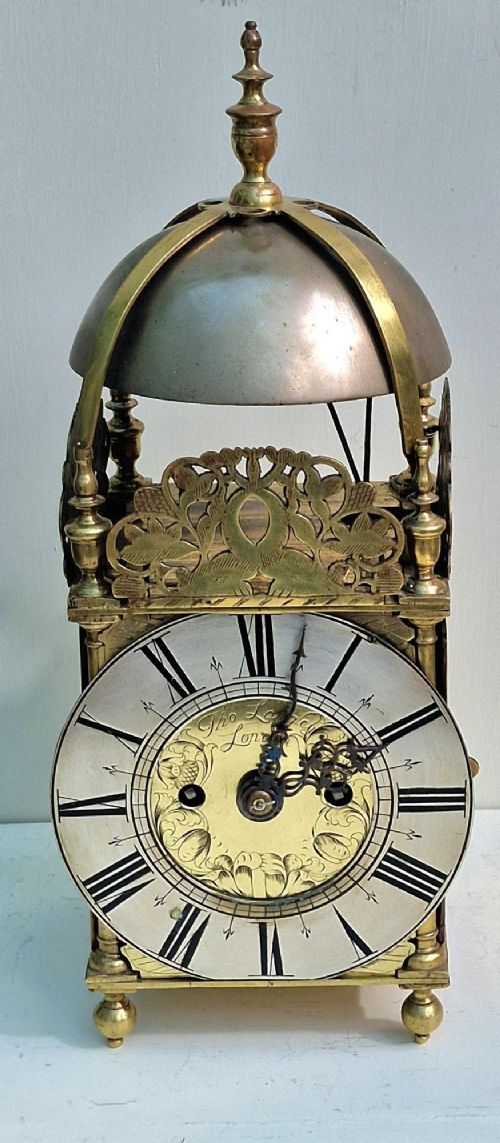


Vintage Skeleton Clock
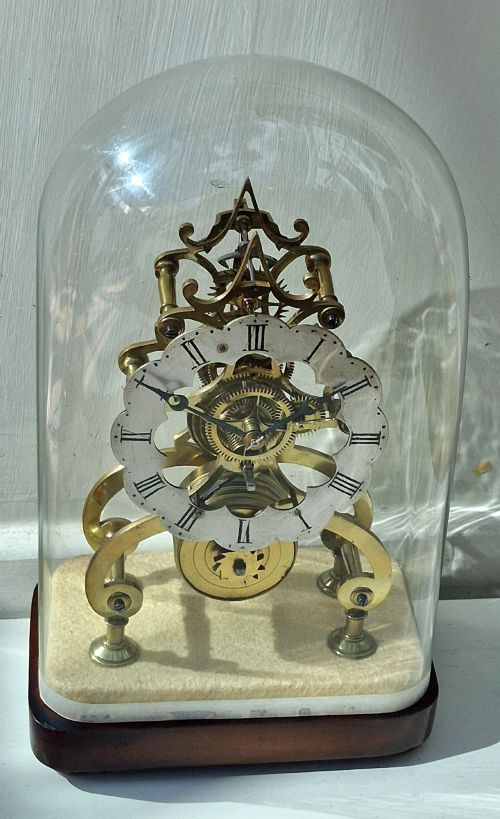
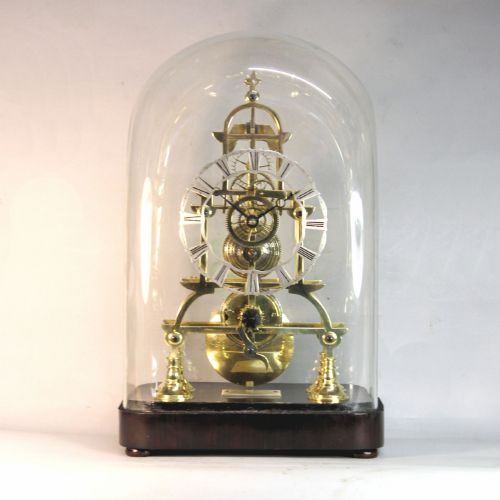
A vintage skeleton clock bares its intricate brass gear train beneath a glass dome, offering a hypnotic display of mechanical timekeeping for the mantel or desk.
Vintage Skeleton Clock
A vintage skeleton clock displays its internal movement fully exposed between open brass plates, allowing the escapement and wheel train to be viewed from all sides. These horological pieces typically sit under a protective glass dome, resting upon a wooden or marble base.
The selection ranges from traditional English fusee movements and Victorian Gothic designs to French four glass mantel pieces and mid-century electric variations. Smaller mantel clocks, desk clocks, and miniature timepieces appear alongside larger striking models.
Origins span nineteenth-century workshops in England and France up to mid-century Swiss production. Buyers encounter both traditional spring-driven mechanisms and early electric systems like the Bulle movement.
Materials and construction
Brass forms the structural skeleton and gear trains of these clocks, polished or plated with rhodium in later mid-century examples. Dials feature white enamel with Roman or Arabic numerals, while bases utilise mahogany, ebonised wood, or heavy marble.
Glass domes protect the delicate open machinery from dust while maintaining complete visibility of the ticking mechanism. Steel components govern the springs, fuses, and escapements that drive the hands.
Some models hide their electrical hearts behind centuries-old aesthetics, proving that even gears appreciate a modern spark.
Assessing quality
Quality depends upon the intricacy of the brass framework and the precision of the wheel train execution. Finely pierced plates and delicate gothic architectural framing distinguish superior pieces from standard production.
The presence of the original glass dome and matching base adds considerable merit to a clock. Complications such as passing strikes, pull alarms, or double fusee movements elevate the horological interest.
Thomas Langley·Richard Winter of Chieveley·Maurice & Marcel Moulin Favre-Bulle·Jaeger-LeCoultre
The Vintage Skeleton Clock Glossary
- Skeleton clock
- A clock with open plates that expose the gear train and movement to view. They are usually displayed beneath a glass dome.
- Fusee
- A conical pulley used in spring-driven clocks to maintain even power as the mainspring unwinds. This ensures consistent timekeeping accuracy.
- Four glass clock
- A mantel clock housed in a brass-framed case with glass panels on all four sides. This style provides an unobstructed view of the movement.
- Escapement
- The mechanical linkage that controls the release of the gear train to drive the pendulum or balance wheel. It gives the clock its characteristic ticking sound.
- Timepiece
- A clock that indicates the time without including a striking mechanism. Many smaller skeleton clocks and desk models take this simplified form.
Vintage Skeleton Clock: Frequently Asked Questions
How do skeleton clocks work?
A skeleton clock operates through a mechanical gear train driven by a spring or weight, regulated by a pendulum or balance wheel. The open framework allows observers to watch the transmission of force through each wheel to the escapement.
The absence of a traditional dial face lets the viewer trace the power from the mainspring barrel directly to the hands. This exposed layout highlights the mechanical artistry of the horologist.
Are glass domes original?
Many vintage skeleton clocks retain their original blown or drawn glass domes, which protected the delicate exposed brass work from atmospheric dust. These domes rest securely on circular wooden or marble bases tailored to the clock.
Finding a clock with its matching period dome is significant for collectors. The glass itself often shows small bubbles and imperfections characteristic of older manufacturing methods.
How do I wind a vintage skeleton clock?
Spring-driven skeleton clocks require a specific winding key applied to the arbor squares set within the dial or movement plates. Care must be taken not to overwind the mainspring, stopping as soon as resistance is felt.
Electric versions from later periods bypass manual winding entirely through battery power or perpetual motion systems. These require checking the electrical contacts or mechanical power reserves instead.
Where should I place a skeleton clock?
A skeleton clock requires a stable, level surface away from direct sunlight, drafts, and heavy vibrations that could disrupt the pendulum or balance wheel. Mantelpieces, desks, and secure side tables provide ideal locations for viewing the movement.
Because the delicate mechanism is fully exposed beneath its glass cover, placement should keep the clock out of reach of high-traffic areas or active children.