




Skeleton Timepiece
A skeleton timepiece lays bare the brass wheels and escapements of its movement, offering a mesmerising view into mechanical timekeeping.
Skeleton Timepiece
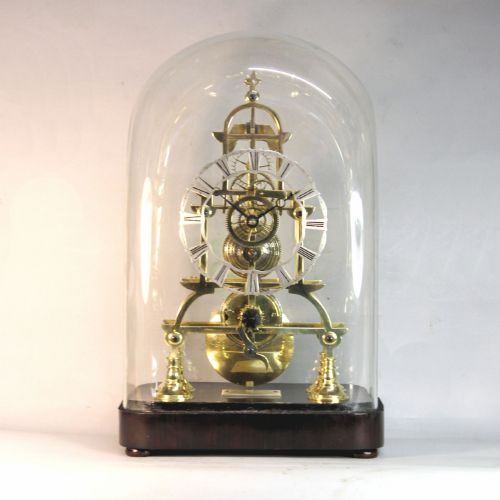
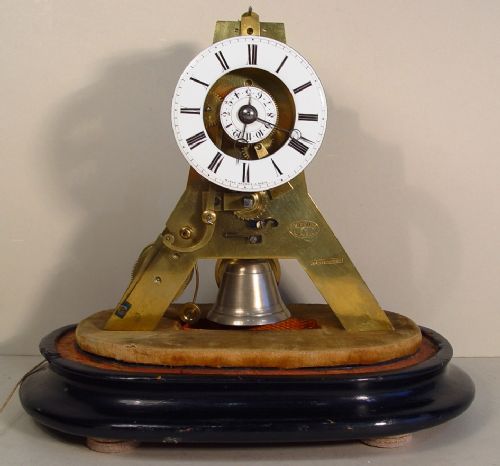
A skeleton timepiece strips away the traditional dial and case to expose the inner mechanism to view. These sculptural objects appear across multiple periods, most frequently as nineteenth century English and French examples.
The form ranges from miniature gothic architectural designs under glass domes to mid century Swiss pieces and electric movements. Mantel clocks and wristwatches both adopt this exposed layout.
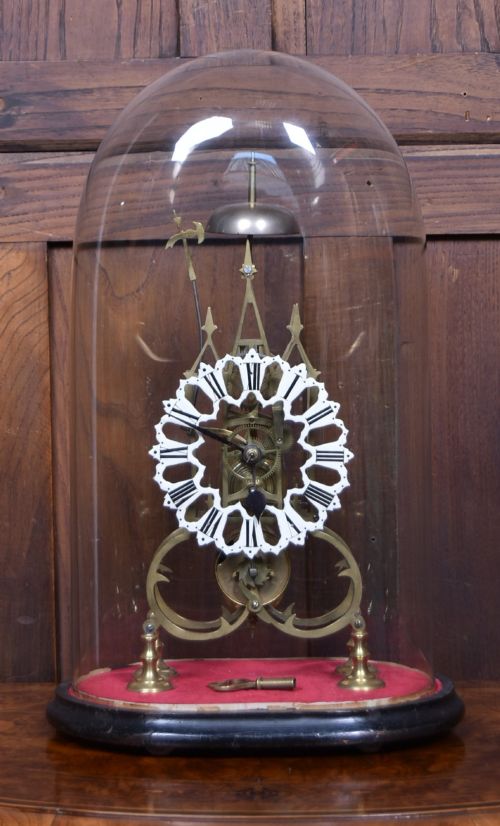
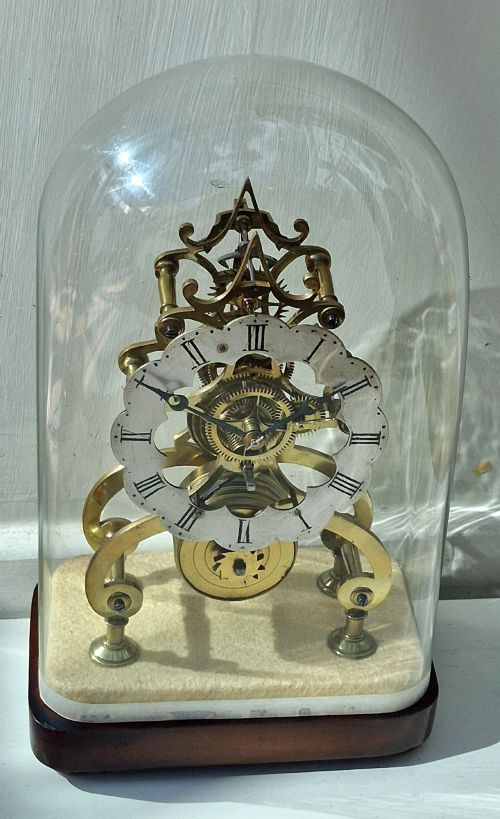
Makers housed these movements on brass feet or marble plinths, often protecting delicate gear trains beneath blown glass bell jars. The focus remains entirely on the ticking mechanism and rotating wheels.
How they were made
Brass forms the structural backbone for plates, wheel work, and frames, while steel provides the hardened pivots and springs. Glass domes protect the delicate mechanisms from dust and damage.
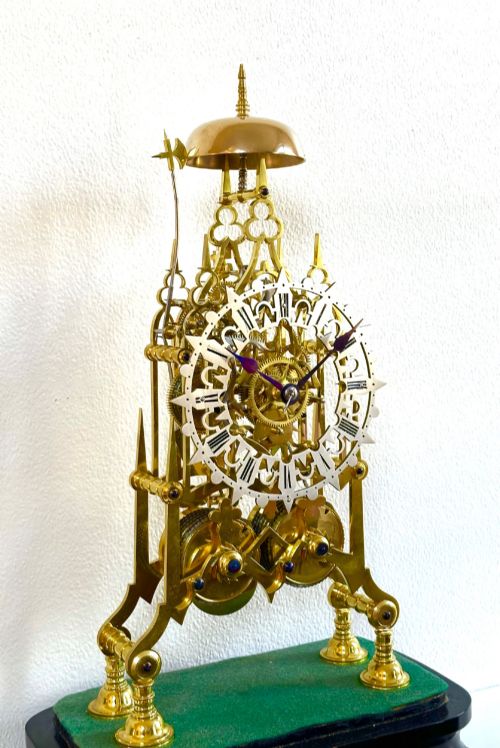
Makers utilised fusee movements and double fusee gear trains to maintain even tension on the drive chain as the mainspring unwound. Enamel dials and chapters mark the hours within the open framework.
A clock with a ships wheel stands ready to steer through the hours.
What varies in quality
The complexity of the wheel work and the precision of the skeletonised brass frames set superior examples apart from standard production. Six spoke wheel designs and passing strike complications indicate finer workshop output.
Original components, including matching glass domes and winding keys, preserve the integrity of the piece. The finish on the brass work and the crispness of the engraving reveal the maker's skill.
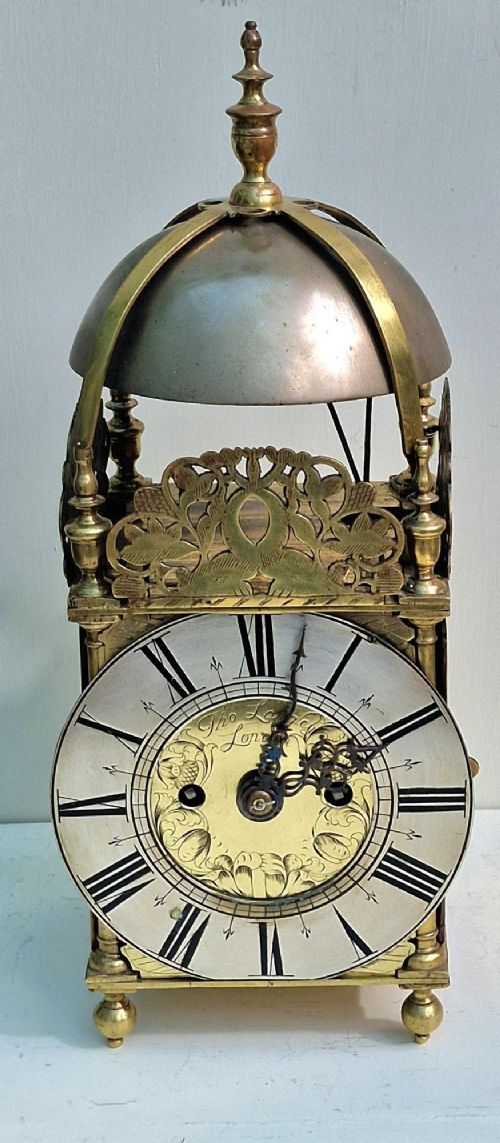
Thomas Langley·Richard Winter·Maurice Marcel Moulin·Jaeger Le Atmos·Audemars Piguet
The Skeleton Timepiece Glossary
- Fusee
- A conical pulley used on a clock to maintain even power as the mainspring runs down. This mechanical device ensures steady timekeeping from full wind to empty.
- Double fusee
- A movement incorporating two fusee cones, typically separating the timekeeping train from the striking train. This layout provides independent power to each function.
- Glass dome
- A blown glass cover designed to sit over a mantel clock on a plinth. It protects the exposed mechanism from dust while allowing uninterrupted viewing.
- Passing strike
- A mechanism that strikes a bell or gong once on the hour or half hour without a full count. It adds an audible element to the visual display.
Skeleton Timepiece: Frequently Asked Questions
What is a skeleton timepiece?
A skeleton timepiece is a clock designed without a traditional dial or solid case, exposing the brass gears, plates, and escapement to full view. Most examples are housed under glass domes to protect the delicate mechanism.
These pieces range from nineteenth century English fusee models to mid century Swiss designs and wristwatches. The layout prioritises mechanical transparency over enclosed cabinetry.
How do you wind a fusee skeleton clock?
Winding requires a matching key inserted into the winding square on the brass plate or dial chapter ring. Care must be taken not to overwind the mainspring.
The fusee chain or cord transfers power smoothly from the spring barrel to the gear train. Regular winding keeps the tension constant for accurate timekeeping.
Why are glass domes used?
Glass domes shield the exposed mechanism from ambient dust, moisture, and accidental physical contact. They keep the polished brass and steel clean without obstructing the view.
Many surviving pieces retain their original blown glass covers and wooden or marble bases. These enclosures form an integral part of the clock's presentation.
How do English and French clocks differ?
English skeleton clocks often feature robust fusee movements mounted on brass frames with architectural or gothic styling. They emphasise mechanical reliability and substantial brass work.
French models frequently incorporate multi glass panels, mercury pendulums, or striking complications within a lighter brass housing. Both traditions showcase intricate wheel work beneath clear covers.