



Fireplace Clock Garniture
These fireplace clock garniture sets bring matching classical symmetry to a mantelpiece, pairing a central clock with flanking ornaments.
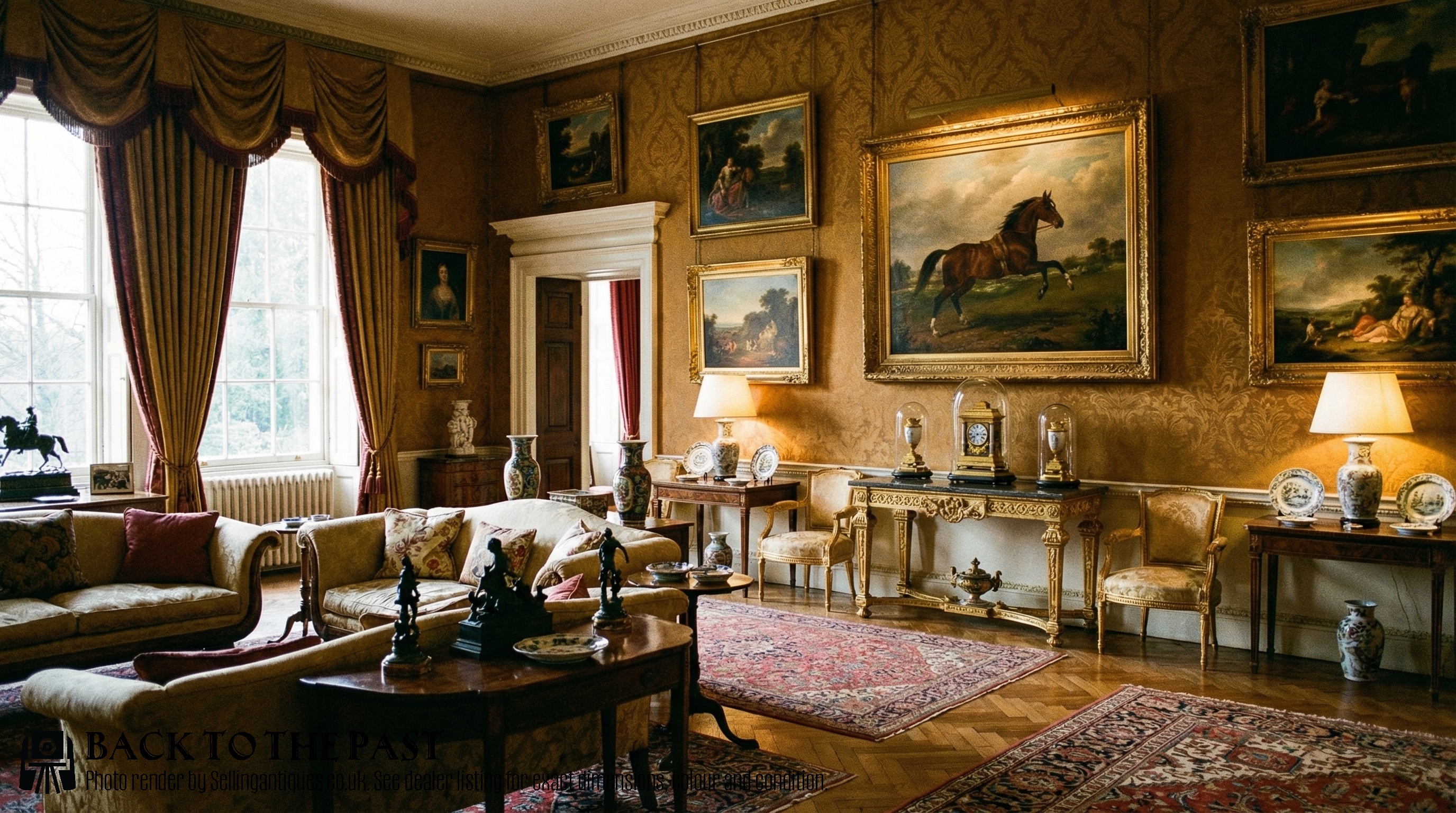
Fireplace Clock Garniture
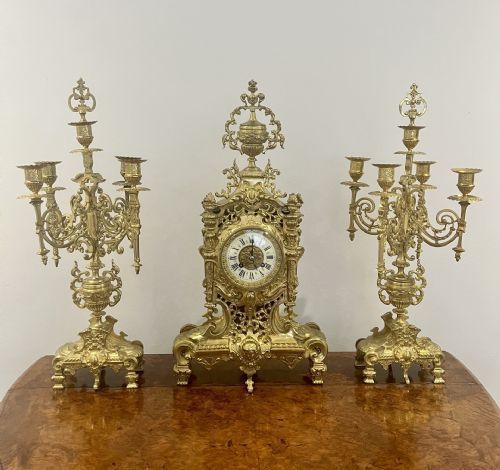
A fireplace clock garniture brings together a central mantel clock and a matching pair of sidepieces, most frequently candelabra, vases, or urns designed to sit in unison on a mantelpiece. The pieces seen here span the nineteenth century into the twentieth, with a strong representation of French output from periods such as the Victorian era, Napoleon III, and the Louis XVI style.
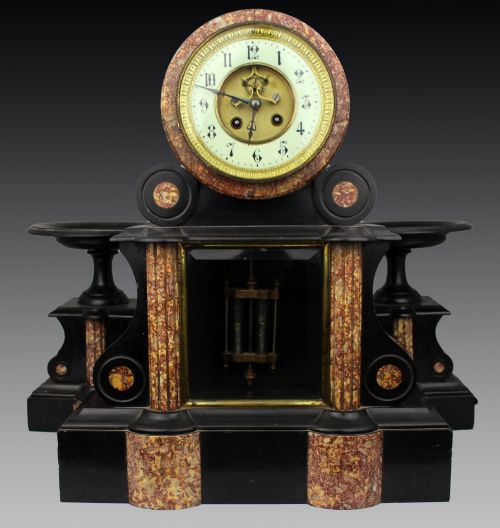
Most examples found on this page comprise three-piece sets executed in materials like marble, ormolu, and bronze, often protected by glass domes in surviving period configurations. Formats range from large architectural marble housings to delicate boudoir sets featuring porcelain and visible pendulums.
How they were made
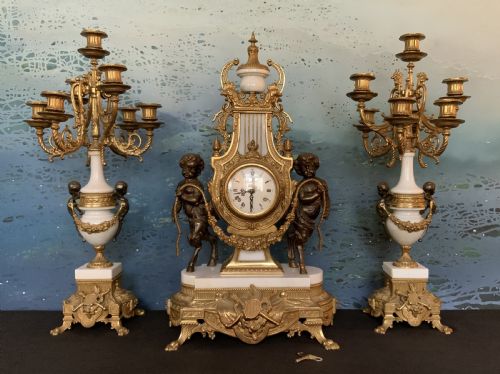
Foundry work and stonemasonry form the foundation of these garnitures, utilising cast ormolu, gilt bronze, and brass mounted onto white, black, or red marble bases. Metal components are cast and chased to achieve ornate scrollwork, cherubs, and neo-classical motifs before receiving mercury gilding or modern plating techniques.
Clock movements are housed within these heavy stone and metal cases, paired with enamel dials and regulated by eight-day mechanisms. Subsidiary ornaments like candelabra are cast in matching metals to continue the decorative scheme across the mantel.
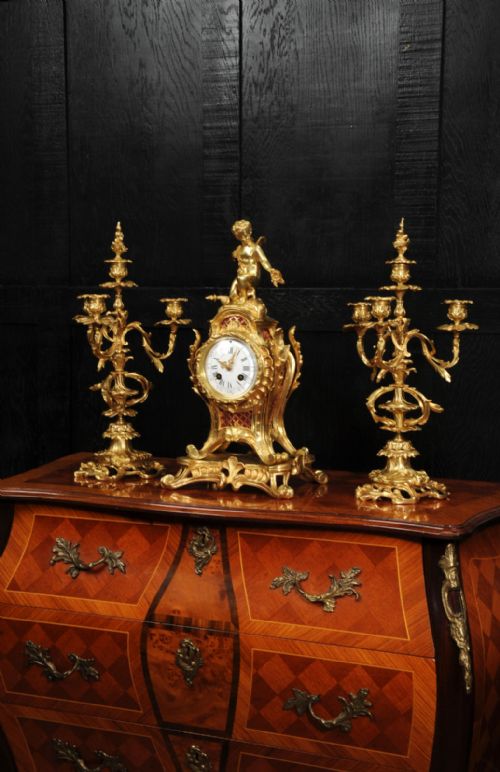
Several sets include cupid figures or visible pendulums swinging steadily behind glazed bezels.
What varies in quality
The distinction between ordinary and superior sets rests in the crispness of the bronze chasing and the weight and choice of the marble. Finer examples display deeply carved ormolu mounts with sharp botanical or figural details rather than soft, cast-smoothed surfaces.
Cohesion within the set marks the highest tier of production, where the clock and its flanking garnitures share identical patination, matching bronze casts, and unified decorative programs without later substitution.
Japy Frères·Vincenti
The Fireplace Clock Garniture Glossary
- Garniture
- A set of matching decorative objects designed to be displayed together, typically consisting of a central clock flanked by two matching vases or candelabra.
- Ormolu
- Finely ground high-carat gold applied to a bronze base using a mercury amalgam, creating a rich golden surface finish on nineteenth-century metalwork.
- Candelabra
- Branched candlesticks designed to hold multiple candles, frequently serving as the matching sidepieces in a three-piece clock garniture.
- Japy Frères
- A prominent nineteenth-century French clockmaking firm known for producing quality movements housed within decorative mantel sets.
Fireplace Clock Garniture: Frequently Asked Questions
What is a fireplace clock garniture?
A fireplace clock garniture is a coordinated set consisting of a central mantel clock and two matching side pieces, such as urns or candelabra. These sets were designed to create a balanced decorative display across the mantelpiece.
Originating largely in nineteenth-century France, they combined timekeeping with sculptural bronze, marble, and porcelain ornament to anchor the formal interior.
How were garniture sets displayed?
These sets were arranged symmetrically on the mantelpiece above a fireplace, with the clock in the centre and the matching candelabra or vases placed on either side. Some sensitive pieces were additionally housed beneath glass domes to protect the delicate gilt surfaces from dust.
They served both a functional purpose for telling time and a decorative role in reflecting the prevailing architectural style of the room.
How do I identify the period?
Period identification relies on the stylistic cues of the mounts and the construction of the clock movement. Neo-classical, Louis XVI, and Rococo Revival styles each dictate specific decorative motifs like acanthus leaves, urns, and asymmetrical scrolls.
Maker signatures stamped on the brass movement plates and the choice of marble types further help narrow down the decade of production.