







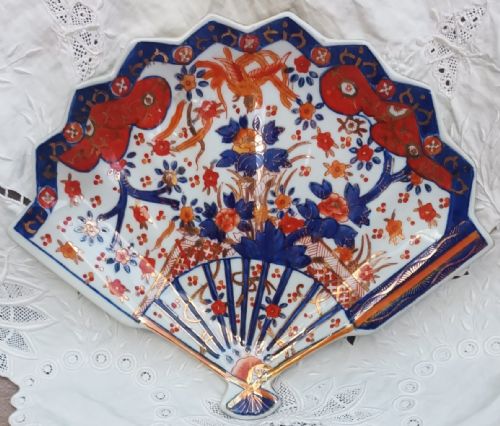
Meiji Period Blue Charger
These large circular ceramic and metal display pieces bring detailed floral and avian motifs into a room, making a meiji period blue charger a striking focal point.
Meiji Period Blue Charger
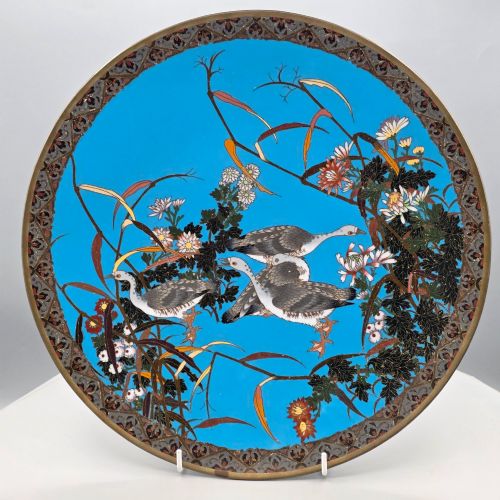
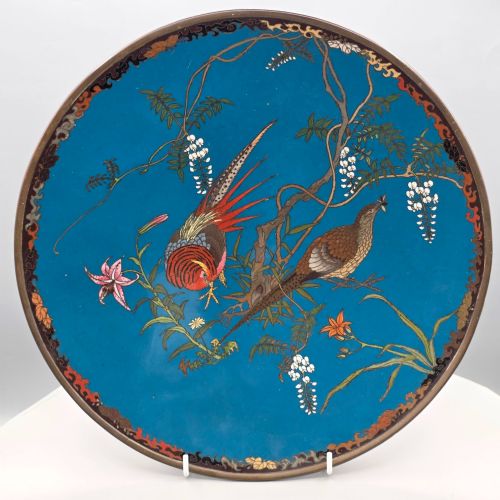
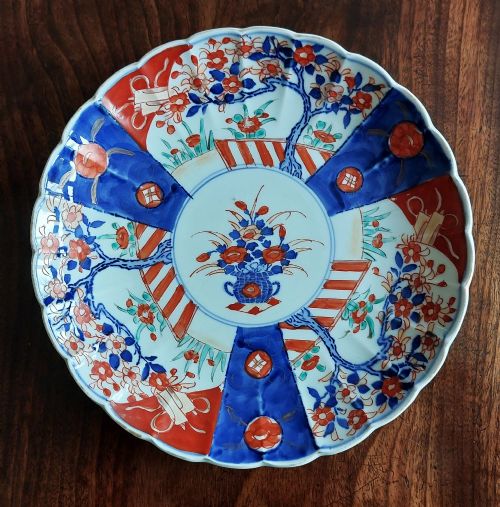
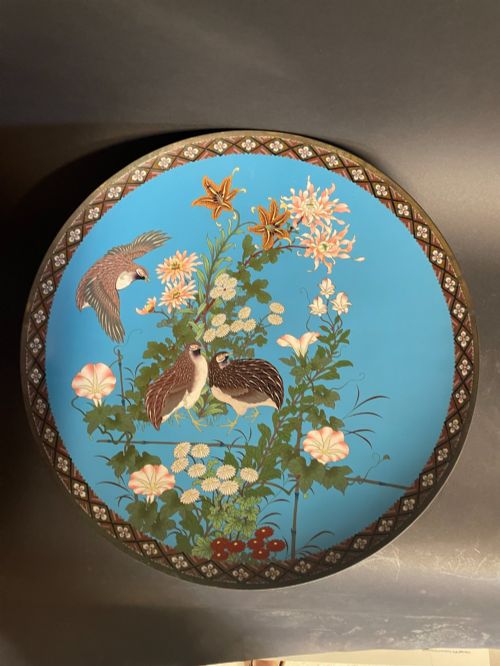
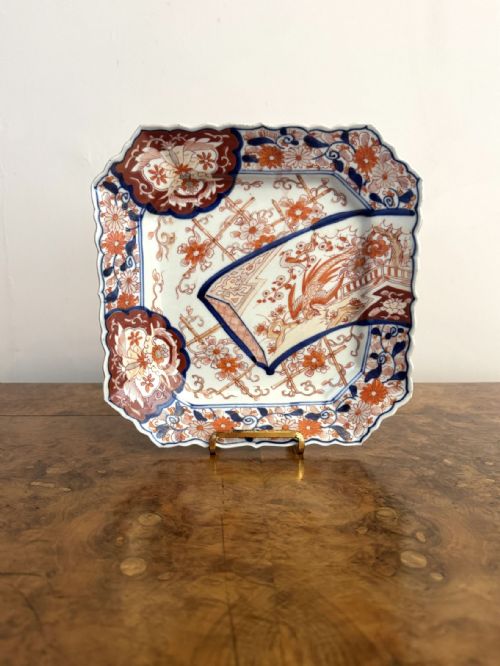
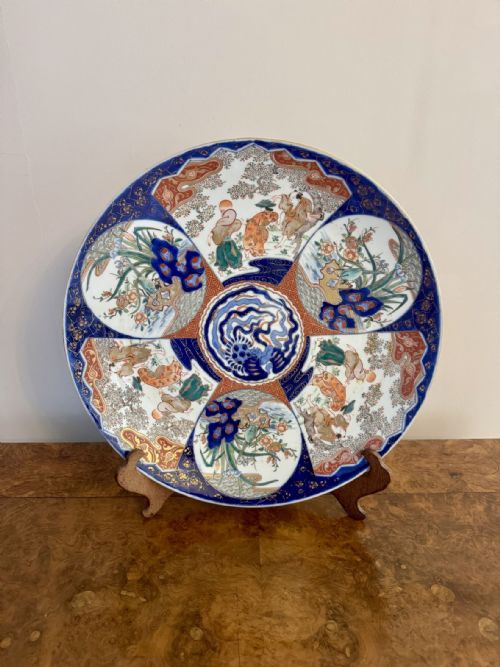
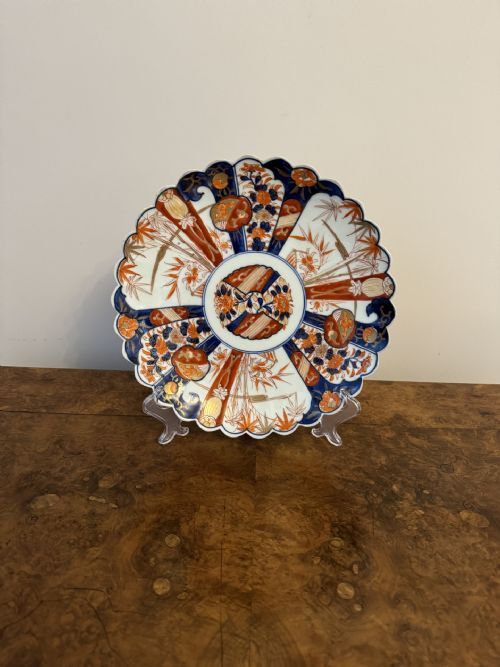
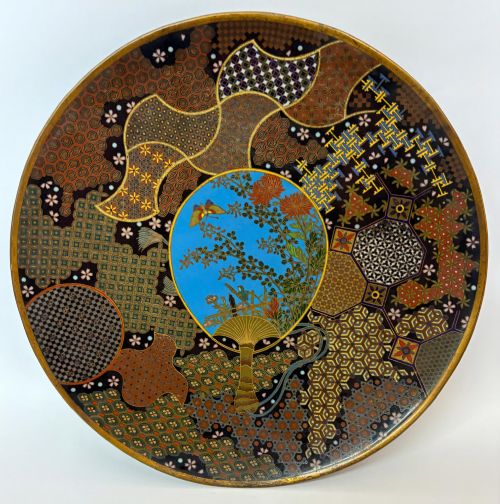
When searching for a meiji period blue charger, buyers encounter large decorative plates, dishes and wall plates originating from Japan during the late nineteenth and early twentieth centuries. These works include porcelain pieces decorated in Japanese Imari and Arita styles, alongside metal vessels decorated in cloisonne enamel.
The objects most frequently met on this page are porcelain chargers and plates displaying traditional blue and white or multi-coloured floral and bird patterns. Many examples feature scalloped edges, square shapes or large bowls associated with nineteenth century production.
How they were made
Porcelain pieces utilise cobalt blue and other glazes fired at high temperatures to create durable decorative plates with hand-painted floral, bird and landscape designs. Artisans shaped clay into large circles and bowls, often finishing the rims with scalloped profiles.
Metal versions rely on copper, brass and wirework combined with enamel and gilding. Craftsmen soldered thin metal wires to form intricate cells on a copper base, filled those compartments with coloured enamel paste, and fired the surface repeatedly before polishing.
Certain cloisonne trays preserve miniature ceramic worlds where tiny frogs and butterflies permanently outlive the artisans who fired them.
What varies in quality
The refinement of the hand-painted brushwork or the precision of the cloisonne wirework determines the visual impact of each piece. Finer examples display complex depictions of birds, fish, dragons and botanicals with exceptional clarity and depth.
The overall balance of the form, the richness of the glaze colours, and the crispness of shaped edges distinguish standard decorative items from masterwork productions signed by skilled makers.
The Meiji Period Blue Charger Glossary
- Imari
- A traditional style of Japanese porcelain decorated in underglaze blue, iron red and gilt. These wares were widely produced for export during the Meiji period.
- Cloisonne
- A metalworking technique where flat wire is soldered to a copper base to create cells filled with enamel. This method produces detailed pictorial designs on plates and trays.
- Charger
- A large decorative plate utilised for display rather than dining. They measure significantly wider than standard dinner plates.
- Arita
- A Japanese town and production centre renowned for manufacturing porcelain. Wares from this region often feature distinctive blue and white or Imari decoration.
- Gilt
- A thin application of gold leaf or gold paint applied to the surface of porcelain or metal. This technique adds metallic highlights to floral and geometric patterns.
Meiji Period Blue Charger: Frequently Asked Questions
How were these chargers displayed?
These large plates were traditionally positioned on surfaces or hung on walls to showcase intricate hand-painted or enamelled artistry in domestic rooms.
Their substantial size and decorative designs made them suitable focal points for display cabinets or principal living spaces.
What is the difference between Imari and cloisonne?
Imari refers to porcelain decorated with cobalt blue, red, and gold pigments fired beneath and over the glaze. Cloisonne involves metal vessels decorated with coloured enamel held within soldered wire compartments.
Both styles were produced during the Meiji period but utilise entirely different materials and manufacturing techniques.
Can these chargers be hung on walls?
Many large plates and chargers feature proportions and sturdy construction suited for display on vertical surfaces using appropriate mounting hardware.
Careful consideration of the weight and rim depth is necessary to ensure secure placement when hanging metal or porcelain pieces.