




Arita Blue White Porcelain
Arita blue white porcelain brings centuries of Japanese kiln tradition into the home through finely painted chargers, bowls, and vases.
Arita Blue White Porcelain
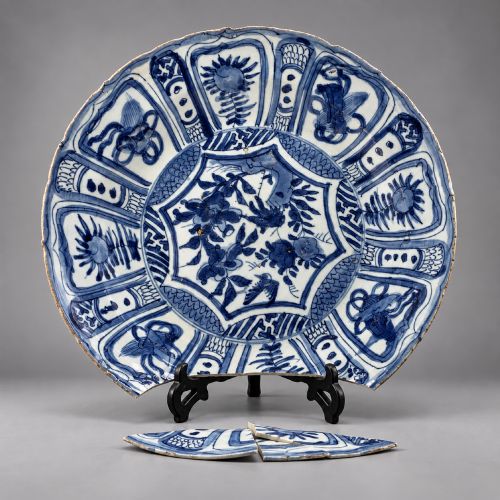
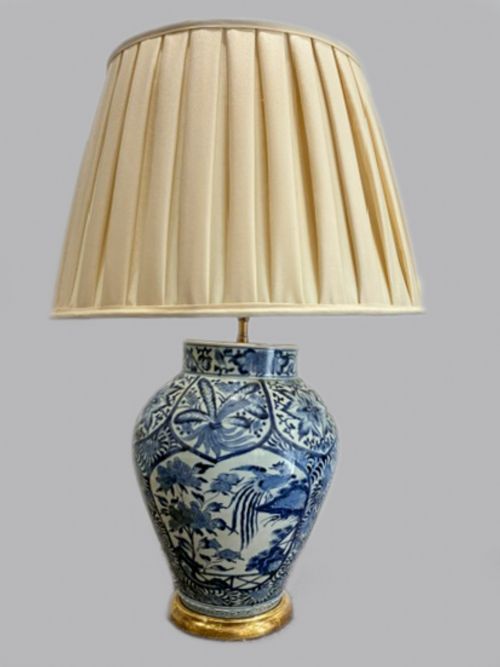
Arriving from Japanese kilns, arita blue white porcelain spans domestic vessels and large decorative chargers created for daily use or export. Pieces range from shallow dishes and table lamps to substantial jardinieres and lidded temple vases.
The material appears across distinct historical eras, with examples originating in the Edo period alongside later Meiji era interpretations. Buyers encounter chargers, plates, and bowls carrying traditional scrolling foliage, crane motifs, and koi carp.
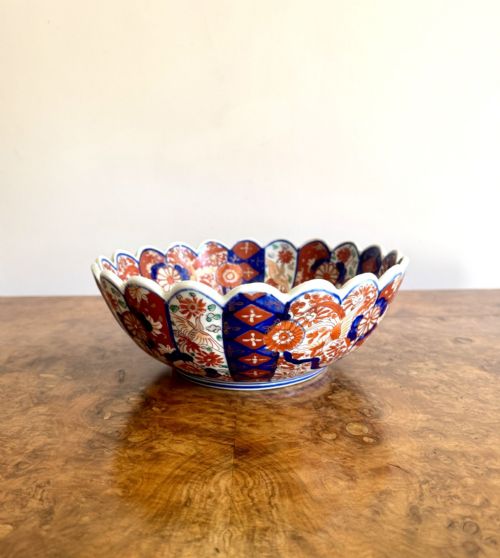
Forming the backbone of the selection, large chargers and scalloped bowls reflect the enduring output of these kilns. Many items retain the distinctive blue pigments applied beneath the glaze, often complemented by imari palettes.
Materials and production methods
Potters shaped fine clay into vessels before applying cobalt pigment directly to the surface in cobalt underglaze. This technique allowed artisans to paint detailed floral and animal scenes prior to firing.
A clear glaze sealed the painted designs, protecting the cobalt pigment and giving the porcelain its characteristic glossy finish. Additional decoration occasionally incorporated enamel or gold leaf over the fired glaze.
Selected items were fitted with brass elements, particularly when converted into table lamps in later centuries. Master potters relied on wood-burning kilns to achieve the vitrified porcelain body.
Several fish found themselves immortalised in porcelain, swimming across chargers and bowls for centuries without ever needing to come up for air.
Assessing quality and execution
The precision of the hand-painted brushwork dictates visual success, separating rapid production pieces from carefully rendered compositions of cranes or koi carp. Pigment saturation and clarity against the white porcelain body reveal the skill of the painter.
Physical proportion and weight influence handling, particularly in large chargers, bowls, and vases where maintaining symmetry during high-temperature firing required considerable expertise. Scalloped and octagonal edges demand exact forming before glazing.
Intact glazes without extensive surface wear preserve the original appearance of the cobalt pigment. The presence of historic markings on the base adds context regarding the origin of the piece.
The Arita Blue White Porcelain Glossary
- Charger
- A large decorative plate intended for display rather than dining. These substantial pieces frequently measure over forty centimetres across.
- Cobalt Underglaze
- A mineral pigment applied to the unfused clay body before glazing and firing. This method ensures the blue decoration remains permanent under the glossy surface.
- Edo Period
- The historical era in Japan spanning from sixteen hundred and three to eighteen hundred and sixty-eight. Kilns during this time produced foundational styles of blue and white export wares.
- Meiji Period
- The era lasting from eighteen hundred and sixty-eight to nineteen hundred and twelve. Artisans during these decades continued traditional painting techniques while adapting to international markets.
- Jardiner
- A heavy ceramic pot designed to hold large indoor plants. These decorative vessels often feature deep walls and scrolling foliate borders.
Arita Blue White Porcelain: Frequently Asked Questions
How do I date my piece?
Dating relies on stylistic markers, throwing techniques, and historical period conventions recorded in the kiln output. Edo period examples often display looser brushwork compared to later Meiji items.
Base markings, where present, help narrow the production era. Comparing forms like wine bottles and temple vases against documented timelines clarifies the age.
Are these items waterproof?
While the porcelain body is fully vitrified and non-porous, historic vessels converted into lamps or utilised as planters require careful handling. The glazed interior holds water safely in original bowls and jardinieres.
Fitted components such as brass lamp hardware should be kept dry. Cleaning requires simple warm water and a soft cloth without harsh detergents.
What is imari decoration?
Imari style refers to Japanese porcelain decorated in underglaze blue, iron red, and gold. Named after the port of shipment, these wares became immensely popular in Europe.
Pieces listed under arita blue white porcelain focus primarily on the cobalt elements rather than the full polychrome palette. The combination creates high contrast against the white ceramic background.
How should I display heavy chargers?
Large chargers require robust wall hangers or secure plate stands designed for substantial weight. Placing them away from high-traffic zones prevents accidental knocks.
Indirect lighting highlights the cobalt underglaze details without fading the enamel highlights. Ensuring stable placement protects the scalloped or foliate rims from chipping.