



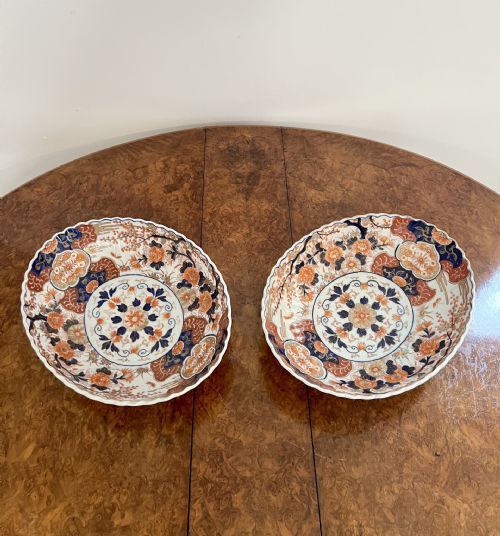


Japanese Ceramic Charger Pair
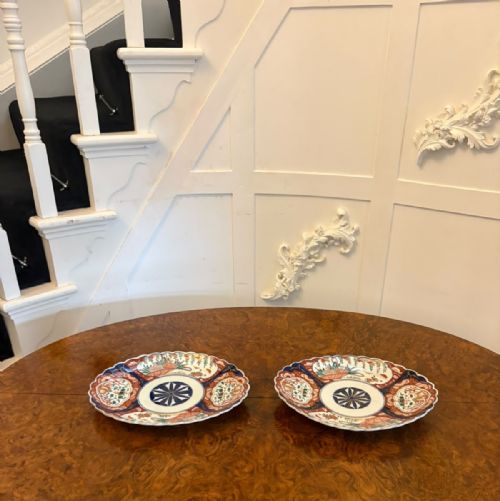
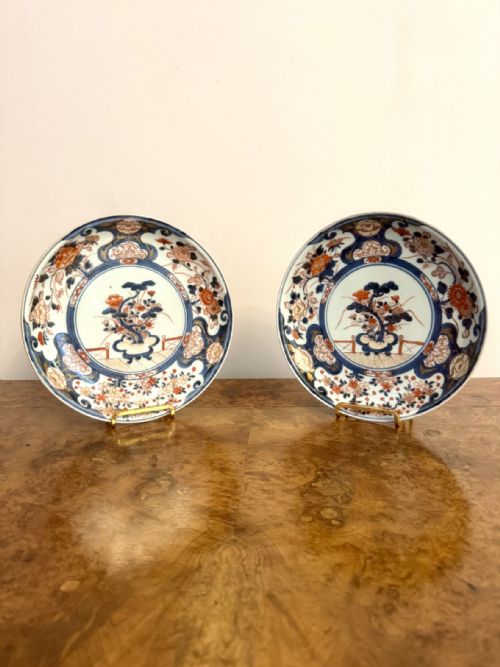
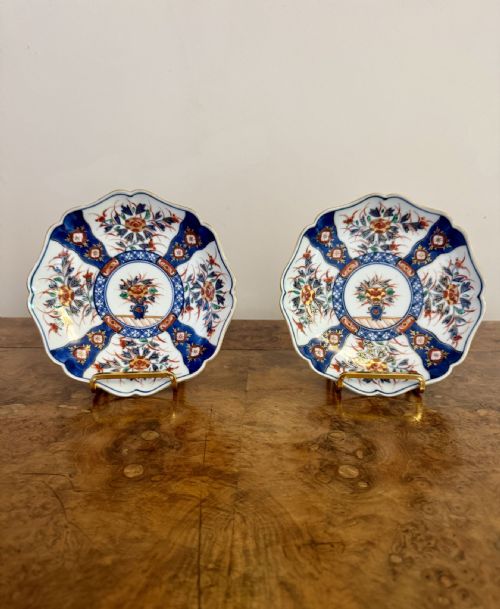
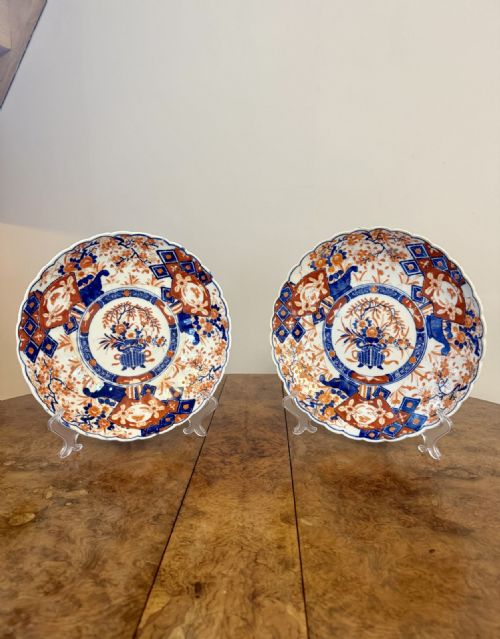
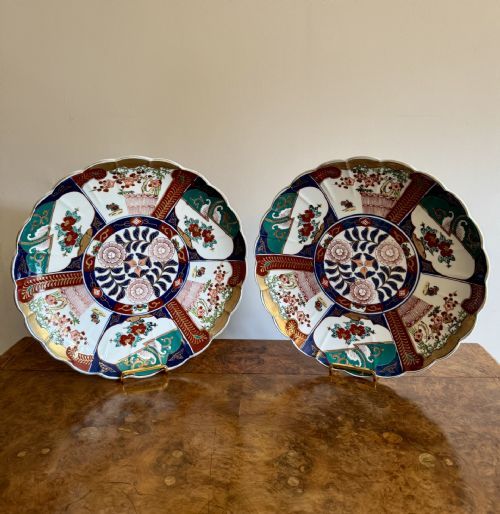
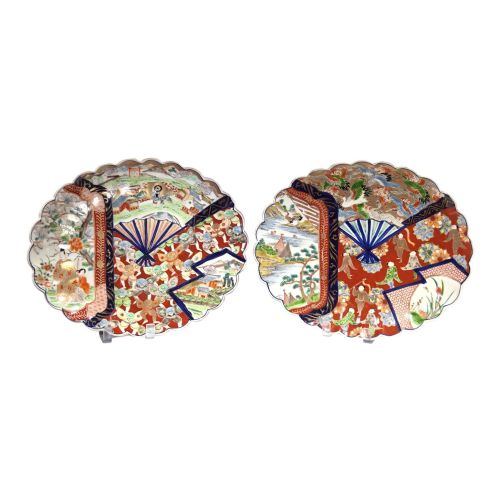
A japanese ceramic charger pair brings heavy hand-painted display pottery into a room, offering bold patterns and traditional imagery.
Japanese Ceramic Charger Pair
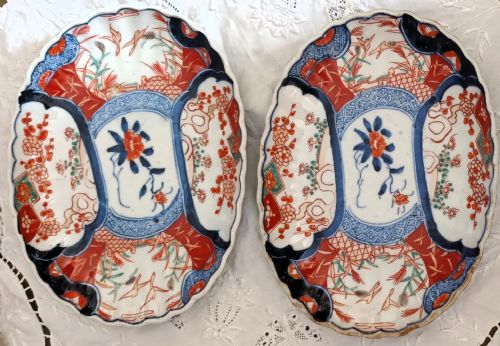
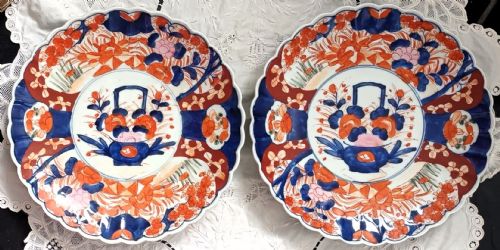
A japanese ceramic charger pair consists of large decorative plates or shallow bowls made for display rather than dining. The pieces span periods from the eighteenth century through the nineteenth century, including the Edo and Meiji periods, alongside Victorian interpretations.
Most examples found here belong to the Imari style or originate from Arita and Fukagawa. Forms vary between round chargers, scalloped edge dishes, and oval platters depicting motifs such as exotic birds or the Seven Lucky Gods.
Materials and Techniques
Potters built these items using porcelain, shaped into large chargers and finished with glaze. Cobalt pigment provided deep blue underglaze decoration, while overglaze enamel added rich colour to the surface.
Many items incorporate gilding and gold leaf to accent the painted scenes. Selected British pieces integrate Mintons date marks alongside Imari coloured decoration.
Listings span the eighteenth century, the nineteenth century, the Edo period, the Meiji period, and the Victorian era.
Assessing Quality and Execution
The standard of a japanese ceramic charger pair rests in the precision of the hand-painted brushwork and the complexity of the design. Examples depicting intricate figural scenes like the Seven Lucky Gods or detailed exotic birds demonstrate greater artistic ambition than simpler patterns.
The clarity of the cobalt pigment and the richness of the enamel and gilding define the visual depth of the surface. Uniformity in a matched pair and the crispness of scalloped moulding further separate standard output from finer studio work.
Fukagawa·Mintons
The Japanese Ceramic Charger Pair Glossary
- Imari
- A style of Japanese porcelain decorated in underglaze blue, overglaze red, and gold. It gained widespread popularity in Europe during the Edo and Meiji periods.
- Charger
- A large decorative plate intended for display on a sideboard, wall, or table. These pieces generally measure considerably larger than standard dining plates.
- Meiji Period
- The era of Japanese history lasting from 1868 to 1912, noted for significant export pottery production. Pieces from this time often display elaborate enamelling.
- Arita
- A Japanese town and the historic centre of porcelain production. Kilns in this region supplied substantial quantities of export ware.
- Overglaze Enamel
- Coloured glass decoration applied on top of the fired glaze and fixed with a lower temperature second firing. This technique allows for bright reds, greens, and gold details.
Japanese Ceramic Charger Pair: Frequently Asked Questions
How were ceramic chargers used historically?
These large ceramic plates were primarily intended for visual display on sideboards, walls, or tables rather than for serving food.
Wealthy households used them to showcase fine craftsmanship and colourful decorative motifs in reception rooms.
How do I hang a heavy charger safely?
Hanging large ceramic plates requires a dedicated spring-loaded wall hanger designed specifically to support the weight and diameter of the piece.
Ensure the wall fixing secures firmly into a stud or uses heavy-duty plaster anchors to prevent accidental slips.
Can I date these chargers by their marks?
Japanese export pieces from the nineteenth century occasionally bear kiln marks or reign stamps that indicate the production period.
British interpretations like Mintons pieces carry specific date ciphers pressed into the ceramic body to show the exact year of manufacture.