




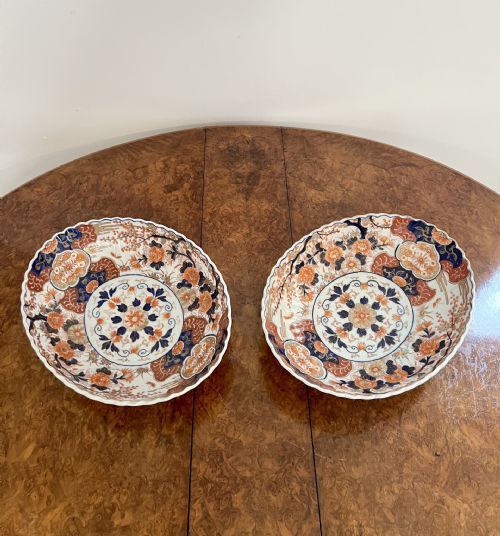


Large Japanese Porcelain Dishes
These large japanese porcelain dishes bring bold colours and intricate historic designs directly from Meiji period workshops into modern rooms.
Large Japanese Porcelain Dishes
Large japanese porcelain dishes primarily take the form of broad chargers, decorative plates, and wide bowls designed for display. These pieces originate largely from the nineteenth century, spanning the Meiji and Victorian eras, along with earlier Edo examples.
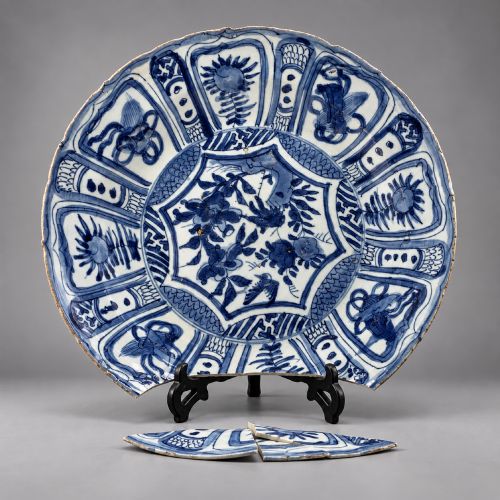
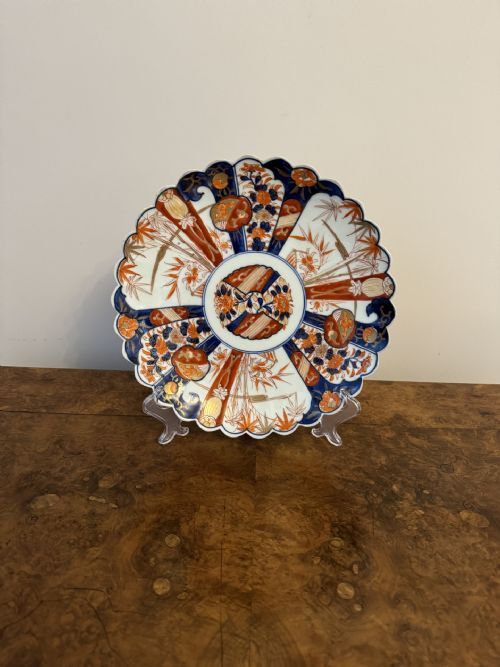
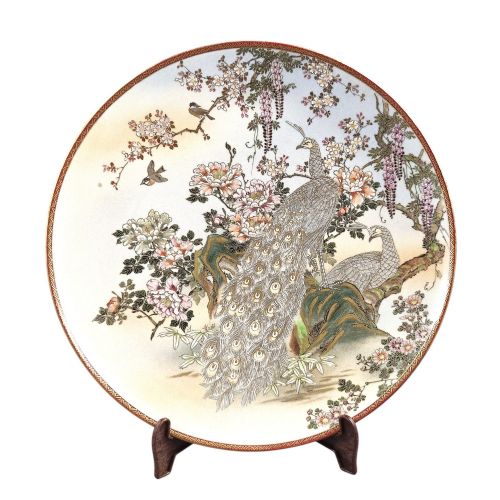
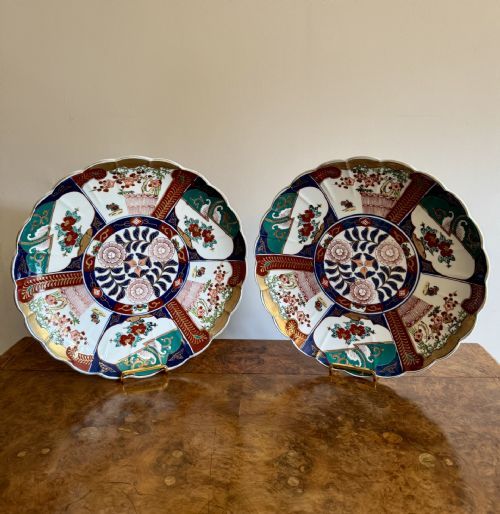
Imari ware dominates the available selection, recognised by its distinctive palette of cobalt blue, iron red, and gilt detailing. Collectors also encounter Satsuma, Kutani, and blue and white Arita wares within the same generous scale.
Forms range from deep scalloped bowls and square plates to massive circular chargers measuring over seventy centimetres across. Most function as decorative focal points rather than utilitarian tableware, reflecting export markets of the period.
How they were made
Potters shaped high-fired ceramic bodies using refined porcelain clay, often associated with production centres in Arita. Cobalt underglaze provided the deep blue foundation beneath subsequent layers of enamel and gold leaf.
Artisans applied polychrome enamels and gilt highlights by hand, creating complex patterns of scrolling foliage, figures, and wildlife such as koi carp or peacocks. Specialist techniques like moriage added raised slip decoration for tactile depth on Satsuma pieces.
Materials documented across the collection include porcelain, enamel, gold leaf, glaze, gilt, ceramic, gold gilt, and cobalt underglaze.
What varies in quality
Quality rests in the precision of the hand-painted brushwork and the clarity of the cobalt underglaze against the white porcelain ground. Superior examples demonstrate confident lines and balanced compositions without crowded or blurred motifs.
The application of gold leaf and enamel determines the refinement of the surface, where dense, neatly executed details elevate a piece above standard export wares. Potter signatures and well-preserved gilt accents further distinguish the finer works.
The Large Japanese Porcelain Dishes Glossary
- Imari
- A traditional style of Japanese porcelain featuring cobalt blue underglaze and iron red overglaze, frequently enriched with gold leaf. This style originated in Hizen province and gained immense popularity in European export markets.
- Charger
- A large decorative plate traditionally used for display on sideboards or walls rather than for serving food. These pieces often measure significantly wider than standard dining plates.
- Moriage
- A ceramic decoration technique where clay is applied in raised dots or lines before glazing and firing, creating a textured surface. This method appears frequently on Satsuma wares.
- Arita
- The Japanese town and surrounding region famous as the birthplace of Japanese porcelain production. Kilns here supplied the raw ceramic bodies and finished wares for export.
- Meiji Period
- The era in Japanese history spanning from 1868 to 1912, characterised by extensive international trade and the production of ornate export art. Many large dishes date from this dynamic period of craftsmanship.
Large Japanese Porcelain Dishes: Frequently Asked Questions
How were large japanese porcelain dishes displayed originally?
These large chargers and bowls were primarily created for export to Western markets during the late nineteenth century. Households placed them on sideboards, mounted them on walls, or used them as centrepieces for fruit display.
Their robust ceramic bodies and striking polychrome designs made them ideal decorative objects for Victorian drawing rooms. Today, they serve a similar purpose in contemporary interiors, functioning as bold wall art or table displays.
Are these dishes meant for daily use?
These historic pieces are designed primarily for decorative display rather than functional dining. The delicate enamel work and gold leaf can wear down with frequent handling or washing.
Collectors treat them as works of art to be admired on walls or secure stands. Gentle dusting with a dry cloth is sufficient for ongoing maintenance.
What is the significance of the Meiji period date?
The Meiji period marks an era of rapid modernisation and increased artistic exchange between Japan and the West. Japanese kilns produced an array of ambitious export ceramics to satisfy international demand for traditional craftsmanship.
Pieces bearing this attribution reflect the technical skill and artistic confidence of late nineteenth-century workshops. This era produced the vast majority of the large-scale chargers found on the market today.