






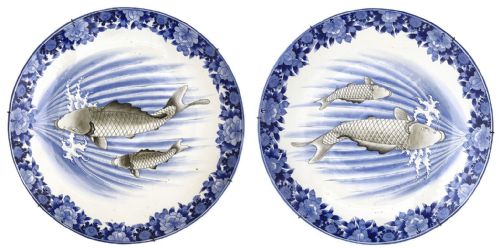


Pair Japanese Ceramic Platters
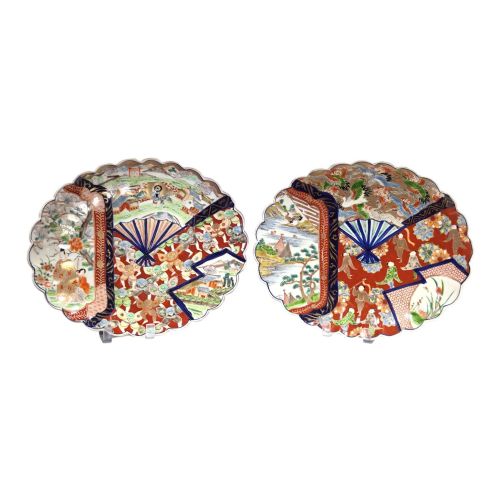
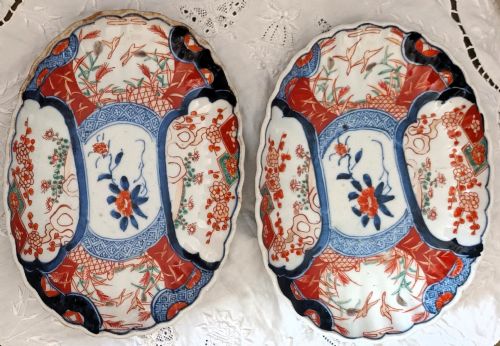
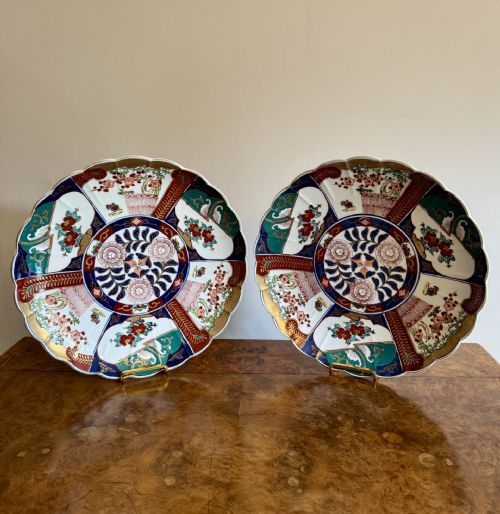
Pair japanese ceramic platters bring rich cobalt pigment and gold leaf into interiors, offering striking decorative presence through traditional forms.
Pair Japanese Ceramic Platters
When you search for pair japanese ceramic platters, you encounter large chargers, oval dishes, and scalloped plates produced across the nineteenth and twentieth centuries.
The selections on this page lean heavily towards Imari wares, featuring circular and shaped porcelain decorated with traditional motifs.
Most examples originate from the Meiji period and the year nineteen hundred, spanning Arita production and Victorian interpretations.
How they were made
Potters shaped fine porcelain bodies before applying cobalt blue underglaze decoration directly to the clay.
Overglaze enamel and gold leaf were added in subsequent firings to build up the intricate patterns seen on chargers and dishes.
Pair Japanese Ceramic Platters Retail Price Guide 2026
Typical asking prices for pair japanese ceramic platters among the pieces listed under this phrase on Sellingantiques today, from the lower quarter to the upper quarter. They describe what is for sale here now, not the wider market.
Listings feature porcelain pieces spanning the Edo period, the Meiji era, and Victorian times, utilising cobalt blue underglaze and gold leaf.
What varies in quality
The crispness of the cobalt pigment and the precision of the overglaze enamel application define the visual strength of each piece.
Richer gilding and more complex pictorial subjects, such as figural scenes, separate standard domestic output from more ambitious decorative charges.
Mintons
The Pair Japanese Ceramic Platters Glossary
- Imari
- A traditional style of Japanese porcelain featuring a distinct palette of cobalt blue, iron red, and gold.
- Charger
- A large decorative plate traditionally used for presentation rather than serving food at the table.
- Meiji Period
- The era in Japanese history spanning from eighteen sixty-eight to nineteen twelve, known for prolific ceramic exports.
- Arita
- The Japanese town and surrounding region long celebrated as the historic centre of porcelain production.
Pair Japanese Ceramic Platters: Frequently Asked Questions
How were pair japanese ceramic platters used originally?
These large porcelain plates and chargers served primarily as decorative items for display on walls, sideboards, or tables.
They demonstrated the household's appreciation for fine Asian craftsmanship during the nineteenth and twentieth centuries.
How do I care for antique ceramic platters?
Display them securely using appropriate wall hangers or stable plate stands designed for heavy porcelain items.
Dust gently with a soft dry cloth and avoid harsh chemical cleaners that might damage the delicate overglaze enamel and gilding.
What distinguishes Meiji period pieces?
Meiji period ceramics reflect a surge in international trade and artistic ambition following the reopening of Japan to the West.
They often combine traditional Arita techniques with bolder compositions tailored for European and British collectors.
Are all these platters from Japan?
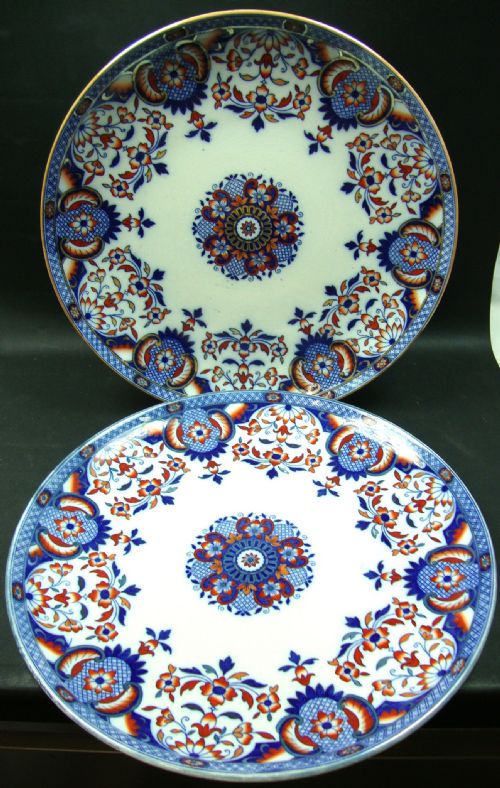
The majority originate from Japanese kilns, particularly in the Arita region, though European factories occasionally produced inspired interpretations.
Makers such as Mintons also created British earthenware items utilising Imari coloured decoration during the Victorian era.