



Meiji Painted Display Bowl
A meiji painted display bowl brings intricate Japanese artistry into a room, offering rich colours and traditional scenes that draw the eye.
Meiji Painted Display Bowl
When searching for a meiji painted display bowl, buyers encounter decorative vessels originating from Japan during the nineteenth century and the Meiji period, alongside pieces linked to the 1700s and the Victorian era. These items encompass decorative bowls, plates, and large chargers featuring distinct regional styles.
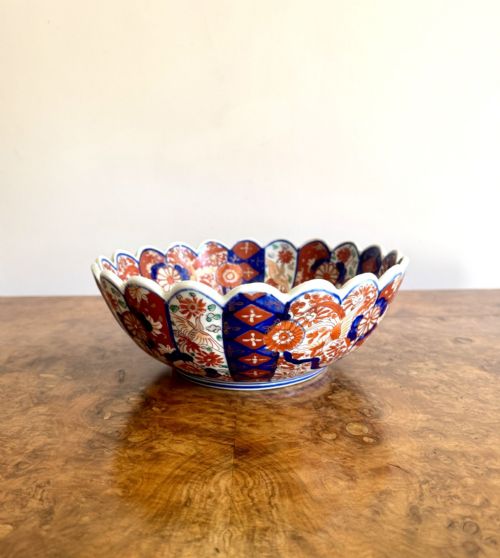
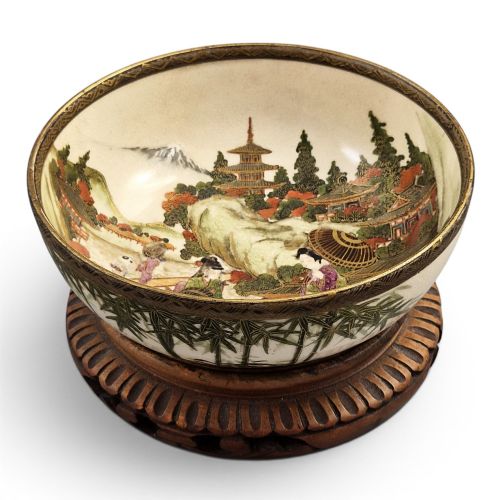
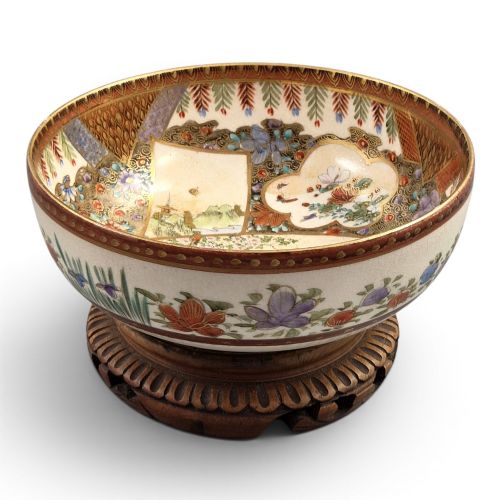
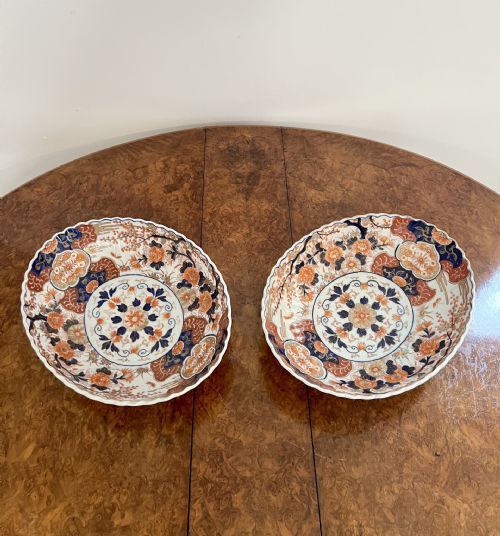
The version most frequently met on this page is the Japanese Imari bowl, often shaped with a scallop edge or a hexagonal form. Alongside these, Satsuma ware and Kutani shallow bowls appear, decorated with hand-painted motifs such as flowers, birds, and samurai battles.
Materials and construction
These items rely on porcelain, earthenware, and ceramic as their primary bodies, shaped into bowls, plates, and chargers. Makers applied glazes and enamels to build up colourful surfaces, often incorporating gold leaf and gilding to highlight specific details.
Wooden elements occasionally appear alongside the ceramic bodies in the broader material record. Artisans combined these substances using traditional techniques, resulting in hand-painted finishes that define the appearance of Satsuma, Imari, and Kutani wares.
Listings span periods from the 1700s and Victorian era through to the 19th Century and 1900.
Distinctions in quality
The standard of a painted display bowl rests on the precision of the hand-painted decoration and the crispness of the form, whether that is a scalloped edge or a hexagonal body. Pieces signed by notable makers command attention for their detailed brushwork and careful application of enamel and gold leaf.
Simpler production items show less intricate patterning and broader brushstrokes, whereas superior examples display elaborate figural scenes, such as samurai battles or women under camellia trees, executed with tight control over the palette.
Kozan·Kinkozan·Shozo
The Meiji Painted Display Bowl Glossary
- Imari
- A style of Japanese porcelain decorated in underglaze blue and overglaze red, gold, and other colours. It remains one of the most common types found in these listings.
- Satsuma ware
- A type of Japanese earthenware featuring a pale, ivory-crackled glaze painted with polychrome enamels and gilding. Pieces from Kyoto and makers such as Kinkozan often fall into this category.
- Kutani
- Japanese pottery and porcelain known for bold pictorial designs and rich enamel colours. These shallow bowls often feature extensive hand-painted details.
- Charger
- A large decorative plate intended for display rather than dining. They form a key category alongside standard bowls in these listings.
- Mon
- A Japanese emblem or crest used to decorate armorial ceramics. The Shimazu mon appears on specific Satsuma pieces.
Meiji Painted Display Bowl: Frequently Asked Questions
How were these bowls used historically?
Historically, these pieces functioned as ornamental objects within interiors, designed to catch the eye on surfaces or walls rather than handle food. Their decorative nature made them popular export items during the Meiji period.
Owners displayed large chargers and scalloped bowls in reception rooms to showcase fine craftsmanship and an appreciation for Japanese art. Many retain their bright enamels and gilding due to this careful display use.
How do I identify Satsuma ware?
Satsuma ware is recognised by its characteristic earthenware body covered in a fine, crackled ivory glaze. Artisans painted these surfaces using detailed polychrome enamels and added gilding to accentuate the design.
Many of these pieces feature signatures from prominent workshops or artists like Kinkozan and Gyokko. They often depict specific narratives, such as samurai battles or figures under trees.
What defines Imari porcelain?
Imari porcelain is defined by its distinct palette, which typically combines underglaze cobalt blue with overglaze iron red, gold, and supplementary colours. The patterns often incorporate complex floral and geometric borders.
On this page, Imari pieces frequently appear with scallop edges, hexagonal forms, or as plates and chargers. Their robust ceramic body and bright pigments have allowed them to survive in quantity.