


Hand Painted Satsuma Bowl
A hand painted satsuma bowl brings intricate Japanese artistry into a room, offering finely detailed scenes rendered in enamel and gold leaf.
Hand Painted Satsuma Bowl
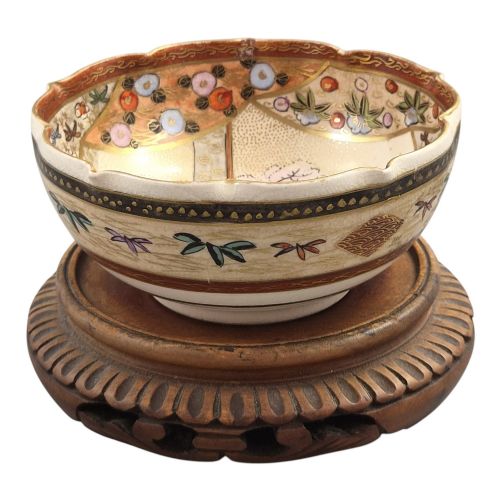
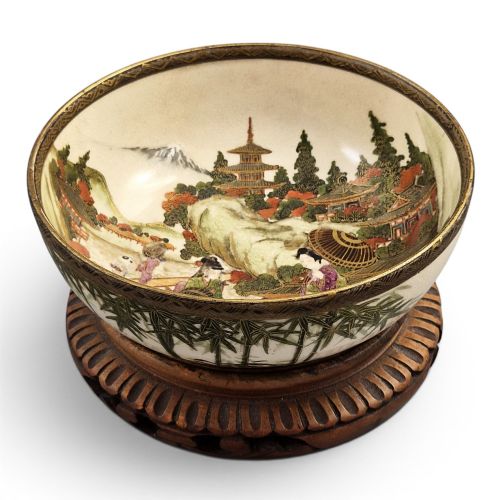
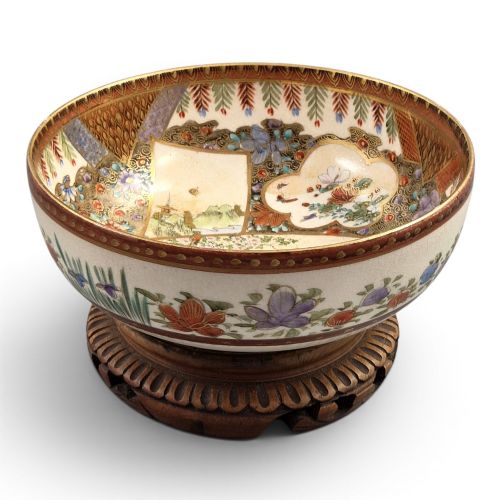
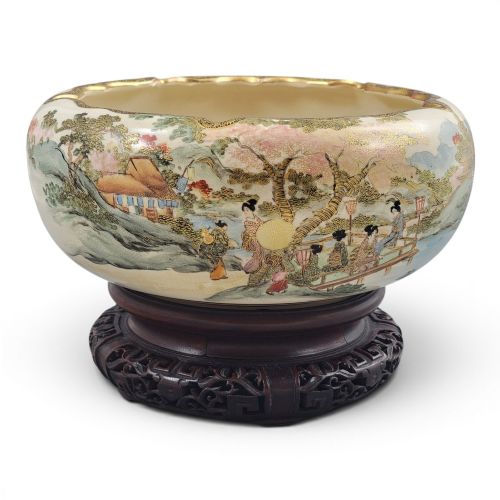
A hand painted satsuma bowl is an earthenware vessel originating from Japan, typically featuring elaborate pictorial scenes rendered in enamel and gold leaf. These pieces emerge primarily from the nineteenth century, including the Meiji period, alongside occasional examples from the Taisho period and the early twentieth century.
Buyers will encounter various forms ranging from small decorative bowls and footed burner bowls to monumental display pieces. Many examples originate from Kyoto and bear artist signatures or the Shimazu crest, depicting subjects such as flowers, birds, samurai battles, and domestic figures.
The aesthetic centres on a distinctive cream-coloured crackle-glazed earthenware body that serves as a canvas for dense polychrome and gilt decoration. These bowls range from modest cabinet pieces to large decorative items designed for prominent display.
Materials and Technique
Makers utilised a porous earthenware body covered with a characteristic clear glaze that developed a fine network of crackles during firing. This absorbent ceramic base accepted delicate overglaze enamel painting exceptionally well.
Artisans applied richly coloured enamels alongside raised gold leaf and gilt detailing to build up intricate portraits, landscapes, and floral motifs. Signed pieces often reflect the specialised workshop practices of master painters in Kyoto.
Listings feature items from the 19th Century, Edwardian period, and 1920, utilising earthenware, enamel, gold leaf, wood, and gilt.
Assessing Quality
Quality rests in the precision and density of the hand painting, where master signatures and crisp artist marks distinguish superior workshop production from standard commercial output. The subtlety of the enamelwork and the sparing, effective use of raised gold leaf define the upper tier.
The fineness of the crackle glaze and the balance of the composition across the interior and exterior surfaces determine the visual success of the piece. Monumental scale combined with complex narrative scenes, such as samurai battles, represents the pinnacle of this ceramic tradition.
Gyokkō·Kozan·Shizan·Ryuzan·Kinkozan·Nikko
The Hand Painted Satsuma Bowl Glossary
- Satsuma ware
- Japanese earthenware characterised by a ivory or cream-coloured crackle glaze and ornate polychrome enamel decoration. It gained international renown during the nineteenth century.
- Meiji period
- An era in Japanese history spanning from 1868 to 1912. This period produced the finest decorative arts exported to Western collectors.
- Shimazu crest
- The heraldic badge of the Shimazu clan, featuring a circle enclosing a cross. It frequently appears on high-quality Satsuma pottery.
- Gilt
- A thin layer of gold applied to the surface of the ceramic. It accentuates borders, figures, and floral elements.
- Enamel
- Opaque glass paste applied over the glaze and fired to create colourful, durable pictorial designs. It forms the primary medium for Satsuma decoration.
Hand Painted Satsuma Bowl: Frequently Asked Questions
How do I display a Satsuma bowl?
These decorative bowls suit prominent placement on sturdy tables or cabinets where adequate lighting reveals the fine enamel and gold leaf details. Avoid positioning them in direct sunlight to protect the colours.
Because many examples are substantial in weight and size, ensure the supporting surface is stable and secure.
Are these bowls food safe?
Antique Satsuma pieces feature a porous earthenware body and lead-bearing overglaze enamels intended strictly for ornamental display. Using them for food or liquid will damage the ceramic and the delicate surface decoration.
Enjoy them solely as works of visual art rather than functional tableware.
How do I date a piece?
Dating relies on stylistic markers, artist signatures, and production periods such as the nineteenth century or the Meiji era. Kyoto pieces often reflect specific aesthetic shifts from the late nineteenth into the early twentieth century.
Signatures and kiln marks provide the most reliable clues for establishing a narrower timeframe.