





Antique Satsuma Ware
Antique satsuma ware comprises finely crackled earthenware ceramics painted with intricate enamel and gold leaf.
Antique Satsuma Ware
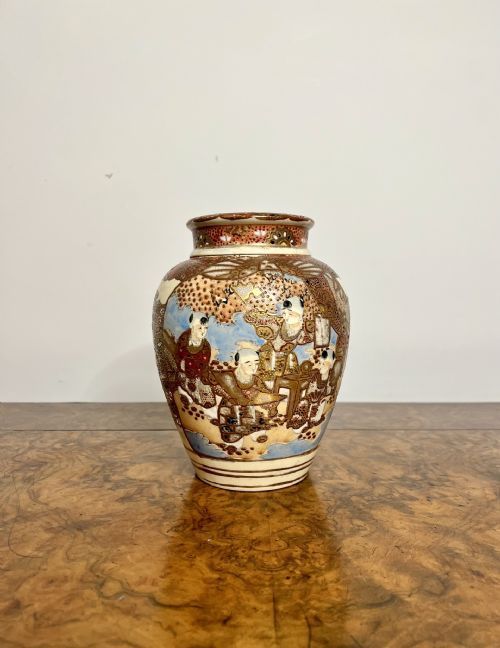
When you search for antique satsuma ware, you encounter a distinct style of Japanese pottery characterised by a fine, creamy earthenware body with a network of minute glaze crackles. The pieces span domestic vessels and decorative forms like vases, bowls, ginger jars, and incense burners. Most examples originate from the Meiji period, reflecting a rich history of export and craftsmanship.
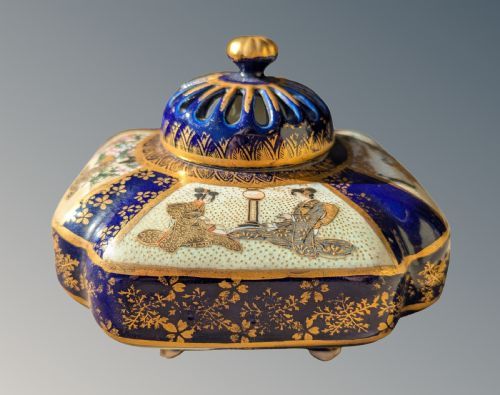
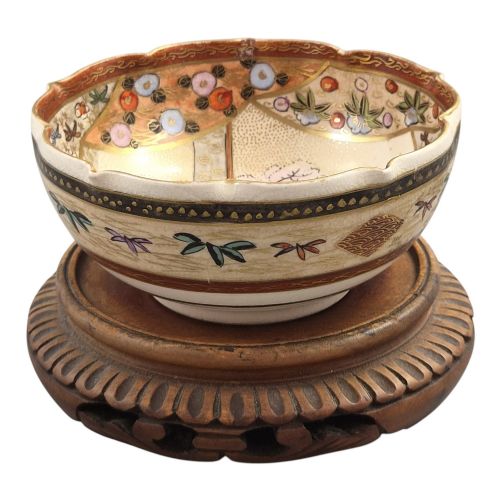
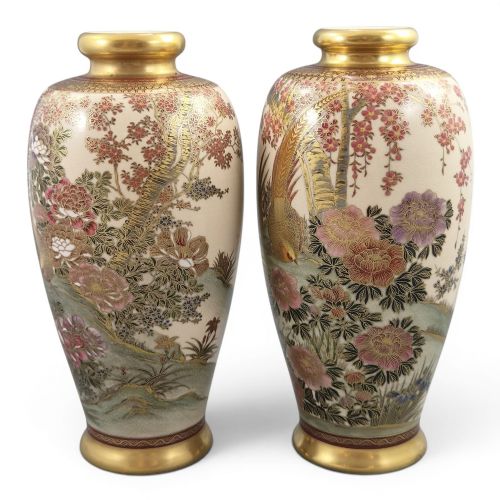
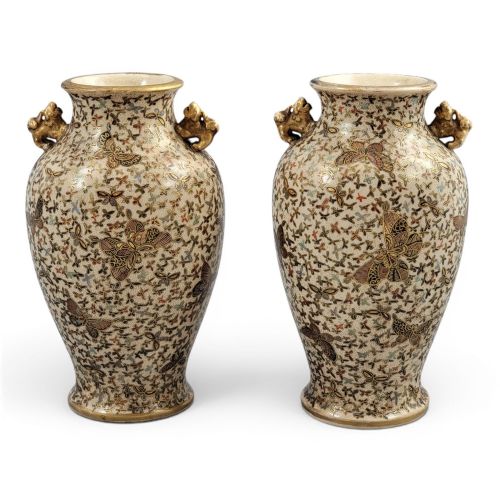
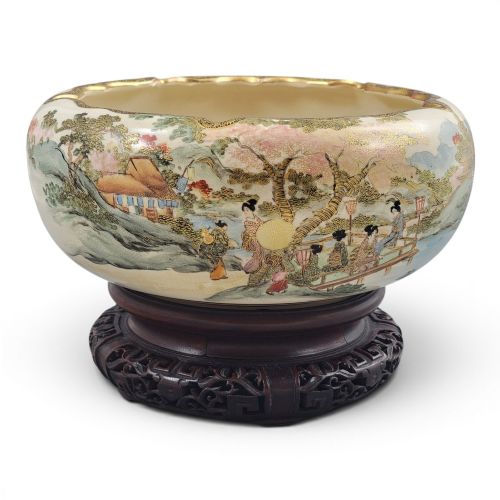
You are most likely to meet vases and decorative bowls on this page, often featuring elaborate hand-painted figural scenes, floral motifs, or complex patterns of butterflies and Arhats. Many examples incorporate the Shimazu family crest, identifying their provenance from specific kilns and workshops. Forms range from miniature cabinet pieces to monumental jars.
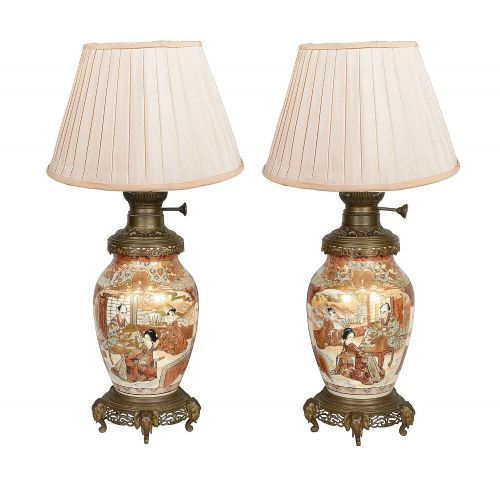
The objects extend beyond display ceramics into functional household conversions, including table lamps adapted from traditional jars and vases. Miniature incense burners complete with lids also appear alongside shallow dishes and saucers. These diverse forms demonstrate the adaptability of the medium throughout the late nineteenth and early twentieth centuries.
How they were made
Makers formed these pieces from a porous earthenware body that was subsequently glazed and fired to produce a characteristic ivory or cream surface covered in a delicate web of crackles. Artisans then applied detailed enamel colours by hand, building up dense polychrome scenes of figures, landscapes, and floral arrangements. Gilt details and raised moriage decoration frequently highlight the painted surfaces to create rich texture and contrast.
Gold leaf and heavy gilt work provide the metallic accents that catch the light across many designs, outlining panels and framing intricate processions of arhats or samurai. Selected workshops utilised contrasting cobalt blue glazes alongside the traditional palette to anchor the composition. Wood stands and brass fittings sometimes accompany the ceramics, particularly when items were repurposed as lamps.
Listings feature earthenware vessels from the nineteenth and early twentieth centuries, spanning the Meiji, Taisho, and early Showa periods.
What varies in quality
The standard of antique satsuma ware rests upon the precision of the brushwork and the delicacy of the enamel painting. Finer pieces display exceptionally crisp figural expressions and elaborate gold detailing without clutter, whereas lesser examples present heavier, less defined applications. The complexity of the narrative scenes, such as thousands of butterflies or arhats, distinguishes workshop output.
Master signatures and recognised marks from prominent Kyoto or Tokyo studios indicate superior production standards and command closer attention. The integration of raised cobalt and moriage relief work adds depth that elevates a piece above standard decorative output. Ultimately, the harmony between the creamy crackle glaze and the intricate overglaze painting defines the upper tier of the range.
Kinkozan·Hotoda·Chosei·Nanzan·Kizan
The Antique Satsuma Ware Glossary
- Moriage
- A technique of building up raised slip or enamel dots and lines to create a tactile, three-dimensional surface on pottery. This method adds significant texture beneath the gilding.
- Koro
- A traditional Japanese incense burner typically featuring a pierced lid and a bowl supported on legs. These vessels often include delicate handles and figural finials.
- Okimono
- A standalone decorative sculpture intended for display on a shelf or in a tokonoma alcove. These figures frequently depict deities, historical personages, or animals.
- Shimazu mon
- The heraldic crest of the Shimazu clan, represented by a cross within a circle. It frequently appears on satsuma ceramics associated with the Satsuma Domain.
- Arhat
- A perfected person who has attained enlightenment, commonly depicted in groups on decorative panels. These figures feature prominently in detailed Meiji period narrative scenes.
Antique Satsuma Ware: Frequently Asked Questions
What is satsuma ware?
Satsuma ware is a type of Japanese earthenware originating from the Satsuma Province, known for its distinctive ivory-coloured body and fine crackle glaze.
Artisans decorate these ceramics with detailed polychrome enamels and gold leaf, frequently depicting traditional figures, landscapes, and floral patterns.
How do I identify Meiji period satsuma?
Meiji period pieces generally display exceptionally fine, dense brushwork and intricate gilding produced during an era of heightened export craftsmanship.
Many bear artist signatures or studio marks from renowned centres like Kyoto alongside the Shimazu crest.
Where were these pieces made?
While the style originated in the Satsuma Province of Kyushu, major production centres later developed in Kyoto, Tokyo, Kobe, and Yokohama.
Prominent workshops in these cities produced the finely painted vases, bowls, and incense burners destined for international markets.
How should I display satsuma lamps?
Satsuma table lamps are typically formed from converted jars or vases mounted with electrical fittings and paired with silk shades.
Place them on stable surfaces away from direct sunlight to protect the enamel colours and delicate gilding over time.