


Japanese Satsuma Bowl
A Japanese Satsuma bowl brings intricate hand-painted storytelling and gilt enamels into a room, made for quiet contemplation.
What a Japanese Satsuma Bowl Is
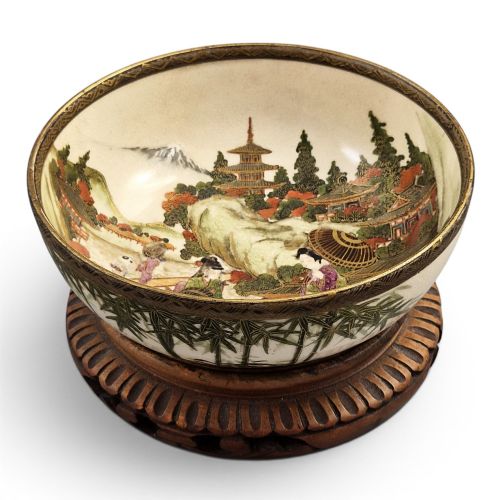
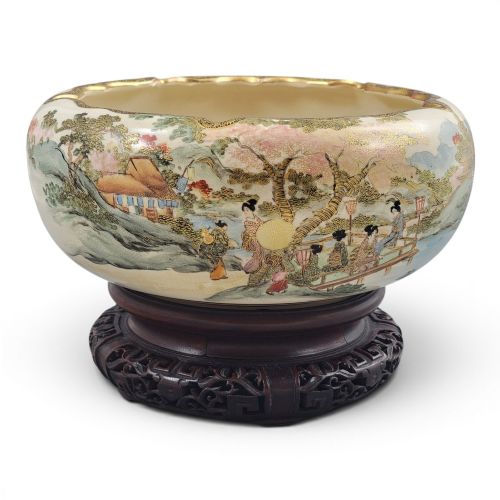
Every Japanese Satsuma bowl originates from specific production centres in Japan, heavily represented here by Meiji period pieces and traditional Kyoto craftsmanship. These decorative vessels range from intimate tea bowls to substantial cabinet pieces adorned with complex figurative scenes or floral motifs.
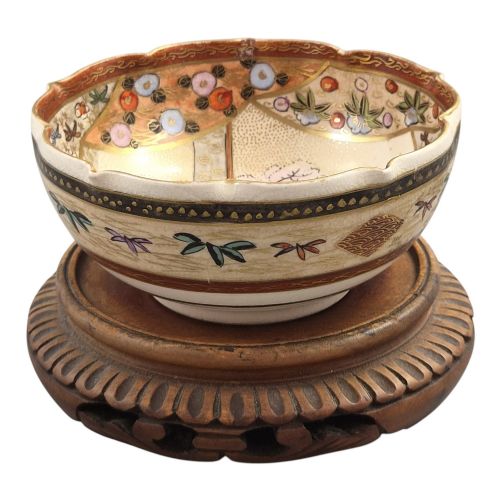
The objects frequently display signatures from named makers alongside the Shimazu crest, rooting them firmly in historical workshops. Collectors encounter various forms, including lobed rims, pedestal bases, and hexagonal shapes.
Dating primarily from the nineteenth century through to the Edwardian era, these bowls capture a distinct period of artistic exchange. They serve as tactile links to Meiji aesthetics, combining traditional Japanese iconography with intricate enamel work.
How They Were Made
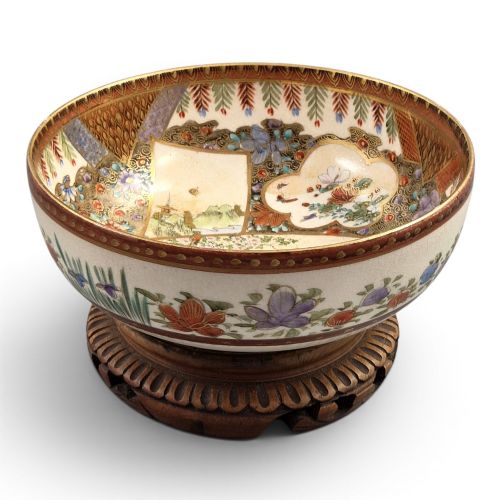
Makers shaped these pieces from earthenware, applying a characteristic ivory crackle glaze that formed the canvas for subsequent decoration. Artisans then built up the designs using detailed enamel paints.
Gold leaf accents highlight specific motifs, creating contrast against the matte finish of the earthenware body. Certain pieces also incorporate wood stands or ormolu mounts to display the ceramics.
The process required precise brushwork to execute dense patterns like millefleur, thousand butterfly designs, and narrative figure groups. Each layer of enamel and gold underwent firing to bond with the underlying glaze.
Retail Price Guide 2026
Typical UK retail prices for japanese satsuma bowl, calculated from the Sellingantiques database of over a million retail prices indexed since 2003. This retail price guide relies exclusively on Sellingantiques data; no external sources or auction records are used, so the figures do not describe the wider market.
Certain butterflies painted on these bowls are so densely packed they create entire optical illusions across the ceramic surface.
What Varies in Quality
The distinction between standard production and masterwork pieces rests entirely on the density, control, and ambition of the brushwork. Superior bowls demonstrate precise execution in complex scenes, such as processions or detailed flora and fauna, where every individual element remains sharp.
The application of gold leaf and enamel also separates tiers of execution, with finer pieces utilising raised gilding and subtle colour shading rather than flat, repetitive stamping. Signature clarity and the presence of reputable studio marks further elevate the standing of an individual bowl.
Kozan·Shizan·Ryuzan·Nikko·Seikozan·Matsumoto Shozan·Genzan·Kinkozan·Hozan·Hankinzan·Ryouzan·Koshida·Taizan
The Japanese Satsuma Bowl Glossary
- Meiji Period
- The era spanning from 1868 to 1912 in Japanese history. This period produced the vast majority of finely decorated earthenware found on the market today.
- Earthenware
- Porous pottery fired at relatively low temperatures. Satsuma ware uses this specific clay body beneath its signature crackled glaze.
- Millefleur
- A dense surface pattern composed of countless tiny painted flowers. The term translates directly to thousand flowers.
- Shimazu Crest
- The heraldic symbol of the Satsuma domain. Its presence indicates a direct link to the ruling clan associated with this ceramic tradition.
- Ormolu
- Gilded bronze used for decorative mounts. Some nineteenth-century bowls incorporate these metal mounts for European display.
Frequently Asked Questions
How do I identify a Meiji period piece?
Meiji period pieces typically display dense polychrome enamel work and gold detailing over a characteristic crackle glaze. Look for period signatures and studio marks on the base.
Historical context provides further clues, as production surged during the late nineteenth century to satisfy international demand for Japanese decorative arts.
Were these bowls used for tea?
Some smaller examples function as tea bowls for traditional gatherings. Others serve purely decorative purposes as centrepieces or cabinet displays.
Larger forms and pedestal bowls were created primarily to showcase intricate painting rather than for practical utility.
What causes the crackle in the glaze?
The fine network of cracks occurs naturally as the glaze cools and contracts at a different rate than the underlying earthenware body. Makers often accentuated this craquelure intentionally.
Over time, absorbed residues can darken these lines, which helps confirm the age and authenticity of nineteenth-century pieces.
How should I display my bowl?
Place the piece away from direct sunlight to protect the stability of the enamel and gold leaf. Ensure it rests on a stable, flat surface.
Some bowls come with fitted wood stands or historic mounts that support their shape and elevate the presentation.