
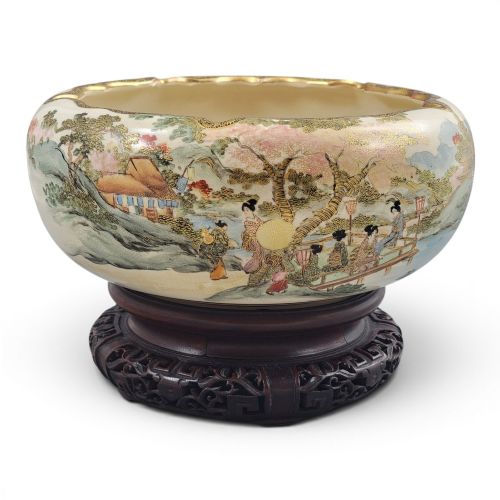


Gilded Earthenware Bowl
A gilded earthenware bowl brings brilliant enamel and gold leaf to the table, offering a striking display piece for the home.
Gilded Earthenware Bowl
When searching for a gilded earthenware bowl, buyers encounter a selection spanning the eighteenth and nineteenth centuries, including Victorian, Edwardian, and Meiji period examples.
The objects listed range from decorative bowls and creamware pudding bowls to Satsuma ware and washware sets, reflecting diverse origins across British and Japanese traditions.
Japanese Satsuma bowls dominate the selection, frequently featuring intricate enamel work and intricate scenes alongside traditional British creamware vessels.
Materials and Method
Potters shaped ceramic and creamware bodies before applying decorative glazes and detailed enamel painting by hand.
Artisans integrated gold leaf and gold gilt onto the surface, often highlighting complex figurative or floral motifs.
Gilded Earthenware Bowl Retail Price Guide 2026
Typical asking prices for gilded earthenware bowl among the pieces listed under this phrase on Sellingantiques today, from the lower quarter to the upper quarter. They describe what is for sale here now, not the wider market.
Listings combine eighteenth-century British creamware with nineteenth-century Japanese Satsuma ceramics, uniting diverse ceramic traditions under gilded earthenware.
Judging Quality
The refinement of the painted enamel and the precision of the gold gilding determine the visual impact of each vessel.
Signed studio pieces and works attributed to known makers demonstrate superior artistic execution compared to unmarked or standard production wares.
Kozan·Shizan·Ryuzan·Hododa·Kinkozan·Shozan
The Gilded Earthenware Bowl Glossary
- Earthenware
- Porous pottery fired at lower temperatures, requiring a glaze to achieve impermeability. This material forms the primary body for many decorative and domestic bowls.
- Satsuma ware
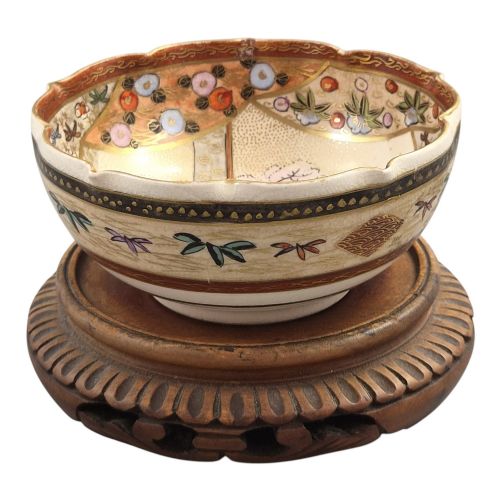
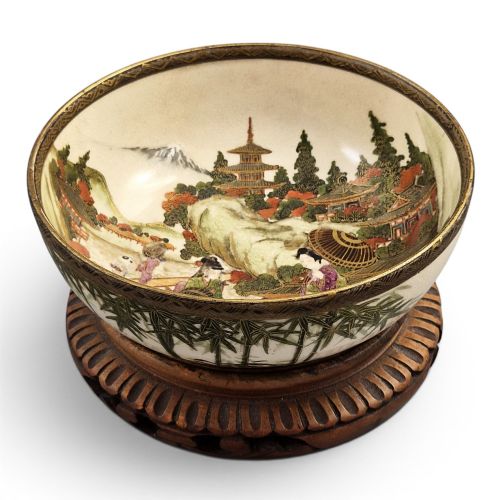
- Japanese pottery originating from Satsuma Province, characterised by an ivory crackle glaze decorated with polychrome enamels and rich gold gilt. These pieces often depict figures, flowers, and historical scenes.
- Creamware
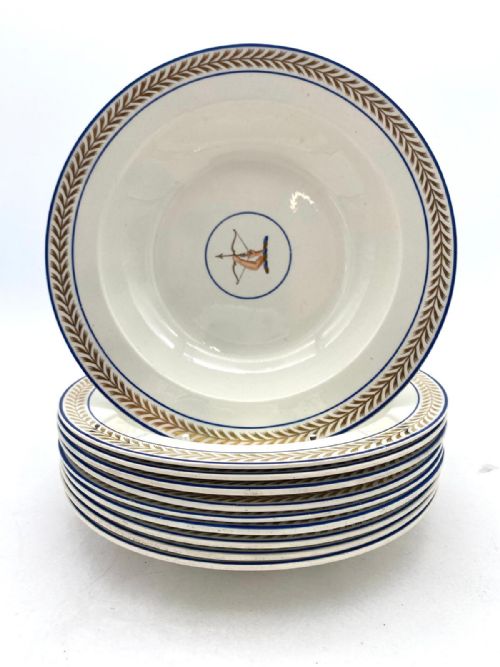
- A refined earthenware developed in eighteenth-century Britain, noted for its pale cream or yellowish hue. Wedgwood famously produced notable armorial examples in this ceramic body.
- Gold Gilt
- A thin layer of gold applied to the surface of ceramics to provide metallic enrichment. It accents specific details in the painted enamel decoration.
- Millefleur
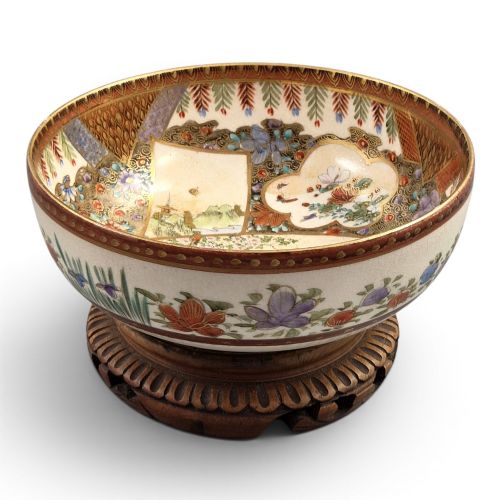
- A decorative pattern composed of numerous small flowers tightly packed across the surface. This French term translates to a thousand flowers and appears on various Meiji period bowls.
Gilded Earthenware Bowl: Frequently Asked Questions
What is a gilded earthenware bowl used for?
These vessels served various functions ranging from domestic pudding service and sugar storage to purely decorative display.
Many examples were intended to showcase artistic skill rather than handle daily dining wear.
How do I identify Satsuma ware?
Satsuma ceramics display a distinctive cream-coloured crackle glaze beneath intricate enamel paintings and heavy gold gilding.
Japanese Satsuma bowls often bear artist signatures on the base from studios in Kyoto or Yokohama.
Are these bowls dishwasher safe?
Historic earthenware featuring delicate enamel and gold leaf requires gentle hand washing without harsh detergents.
Harsh cleaning methods will quickly wear away the antique gilt and surface decoration.
What is creamware?
Creamware is a type of refined earthenware perfected in Britain during the eighteenth century.
It possesses a warm, pale yellow tone and served as a lighter alternative to traditional salt-glazed stoneware.