


Cream Satsuma Bowl
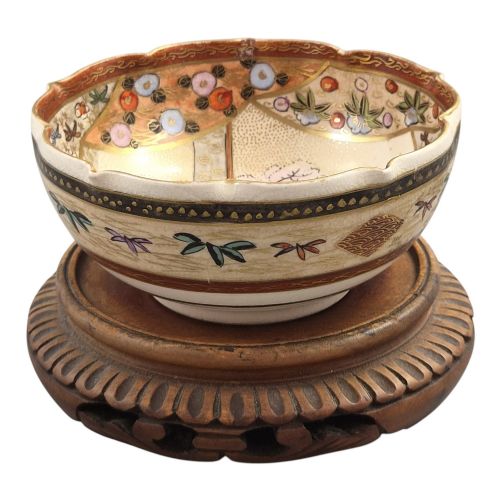
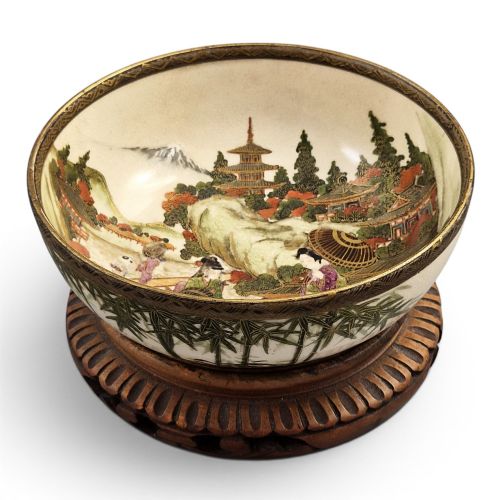
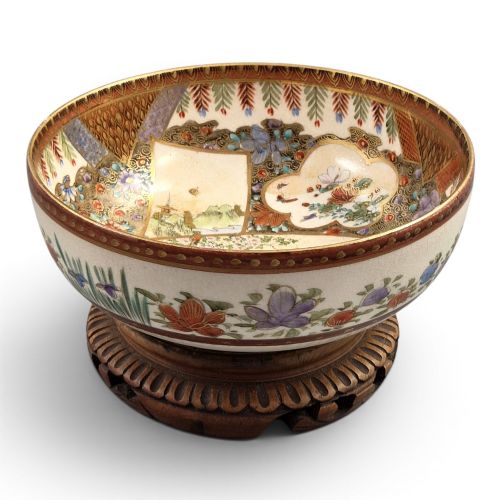
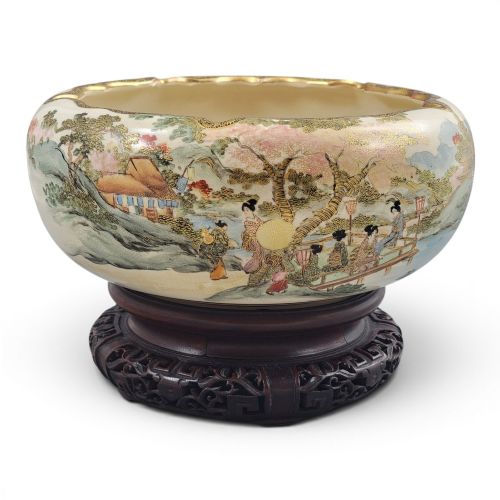
These cream satsuma bowl pieces are finely decorated earthenware vessels that bring intricate Meiji and Taisho period artistry into a modern room.
Cream Satsuma Bowl
A cream satsuma bowl is a form of Japanese decorative ceramics originating from the nineteenth and early twentieth centuries. These vessels showcase traditional styles spanning the Meiji and Taisho periods, often featuring distinctive crackle glazes in a creamy tone.
The pieces listed on this page appear primarily in forms such as decorative bowls, sugar bowls, and footed incense burners. Many examples derive from Kyoto studios and bear signatures from makers working within the Meiji period.
Buyers seeking a cream satsuma bowl will encounter various sizes, from small Hanami dishes to large decorative table pieces. The imagery painted upon these ceramics frequently includes floral motifs, birds, and figural scenes.
How they were made
Makers fashioned these vessels using earthenware covered in a characteristic pale crackle glaze. Artisans then applied detailed enamel painting by hand over the glazed surface.
Many of the finer examples incorporate gold leaf accents alongside the enamel work, adding brightness to the painted scenes. Selected pieces also feature wood components or specialised marks such as the Shimazu crest.
Object types seen across the available inventory include decorative ceramics, decorative bowls, and incense burners from the Meiji and Taisho periods.
What varies in quality
Quality in a cream satsuma bowl depends upon the finesse of the hand-painted enamel work and the clarity of the crackle glaze. Finer examples display meticulous detail in depictions of flowers, birds, and figures.
Another measure of quality involves the presence of artist signatures or workshop marks from renowned masters based in Kyoto. The precision of the gilding and the balance of the overall design further distinguish superior pieces from standard production.
Kozan·Shizan·Ryuzan·Nikko·Shozan
The Cream Satsuma Bowl Glossary
- Satsuma ware
- A type of Japanese earthenware traditionally characterised by an ivory-coloured, crackle-glazed surface. It served as a ground for elaborate polychrome and gilt decoration.
- Meiji Period
- A span of Japanese history lasting from eighteen sixty-eight to nineteen twelve. This era saw a surge in detailed decorative arts produced for both domestic and export markets.
- Enamel
- A glassy substance fused to ceramic surfaces through firing to create colourful painted designs. Artisans used it to render intricate botanical and figural subjects.
- Gold Leaf
- Hammered gold beaten into extremely thin sheets and applied to decorative objects. It provides rich highlights across the painted panels.
- Kyoto
- A historic Japanese city known as a major centre for pottery production. Studios here created distinctive ceramics marked by careful brushwork.
Cream Satsuma Bowl: Frequently Asked Questions
What is a cream satsuma bowl?
A cream satsuma bowl is a piece of Japanese earthenware featuring a pale, crackled glaze and detailed enamel painting. These decorative vessels date primarily from the nineteenth and early twentieth centuries.
They were produced in various sizes and forms, including sugar bowls and footed burners, often originating from Kyoto studios during the Meiji period.
How were these bowls used?
These ceramics served primarily as decorative items for display within interiors rather than for heavy practical dining use. Certain specialised forms, such as footed burners, functioned to hold incense.
Smaller vessels like Hanami bowls were traditionally associated with cherry blossom viewing gatherings. Sugar bowls offered a functional purpose while maintaining elaborate artistic decoration.
How do I identify the maker?
Many pieces feature painted or impressed signatures on the base, often naming specific artists or Kyoto studios. Additional marks, such as the Shimazu crest, help identify the workshop origin.
Comparing the style of the enamel painting and the character of the crackle glaze can also provide clues about the period and maker.
How do I care for a cream satsuma bowl?
These delicate earthenware vessels require gentle handling and should be kept away from excessive moisture and direct sunlight. Dusting them softly with a dry cloth helps preserve the enamel and gold leaf decoration.
Avoid washing them in water or using chemical cleaners, as the porous body and painted surface are sensitive to moisture.