



Satsuma Pottery Dish
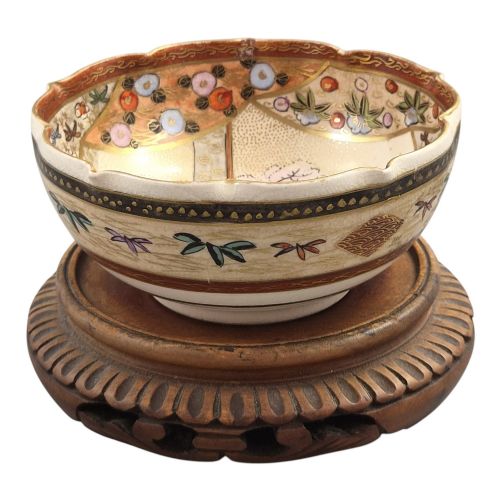
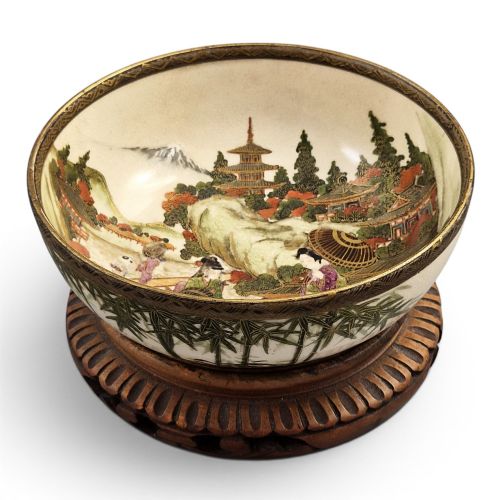
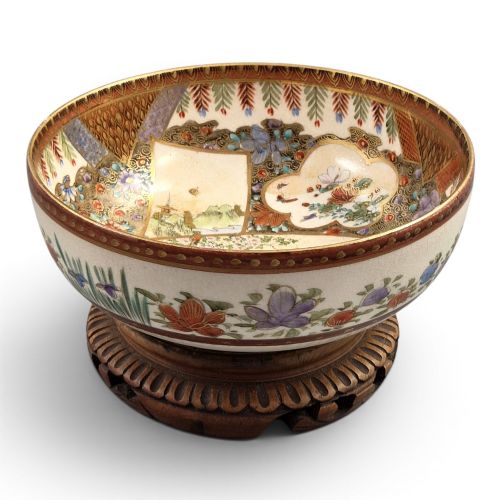
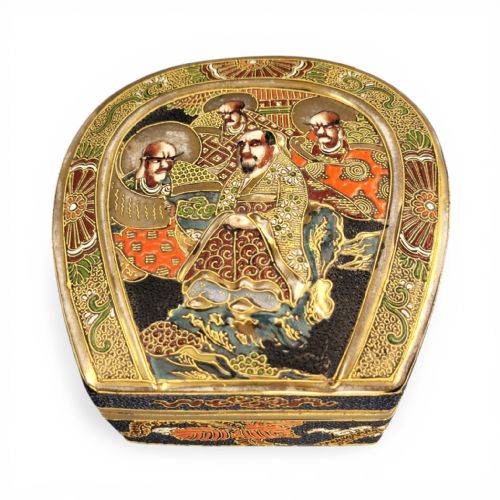
These pieces of satsuma pottery dish capture the detailed hand-painted scenes and gilded decoration characteristic of late nineteenth and early twentieth century Japanese craftsmanship.
Satsuma Pottery Dish
A satsuma pottery dish encompasses shallow bowls, decorative plates, and trinket boxes originating primarily from the Meiji period and the early twentieth century. Buyers seeking these items will find earthenware bodies decorated with intricate enamel work and gold leaf.
The selection ranges from small Kyoto bowls and thousand flowers patterns to signed pieces by notable makers like Koshida, Gyokkō, and Kinkozan. Most examples date from the nineteenth century through the Edwardian era, reflecting traditional Japanese artistic themes such as flowers and birds.
How they were made
Makers utilised earthenware as the base ceramic material, which was then painted using detailed enamel colours. Gold leaf and gilt highlights were applied to accent the complex decorative motifs.
Pieces frequently incorporate cobalt blue backgrounds alongside dense floral patterns such as millefleur designs. Signatures and the Shimazu crest were often hand-painted onto the base of the items.
Periods represented span from the nineteenth century through the Edwardian era, encompassing the Meiji and Taisho periods.
What varies in quality
The finesse of the brushwork and the density of the enamel and gold gilt decoration dictate the distinction between standard production and top-tier workshop output. Signed pieces by recognised masters display superior precision in floral and figurative painting.
The preservation of the delicate gilt work and the clarity of the underlying earthenware glaze determine the overall integrity of each dish or bowl.
Koshida·Gyokkō·Kozan·Toshozan·Kinkozan·Nikko·Hododa·Kanzan
The Satsuma Pottery Dish Glossary
- Earthenware
- A porous pottery body fired at lower temperatures, serving as the foundation for satsuma wares before glazing and decoration.
- Enamel
- Opaque glass-like paint applied to the ceramic surface to create colourful pictorial scenes.
- Gilt
- A thin layer of gold applied to surface details, enhancing the decorative richness of the piece.
- Millefleur
- A dense pattern style translating to thousand flowers, covering the entire surface of the ceramic.
- Shimazu crest
- The heraldic symbol of the Shimazu clan, frequently found marked on quality satsuma pottery.
Satsuma Pottery Dish: Frequently Asked Questions
How do I identify a Meiji period satsuma dish?
Examine the base for artist signatures and the Shimazu family crest, which appear on many pieces from this era. The style typically combines finely crackled cream-coloured earthenware with dense enamel and gold work.
Consider the subject matter and the precision of the hand-painted flowers and birds, as nineteenth-century workshop pieces show distinct artisanal control.
Were these dishes used for food?
Most surviving pieces served decorative and display purposes rather than practical dining use due to the delicate nature of the enamel and gold gilt.
Trinket boxes and shallow bowls were intended for ornamental display within interiors, reflecting the export market tastes of the late nineteenth and early twentieth centuries.
How should I care for antique satsuma pottery?
Keep these pieces away from direct sunlight and moisture to protect the fragile enamel and gold leaf decorations on the earthenware surface.
Clean them only with a soft, dry cloth and avoid liquid cleaners or abrasive materials that could damage the glaze.