



Satsuma Ceramic Bowl
Satsuma ceramic bowl pieces are finely potted earthenware vessels decorated with rich enamel and gold leaf that bring intricate Meiji period artistry to a room.
Satsuma Ceramic Bowl
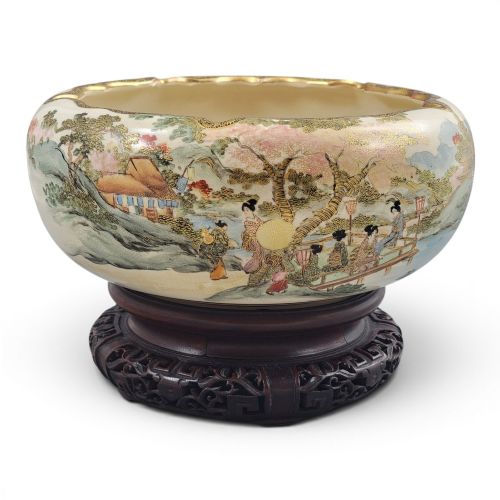
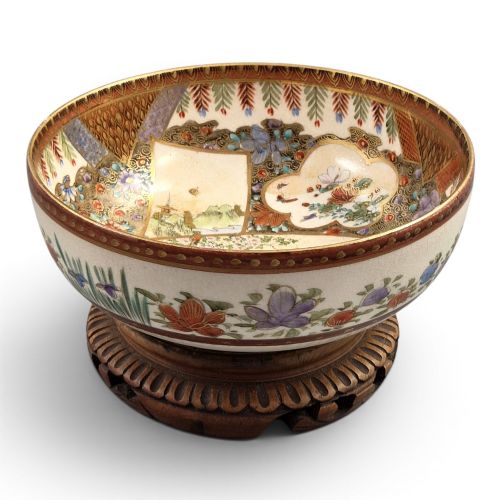
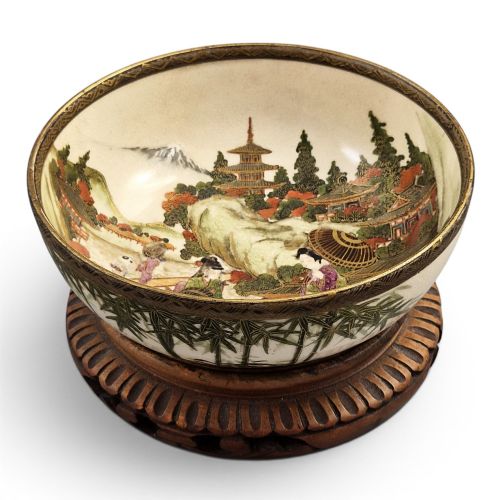
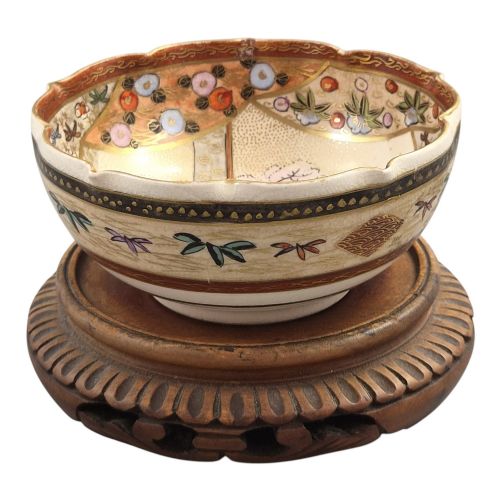
A satsuma ceramic bowl is a decorated earthenware vessel originating from Japan, most commonly encountered here from the nineteenth century and the Meiji period. These pieces range from small hanami bowls and sugar bowls to large decorative vessels, footed burner bowls, and bowls with saucers.
Makers working in Kyoto and Yokohama produced these works, employing distinct regional motifs such as floral scenes, thousand flowers patterns, cobalt blue and gilt accents, and figural narratives. The examples available on this page span periods including the nineteenth century, eighteen-eighty, the Victorian era, nineteen hundred, the Edwardian period, and nineteen twenty.
Collectors encounter various scales, from intimate footed items to monumental bowls featuring complex battle scenes or serene domestic subjects. The forms include decorative bowls, incense burners, and matched saucers created during the Meiji and Taisho periods.
What varies in quality
Quality in a satsuma ceramic bowl rests on the precision of the enamelwork and the fineness of the gold leaf application. Finer examples display meticulous control over complex scenes, such as samurai battles or dense floral millefleur patterns, executed by recognised studio masters.
The sophistication of the potting and the clarity of the crackle glaze further distinguish superior pieces from standard production. Signed works by established makers demonstrate a higher level of artistic ambition in both composition and detail.
Satsuma Ceramic Bowl Retail Price Guide 2026
Typical asking prices for satsuma ceramic bowl among the pieces listed under this phrase on Sellingantiques today, from the lower quarter to the upper quarter. They describe what is for sale here now, not the wider market.
Listings feature earthenware materials enhanced with enamel, gold leaf, and wood across nineteenth-century, Edwardian, and Taisho periods.
Kozan·Shizan·Ryuzan·Kinkozan·Nikko·Hododa·Shozan
The Satsuma Ceramic Bowl Glossary
- Earthenware
- Porous ceramic pottery fired at lower temperatures, serving as the traditional body for satsuma ware before glazing and decoration.
- Enamel
- Opaque or translucent glass-like material melted onto the pottery surface to create colourful pictorial designs.
- Gilt
- A thin layer of gold or gold-like material applied to embellish rims, backgrounds, and specific motifs.
- Shimazu crest
- The traditional mon or badge of the Shimazu clan, frequently found on higher-quality satsuma pieces associated with the Satsuma domain.
- Millefleur
- A decorative pattern densely packed with countless tiny painted flowers covering the entire surface of the bowl.
Satsuma Ceramic Bowl: Frequently Asked Questions
What is a satsuma ceramic bowl?
A satsuma ceramic bowl is a traditional Japanese earthenware vessel characterised by a fine, crackled glaze and elaborate polychrome enamel and gold leaf decoration. These pieces were produced primarily during the nineteenth and early twentieth centuries.
Craftsmen in regions such as Kyoto and Yokohama painted intricate scenes of flora, figures, and historical narratives onto the ceramic body, often finishing them with signatures and clan crests.
How do I live with a satsuma ceramic bowl?
Living with a satsuma ceramic bowl involves placing it away from direct sunlight and areas of high humidity to protect the delicate enamels and gold leaf. A stable shelf or cabinet allows the detailed painted scenes to be viewed safely.
Handle these earthenware vessels with clean, dry hands, supporting the base rather than the rim, as the historic body and glaze benefit from gentle care.
How do I tell periods apart?
Distinguishing periods relies on observing stylistic shifts, maker signatures, and the specific materials or regional attributes recorded in the piece. Nineteenth century and Meiji period works often feature dense hand-painted gold and enamel compositions from renowned Kyoto studios.
Later pieces from the Edwardian era, nineteen hundred, or the Taisho period reflect evolving manufacturing techniques and slightly different decorative conventions while retaining the core earthenware tradition.