


Satsuma Pottery Bowls
Satsuma pottery bowls bring intricate Japanese artistry to a room, offering finely painted scenes in enamel and gold leaf that collectors prize for their intricate detail.
Satsuma Pottery Bowls
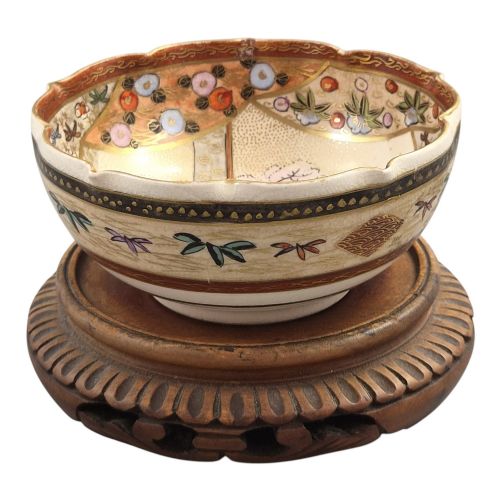
When you search for satsuma pottery bowls, you encounter earthenware vessels originating primarily from the Meiji period and the early twentieth century. These pieces encompass forms ranging from small decorative bowls and sugar bowls to large display pieces and footed burners.
The objects frequently hail from Kyoto studios, with makers often signing their work alongside the Shimazu crest. Buyers on this page will most commonly find nineteenth century and Edwardian examples featuring traditional Japanese motifs.
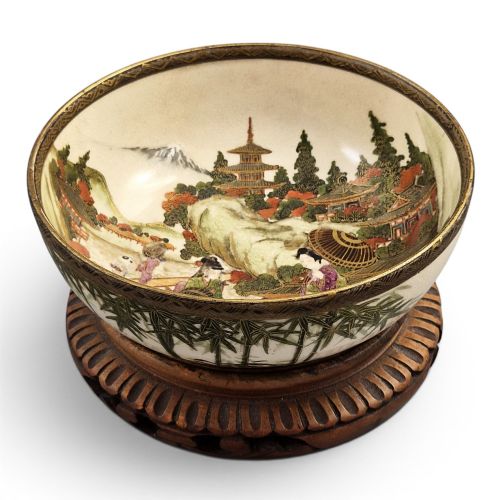
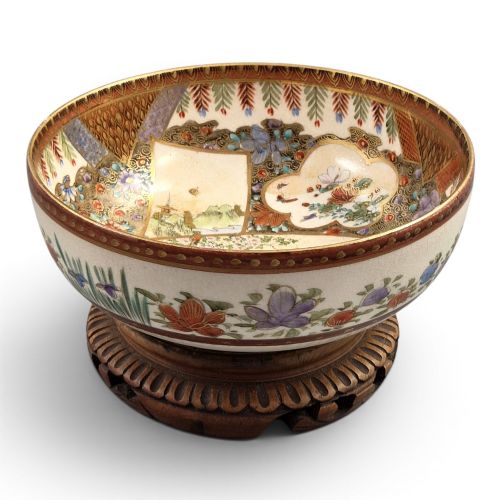
Many items display complex natural scenes, including flowers, birds, and figural compositions involving samurai. The physical scale varies from intimate finger bowls to monumental decorative bowls.
How they were made
The makers formed these vessels using earthenware clay, which was then painted with detailed enamel designs. Artisans applied gold leaf and gilt highlights to accentuate specific elements of the surface decoration.
Many workshops utilised wood for auxiliary components or presentation elements associated with the ceramics. The glazing technique often involved intricate crackle patterns unique to this tradition of pottery.
Several bowls manage to squeeze an entire moonlit samurai battle onto a surprisingly small ceramic surface.
What varies in quality
The distinction between standard and exceptional pieces rests upon the precision of the enamel work and the complexity of the painted subject matter. Finer examples display meticulous brushwork in depicting flowers, birds, or narrative scenes like samurai battles.
The presence of a recognised signature, such as those from Kyoto studios or specific makers like Kinkozan and Ryuzan, elevates the standing of a piece. Furthermore, the extensive application of gold gilt and the preservation of the delicate earthenware surface dictate the relative standing of individual bowls.
Gyokkō·Kozan·Ryuzan·Kinkozan·Nikko·Hododa·Shozan
The Satsuma Pottery Bowls Glossary
- Earthenware
- Porous pottery fired at relatively low temperatures. It forms the ceramic body of these bowls before enamel and gold decoration is applied.
- Enamel
- Opaque glass paste fused to the ceramic surface through firing. It provides the vibrant colours seen in floral and figural motifs.
- Shimazu crest
- The heraldic symbol of the Shimazu clan. It frequently appears on satsuma wares produced in association with their domain.
- Meiji period
- The era of Japanese history lasting from 1868 to 1912. Much of the output seen here dates from this time of intense artistic production.
Satsuma Pottery Bowls: Frequently Asked Questions
Where were satsuma bowls made?
These bowls originated in Japan, with notable production centres located in Kyoto and Yokohama during the nineteenth and early twentieth centuries.
Studios in these regions produced wares specifically for export as well as domestic appreciation.
What motifs appear on them?
Common subjects include natural elements such as flowers and birds, alongside narrative scenes featuring samurai.
Artists utilised detailed enamel and gold gilt to bring these complex compositions to life across the earthenware surface.
How do I identify the period?
Dating relies on stylistic markers associated with the Meiji period, Edwardian era, and Taisho period, alongside specific maker signatures.
Studio marks and the presence of the Shimazu crest offer further clues to the chronological origin of a piece.
Are all pieces signed?
Many of the finer examples bear signatures or artist seals, often painted directly onto the base alongside studio names like Kinkozan.
Unsigned items also appear, reflecting standard workshop production methods of the late nineteenth century.