






Meiji Japanese Imari
Meiji Japanese Imari ceramics bring vibrant cobalt and iron red decoration into domestic spaces, prized for their rich patterns and substantial presence.
Meiji Japanese Imari
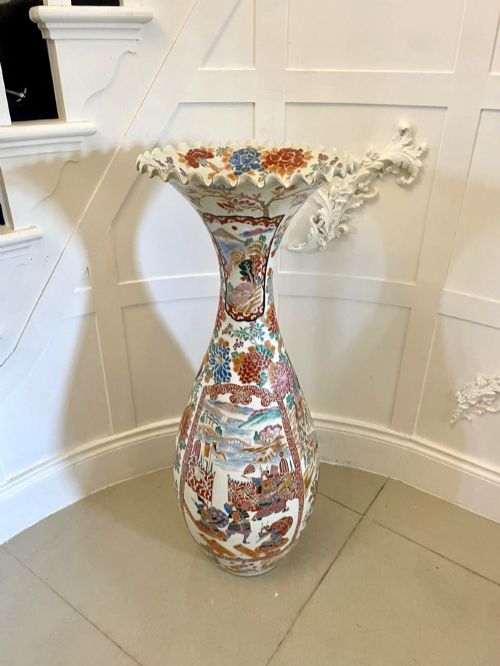
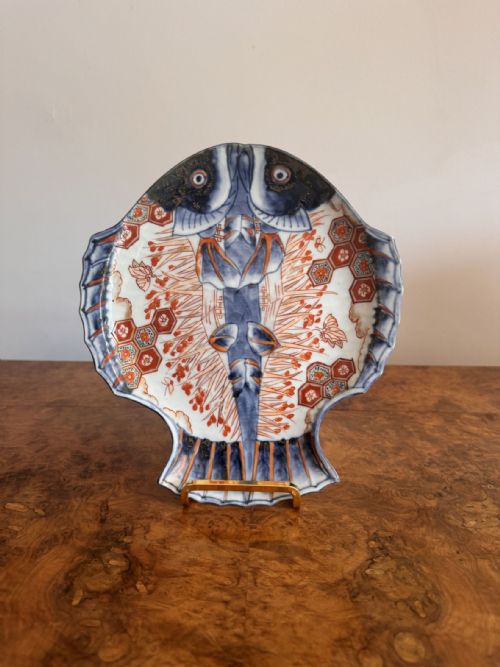
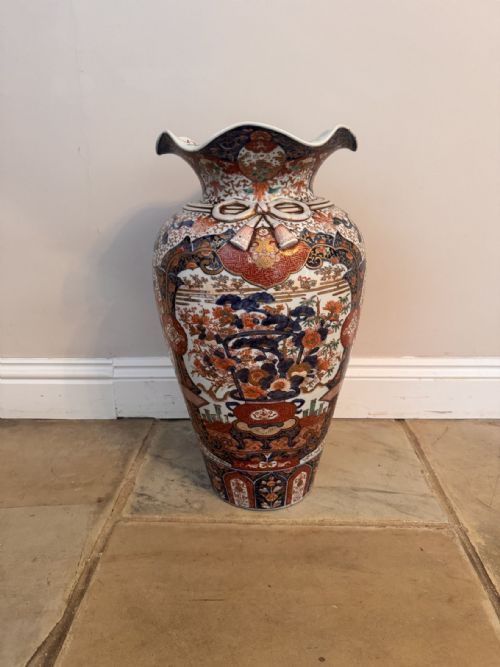
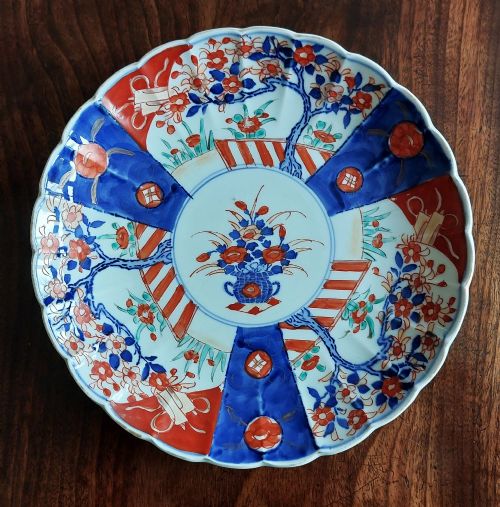
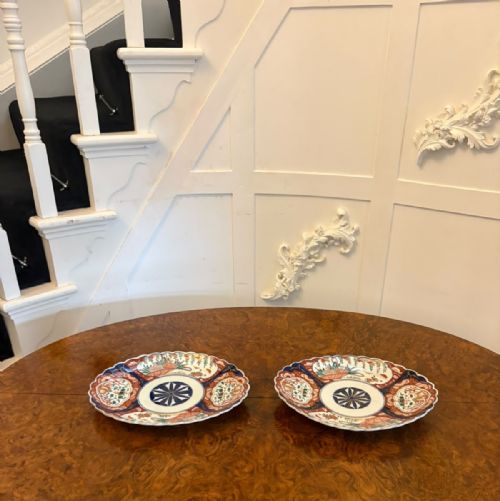
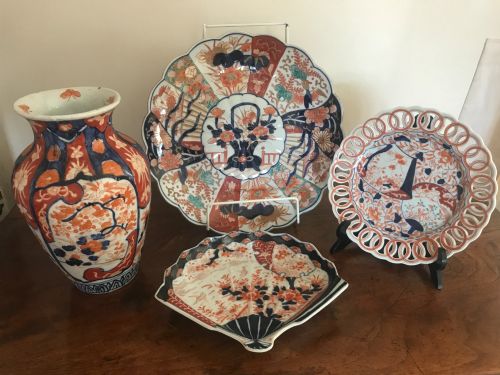
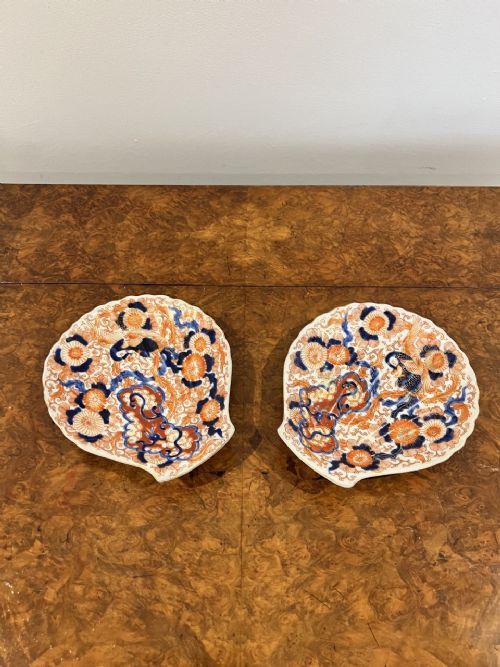
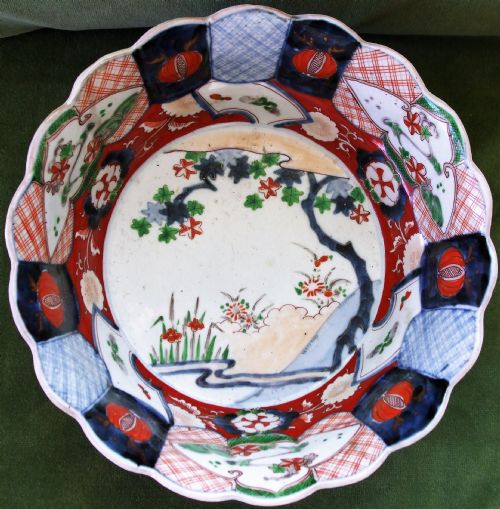
Meiji Japanese Imari items span a variety of decorative forms, with plates, chargers, bowls and vases dominating the selection. Pieces often adopt imaginative shapes such as fish, shells, treasure boats and double gourd silhouettes alongside traditional round profiles.
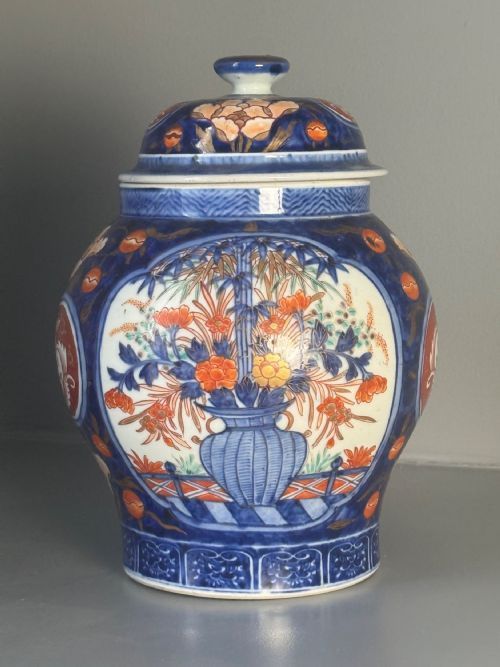
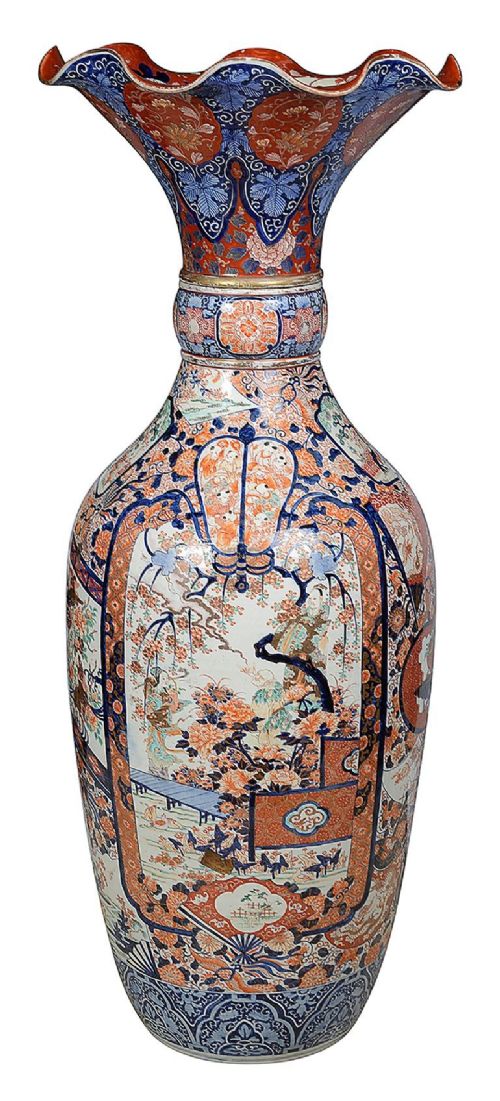
Most examples originate from the Meiji period in the late nineteenth and early twentieth centuries, drawing upon earlier Edo traditions associated with the Arita kilns. Floor standing vases and large covered jars represent the more ambitious scale of output from this era.
How they were made
Potters shaped ceramic clay into porcelain bodies before applying cobalt underglaze details to the raw surface. Firing fixed the blue pigments beneath a clear ceramic glaze that protected the underlying material.
Artisans added enamel colours and gilt or gold leaf over the glaze in subsequent low temperature firings. This secondary decoration introduced the characteristic iron red and metallic highlights layered across the design.
Listings feature porcelain forms ranging from small sencha tea cups and biscuit barrels to monumental floor standing vases over a metre high.
What varies in quality
The precision of the brushwork and the complexity of the palette define the upper tier of production. Exemplary pieces display tightly controlled underglaze cobalt paired with meticulously applied enamel and gilding.
Form and scale also dictate distinction, separating standard domestic vessels from exhibition pieces and ambitious sculptural models like pagodas, rabbits and large floor vases.
Fukagawa·Koransha factory·Ginshōtei Gyokushi
The Meiji Japanese Imari Glossary
- Imari palette
- A distinct decorative scheme utilising underglaze cobalt blue and iron red overglaze enamel, frequently accented with gilding. This combination creates the high contrast aesthetic typical of the style.
- Arita
- The Japanese town and surrounding region central to the production of Japanese porcelain. Kilns here manufactured the bodies subsequently decorated in the Imari style.
- Charger
- A large decorative plate intended for display rather than table service. These pieces provide an expansive surface for complex pictorial and geometric motifs.
- Double gourd
- A vessel shape resembling two stacked bulbous spheres inspired by the natural fruit. The profile appears in vases and bottles within the ceramic repertoire.
- Enamel
- Coloured glass powder fused to the ceramic surface during a secondary low temperature kiln firing. It supplies the vibrant reds, greens and other non-blue hues to the design.
Meiji Japanese Imari: Frequently Asked Questions
How do I identify Meiji period pieces?
Meiji period ceramics typically date from the late nineteenth to early twentieth centuries, aligning with the reign of Emperor Meiji. The era is distinguished by intensive export production and complex decorative layering.
Items from this time often combine traditional Arita forms with dense pictorial compositions in the classic Imari palette. Examination of the porcelain body and the wear on the overglaze enamels helps confirm the period.
Were these pieces used for dining?
While some smaller dishes served functional roles in domestic settings, the majority of larger plates, chargers and vases were created for display. Their intricate enamel and gold leaf decoration made them unsuited for heavy daily use.
Export demand in the West encouraged the manufacture of decorative items intended to adorn mantelpieces, cabinets and walls. Even smaller bowls often functioned as ornamental table pieces rather than tableware.
What is the difference between Arita and Imari?
Arita refers to the geographic production centre in Japan where the porcelain clay was mined and fired. Imari describes the decorative style and the port town from which these ceramics were shipped abroad.
All Imari porcelain produced in the region originated from Arita kilns, but not every Arita ceramic utilised the Imari palette of blue, red and gold. Understanding this distinction clarifies how makers and regional traditions overlap.
How should I display large floor vases?
Large floor vases require stable placement away from heavy foot traffic to protect their substantial ceramic bodies. Positioning them directly on the floor or on low sturdy stands highlights their impressive height.
Adequate natural light helps reveal the detailed cobalt underglaze and gilt highlights across the surface. Maintaining clearance around the vessel ensures the complex patterns remain fully visible from multiple angles.