


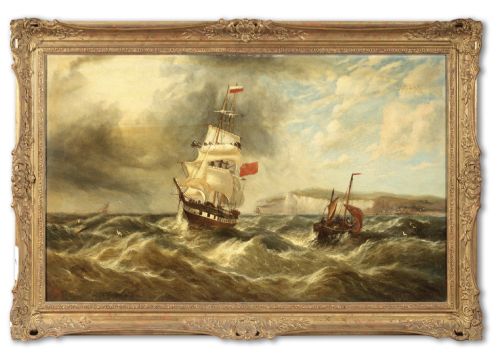
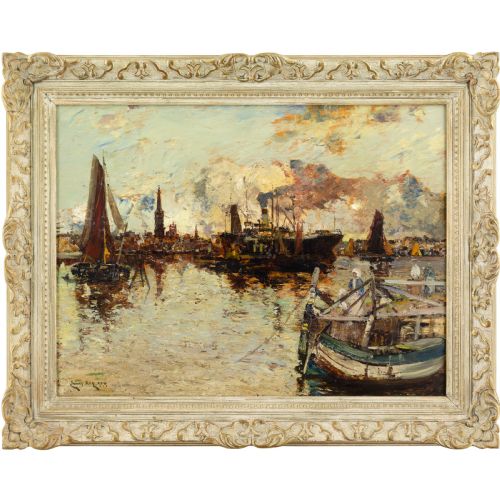
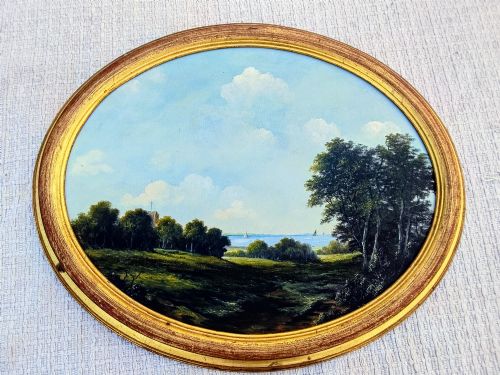
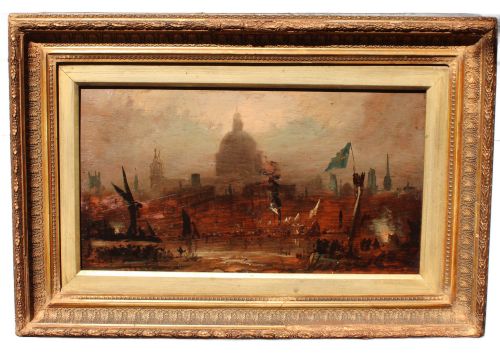
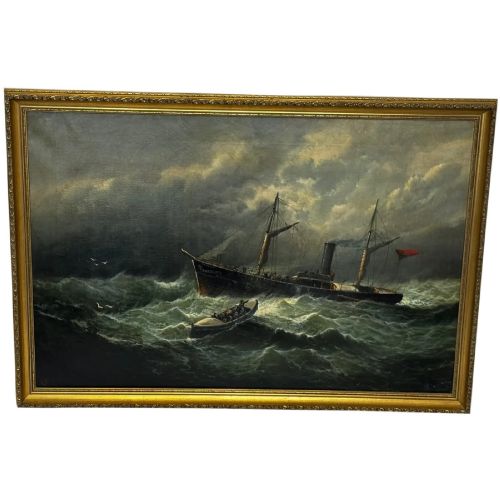
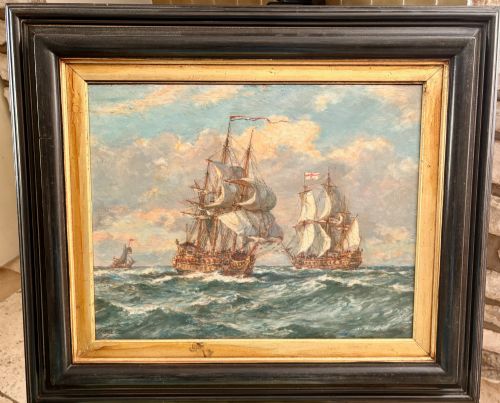
Maritime Oil Canvas Painting
These maritime oil canvas painting works capture the power of the sea, and you are looking for an authentic piece of naval history to anchor a room.
Maritime Oil Canvas Painting
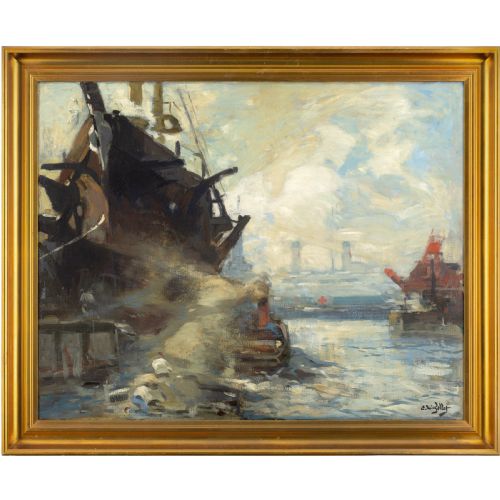
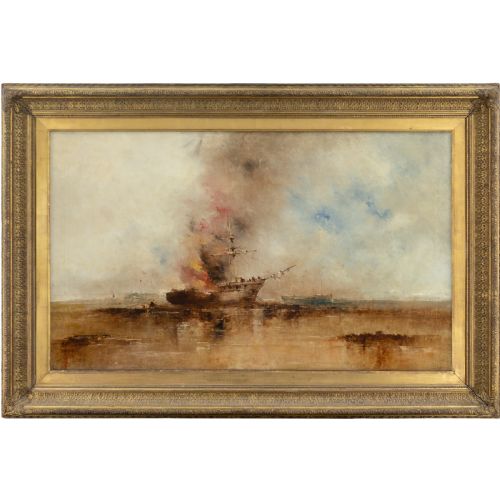
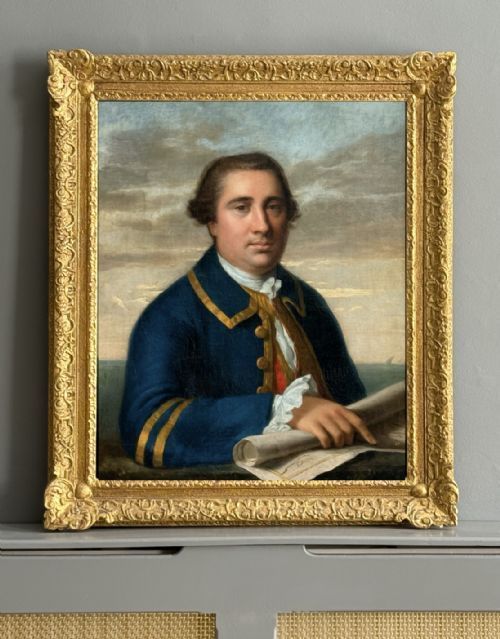
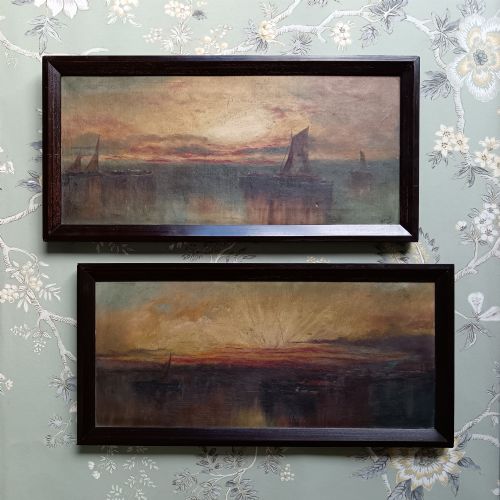
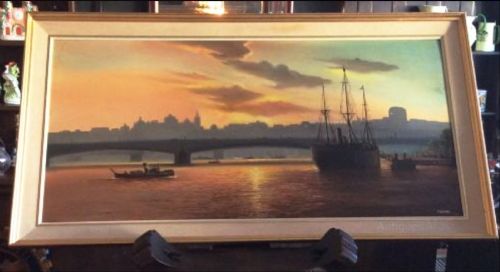
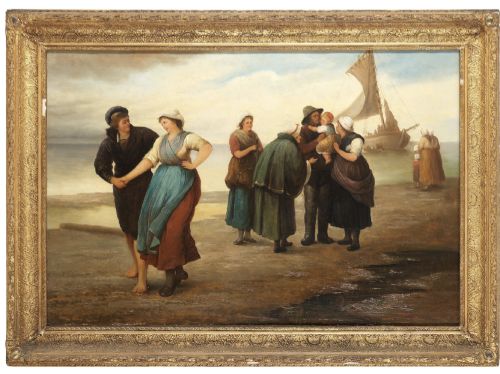
A maritime oil canvas painting brings the movement of water and the history of shipping directly onto the wall, ranging from bustling river scenes on the Thames to dramatic shipwrecks in heavy seas. You will encounter nineteenth-century canvases alongside Edwardian depictions of coastal life and mid-century harbour views.
The subjects stretch from merchant vessels and naval battles to quiet coastal landscapes and Venetian lagoons. Most works record specific vessels, ports, or historical moments, painted by artists who observed maritime trade and coastal weather firsthand.
Materials and methods
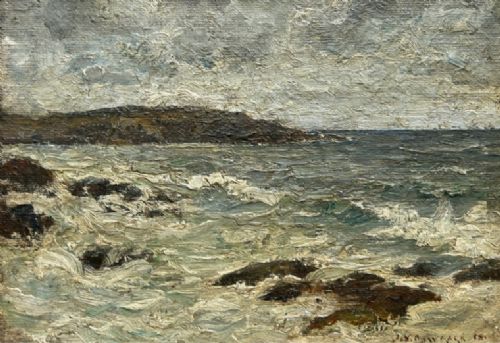
Artists built these images using oil paint applied to stretched canvas or wood panels, often housed in heavy giltwood frames embellished with gold leaf. The medium allowed painters to build rich textures, from thick impasto waves to translucent glazes over grey skies.
Preparation of the canvas involved priming with gesso to hold the oil paint stable over decades. Frames were constructed from carved wood, providing structural support and visual depth to the marine compositions.
Listings feature works spanning from the seventeenth century through the Victorian era to post-war Britain, executed in oil on canvas and panel.
Distinctions in quality
Quality rests in the artist's command of light, atmosphere, and maritime architecture. Superior works render the weight of water and the rigging of vessels with anatomical precision, while lesser pieces rely on formulaic waves and stiff hulls.
The handling of paint creates the division between a standard record and a compelling artwork. Skilled painters capture the shifting mood of a gale or the reflection of sunset on a harbour through confident brushwork rather than rigid outlines.
LEMUEL FRANCIS ABBOTT·Eugène-Louis Gillot·William McAlpine·Francis Moltino·John Wilson Carmichael·Bernard Gribble·Bonaventura Peeters
The Maritime Oil Canvas Painting Glossary
- Impasto
- Paint applied thickly to a canvas, standing out from the surface so that the marks of the brush or palette knife remain visible. This technique adds tactile dimension to turbulent seas and clouds.
- Giltwood
- Wood carved and covered with a thin layer of gold leaf or gold paint. Frames of this material are frequently paired with nineteenth-century marine works.
- Barque
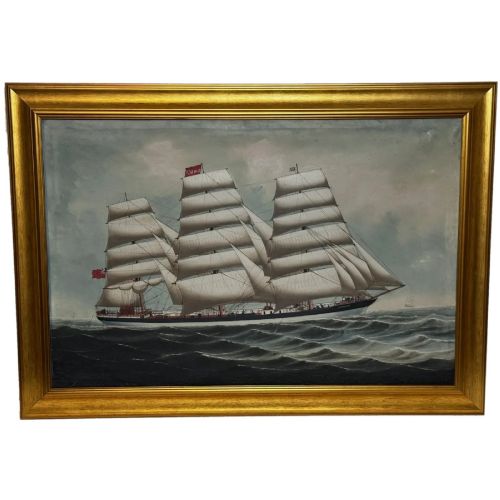
- A sailing vessel with three or more masts, where the aft mast is rigged fore-and-aft and the others are square-rigged. These ships appear frequently in historical coastal art.
- Seascape
- A work of art depicting the sea, coastlines, or ships in open water. It forms the primary genre for this category of painting.
Maritime Oil Canvas Painting: Frequently Asked Questions
How do I date a maritime oil painting?
Dating relies on the rigging of the depicted vessels, the clothing of any figures, and the style of the canvas stretcher and frame. Maritime historians often date a work by identifying the specific ship or naval uniform shown.
Technological details, such as the transition from sail to steam, provide firm historical boundaries for the scene. Comparative study of the artist's known exhibition dates also helps narrow the period.
Where should I hang a marine painting?
These works demand a wall with stable humidity and indirect light to protect the oil paint and gilt frame from degradation. Placing them away from direct heat sources prevents the canvas from slackening.
Many collectors pair them with traditional wooden furniture or neutral walls that allow the deep blues and greys of the water to stand out. Proper lighting enhances the texture of impasto waves.
What is the difference between marine and maritime art?
Marine art focuses primarily on the sea itself, coastal views, naval battles, and ships navigating open water. It privileges the water and atmospheric conditions above all else.
Maritime art encompasses a broader range of subjects, including port scenes, dockyards, river trade, and harbour towns. Both categories overlap heavily within nineteenth-century painting.
How do I identify unsigned marine paintings?
Unsigned works are attributed by comparing the handling of water, sky, and vessel architecture to documented works by known painters. Harbour landmarks and shipping registries often provide clues to the geographic location.
Exhibition labels, old gallery stamps on the reverse of the canvas, and framing styles frequently offer secondary evidence for attribution.