
Marble Inlay Table
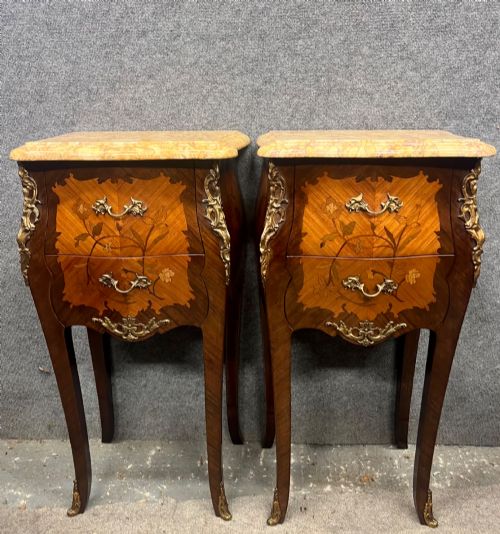
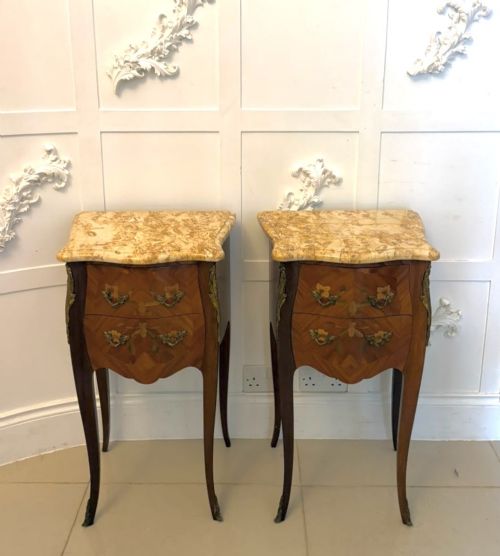
These marble inlay table designs combine stone tops with wood frames, offering functional surfaces for lamps and display.
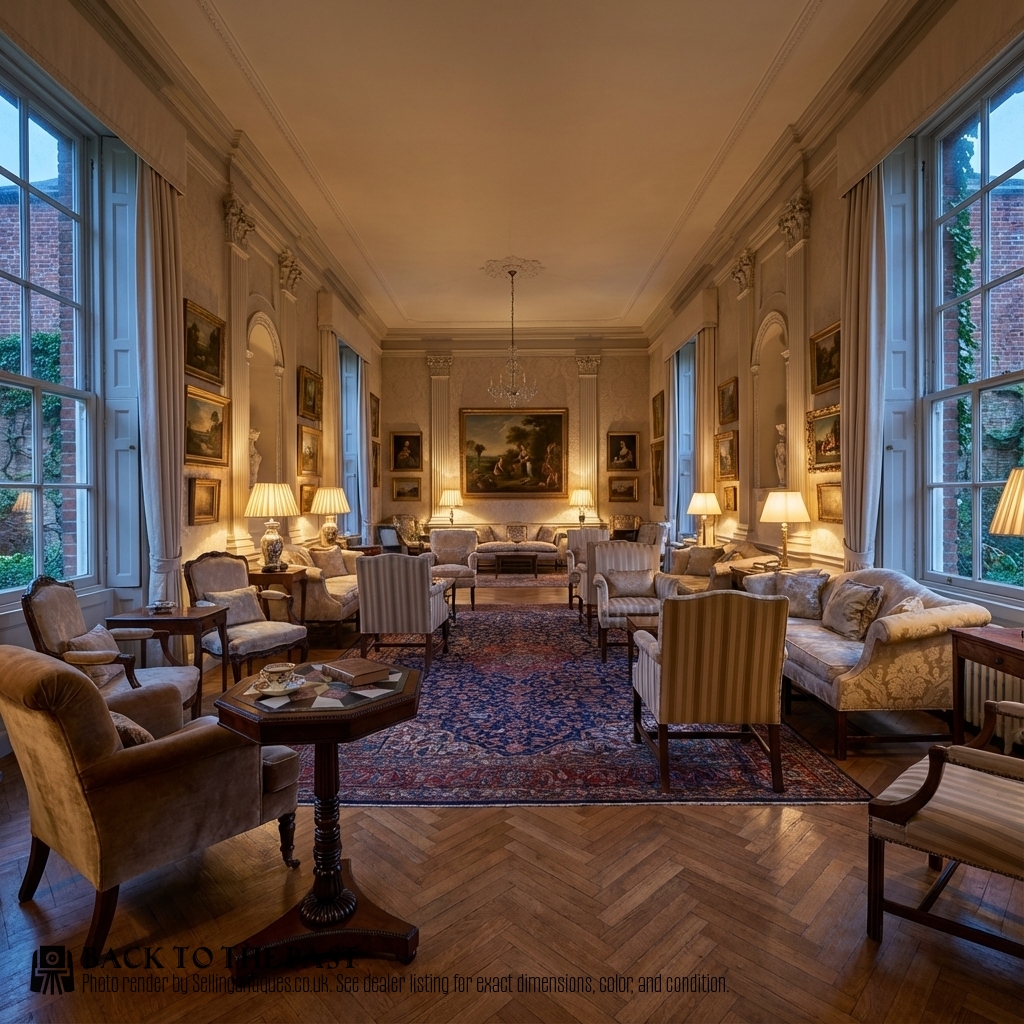
Marble Inlay Table
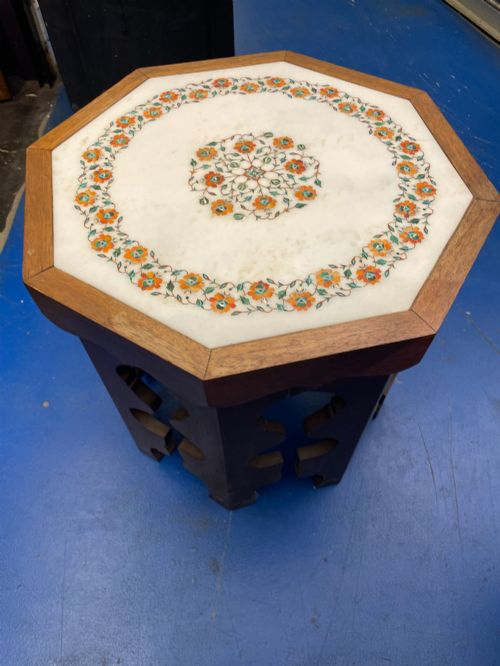
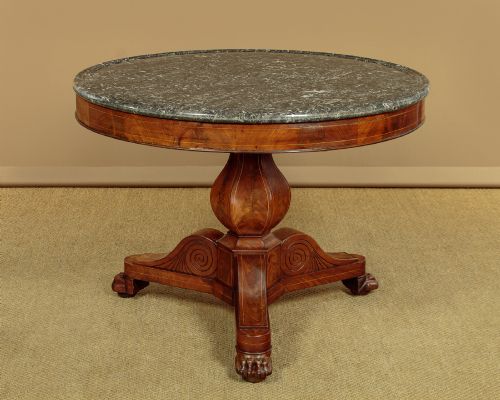
A marble inlay table brings together dense stone tops and timber frames, featuring prominently in forms such as centre tables, bedside tables, and occasional tables. These pieces span the nineteenth century, Regency, and Edwardian periods, reflecting diverse stylistic influences from Victorian and French Louis XV aesthetics to Anglo-Indian design.
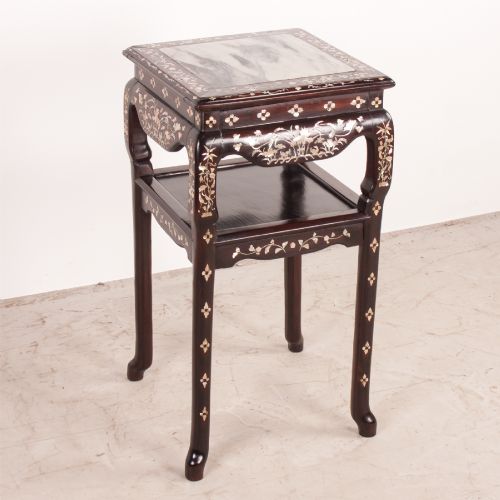
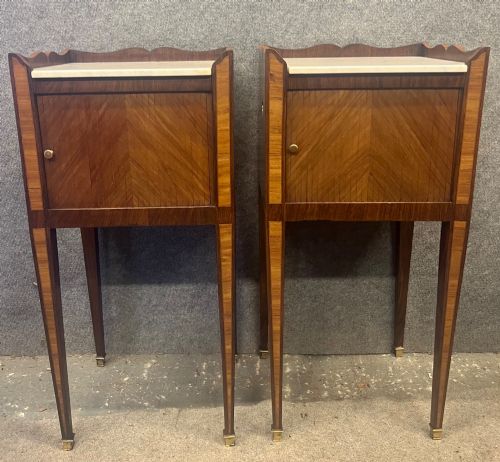
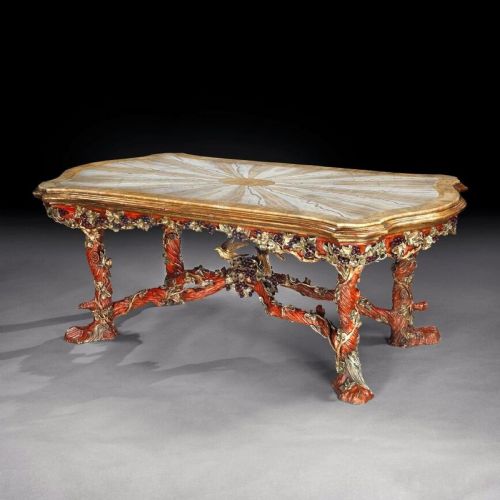
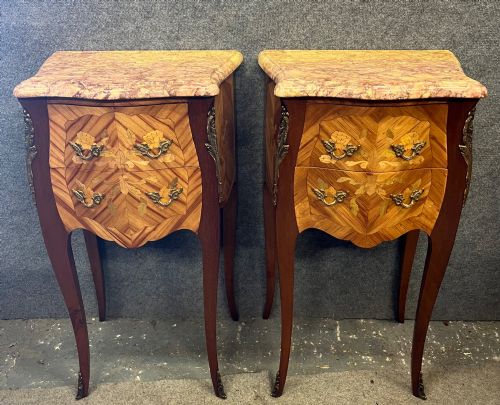
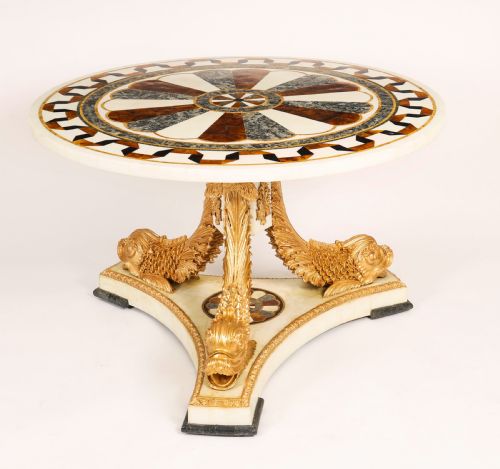
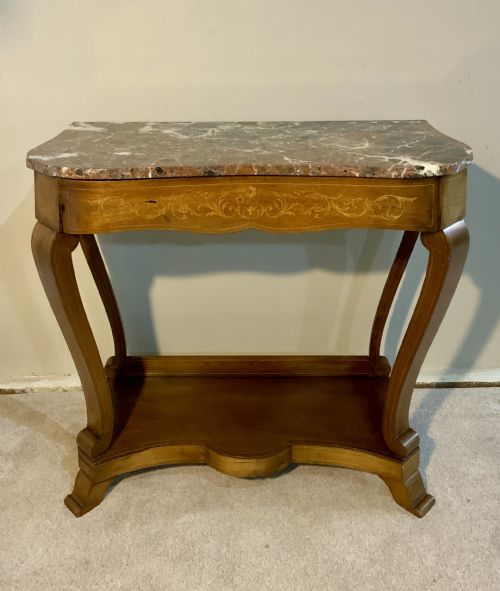
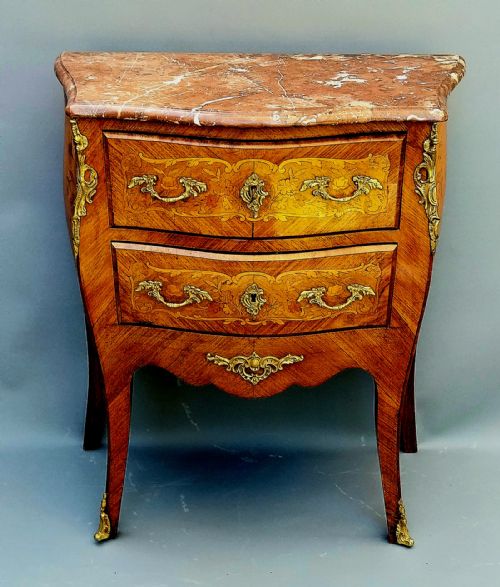
Buyers encounter variations ranging from grand Italian centrepieces with specimen marble to intimate bedside chests and lamp tables. The selection includes occasional tables paired with mother-of-pearl work and console tables incorporating brass or walnut support structures.
The underlying architecture relies on traditional cabinet-making timbers, including mahogany, walnut, rosewood, and kingwood, often enhanced by parquetry or marquetry details. These tables serve practical functions in domestic spaces while displaying distinct regional crafting traditions.
Materials and Construction Methods
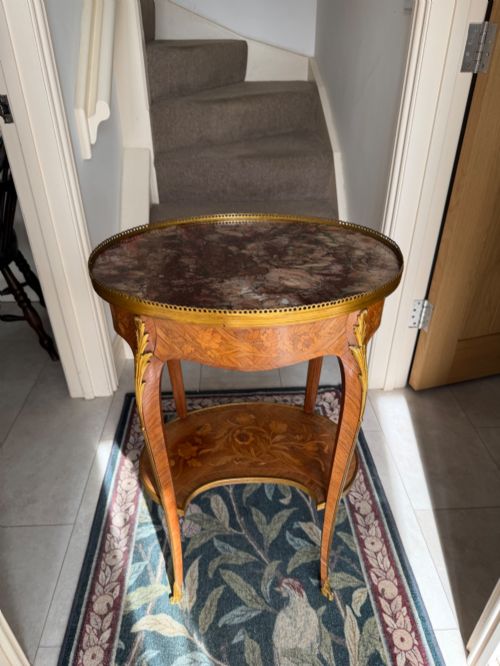
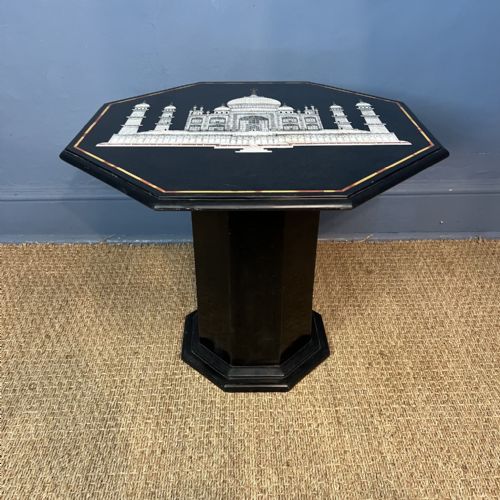
Makers set natural marble, onyx, or specimen stone slabs into solid wood frameworks of mahogany, walnut, rosewood, and kingwood. These stone surfaces often feature meticulous inlay work, geometric specimen arrangements, or pietra dura mounts.
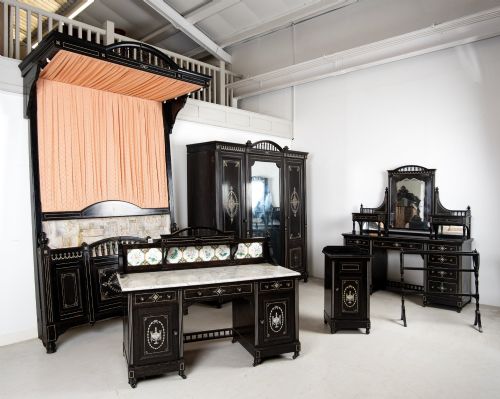
Woodwork construction employs traditional joinery, complemented by marquetry, parquetry, and brass or ormolu mounts. Ebonised finishes and polychrome carved wood details frequently accent the primary timbers.
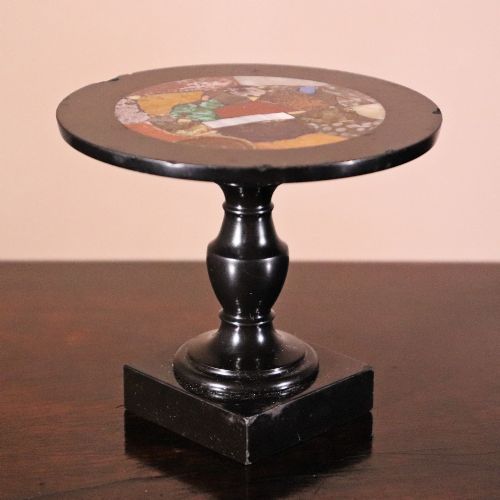
A miniature Ashford specimen marble table proves that even nineteenth-century geologists needed somewhere small to rest their tea.
Assessing Quality and Execution
Quality rests in the precision of the stone cutting and the tightness of the inlay work within the marble surface. Superior examples demonstrate seamless integration between the heavy stone top and the supporting timber frame, maintaining structural stability without excess reinforcement.
The refinement of the secondary woods, such as satinwood or kingwood used in the marquetry, dictates the grade of the piece. Hand-carved elements, crisp brass or ormolu mounts, and balanced proportions separate standard domestic tables from finer exhibition-grade examples.
Amleto Bertoni
The Marble Inlay Table Glossary
- Specimen marble
- A decorative top assembled from multiple small pieces of different coloured marbles arranged in geometric or pictorial patterns. This technique demands high skill from the stonecutter.
- Pietra dura
- An artistic inlay technique using cut and fitted polished coloured stones to create pictorial images. It appears frequently on panels and tabletops.
- Marquetry
- Decorative veneer applied to furniture in patterns involving different woods, metals, or shells. It creates pictorial or abstract designs across the surface.
- Gueridon
- A small circular table supported by one or more columns or figures. Originating in France, these often feature marble tops.
- Ormolu
- Gilt bronze mounts applied to furniture for decoration. High-quality pieces show crisp chasing and bright gilding.
Marble Inlay Table: Frequently Asked Questions
How do I clean a marble table top?
Use a soft cloth dampened with warm water and mild, pH-neutral soap to wipe the surface gently. Avoid acidic cleaners, vinegar, or abrasive pads that can etch or dull the stone.
Dry the marble thoroughly after washing to prevent water spots. Applying a suitable stone sealer periodically helps protect the polished finish from spills.
Are these tables sturdy enough for daily use?
Most tables utilise robust timbers like mahogany, walnut, or oak to support heavy stone tops safely. Their weight provides inherent stability against tipping during normal domestic activities.
Care should be taken when moving them, as the heavy marble top is usually set loose or pinned lightly into the wooden frame rather than permanently fixed.
What is the difference between specimen marble and standard marble?
Standard marble tops consist of a single slab of stone with natural veining and colour variation. Specimen marble involves cutting and fitting numerous distinct mineral varieties into a composite geometric design.
Tables with specimen marble typically require more intricate labour, often representing specific regional production centres like Ashford or Italian workshops.
How do I identify a Regency period table?
Regency tables often incorporate classical architectural motifs, such as reeded legs, brass inlay, and rosewood or mahogany veneers. Proportions lean toward clean lines inspired by ancient Roman and Greek designs.
Construction details, such as secondary timbers and hand-cut joinery, help confirm the early nineteenth-century date alongside the characteristic hardware of the era.