




Victorian Specimen Marble Table
These victorian specimen marble table pieces combine dense geological stone tops with rich timber bases to anchor a room.
Victorian Specimen Marble Table
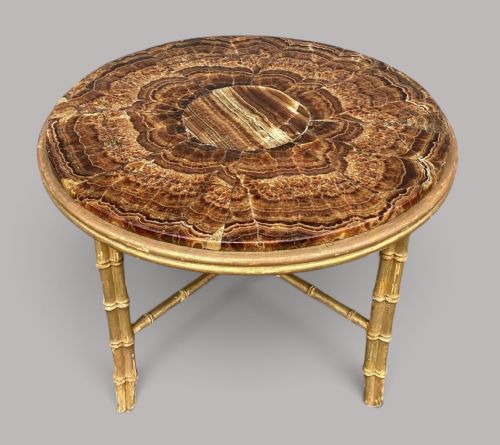
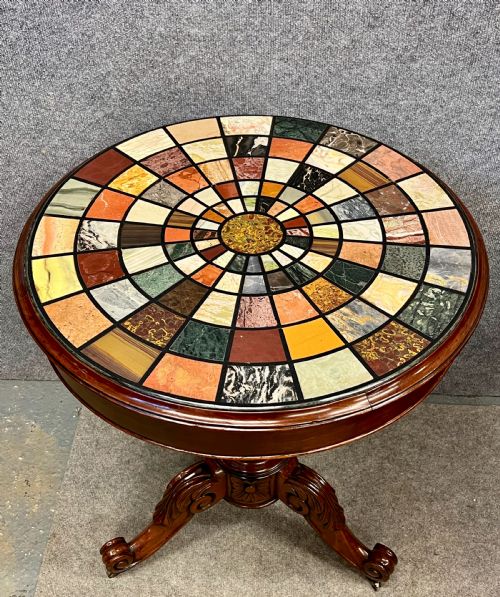
A victorian specimen marble table brings together a multi-coloured stone top and a supportive timber base, typically configured as a circular occasional table, a centre table, or a smaller side table. The tops display geometric arrangements or pictorial pietra dura insets gathered during travels abroad.
Most examples found here date from the nineteenth century, reflecting the Victorian taste for classical antiquity and the Grand Tour. Buyers frequently encounter circular occasional tables featuring inlaid geometric borders and central star motifs.
Construction and materials
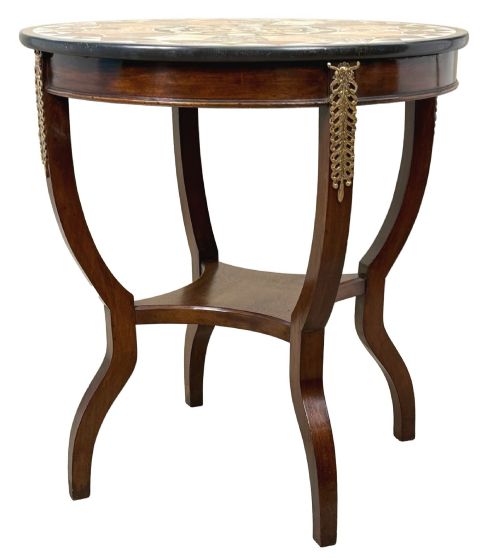
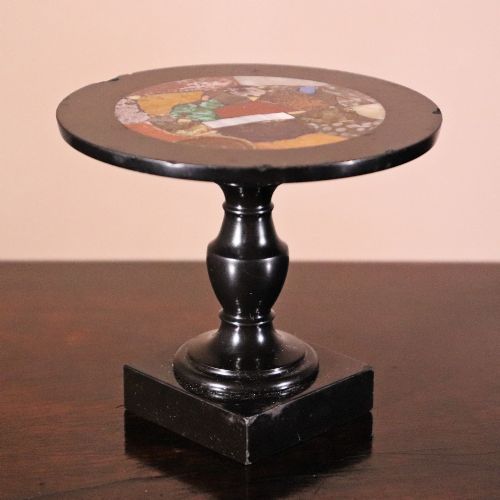
Tops are constructed by closely fitting numerous small shards of diverse marbles and mineral specimens into a slate or stone base, secured with specialist adhesives and polished to a smooth surface. Timber frames in mahogany, walnut, oak, and giltwood provide sturdy support, often featuring carved supports or turned pedestals.
Cabinetmakers matched these heavy stone veneers to robust hardwood bases, sometimes incorporating brass mounts or giltwood accents to complement the varied colours of the mineral insets.
The inventory records pieces linked to the Grand Tour alongside specific nineteenth-century English cabinetmaking workshops.
Assessing quality
Quality depends on the precision of the stonecutting and the complexity of the geometric or pictorial composition within the marble top. Tightly fitted specimen pieces with minimal visible grout lines represent finer workmanship.
The supporting timber frame indicates overall grade, with substantial mahogany or walnut structures, crisply carved details, and stable pedestals elevating the status of the piece above standard production.
James Shoolbred·Woodley family
The Victorian Specimen Marble Table Glossary
- Specimen marble
- A decorative top composed of many small pieces of different coloured marbles and stones arranged in patterns. These fragments demonstrate the variety of geological materials collected during the nineteenth century.
- Pietra dura
- An artistic technique using cut and fitted polished coloured stones to create pictorial images. It appears on select table tops to depict floral or geometric designs.
- Grand Tour
- A traditional trip of Europe undertaken by upper-class young European men of means. This travel spurred the acquisition of antique marbles and inlaid tables.
- Centre table
- A freestanding piece designed to be viewed from all sides in the middle of a room. These tables often feature circular specimen tops supported by heavy pedestals.
- Occasional table
- A small, portable table used for specific functions rather than permanent placement. They frequently serve as lamp or display stands in Victorian interiors.
Victorian Specimen Marble Table: Frequently Asked Questions
What is a victorian specimen marble table?
A victorian specimen marble table is a nineteenth-century furniture piece featuring a decorative stone top made from multiple inlaid marble shards. These tables were designed for display in principal rooms.
The sturdy wooden bases support heavy stone surfaces, combining structural timber craftsmanship with intricate geological specimens.
How were these tables used originally?
Original owners used these tables as centrepieces in reception rooms or as occasional stands for lamps and decorative objects. They served as conversation pieces that displayed the owner's travel and cultural pursuits.
Smaller miniature or games versions provided specialised surfaces for chess or intimate parlor use, while larger centre tables anchored formal drawing rooms.
How do I care for a specimen marble top?
Protect the polished stone surface by using coasters and avoiding acidic liquids that can etch marble. Dust the top regularly with a soft, dry cloth.
Treat the wooden base with appropriate furniture wax while keeping the stone clean and free from moisture to preserve the polished finish.
How can I tell the period?
Dating relies on examining the timber construction methods, edge moulding profiles, and the style of the base supports. Nineteenth-century pieces typically exhibit specific revival styles and hand-turned pedestals.
The combination of dense slate-backed stone insets and native hardwoods such as mahogany or walnut further confirms the Victorian manufacturing era.