
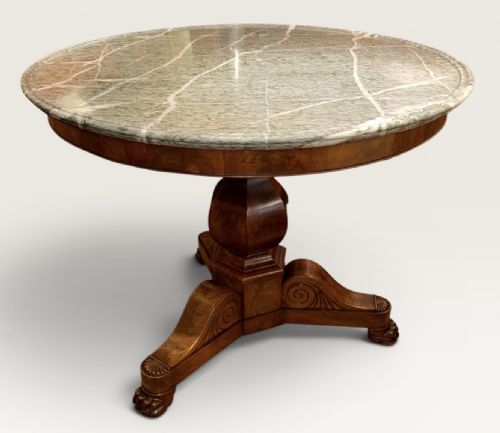


Empire Gueridon Table
An empire gueridon table provides a striking circular centrepiece, bringing classical French proportion and heavy timber warmth to a room.
Empire Gueridon Table
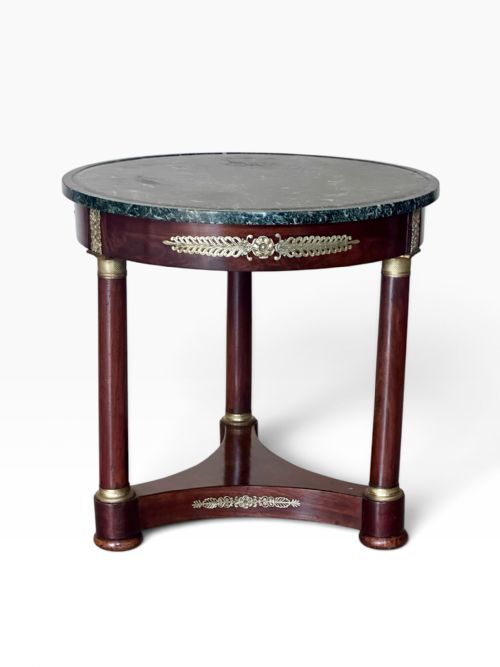
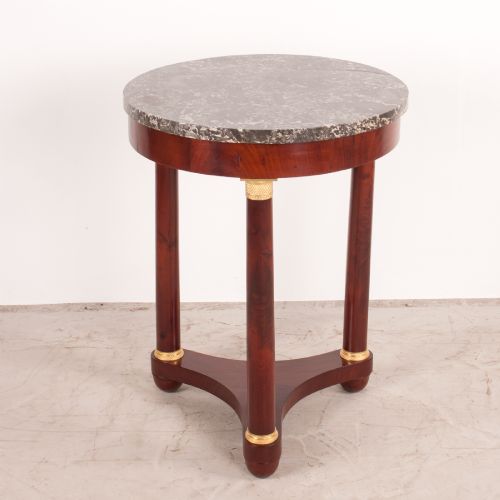
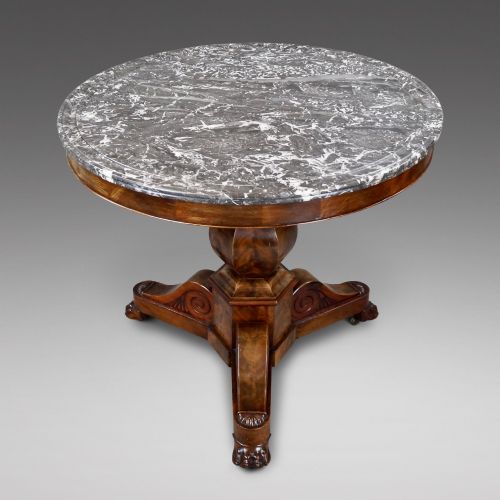
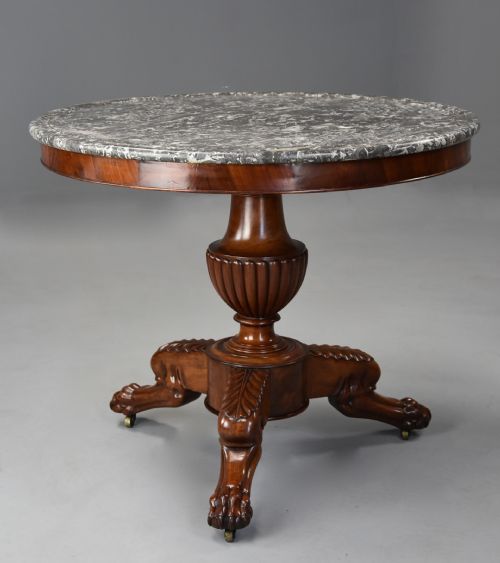
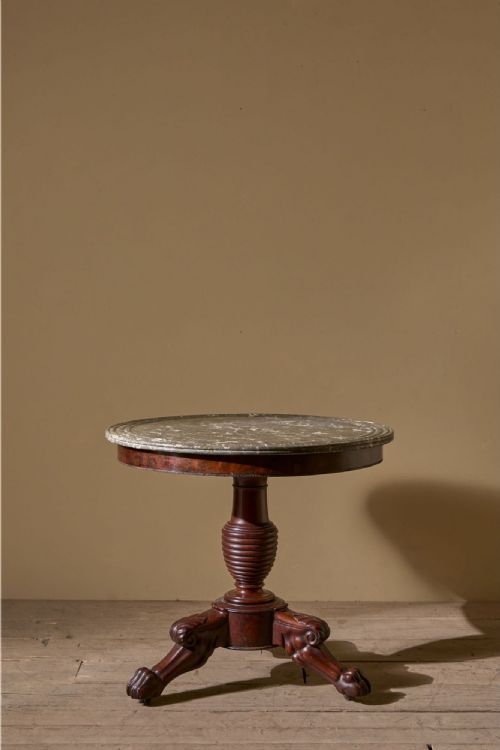
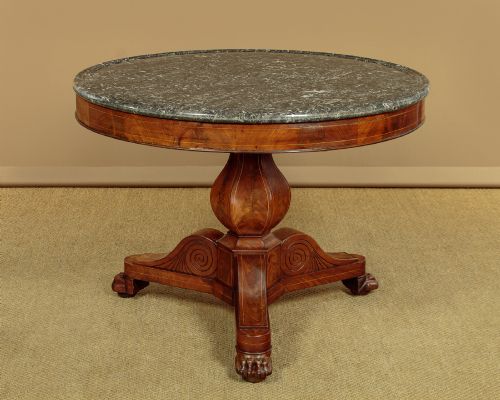
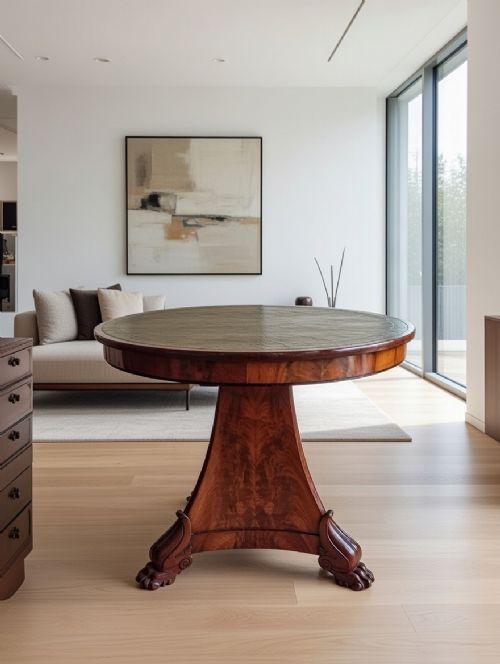
An empire gueridon table is a round occasional or centre table, typically supported by a central pedestal column resting on a triangular or platform base. When searching for an empire gueridon table, buyers encounter examples originating primarily from nineteenth century France, alongside later revival pieces.
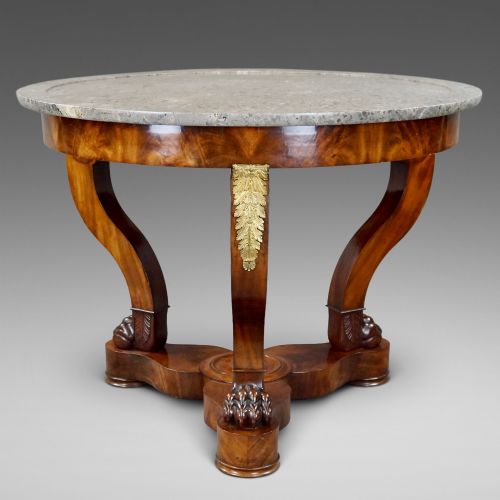
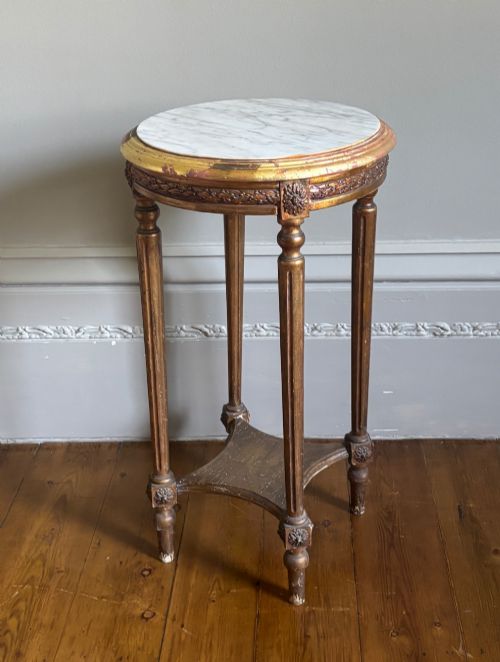
The form functions primarily as a centre table or side table, frequently positioned in the middle of a room to hold a lamp or decorative object. Many of these tables arrive with circular stone tops designed to sit flush within the timber framing.
Makers produced these tables in various scales, ranging from small wine tables to unusually large centre pieces suited for expansive entrance halls.
How they were made
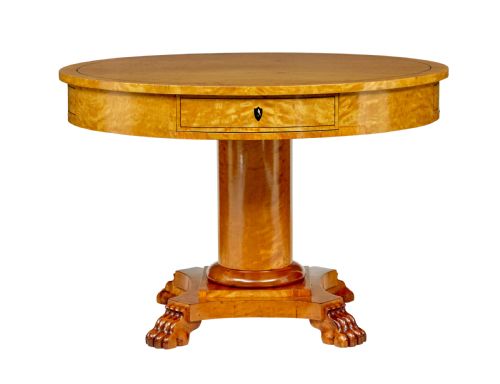
Carpenters constructed the primary carcasses using dense timbers such as mahogany, flame mahogany, and occasionally walnut, burr elm, or birch, applying veneers over sturdy secondary woods. These wooden frames often feature polished surfaces that highlight the deep grain patterns of the timber.
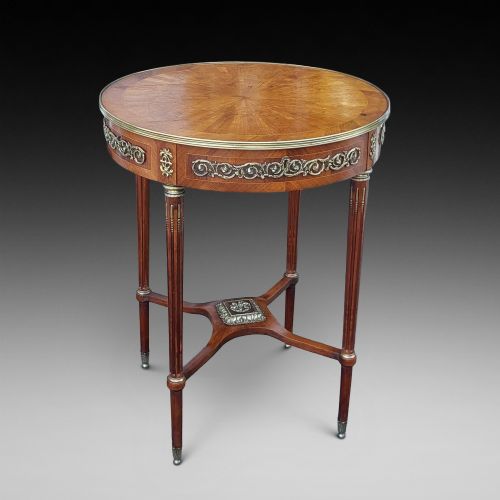
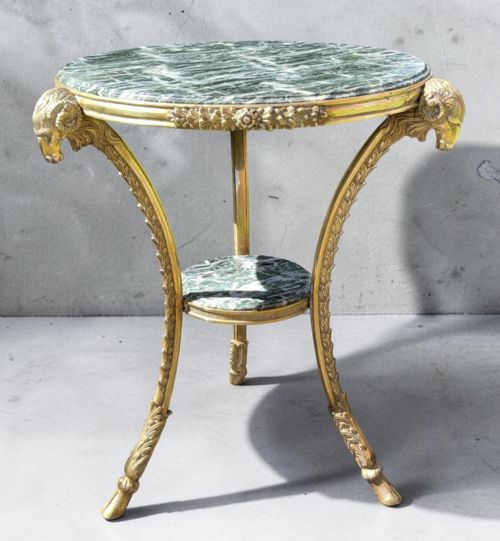
Artisans integrated heavy veined marble, grey marble, or red marble tops into the design, sometimes pairing the stone with leather inserts. Cast brass, ormolu, and gilt bronze mounts decorate the pillars, friezes, and feet, frequently taking the form of classical motifs like swans or rams heads.
The selection spans French Empire, French Restauration, and Empire Revival styles alongside nineteenth century Swedish pieces.
What varies in quality
Quality rests heavily on the crispness of the cast brass or ormolu mounts and the severity of the carving on wooden supports like swan pedestals. Superior examples display finely chased metalwork and deeply undercut timber details rather than flat, cast-in-paste ornamentation.
The selection of timber veneers defines the visual weight of the piece, with richly figured flame mahogany and burr elm denoting higher grade cabinet work. Furthermore, the presence of an original veined or specimen marble top elevates the integrity of the table.
The Empire Gueridon Table Glossary
- Gueridon
- A small circular table on a single central pillar, originating in seventeenth century France and evolving into the grand pedestals of the nineteenth century.
- Ormolu
- Gilded bronze used for decorative mounts on furniture, highly prized for its rich metallic lustre.
- Flame mahogany
- Mahogany veneer cut to reveal a fiery, undulating grain pattern resembling flickering flames.
- Specimen marble
- A polished top composed of multiple geometric or mosaic sections of different coloured marbles.
Empire Gueridon Table: Frequently Asked Questions
What is an empire gueridon table used for?
These tables traditionally serve as freestanding centre tables placed in the middle of a room, providing a surface for lamps, books, or decorative displays.
Their compact circular footprint also allows them to function effectively as side tables or occasional tables in living spaces and hallways.
How do I identify a nineteenth century piece?
Nineteenth century examples typically exhibit dense mahogany timbers, hand-cut veneers, and heavy marble tops fitted directly into the wooden framework.
Examine the construction methods underneath the top and around the central pillar to confirm traditional joinery and period metal mounts.
Are marble tops original to these tables?
Many tables retain their original veined, grey, red, or specimen marble slabs, which sit snugly inside a raised wooden gallery.
Slight variations in the stone matching the interior rebate help confirm that the marble has remained with the table since its construction.
How do I care for the timber and ormolu?
Maintain the polished mahogany or walnut surface with light waxing and protect the timber from direct sunlight and excessive heat.
Dust the cast brass and ormolu mounts gently with a dry cloth, avoiding abrasive cleaning agents that can damage the gilded finish.