





Brown Mahogany Gueridon
Brown mahogany gueridon tables are compact round centre tables built for elegant display, and you want one for its striking timber and versatile footprint.
Brown Mahogany Gueridon
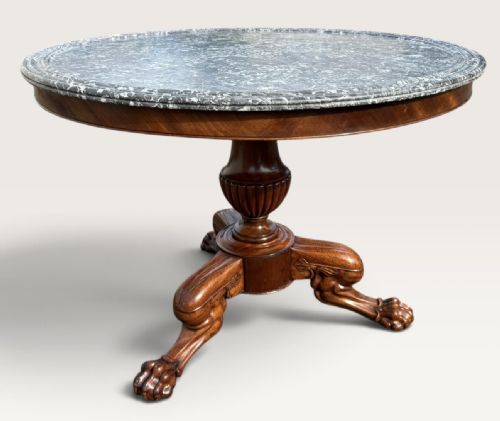
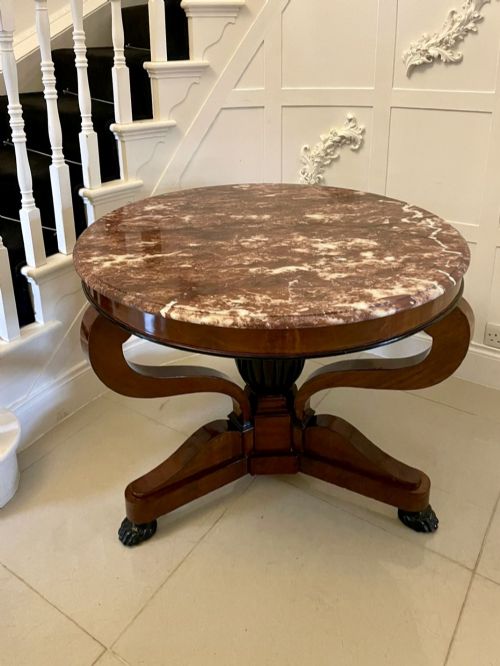
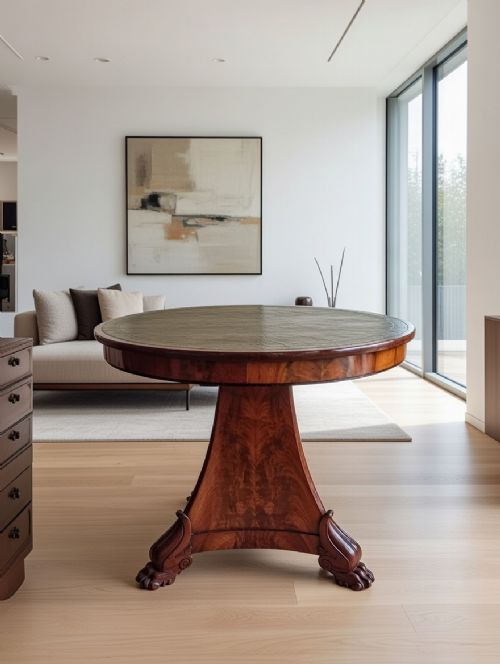
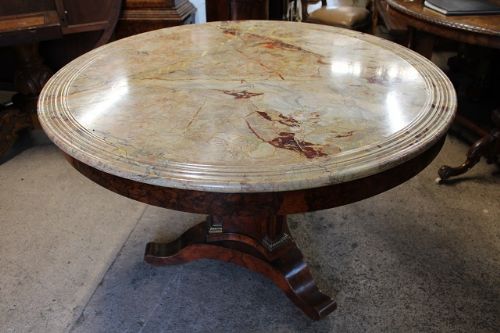
A brown mahogany gueridon is a round occasional or centre table that sits on a central pillar or tripod base. When you search for brown mahogany gueridon, you encounter examples spanning from the late eighteenth century through the Victorian era and into the early twentieth century.
The versions most commonly met on this page are French and English centre or side tables, frequently topped with marble or leather. Makers often utilised rich flame mahogany veneers and marquetry inlay to give these compact pieces visual depth and presence.
Styles range widely across these listings, taking inspiration from Georgian, Regency, French Empire, Louis XVI, and Swedish design traditions. These tables function successfully as standalone display pieces or intimate tea and card tables in smaller reception spaces.
How they were made
Cabinet makers constructed these tables using solid mahogany and figured flame mahogany veneers applied over robust secondary timbers. The grain patterns were carefully matched across the circular tops to create symmetrical and dynamic visual movement.
Many examples incorporate contrasting materials, pairing timber with inset white or veined marble slabs, tooled leather surfaces, and cast brass or ormolu mounts. Bases often feature turned pedestals supported by tripod legs, occasionally accented with brass sabots.
Brown Mahogany Gueridon Retail Price Guide 2026
Typical asking prices for brown mahogany gueridon among the pieces listed under this phrase on Sellingantiques today, from the lower quarter to the upper quarter. They describe what is for sale here now, not the wider market.
Listings feature pieces spanning the 18th century, 19th century, and early 20th century, utilising mahogany, marble, brass, and leather.
What varies in quality
The standard of a brown mahogany gueridon is defined by the selection of the timber and the crispness of the carving or brass mounts. Finer pieces display heavily figured flame mahogany with seamless veneer work and substantial, genuine marble tops rather than painted substitutes.
Construction details also separate standard production from superior craftsmanship, particularly in the stability of the central pillar and the precision of the joinery beneath the top. Original patination on the mahogany surface indicates how well a table has aged and been maintained over centuries.
The Brown Mahogany Gueridon Glossary
- Gueridon
- A small circular table on a pillar and claw foot, originating in France during the seventeenth century. These pieces were originally designed to hold candlesticks or figures before evolving into general display and centre tables.
- Flame mahogany
- A veneer cut from the fork of the mahogany tree where the branch meets the trunk. This method yields a dramatic, rippling pattern resembling flickering flames.
- Ormolu
- Gilt bronze ornamentation applied to the mounts, feet, and capitals of furniture. This technique was widely used in French Empire and Louis XVI furniture to create bright golden contrasts against dark mahogany.
- Sabot
- A metal sleeve or shoe fitted to the foot of a table leg. These fittings protect the timber from wear and frequently incorporate cast brass detailing matching the other mounts.
Brown Mahogany Gueridon: Frequently Asked Questions
What is a brown mahogany gueridon used for?
These round tables serve well as central focal points in entrance halls or as lamp tables beside seating in a drawing room. Their compact footprint allows them to fit easily into corners or tight spaces where rectangular furniture might crowd the floor plan.
Historically, they held decorative objects, lighting, or books, and they continue to fulfil this display function in modern interiors today.
How can I tell the period of a gueridon table?
Dating relies on examining the timber construction, the style of the base, and secondary woods hidden beneath or inside the frame. Eighteenth and early nineteenth-century examples often feature hand-cut dovetails and heavy mahogany timbers, while later Victorian and 1890 pieces might show machine-sawn components and different veneer thicknesses.
Stylistic cues such as brass mounts, marquetry inlay, and marble slab thickness also point directly to specific design eras like French Empire or Louis XVI revival.
Are marble top gueridons original?
Many nineteenth-century French and Swedish gueridons were manufactured specifically to receive fitted marble slabs. You can determine originality by looking at the rebate in the wooden frame and checking whether the marble sits flush and matches the period of the base.
Veined marble tops were favoured for their durability and coolness, making them practical surfaces for serving drinks or holding heavy planters.