
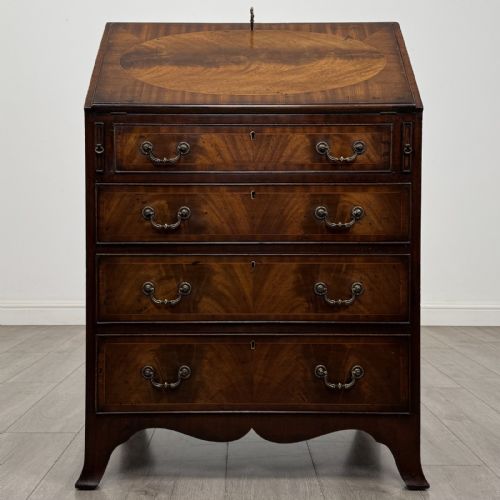
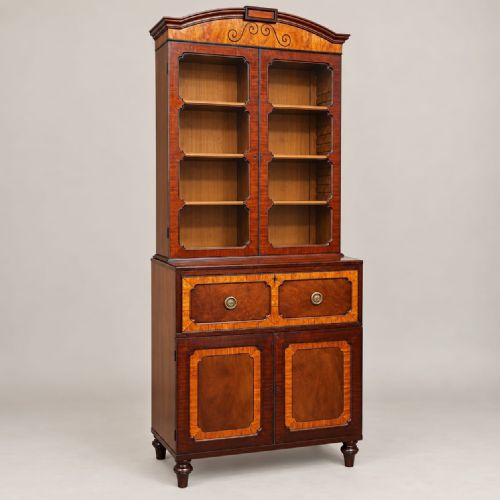
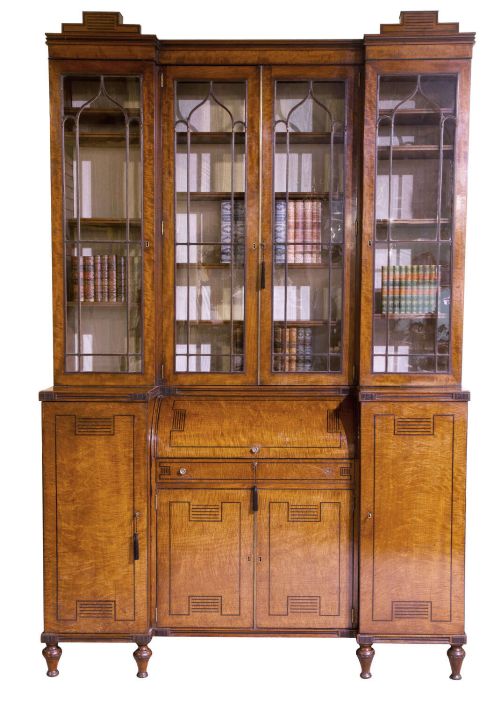
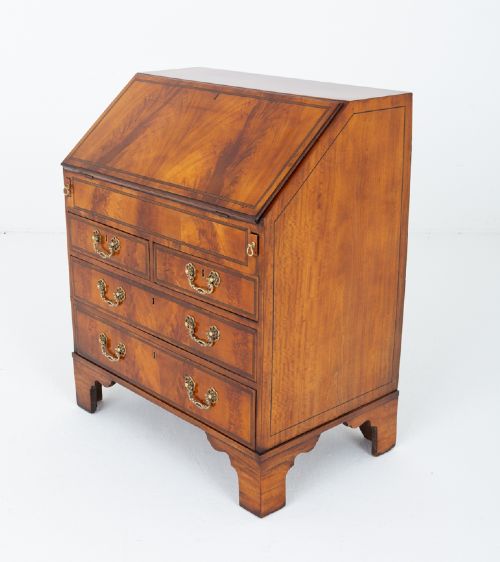
Mahogany Secretary Desk Cabinet
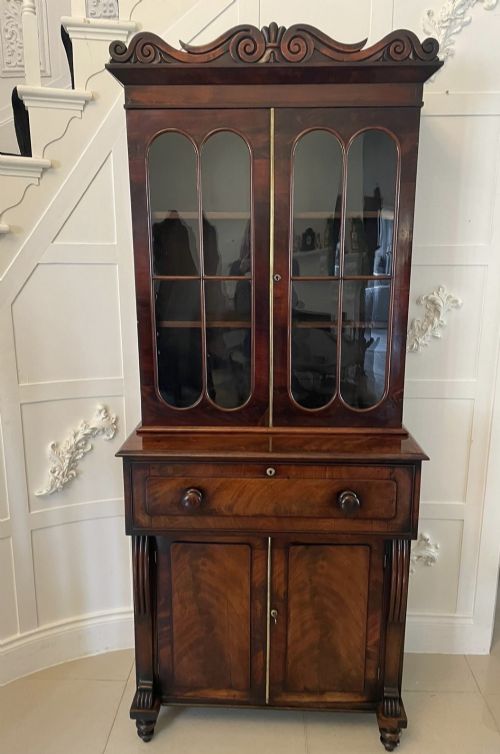
A mahogany secretary desk cabinet is a combined writing surface and bookcase built for domestic administration.
Mahogany Secretary Desk Cabinet
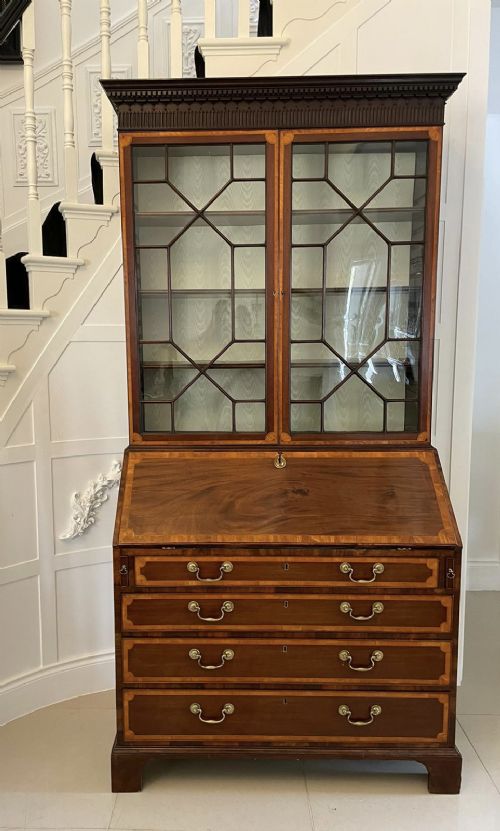
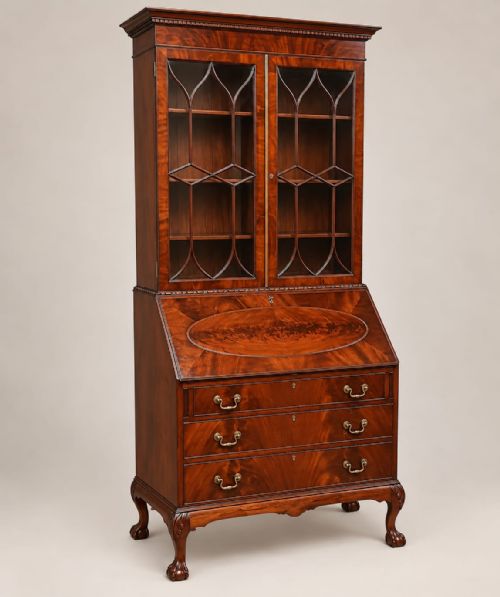
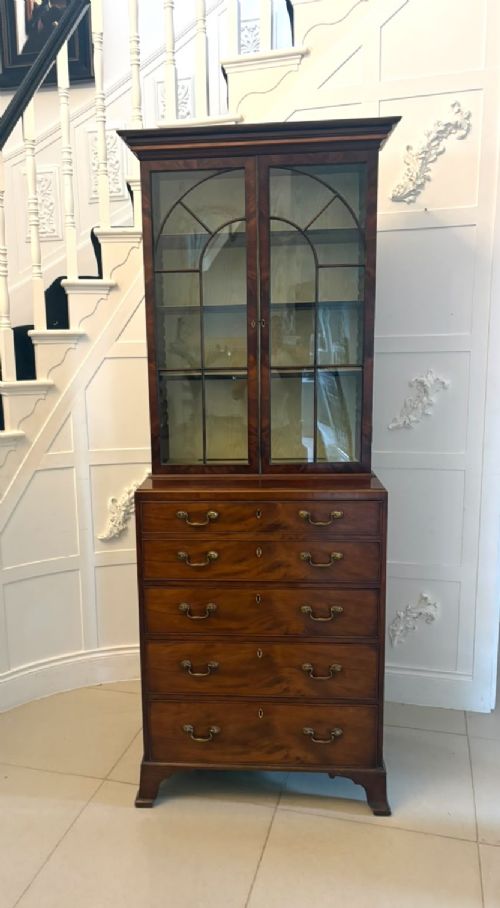
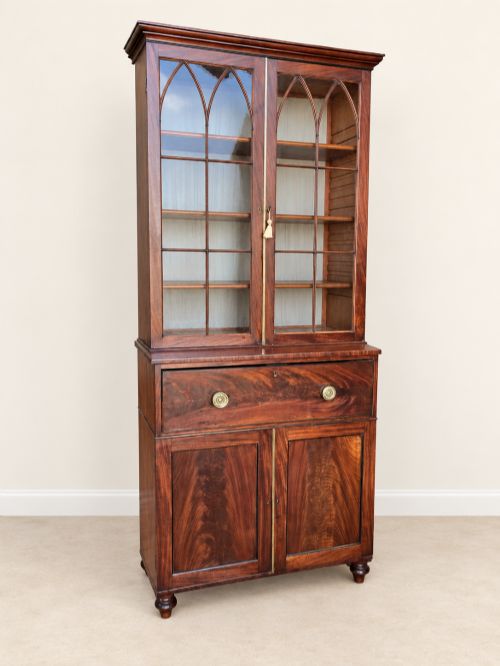
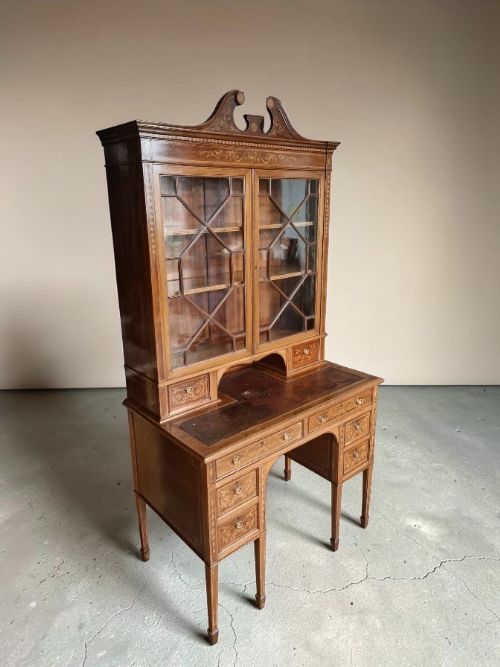
A mahogany secretary desk cabinet serves as a dual-purpose piece of furniture, combining a concealed writing drawer or drop-front desk with upper shelving enclosed by doors. Buyers searching for a mahogany secretary desk cabinet encounter various formats, from tall Georgian bookcase combinations to compact Edwardian writing desks.
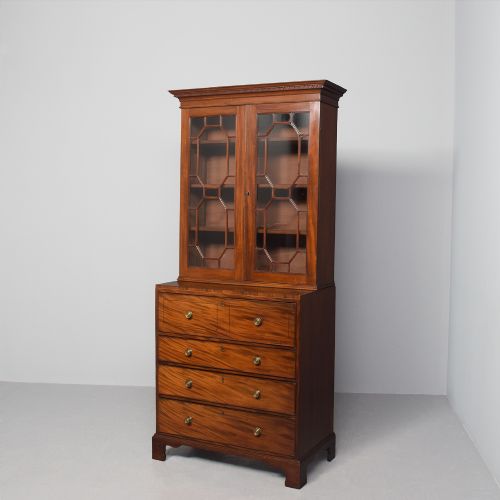
The pieces on this page span the eighteenth and nineteenth centuries, alongside Edwardian and 1930s examples. Georgian and Regency iterations frequently employ glazed upper doors to display books, while cylinder fronts and tambour mechanisms appear in late eighteenth and early nineteenth-century workshops.
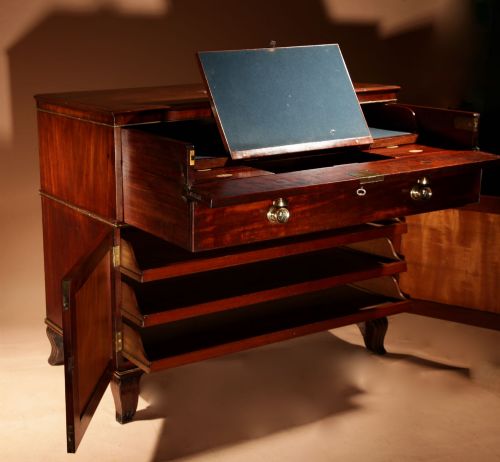
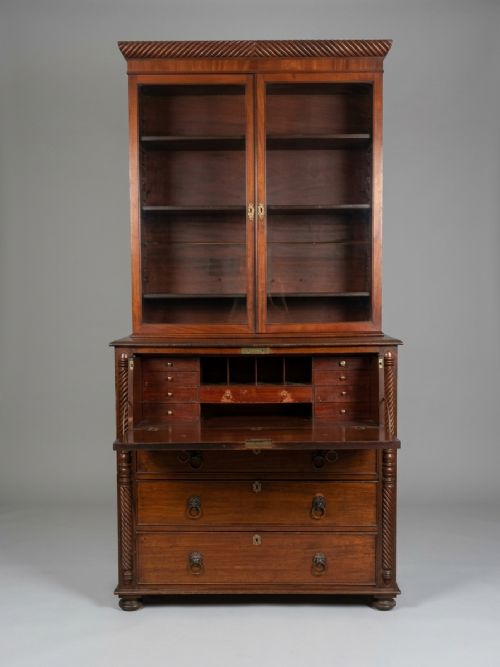
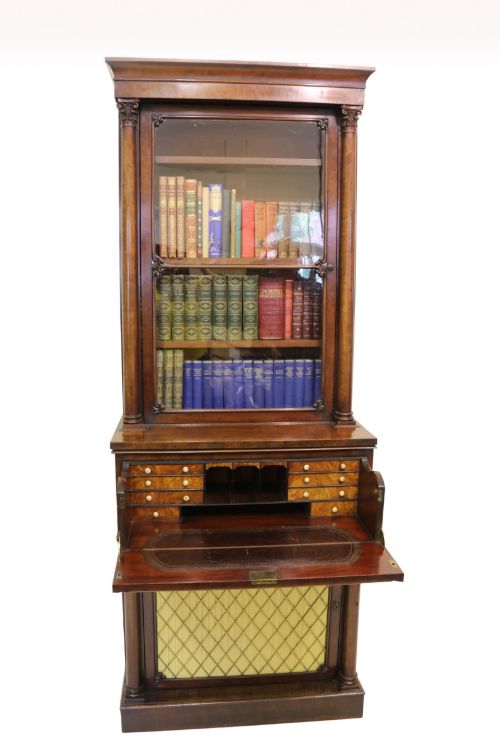
Common designations include bureau bookcases, secretaire bookcases, and escritoires. The versions most frequently met here pair a shelved upper cabinet with a fall-front writing flap or pull-out secretaire drawer fitted with small pigeonholes and drawers.
Materials and construction methods
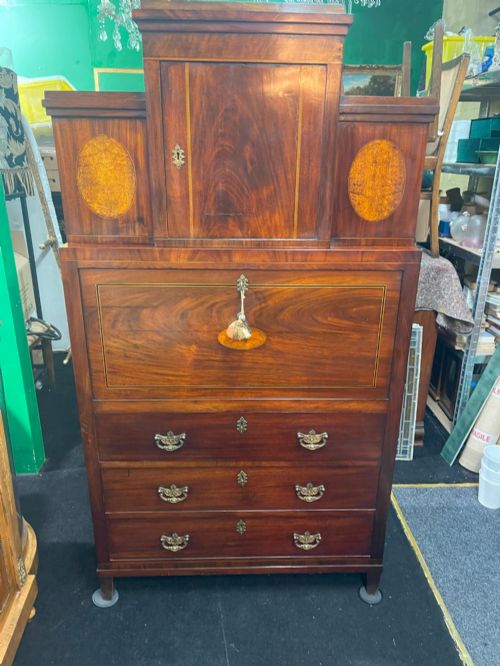
Inlay work incorporates satinwood for contrasting geometric lines and floral marquetry motifs. Glazed upper doors utilise individual wooden glazing bars to hold glass panes, while brass hardware secures doors and operates drawers.
Interior fittings comprise small compartments, pigeonholes, and subsidiary drawers constructed from secondary woods. Drop-front writing surfaces are often lined with leather to provide a suitable medium for writing.
Object forms recorded here include bureau bookcases, cylinder tambour bureaux, bon-heur du jour writing desks, and side cabinets with integrated secretaire drawers.
Indicators of refinement in execution
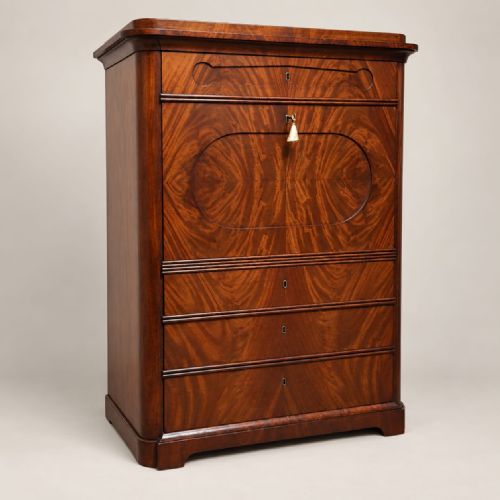
The standard of cabinetmaking is visible in the selection and bookmatching of figured mahogany veneers across drawer fronts and fall-front panels. Grain continuity across adjacent drawers indicates careful initial cutting from the same timber board.
Internal configuration dictates the complexity of the piece, with fitted interiors featuring secret compartments, shaped pigeonholes, and satinwood inlay representing higher levels of joinery skill. The precision of dovetail joints on subsidiary drawers reflects the maker's hand.
Proportion and scale distinguish standard production from exceptional pieces, particularly in tall bureau bookcases where cornice mouldings and plinth bases must balance the height of glazed upper doors.
George Oakley·Gillows·Tudor and Burrey
The Mahogany Secretary Desk Cabinet Glossary
- Bureau bookcase
- A tall case furniture piece combining a writing desk base with an upper enclosed bookcase section. The upper doors are frequently glazed with wooden astragal bars.
- Flame mahogany
- A veneer cut from the branch junction of a mahogany tree, yielding a distinctive flickering flame-like grain pattern. Cabinetmakers placed these veneers centrally on drawer fronts for decorative impact.
- Tambour
- A flexible sliding shutter formed from thin vertical strips of wood glued to a canvas backing. It runs in concealed grooves to cover internal desk compartments.
- Astragal glazing
- Wooden framework dividing glass panes within cabinet doors into smaller geometric sections. Georgian and Regency examples use fine mouldings for these bars.
Mahogany Secretary Desk Cabinet: Frequently Asked Questions
What is the difference between a bureau and a secretaire bookcase?
A traditional bureau utilises an angled, sloping fall-front that opens downward to create a slanted writing surface. The interior houses fixed pigeonholes and small vertical document slots.
In contrast, a secretaire bookcase conceals its writing surface behind a horizontal drawer front that pulls forward and drops down on hinges. This design maintains the external appearance of a chest of drawers or sideboard cabinet.
How are tambour doors constructed?
Tambour doors are built from narrow vertical slats of mahogany glued side-by-side onto a sturdy fabric backing. This flexible membrane slides smoothly along curved wooden tracks cut into the desk body.
This mechanism allows cabinetmakers to enclose desktop pigeonholes without requiring clearance for swinging doors.
Where were secretaire cabinets placed in a home?
These cabinets served as administrative hubs in libraries, studies, and withdrawing rooms. The upper glazed sections stored reference volumes and ledgers, while the enclosed desk held correspondence.
Because they combined book storage and writing facilities into a single vertical footprint, they suited rooms where floor space was restricted.