
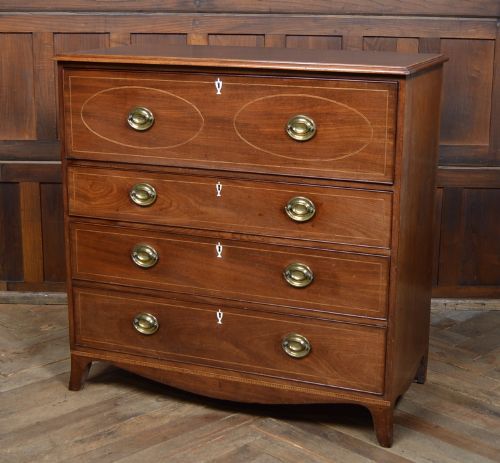


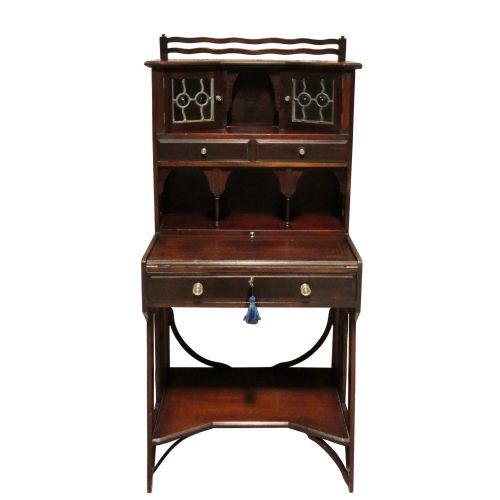


Edwardian Mahogany Secretaire Desk
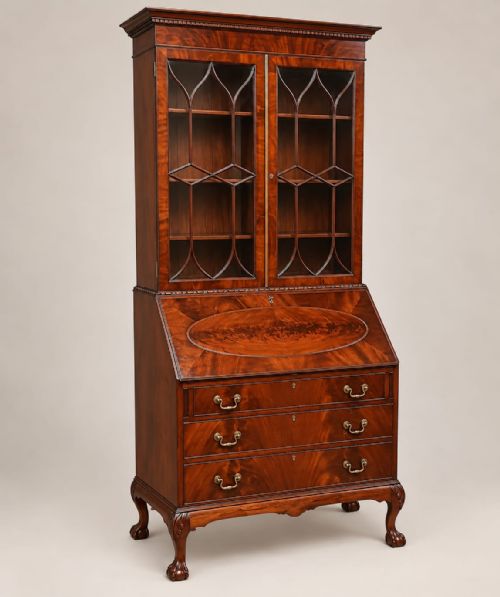
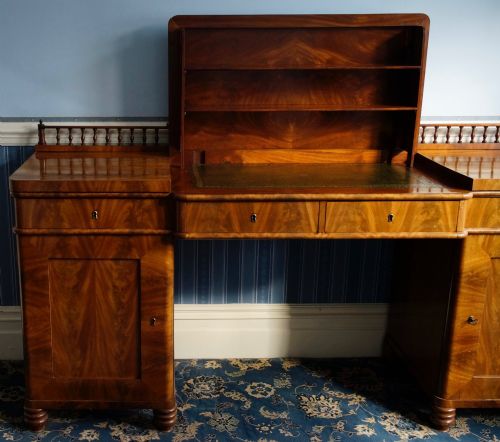
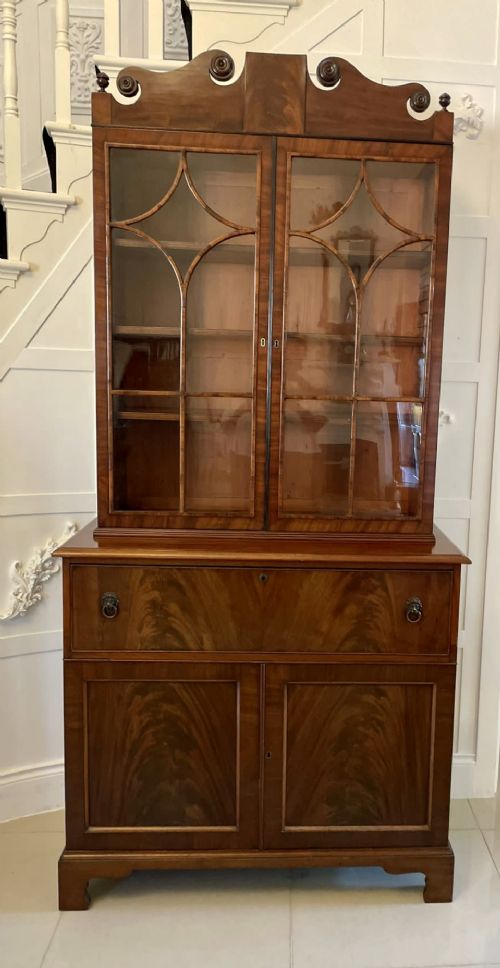
These edwardian mahogany secretaire desk pieces combine practical writing furniture with fitted upper cabinets, offering versatile storage and display for the home.
Edwardian Mahogany Secretaire Desk
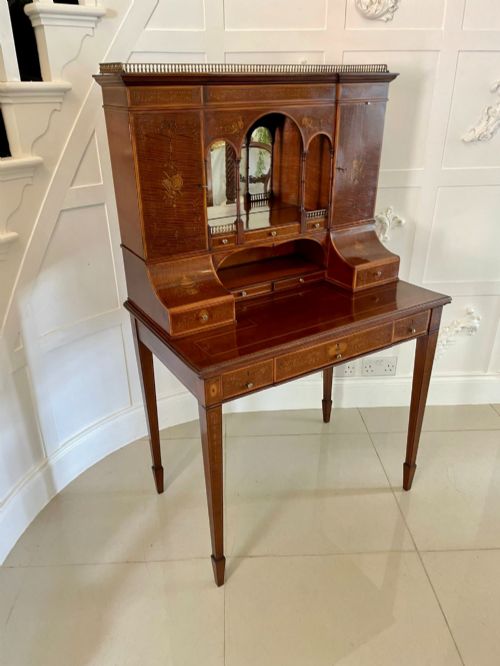
The selection here encompasses various related forms including secretaire bookcases, chests of drawers, and writing tables. You are most likely to meet large bookcase combinations alongside compact chests, often displaying inlaid satinwood details characteristic of Sheraton Revival or Edwardian Art Nouveau influences.
Materials and Construction
The construction relies heavily on solid and veneered mahogany, frequently accented with contrasting satinwood inlay and brass hardware. Secondary woods and glass panels complete the upper bookcase sections, while leather inserts often line the drop-down writing flaps.
Cabinetmakers utilised traditional joinery techniques such as dovetailed drawers and panelled doors to ensure structural longevity. Finer examples incorporate specialised interior compartments within the secretaire drawer alongside intricate marquetry patterns.
Listings include mahogany, brass, glass, leather, satinwood, metal, mirror glass, and bone across various periods.
Evaluating Quality and Craftsmanship
Quality in these pieces depends largely on the selection of timber veneers, the crispness of any inlaid decoration, and the complexity of the interior fittings within the secretaire drawer. Superior examples demonstrate meticulous attention to detail in the pigeonholes, secret compartments, and overall proportions.
The integrity of the original hardware, glass panes, and leather writing surfaces also influences the standing of a piece. Well-executed cabinetwork from established makers distinguishes higher-grade items from standard production pieces.
Maple and Co·Gillows·Edwards and Roberts·Liberty
The Edwardian Mahogany Secretaire Desk Glossary
- Secretaire
- A desk or chest of drawers featuring a pull-down writing flap that conceals small drawers and pigeonholes. This clever mechanism allows a piece of case furniture to serve double duty as a writing station.
- Marquetry
- Decorative woodwork where pieces of veneer are fitted into a ground material to form intricate designs. This technique often employs contrasting woods like satinwood against a mahogany background.
- Sheraton Revival
- A late nineteenth and early twentieth century design movement that reinterpreted the lighter furniture styles of the eighteenth century. Pieces from this period frequently feature delicate inlay and tapered legs.
- Pigeonhole
- A small compartment within a desk or cabinet used for sorting letters and papers. These are typically arranged in banks inside the pull-down section of a secretaire.
Edwardian Mahogany Secretaire Desk: Frequently Asked Questions
How do I use a secretaire desk?
The drop-down drawer front lowers to create a stable writing surface, supported by specialised side arms or the drawer itself. Inside, you find a collection of small drawers and pigeonholes designed for stationery and correspondence.
When you finish writing, simply lift the flap back into place and secure it with the lock. This conceals your papers and restores the tidy appearance of a standard chest or bookcase.
Where did these pieces originate?
These items hail primarily from British workshops and cabinetmakers working during the Georgian, Victorian, and Edwardian periods. Major firms and provincial makers alike produced them for domestic use in libraries, drawing rooms, and studies.
Many bear the stylistic hallmarks of London makers or large retail furnishers who supplied well-to-do households. Their designs evolved over generations to meet changing fashions in domestic interior decoration.
How do I care for mahogany furniture?
Keep mahogany pieces away from direct sunlight and strong heat sources to prevent the wood from drying out and the veneers from lifting. Regular dusting with a soft, dry cloth maintains the lustre of the polish.
Avoid using silicone-based polishes or harsh chemical cleaners which can damage the historic finish over time. Periodically applying a quality wax helps nourish the timber and protect the surface.
How can I tell the period?
Examine the construction methods, secondary woods, and hardware style to help determine the age of a piece. Earlier examples from the Georgian era often feature hand-cut dovetails and solid timber construction, while Edwardian pieces may show machine-sawn elements and revival styling.
Cabinetmaker stamps, paper labels, and specific inlay motifs also provide reliable clues to a piece's date of manufacture. Comparing the overall proportions and decorative vocabulary to known examples helps narrow down the period.