

Mahogany Nesting Tables
These mahogany nesting tables offer a practical way to stack multiple surfaces neatly when floor space matters.
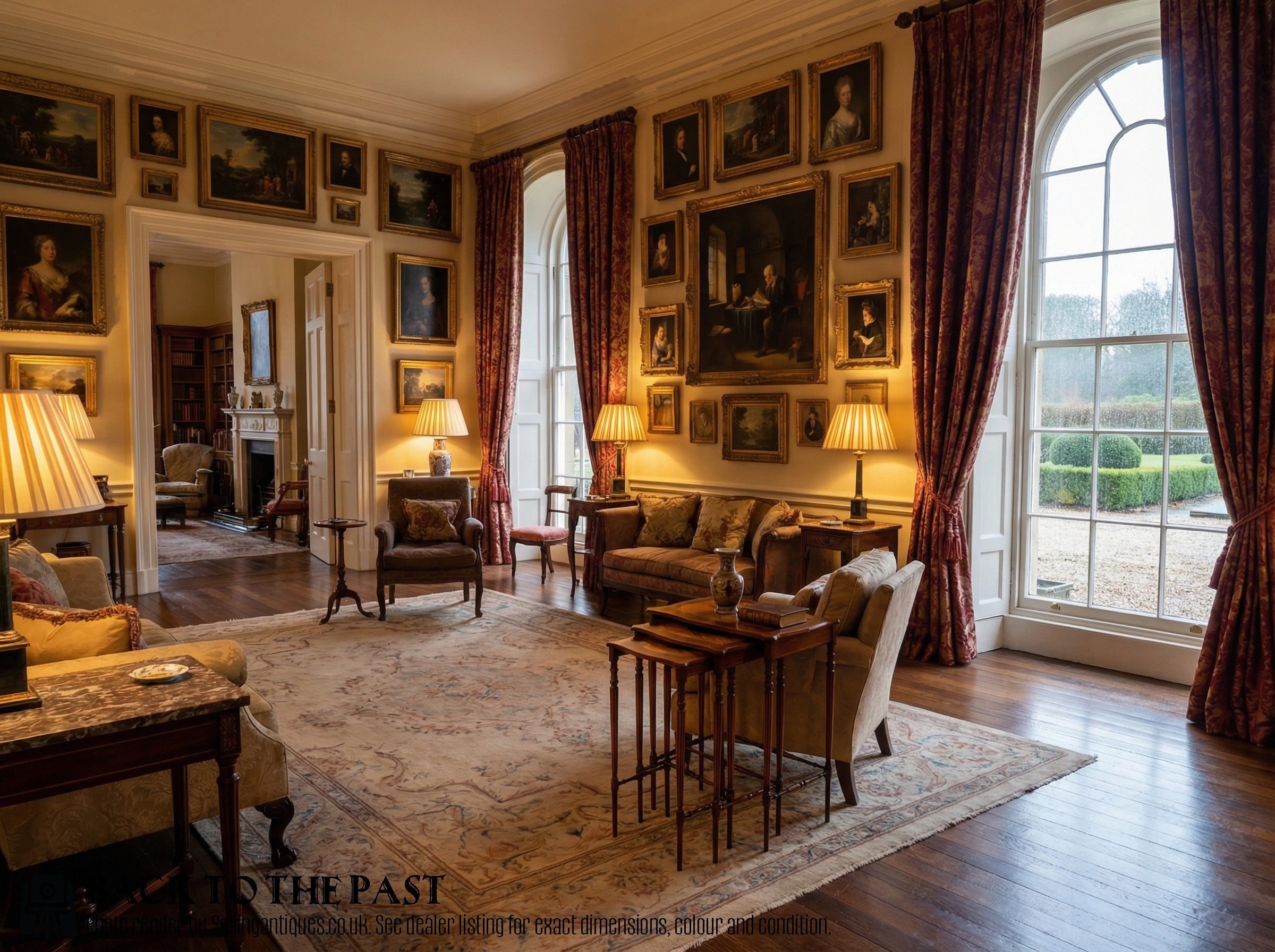
Mahogany Nesting Tables
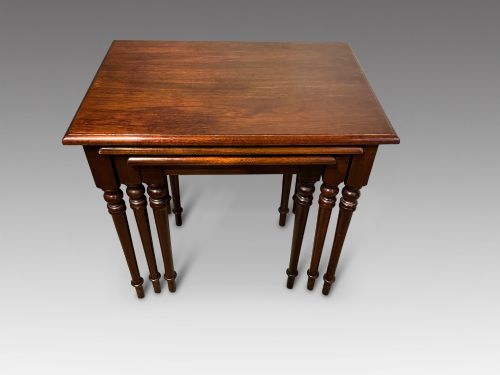
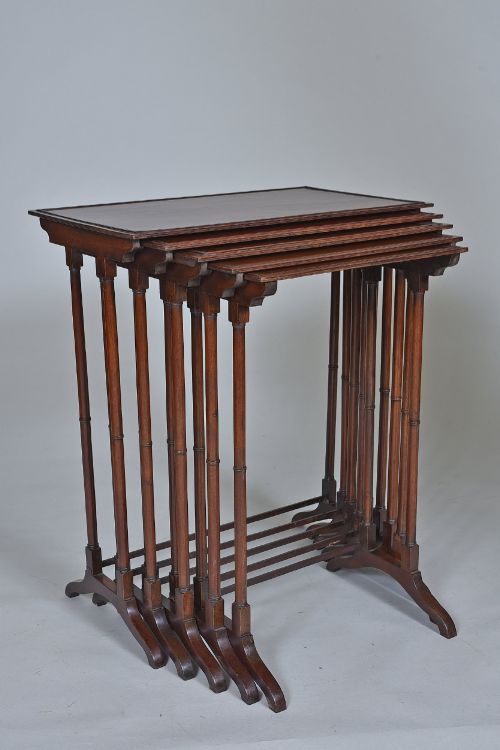
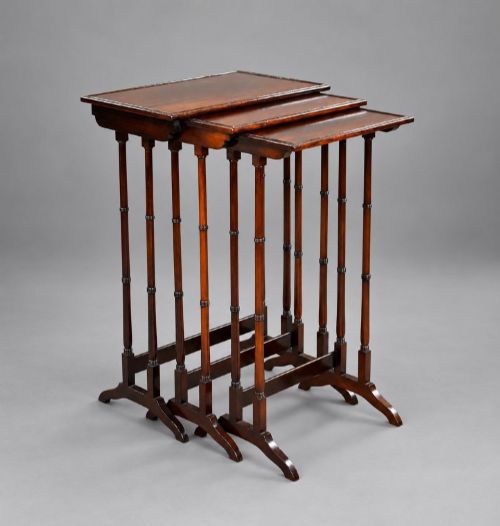
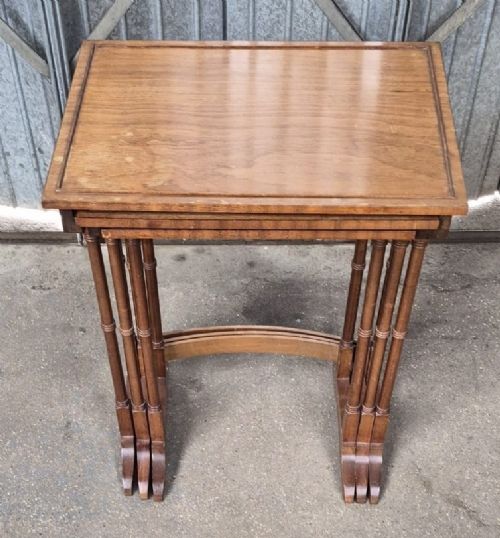
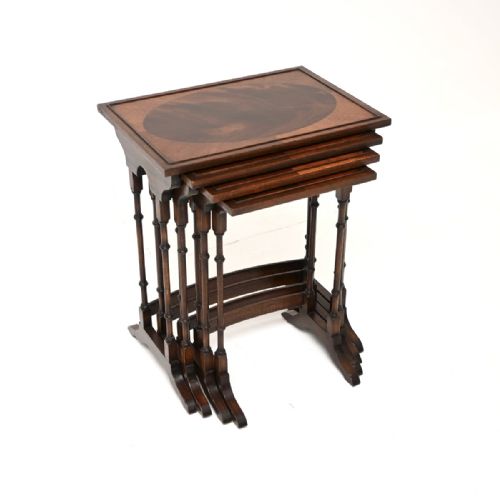
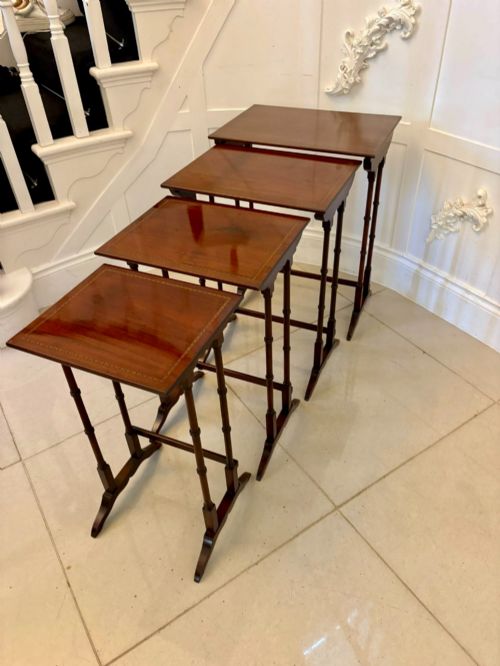
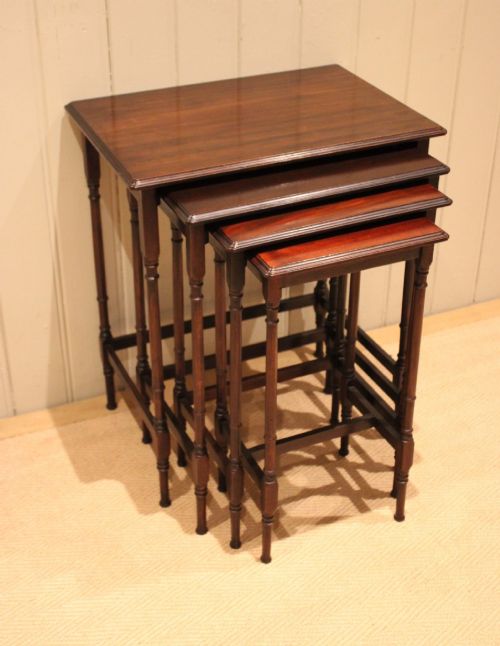
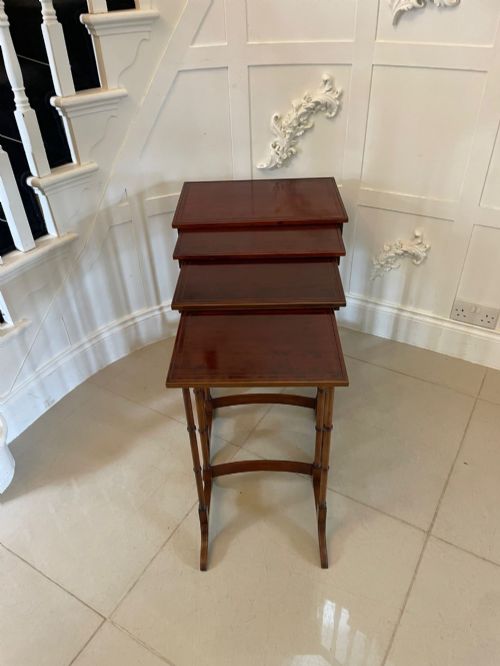
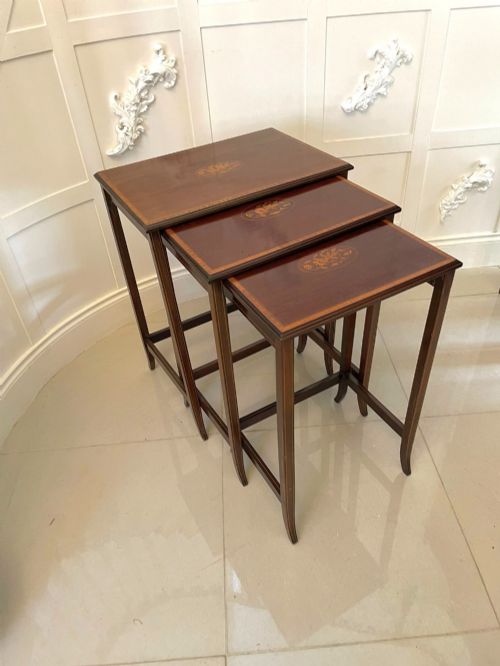
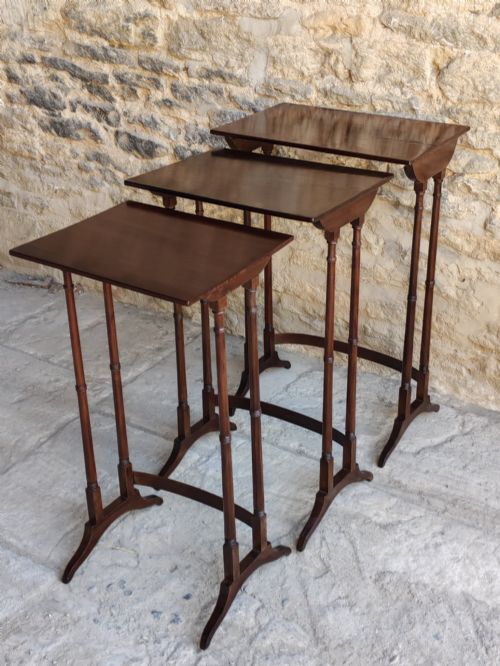
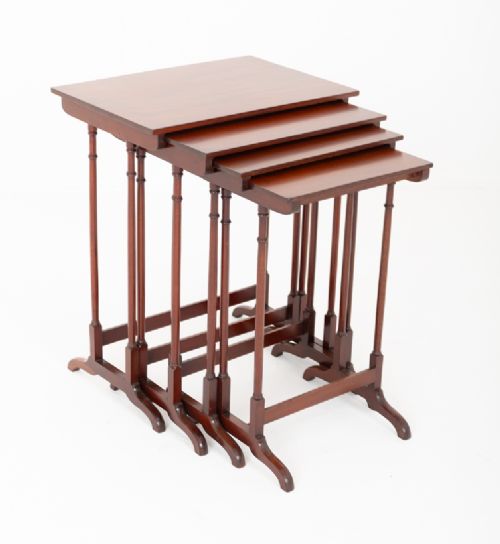
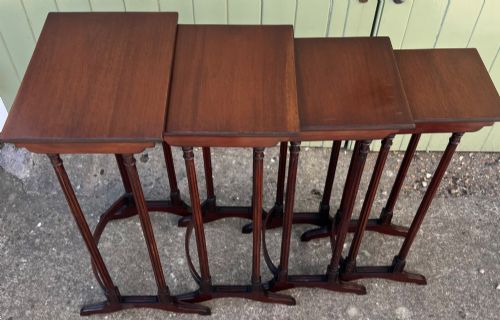
Mahogany nesting tables comprise sets of three, four or five tables designed to slide neatly beneath one another when not in use. The examples seen on this page span from the Georgian period through the Victorian, Edwardian and Regency eras, continuing into the 1920s and 1930s.
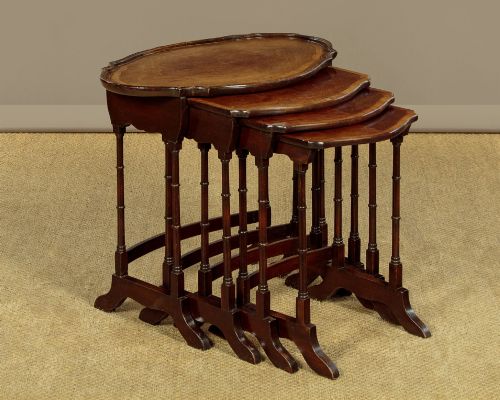
Sets frequently appear under historical designations such as quartetto tables, offering gradated surfaces that occupy the footprint of a single piece of furniture. Formats range from rectangular and square tops to circular, oval and serpentine shapes.
Originating as versatile occasional furniture for drawing rooms and parlours, these tables provide flexible surfaces for tea, writing or display. Buyers encounter both traditional Georgian forms and revival styles including Sheraton Revival and Regency Revival.
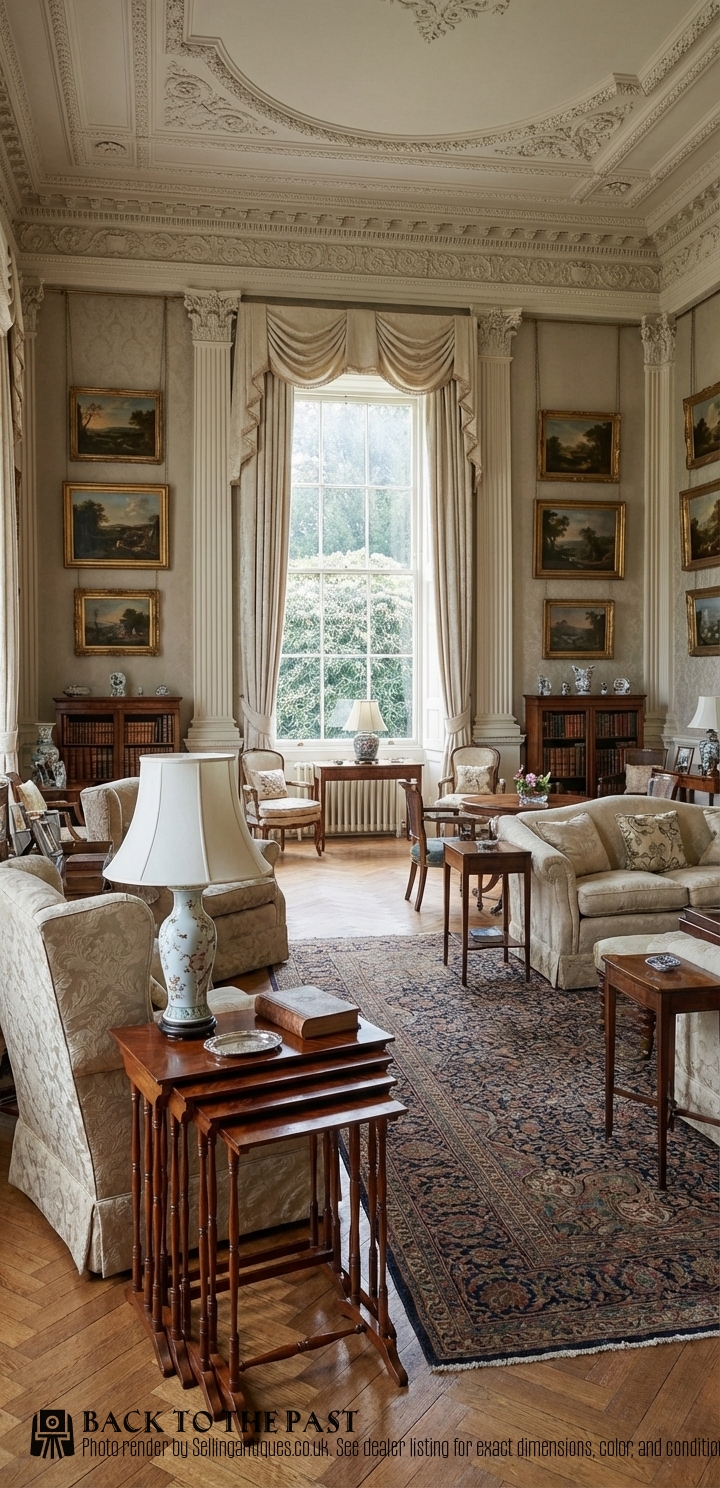
How They Were Made
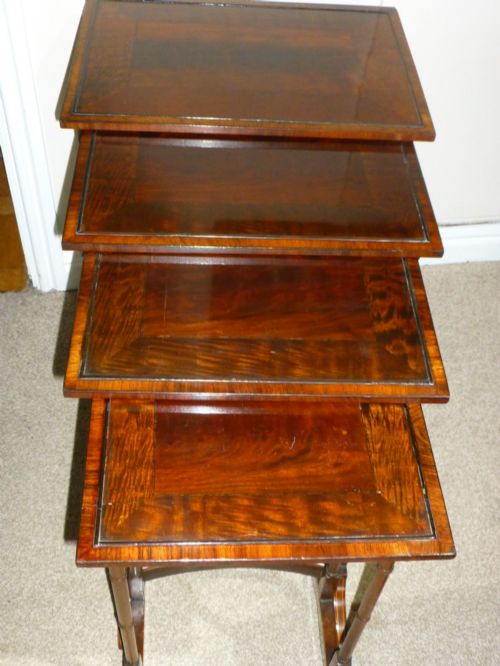
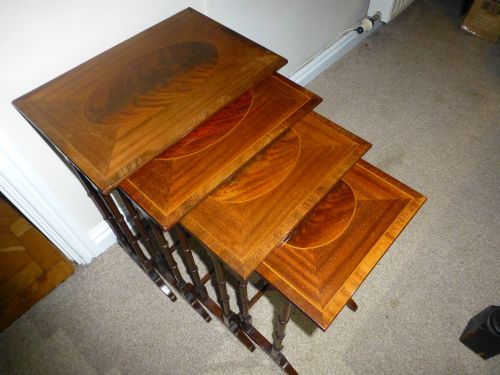
Cabinet makers utilised solid mahogany alongside timber veneer to construct the tops and framing for these stacking sets. Secondary woods and decorative elements frequently incorporated satinwood and boxwood inlay or cross banding.
Many examples feature square tapered legs or turned supports designed to clear the framework of the smaller tables below. Surface details include embossed leather inserts and shaped top profiles across various periods.
Mahogany Nesting Tables Retail Price Guide 2026
Typical asking prices for mahogany nesting tables among the pieces listed under this phrase on Sellingantiques today, from the lower quarter to the upper quarter. They describe what is for sale here now, not the wider market.
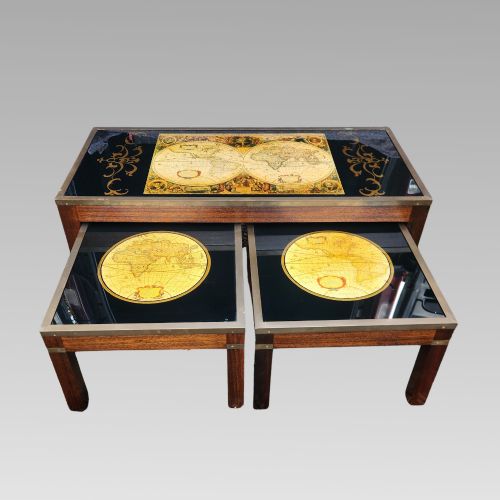
Listings feature mahogany, satinwood, boxwood, and glass across Georgian, Victorian, and Edwardian periods.
What Varies in Quality
Construction standards differ between standard production items and finely detailed sets featuring matching grain patterns and precise joinery. The selection of timbers, from plain mahogany to finely figured veneer with contrasting satinwood inlay, separates simpler pieces from more elaborate examples.
Proportion and stability determine the success of a nested set, where tighter tolerances allow each table to slide smoothly into place without friction. Original surface patination and crispness in the inlay work also distinguish superior examples.
The Mahogany Nesting Tables Glossary
- Quartetto
- A set of four nesting tables designed to slide progressively beneath one another. This term appears frequently in nineteenth and early twentieth century cabinet making.
- Satinwood
- A durable hardwood with a lustrous yellow or golden sheen used extensively for stringing and decorative inlay work. Craftsmen paired it with darker mahogany to create geometric contrasts.
- Cross banding
- A decorative border of veneer laid with the grain running perpendicular to the main surface. It frames the perimeter of table tops on finer pieces.
- Boxwood inlay
- Narrow lines of pale boxwood embedded into the mahogany surface to form delicate borders. This technique defines much of the Sheraton Revival output.
- Campaign
- A style of portable furniture designed for travel, featuring recessed brass hardware and robust construction. Occasional sets occasionally share these practical structural traits.
Mahogany Nesting Tables: Frequently Asked Questions
How many tables are in a set?
Sets typically comprise three or four tables, though specific examples contain five or appear as occasional pairs with matching smaller units.
Graduated sizing allows each piece to slide completely beneath the one above it to conserve floor space.
What periods do these tables represent?
The pieces span from the Georgian and Regency eras through the Victorian period and into Edwardian times, with later examples from the 1920s and 1930s.
Revival styles from the late nineteenth century frequently emulate earlier Georgian and Sheraton designs.
Were these used as coffee tables?
Historic sets served primarily as occasional tables for holding tea, books or small decorative items in reception rooms rather than low coffee tables.
Nineteenth and early twentieth century heights accommodated seating arrangements of the period.
How do I identify inlaid decoration?
Inlaid surfaces feature contrasting lighter timbers such as satinwood or boxwood set flush into the darker mahogany top or legs.
Stringing lines and cross banded borders indicate the Sheraton Revival and Edwardian periods.