
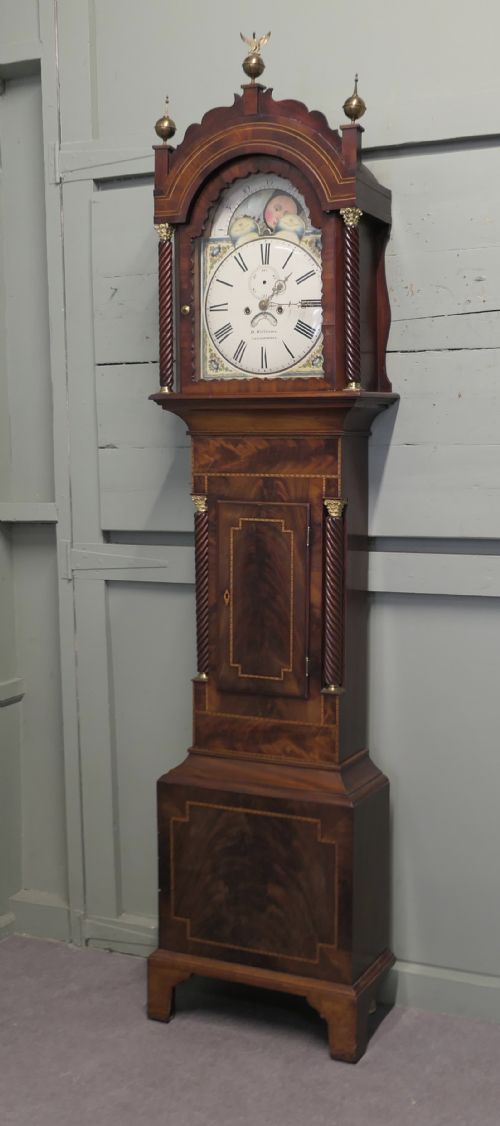


Mahogany Moonphase Clock
A mahogany moonphase clock brings the rhythm of the tides and the phases of the moon into a room through precise mechanics and warm timber.
Mahogany Moonphase Clock
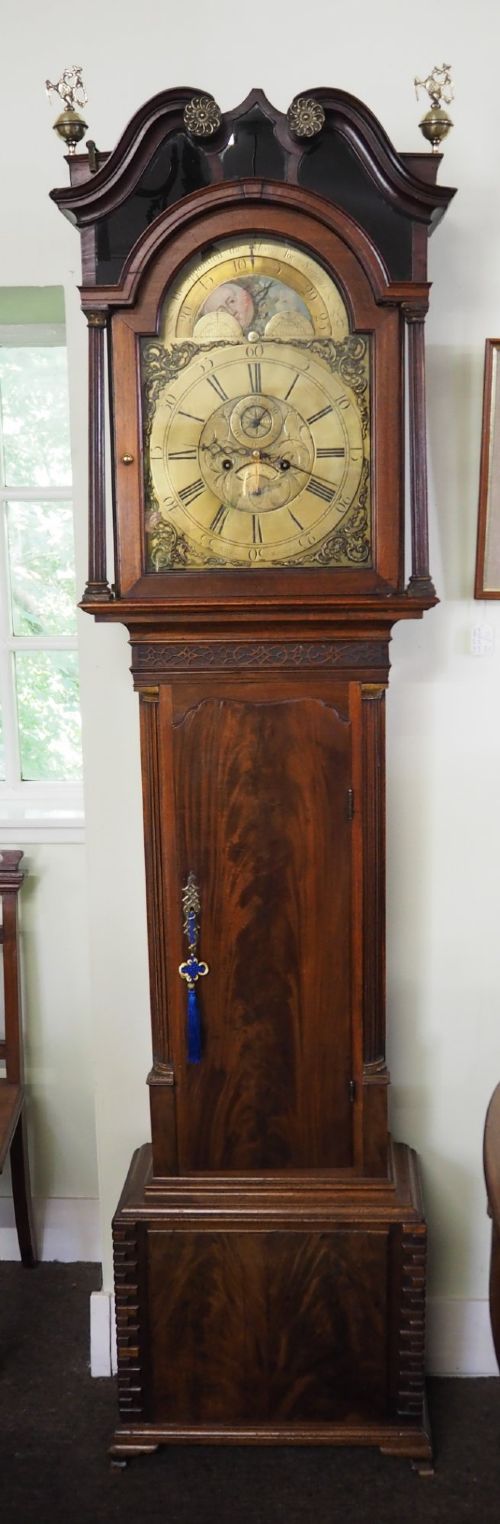
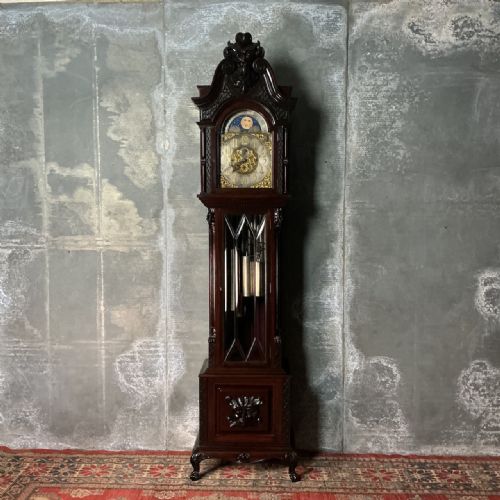
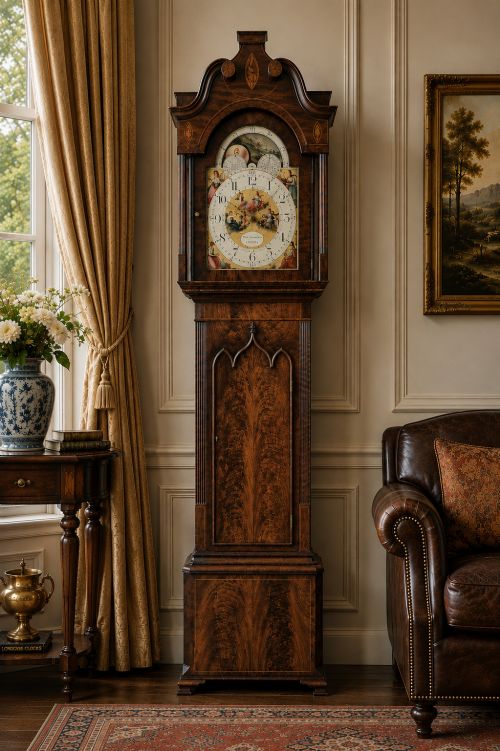
A mahogany moonphase clock is a tall floor-standing timekeeper, frequently referred to as a longcase or grandfather clock, designed to display lunar cycles alongside the hours and minutes. These pieces emerge predominantly from the eighteenth and nineteenth centuries, spanning Georgian, Regency, and Victorian periods.
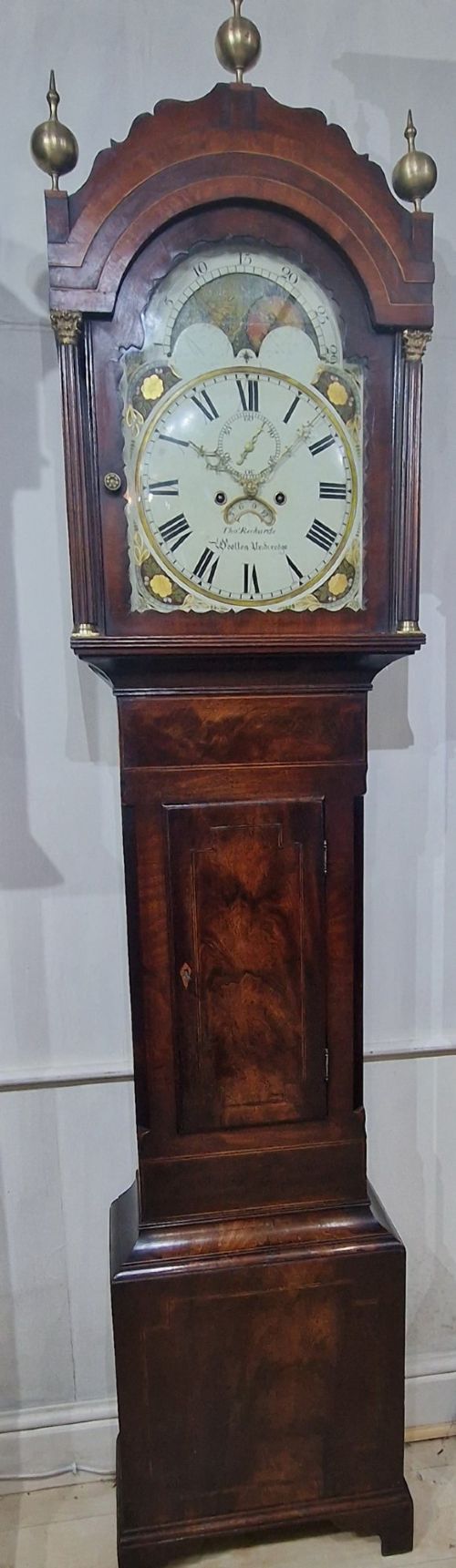
The version most commonly met on this page is the George III or eighteenth-century longcase, housed in rich mahogany or flame mahogany timber with a painted iron or metal dial. Regional makers from Bristol, Liverpool, and various northern and Welsh towns signed their work directly onto the face.
The form combines functional domestic timekeeping with complex mechanical displays, including rolling moons and tidal dials that indicate astronomical changes. Tall wooden cases protect the descending weights and swinging pendulum while providing a commanding architectural presence in a hallway or principal room.
How they were made
Cabinetmakers selected dense mahogany and figured flame mahogany for the tall cases, constructing them with solid timber boards and occasionally incorporating decorative inlay. The long vertical trunk sheltered the weights and pendulum, while the glazed hood protected the delicate dialwork.
Dial faces combined painted iron or metal with brass details, inscribed by hand with the maker's name and location. Complex gear trains inside drove both the standard timekeeping hands and the rotating moonphase disc behind the dial arch.
Makers span English and Welsh regions including Manchester, Hull, Liverpool, and Bristol.
What varies in quality
Quality rests upon the crispness of the cabinetwork, the depth and figuring of the mahogany veneer, and the artistic execution of the painted moon dial. Finer examples display harmonious proportions in the hood and trunk alongside intricate regional signatures.
The complexity of the internal movement further separates standard timekeepers from exceptional ones. Clocks with additional complications such as alarm mechanisms, tidal dials, or musical trains represent the higher tier of maker craftsmanship.
Samuel Kellett of Bredbury·D Williams of Crickhowell·Charles Dowsett Of Canterbury·Nevitt of Bristol·John BANKS OLDHAM·FURNIVAL OLDHAM·THOMAS DEAN of LEIGH·Wilshire & Link of Bristol·RICHARDSON OF MANCHESTER·James Rayner of Hull·THOS. BURCHALL of NANTWICH·THOMAS HALL·Thomas Hutchison of Leeds·Iames Richards Liverpool
The Mahogany Moonphase Clock Glossary
- Moonphase
- A mechanical display on the clock dial that tracks the visual phases of the moon through a rotating painted disc. This function required an additional gear train operating on a lunar month cycle.
- Longcase clock
- A tall, floor-standing weight-driven timekeeper enclosed in a wooden case, commonly known as a grandfather clock. The height allowed the heavy drive weights to descend over long operational periods.
- Flame mahogany
- A veneer cut from the branch forks of the mahogany tree to produce a dramatic, flickering grain pattern. Cabinetmakers reserved this timber for the most prominent surfaces of the clock door and base.
- George III
- The stylistic and historical period spanning the later eighteenth century, characterised by refined cabinet proportions and classical decorative restraint. Many surviving moonphase clocks originate from these decades.
- Painted dial
- A clock face created by painting numerals and decorative scenes directly onto an iron or metal sheet. Regional makers often commissioned specialised artists to paint the lunar scenes in the arch.
Mahogany Moonphase Clock: Frequently Asked Questions
How do I set the moonphase?
The moonphase disc is typically advanced by hand using your finger against the painted edge behind the dial opening, matching it to the current lunar calendar.
Consult a current lunar calendar to determine the exact phase before adjusting the mechanism to ensure accuracy.
Where should I place a longcase clock?
Position the clock on a stable, level floor against a solid interior wall away from direct sunlight and heating vents. Wooden cases react to extreme humidity changes, so a stable environment preserves the timber and veneer.
Ensure there is sufficient vertical clearance for the tall case and enough room to safely access the side door for winding.
How often do I need to wind it?
Most eight-day movements require winding once a week using a crank key inserted into the winding holes on the dial face. Three-train musical variations may require more frequent or separate winding for the chime and strike trains.
Consistent weekly winding maintains even tension on the driving weights and keeps the timekeeping steady.
How do I identify the maker?
Look directly at the painted iron or brass dial face, where eighteenth and nineteenth century makers routinely inscribed their full name and town. Additional signature plaques or inscriptions sometimes appear on the brass movement plates behind the dial.
Regional records and trade directories help date these signatures back to specific workshops in locations such as Bristol, Liverpool, or Manchester.