
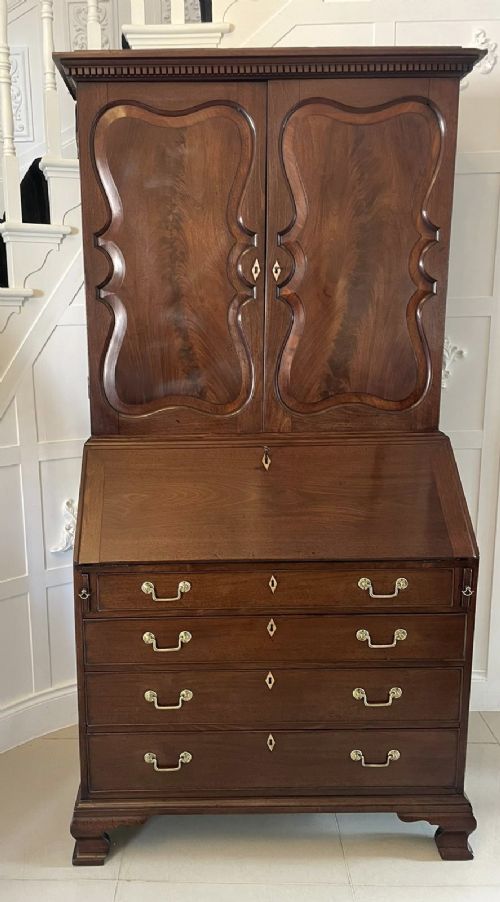
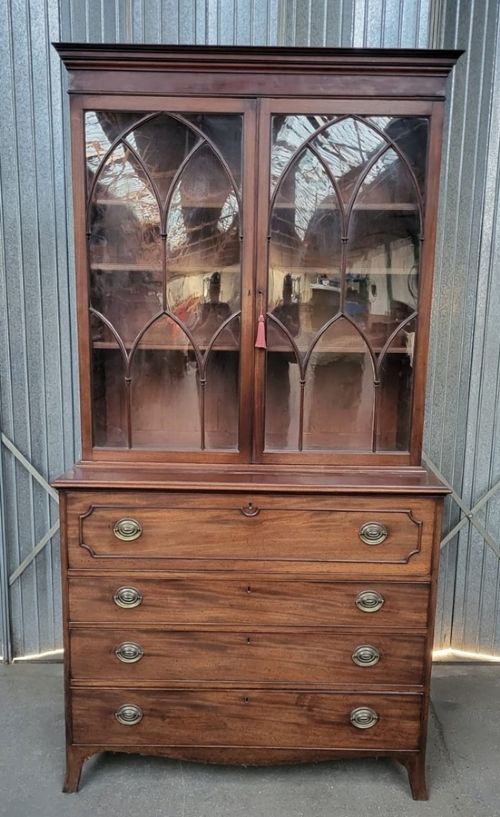
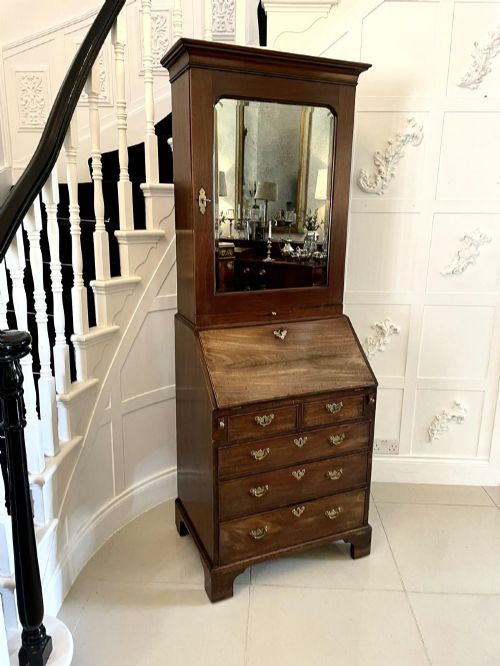
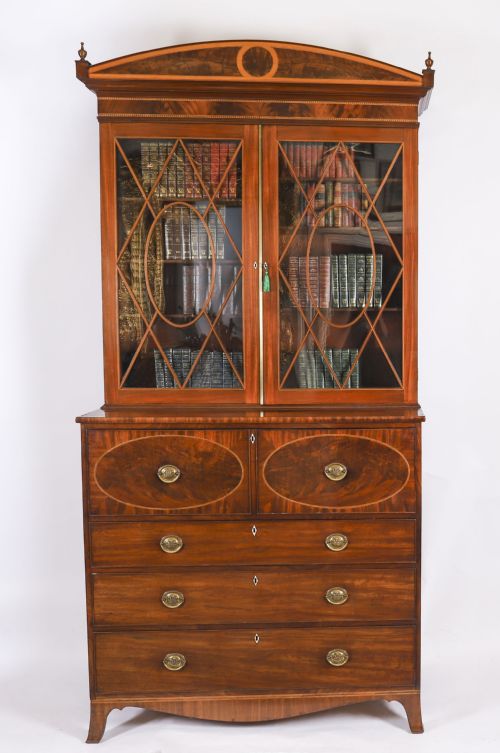
Mahogany Desk Bookcase
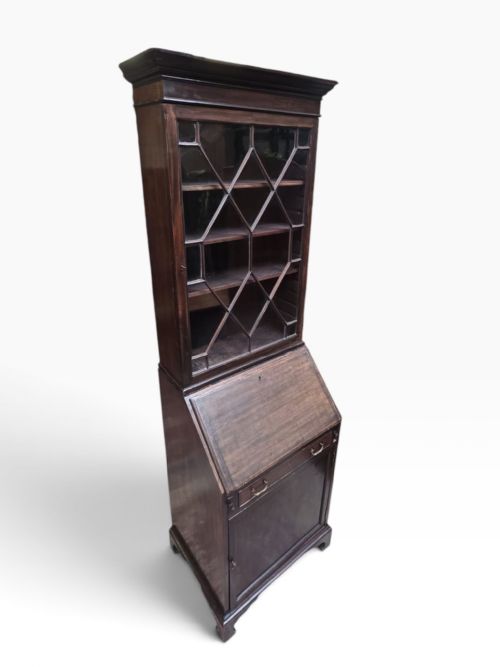
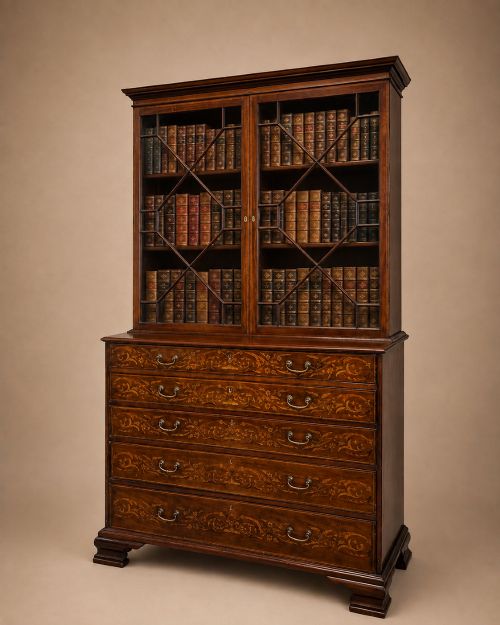
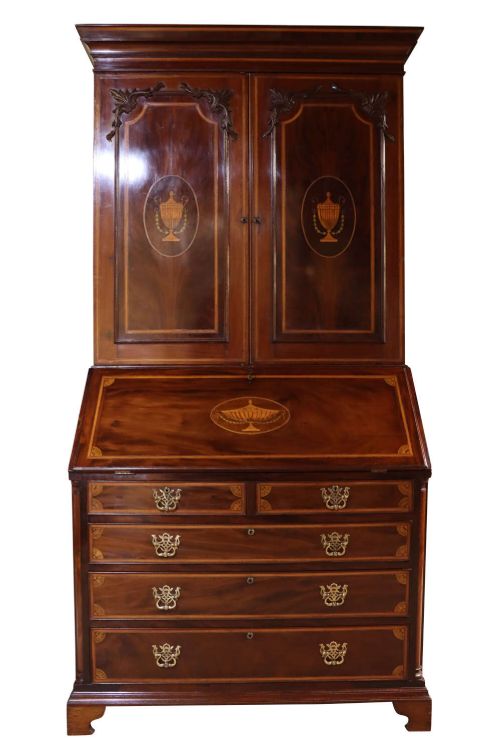
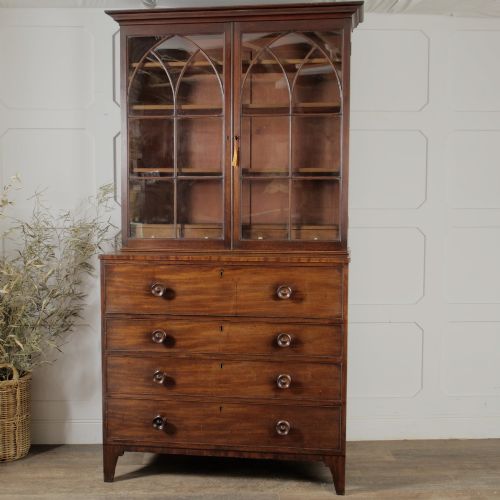
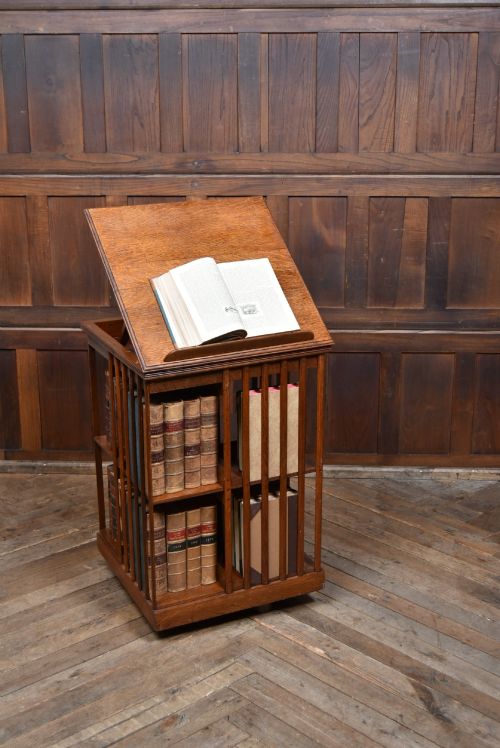
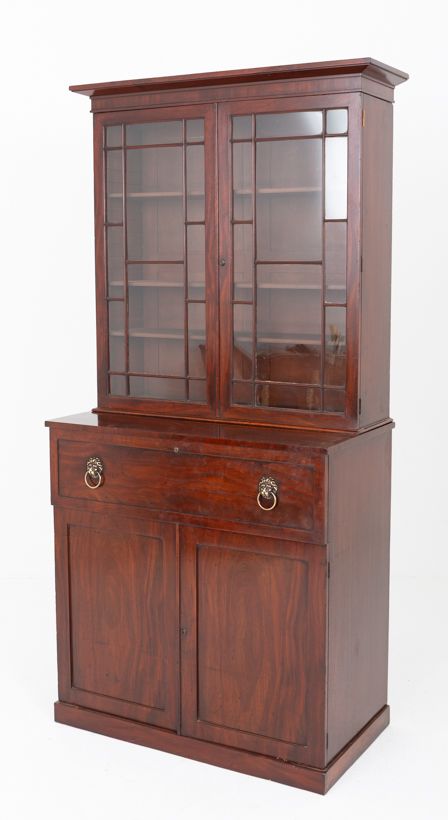
These mahogany desk bookcase pieces combine a writing surface with upper shelving, offering both study space and organised display.
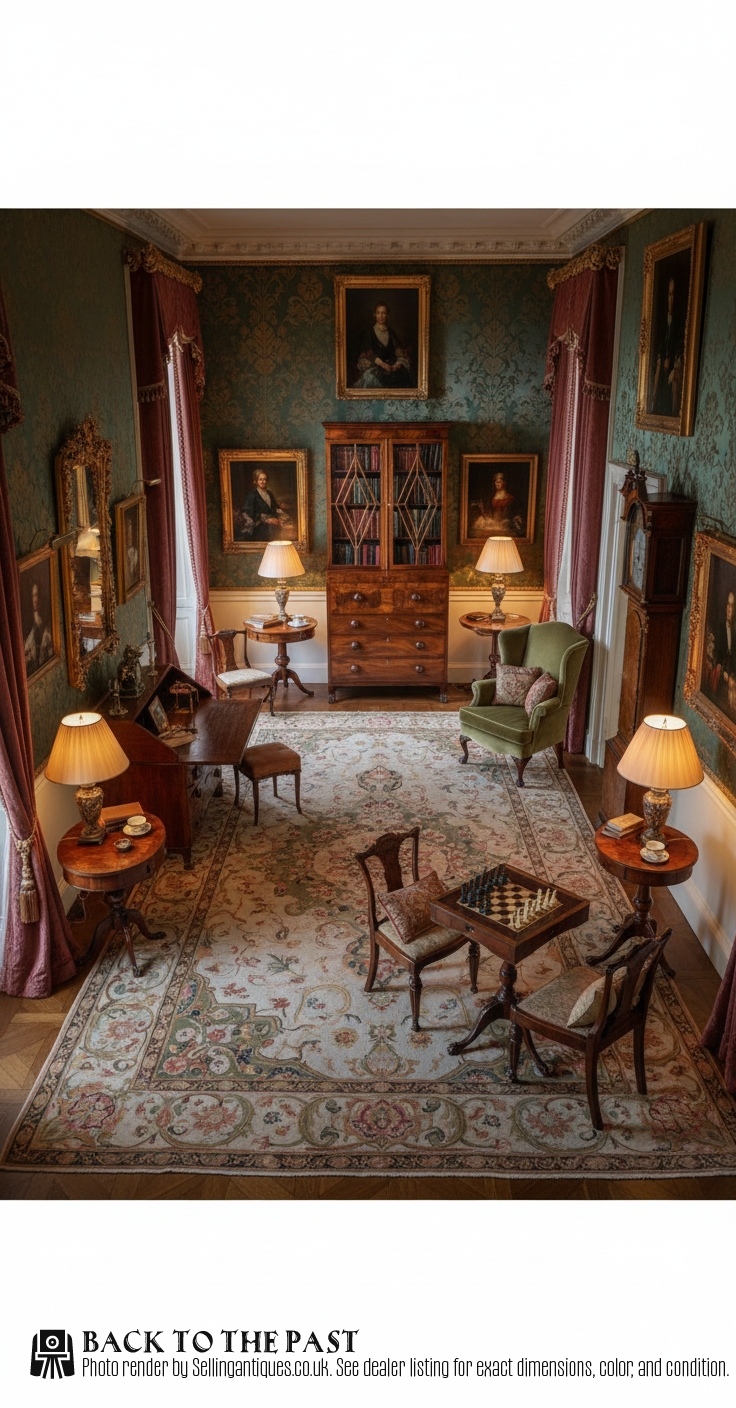
Defining the mahogany desk bookcase
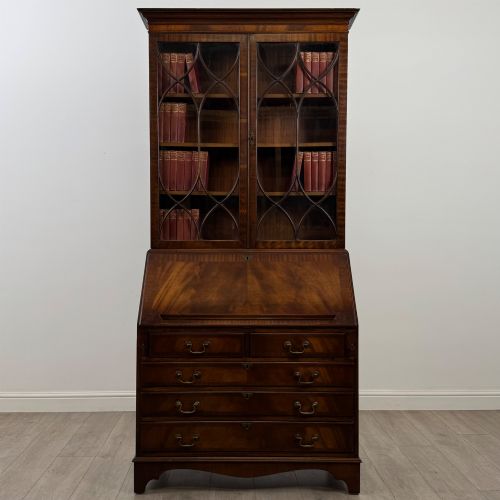
A mahogany desk bookcase brings together a fitted writing compartment and an upper storage cabinet for books and papers, uniting two essential pieces of furniture into a single substantial form. Buyers searching for a mahogany desk bookcase find a range of historic designs extending from the eighteenth century into the Edwardian era.
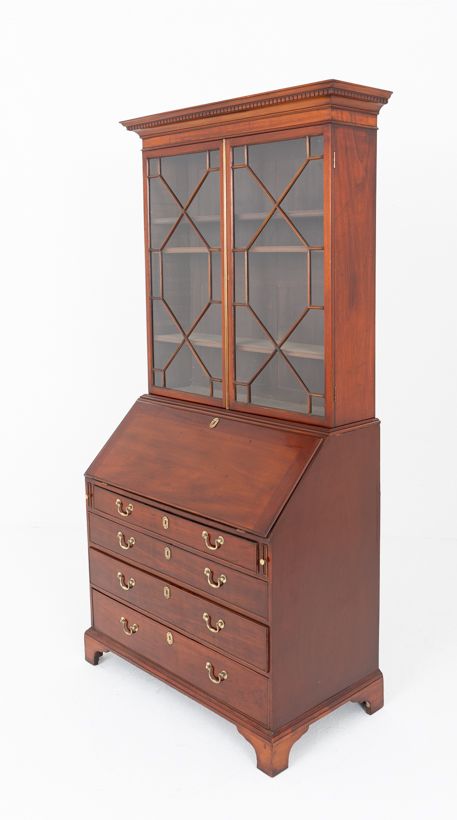
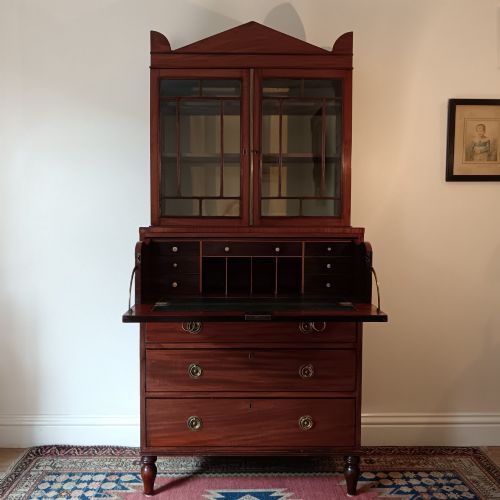
The most common forms seen here include bureau bookcases, secretaire bookcases, and cylinder desks paired with glazed shelving. These dual-purpose items served the library, study, or drawing room of traditional homes.
Examples span George III, Regency, William IV, and later periods, showing how cabinetmakers adapted the form across changing stylistic decades.
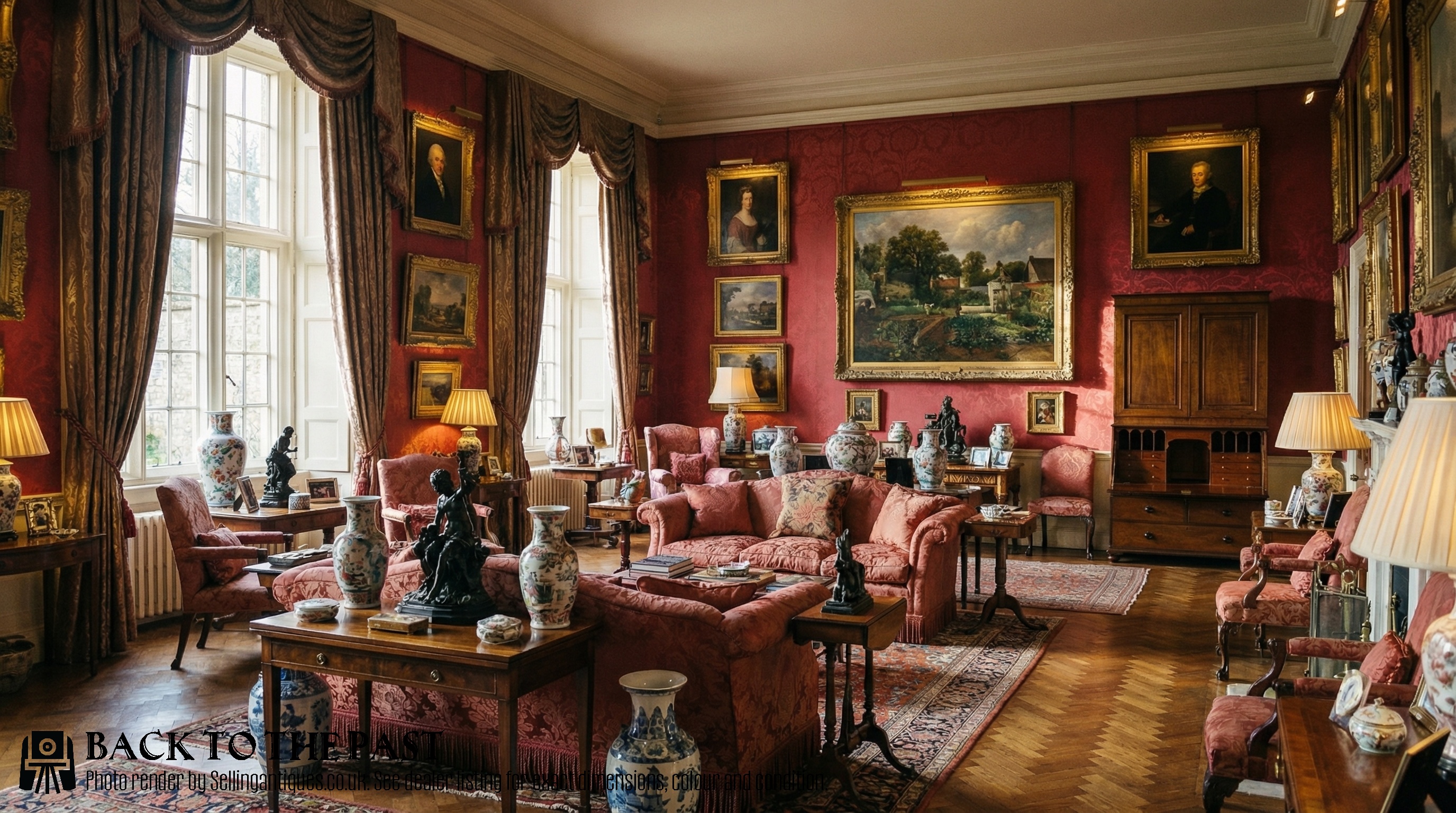
Materials and construction
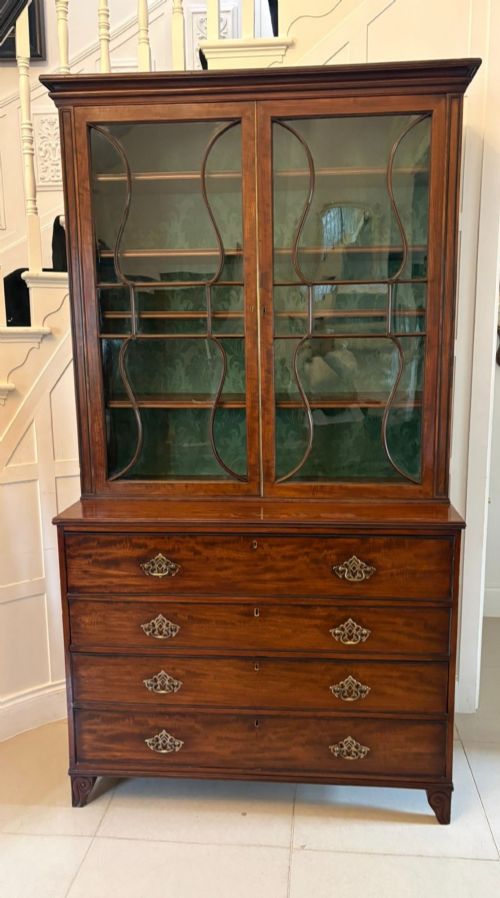
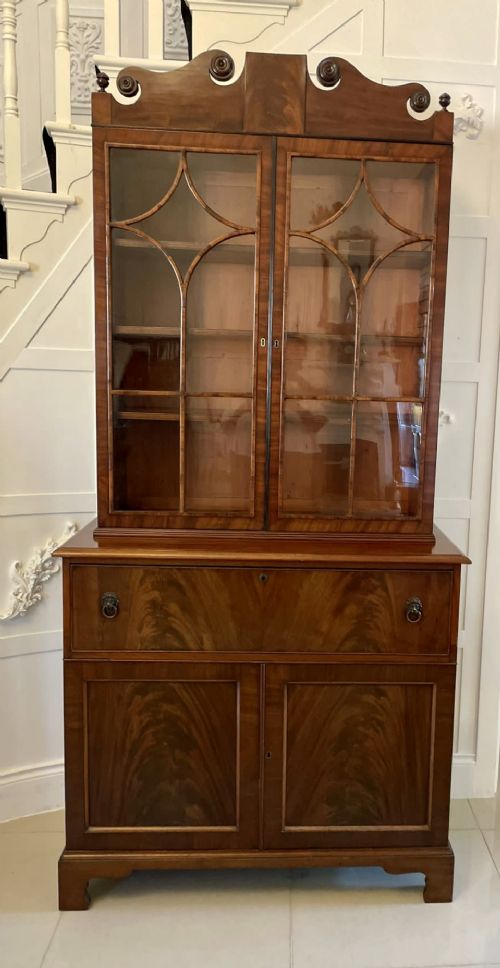
Makers relied primarily on mahogany timber, often selecting figured veneers such as flame mahogany for drawer fronts and major display surfaces to create visual depth and grain movement. Brass hardware, including handles, escutcheons, and hinges, provides functional contrast against the dark timber.
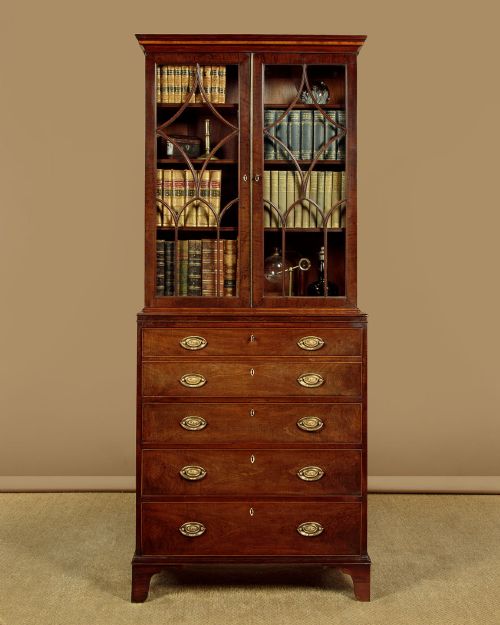
Upper compartments feature glass panels, frequently set within wooden astragal bars, while writing surfaces often incorporate fitted interiors with small drawers and pigeonholes alongside panels of leather.
Retail Price Guide 2026
Typical UK retail prices for mahogany desk bookcase, calculated from the Sellingantiques database of over a million retail prices indexed since 2003. This retail price guide relies exclusively on Sellingantiques data; no external sources or auction records are used, so the figures do not describe the wider market.
Regional cabinetmakers utilised flame mahogany veneers to highlight the fall fronts and secretaire drawers of library pieces.
Judging quality in the range
Quality separates pieces through the selection of timber veneers and the precision of the cabinetmaker's joinery in the internal fittings. Superior examples display careful grain matching across the fall front or secretaire drawer and well-proportioned astragal glazing bars.
The complexity of the interior arrangement, the weight and finish of the brass fittings, and the integrity of the original carcase construction distinguish workshop standards across the Georgian and later periods.
The Mahogany Desk Bookcase Glossary
- Secretaire bookcase
- A tall cabinet featuring a fitted writing drawer that drops down to reveal small drawers and pigeonholes, paired with an upper bookcase.
- Astragal
- The moulded wooden bars that divide panes of glass within the upper cabinet doors.
- Flame mahogany
- A distinct timber figure resembling flickering flames, achieved by cutting across the branch forks of the mahogany tree.
- Bureau
- A desk with a sloping flap that opens to provide a writing surface.
- Escutcheon
- A protective brass plate surrounding a keyhole.
Frequently Asked Questions
What is the difference between a bureau bookcase and a secretaire bookcase?
A bureau bookcase utilises a sloping hinged flap that pulls down to form a writing slope. The interior reveals small pigeonholes and letter drawers.
In contrast, a secretaire bookcase typically conceals its writing compartment behind a drawer front that pulls straight out and drops forward. This maintains the clean exterior appearance of a chest of drawers.
How do I date a mahogany desk bookcase?
Dating relies on examining construction methods, timber choice, and the prevailing decorative style of the period. Earlier George III pieces often show solid timber framing and fine cock-beading around drawers.
Later Victorian and Edwardian examples may incorporate machine-sawn elements, different brass casting techniques, and specific inlay styles that mark their decade of production.
Where were these pieces used in the home?
These pieces traditionally stood in private libraries, studies, or principal reception rooms where household accounts and correspondence were managed. They kept reference volumes close at hand while offering a private space for writing letters.
The upper glass doors allowed owners to display leather-bound volumes protected from dust.
How should I care for mahogany timber?
Mahogany responds best to a stable environment away from direct heat sources and strong sunlight, which can fade the rich reddish-brown colour over time. Regular dusting with a soft, dry cloth maintains the surface.
Occasional application of appropriate wax polish helps nourish the grain without building up heavy residues.