
Mahogany Credenza Sideboard
A mahogany credenza sideboard brings deep timber grain and formal storage into a dining room or hall, spanning Georgian lines to Victorian proportions.
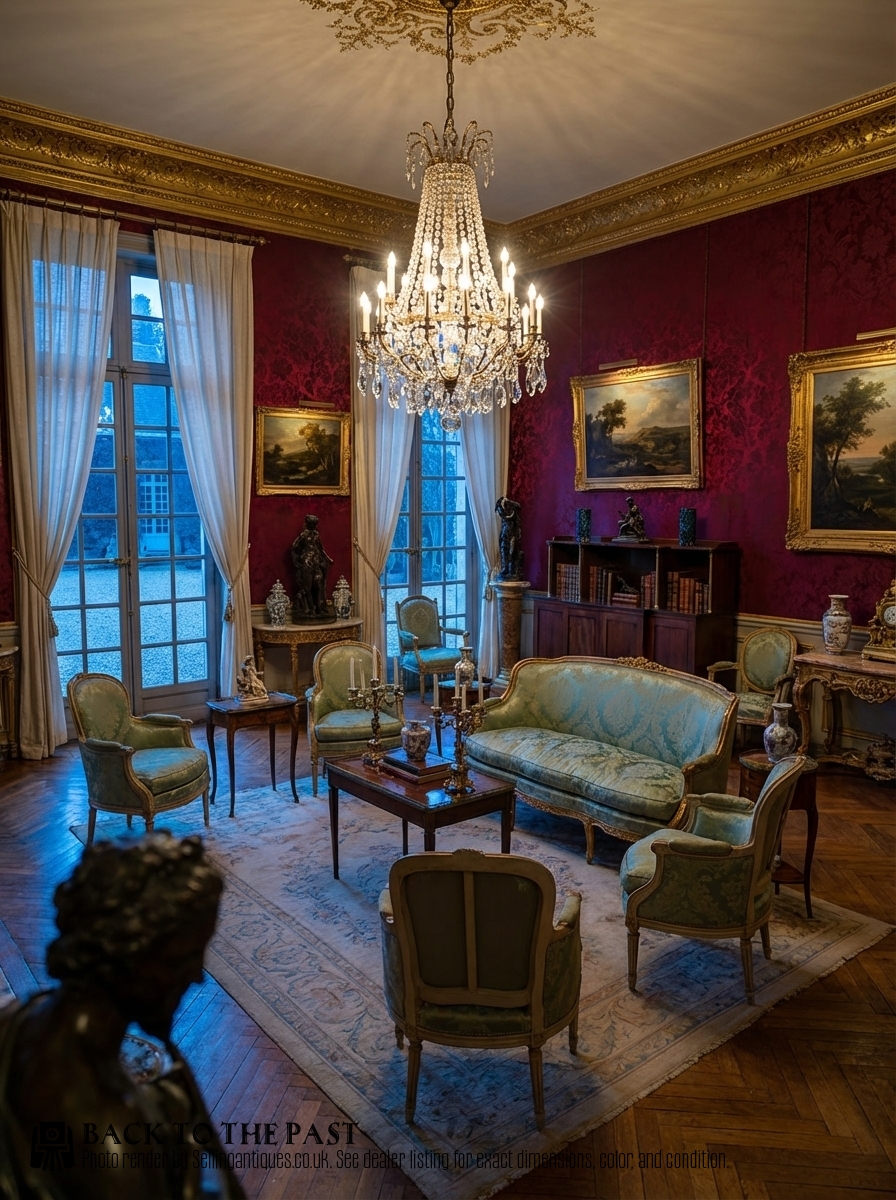
Mahogany Credenza Sideboard
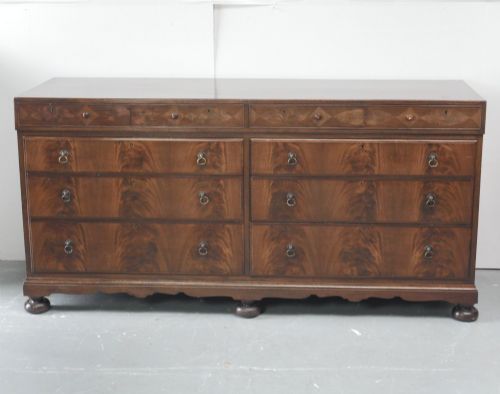
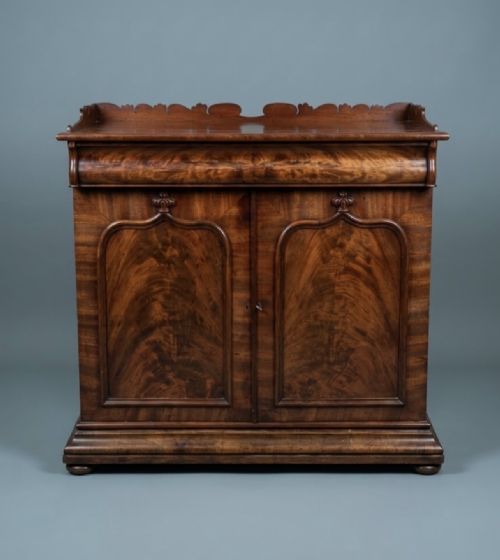
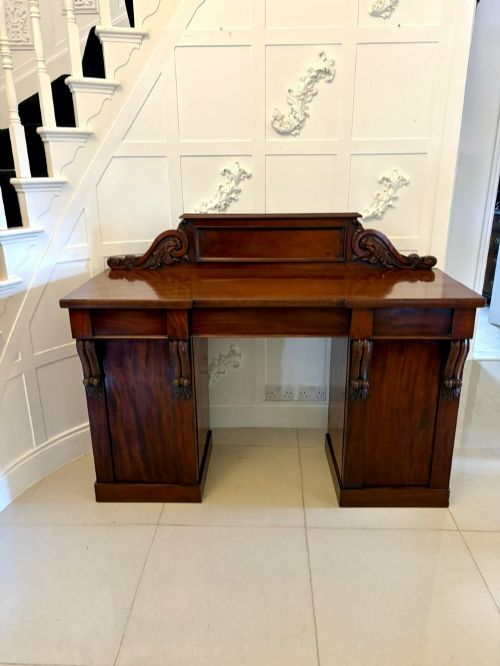
When you search for a mahogany credenza sideboard, you encounter large dining room servers, pedestals, and low cabinets built to hold linen, silver, and glass. The pieces on this page span the 18th, 19th, and early 20th centuries, covering Georgian, Regency, and Victorian eras.
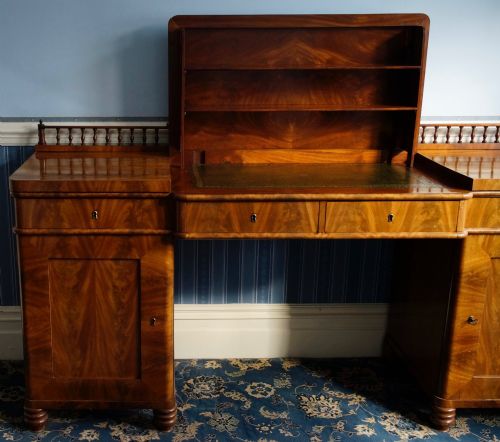
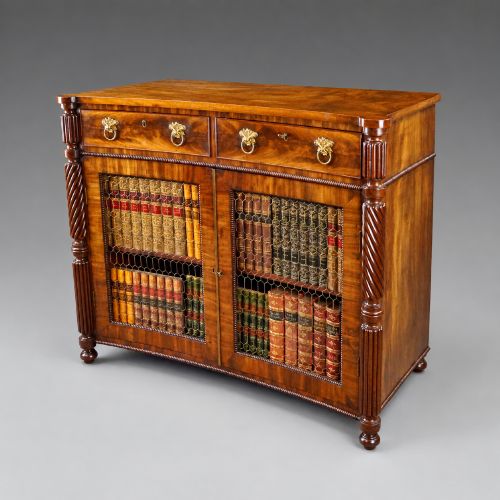
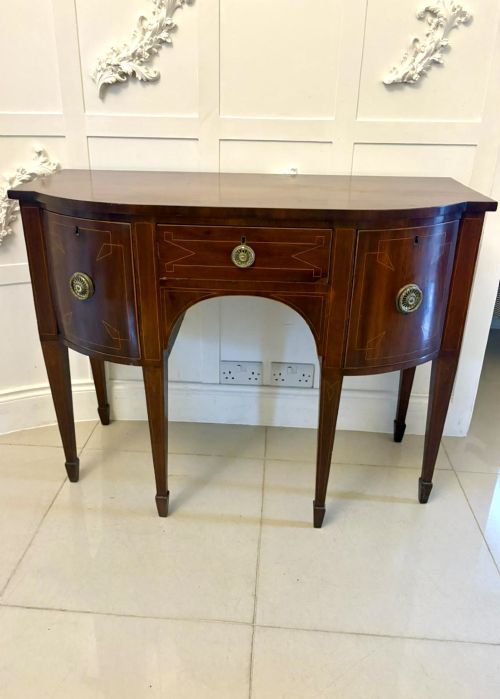
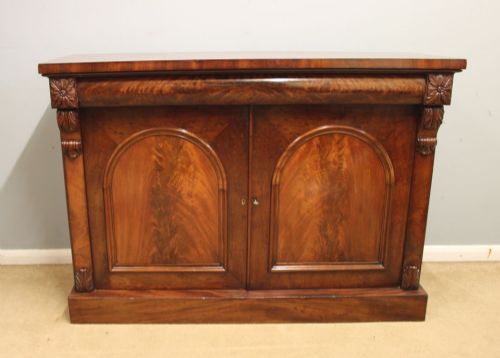
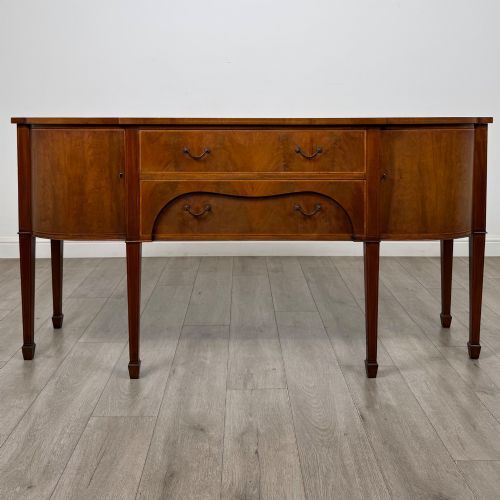
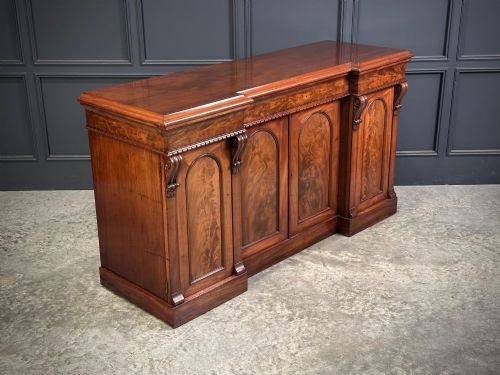
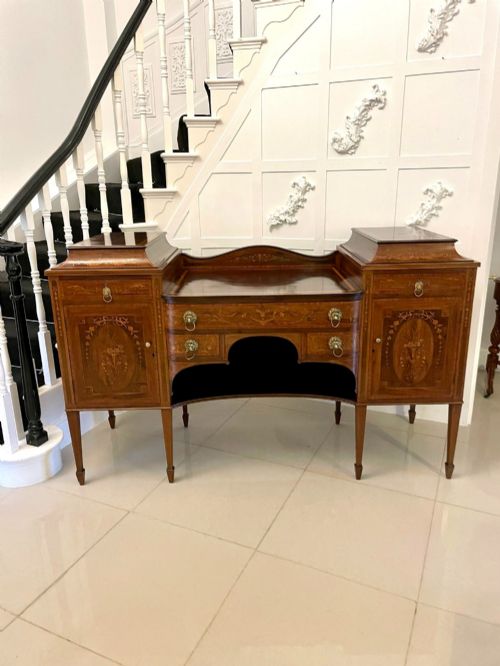
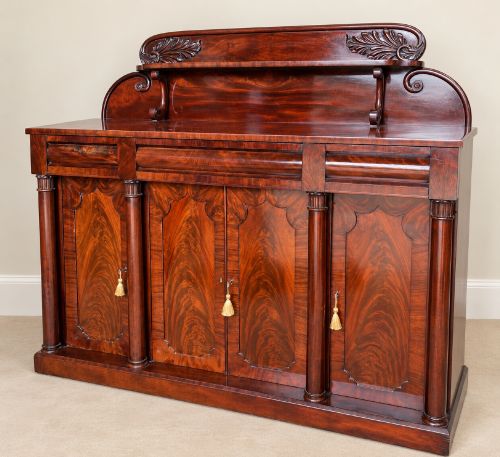
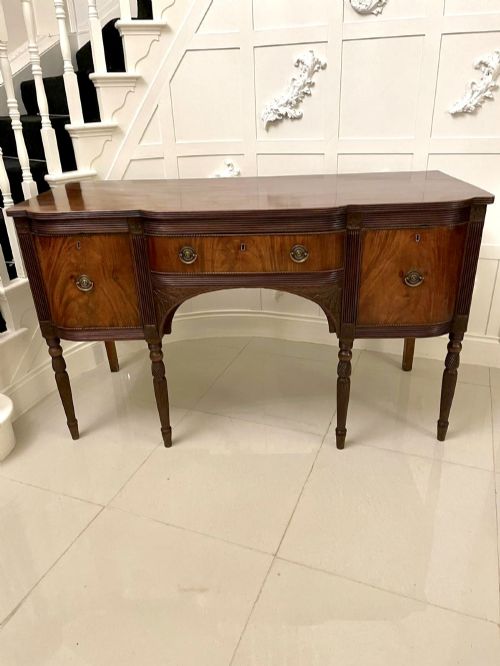
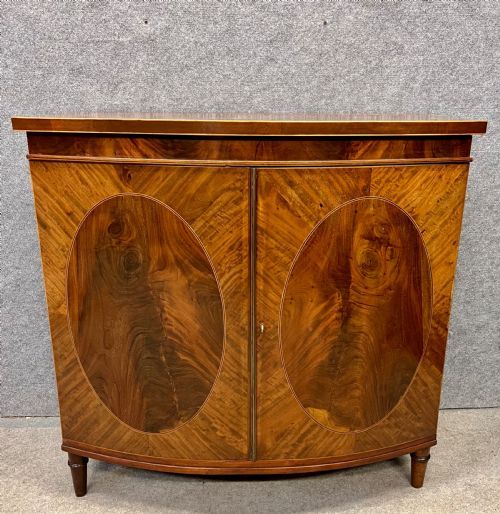
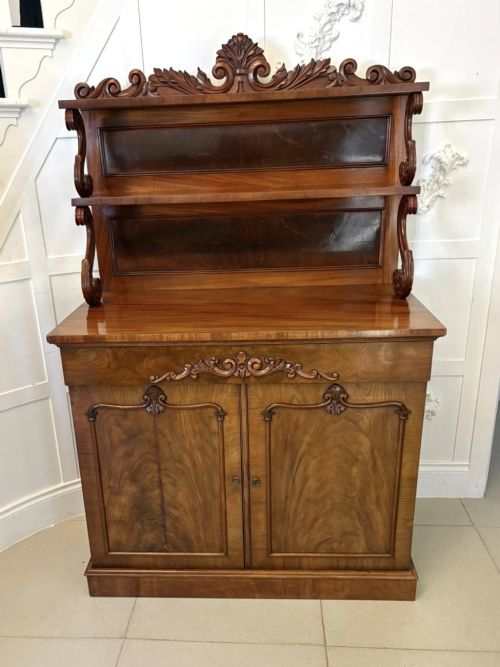
You meet straightforward bow-front and breakfront shapes alongside more architectural forms like the William IV side cabinet and the mirrored Victorian chiffonier. Many examples feature four doors, drop-down secretaire drawers, or raised cabinet backs.
Makers and workshops from London to Scotland produced these formats, employing revival designs well into the Edwardian period. The selection ranges from compact sideboards to exhibition-scale console tables and bookcases.
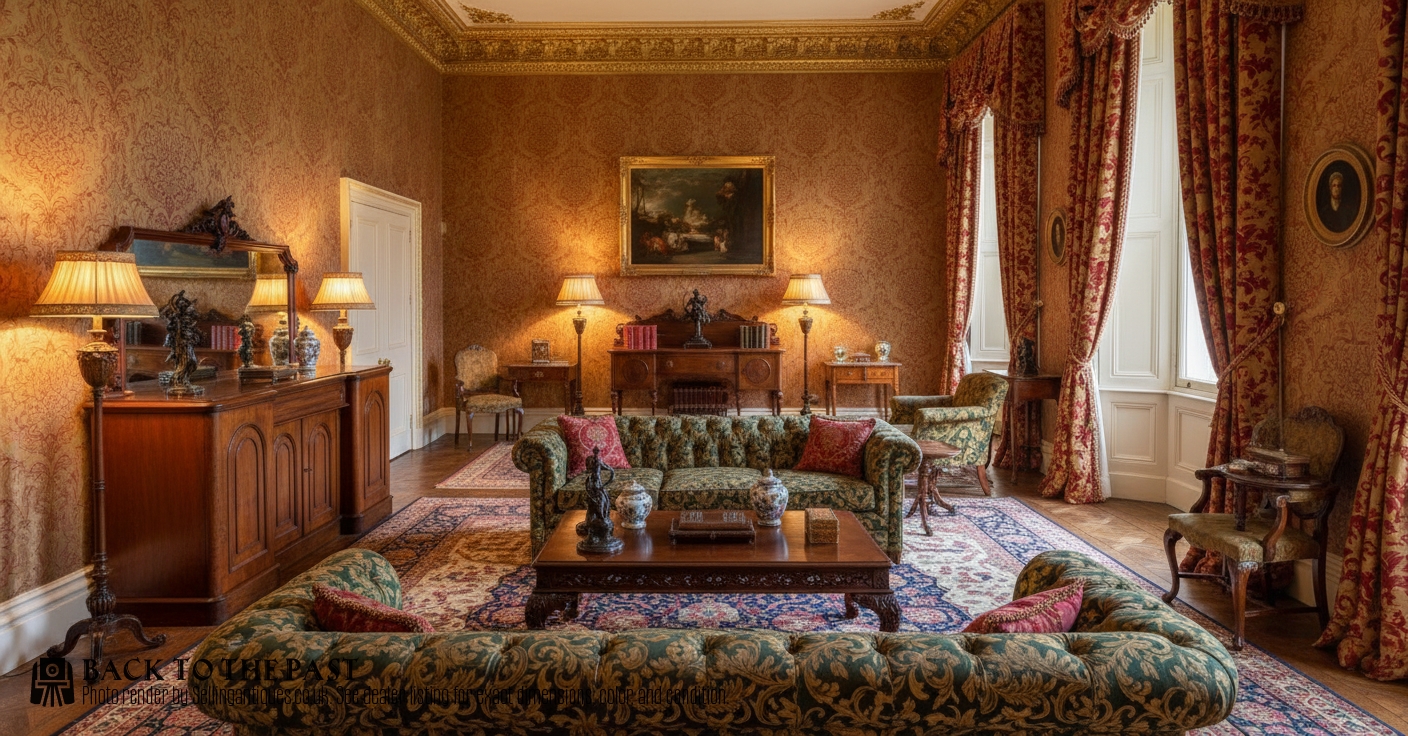
Materials and construction methods
Solid mahogany and flame mahogany veneer form the primary surfaces, matched with secondary timbers such as oak and boxwood for drawer linings and internal framing.
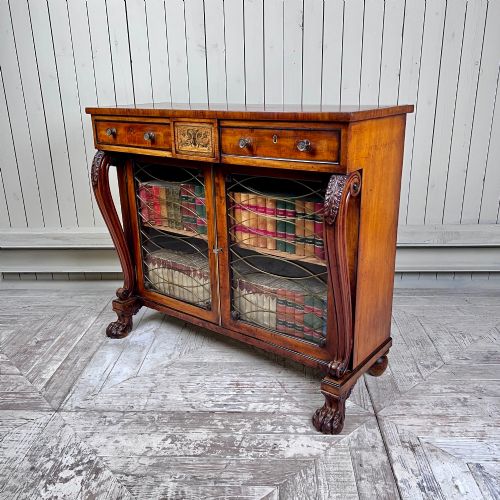
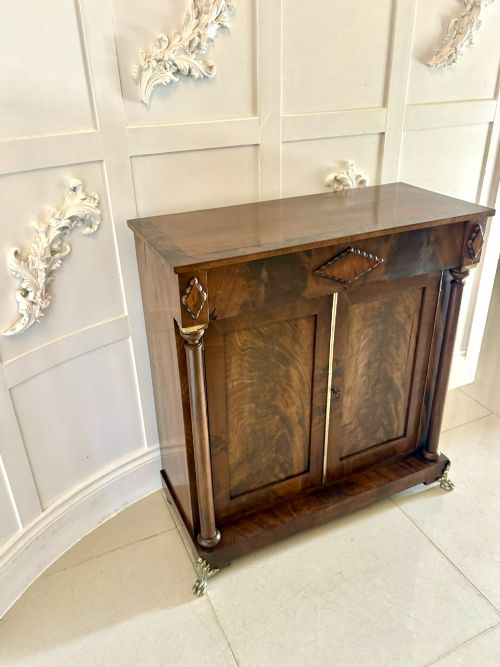
Cabinet makers applied elaborate brass inlay, ebony stringing, and marquetry to accentuate the natural figure of the timber, often mounting pieces on carved lion paw feet.
Glass doors, marble tops, and brass gallery rails appear on specific Regency and Victorian iterations, combining display utility with heavy structural framing.
Listings span Georgian, Regency, Victorian, and Edwardian periods, utilising solid mahogany, flame mahogany veneer, brass, marble, and glass.
Distinctions in construction and finish
Quality rests in the selection of the timber grain, where matched flame mahogany veneer exhibits deep, rolling figures across wide door panels and drawer fronts.
The precision of the cabinetwork dictates value, seen in tight dovetail joints, crisp boxwood stringing, and heavy cast brass mounts that sit flush with the wood.
Proportion and architectural balance separate standard utility pieces from exhibition-grade examples carrying carved architectural details and integrated cellarettes.
Whytock and Reid·Hewetsons London·Edwards and Roberts
The Mahogany Credenza Sideboard Glossary
- Flame mahogany veneer
- Thin slices of timber cut from the fork of the mahogany tree to create a distinctive flickering flame pattern.
- Breakfront
- A piece of furniture where the central section projects forward from the flanking cabinets.
- Chiffonier
- A compact sideboard or low cabinet, frequently fitted with shelves or a mirror superstructure.
- Cellarette
- A compartment or lined drawer built into a sideboard for cooling and storing wine bottles.
- Marquetry
- Decorative veneer patterns formed by fitting together small pieces of coloured wood and other materials.
Mahogany Credenza Sideboard: Frequently Asked Questions
What is a mahogany credenza sideboard?
A mahogany credenza sideboard is a heavy timber storage cabinet designed for dining rooms and large reception spaces. These pieces combine flat top surfaces with internal cupboards and drawers for hosting and service.
They bridge the gap between formal sideboards and display cabinets. Many incorporate specialised compartments like cellarettes or upper shelving tiers.
How do I date a mahogany sideboard?
Dating relies on stylistic markers and construction traits seen across different periods. Georgian and Regency pieces favour clean architectural lines, brass inlay, and tapered legs.
Victorian and later examples introduce heavier carved details, flame mahogany veneers, and sometimes marble tops or mirror backs. Drawer construction and secondary timbers also help confirm the era of manufacture.
Where should I place one?
These large cabinets suit dining rooms, long hallways, or spacious living areas where they provide both surface display and deep storage. Their substantial timber presence anchors a room.
Ensure adequate floor space for door swings and drawer extensions, particularly with bow-front or breakfront formats.
What is the difference between a sideboard and a credenza?
Traditional sideboards focus on flat serving surfaces and drawer storage for dining silver and linen. Credenzas lean towards enclosed low cabinetry, often featuring glass doors or marble surfaces.
Over time, makers blended these terms, resulting in hybrid formats that serve both display and utilitarian storage functions.