
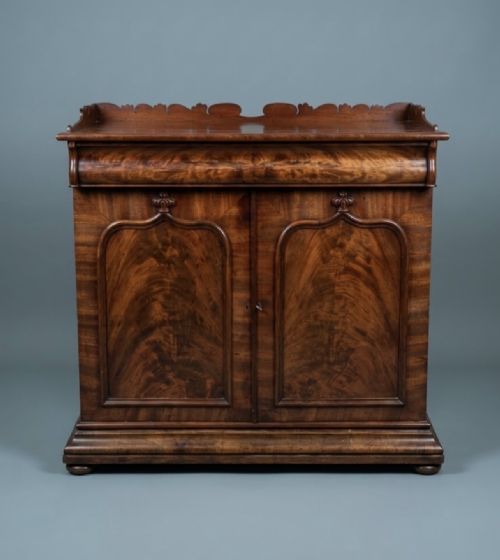
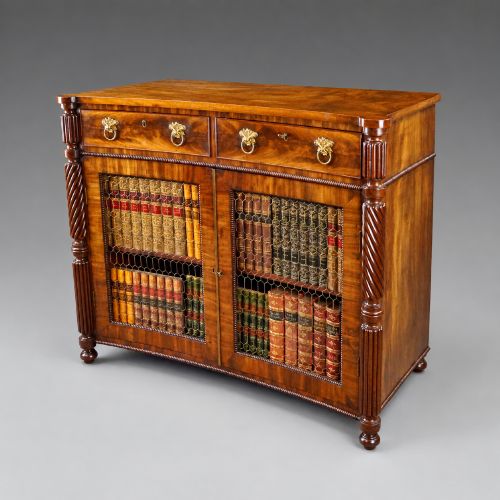
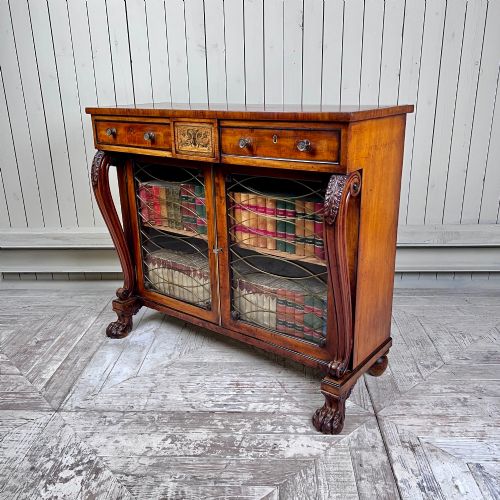
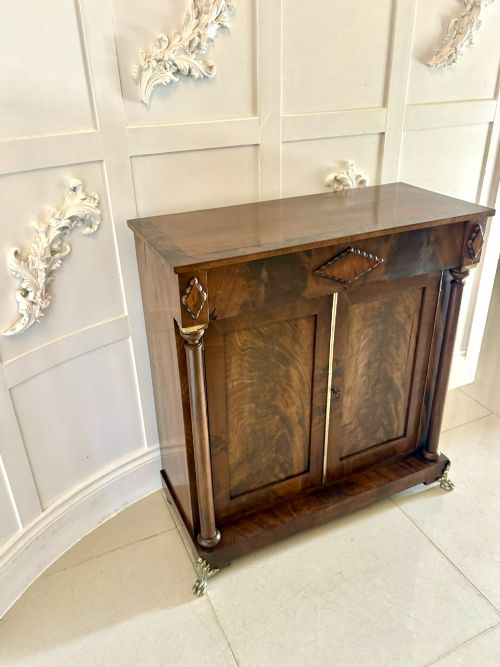
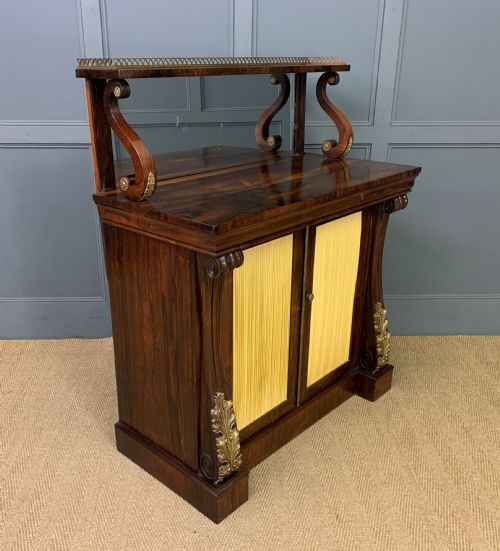
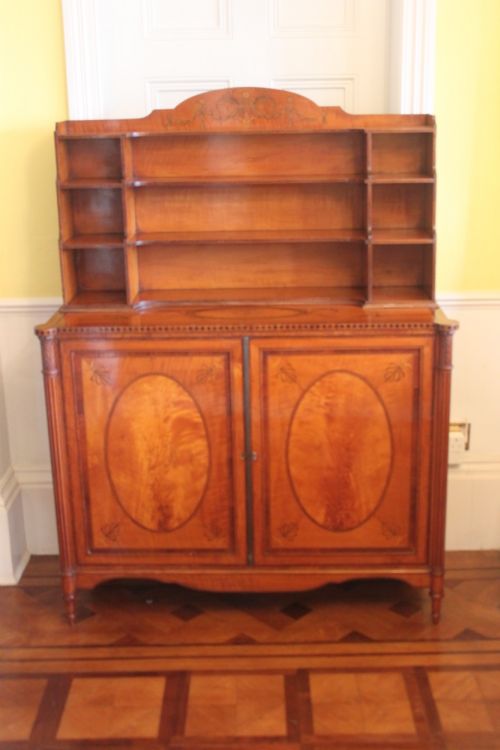

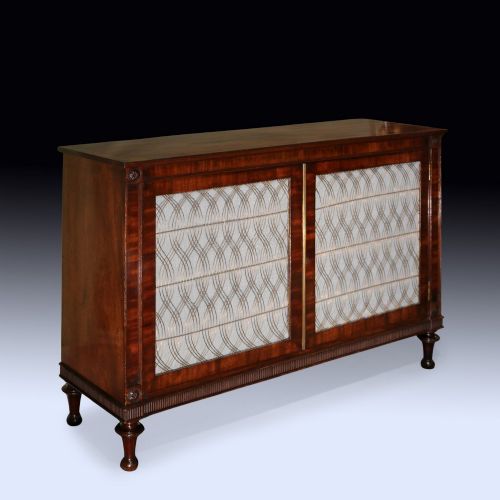


Georgian Chiffonier Side Cabinet
A georgian chiffonier side cabinet combines display shelving with enclosed storage, offering compact elegance for the dining room or drawing room.
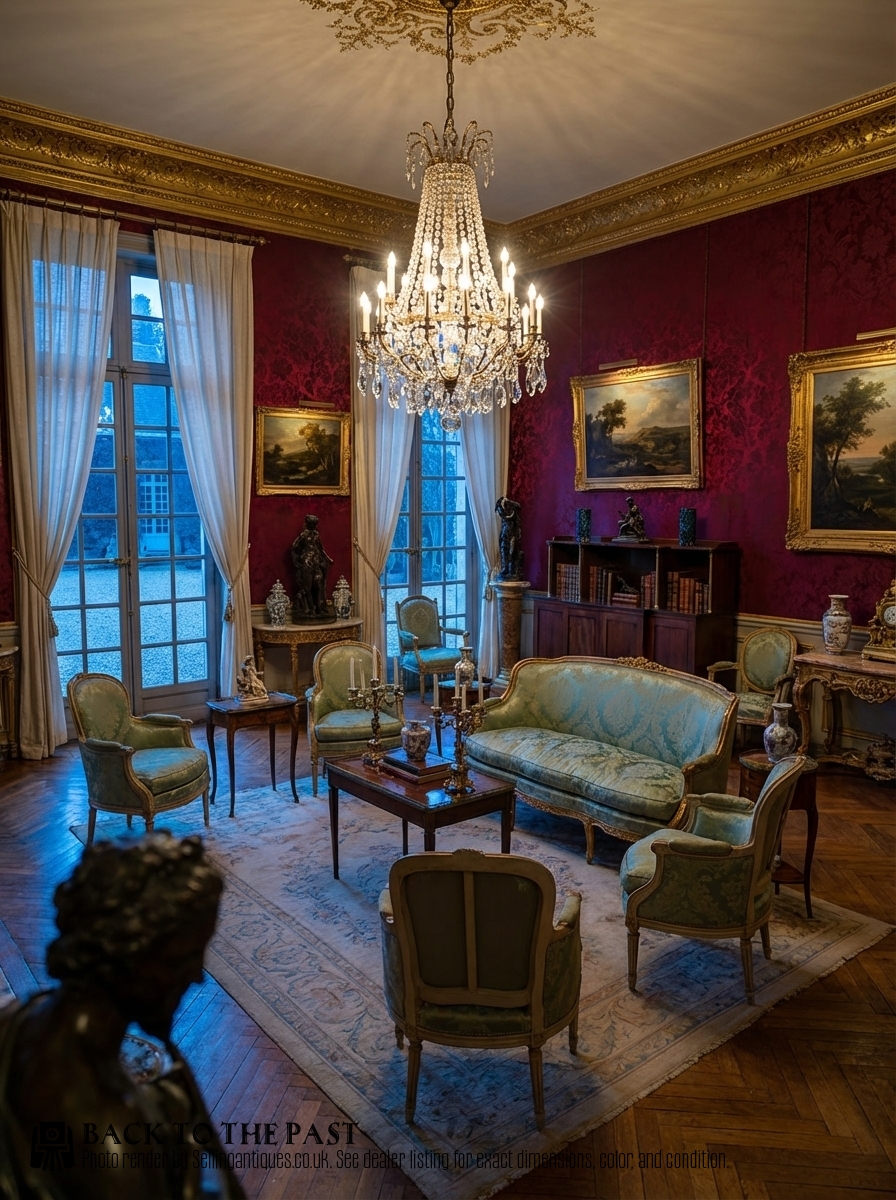
Georgian Chiffonier Side Cabinet
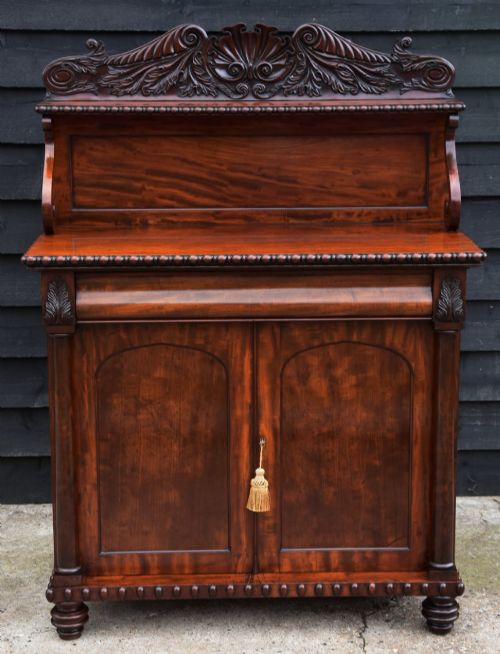
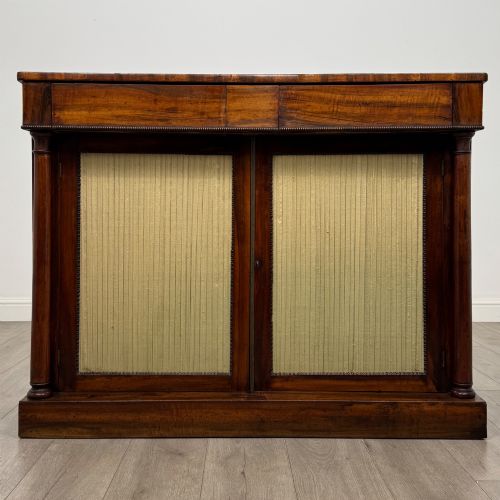
When you search for a georgian chiffonier side cabinet, you encounter low, timber-built storage furniture designed for the formal rooms of eighteenth and nineteenth-century homes. The pieces appearing here span the Georgian, Regency, and William IV eras, capturing a period when cabinet-makers refined domestic storage with shelves and enclosed cupboards.
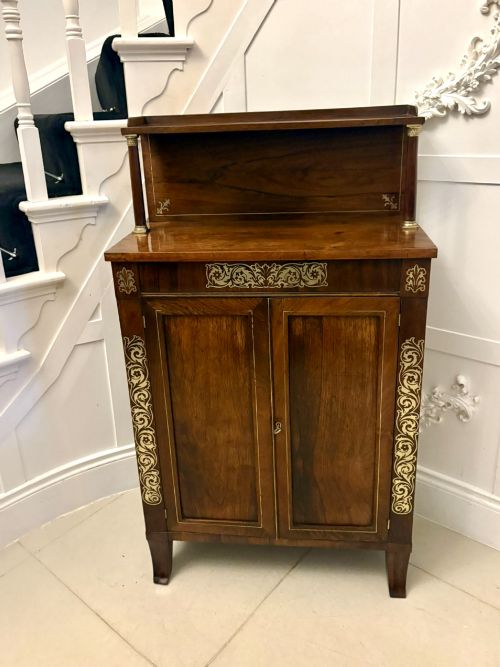
Most examples you meet are fashioned from rich hardwoods such as mahogany or rosewood, frequently incorporating adjustable shelving or enclosed lower doors. They serve as practical low sideboards, often topped with a raised shelf gallery for displaying ceramics or silver.
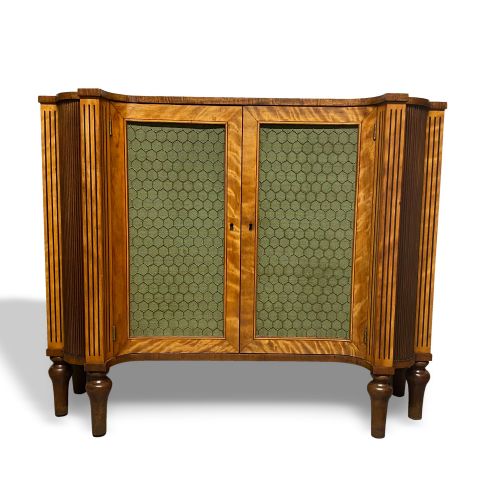
The form evolved from simple low cupboards into sophisticated side pieces featuring brass grilles, glazed panels, or silk-backed doors. The surviving stock reflects this transition, ranging from austere mahogany side cabinets to elaborate rosewood pieces inlaid with brass.
Materials and construction methods
Cabinet-makers relied on solid hardwoods like mahogany and rosewood, frequently selecting flame mahogany veneer or pollard oak to create striking surface grain patterns. These timbers were worked over sturdy oak carcases, ensuring structural stability for heavy tops and doors.
Decorative detailing involved precision brass inlay, ebony stringing, and pierced brass grilles backed with fabric or silk. Specialised techniques such as pen-work and painted simulation of rosewood also appear among the finer examples.
Joinery techniques utilised traditional dovetailing for drawers and mortise-and-tenon joints for frames, allowing timber to expand and contract naturally over centuries of use.
Mahogany, rosewood, and oak dominate the timber selections across these cabinet listings.
Distinctions in craftsmanship
The standard of timber selection and veneer matching defines the upper tier of these cabinets, where cabinet-makers used continuous grain across multiple doors and drawer fronts. Lesser pieces rely on uniform, plain timber planks without the depth of figure seen in high-grade workshop output.
Hardware and metalwork differentiate workshop origins, with finely cast and hand-chased brass mounts indicating superior production. Simpler pieces utilise stamped brass or standard commercial fittings lacking crisp definition.
Internal joinery and secondary woods reveal the care taken in construction, as top-tier makers employed solid mahogany or oak for interior shelves rather than deal or secondary conifers.
Gillows·Ince and Mayhew
The Georgian Chiffonier Side Cabinet Glossary
- Chiffonier
- A low sideboard or cabinet featuring enclosed cupboards below, sometimes surmounted by a small shelf or gallery. This form became central to formal dining and drawing rooms during the Regency period.
- Flame mahogany veneer
- A sliced layer of mahogany timber displaying a distinctive, flickering flame pattern. Cabinet-makers applied this to prominent door and drawer surfaces for visual impact.
- Breakfront
- A cabinet design where the central section projects forward from the flanking wings. This architectural arrangement creates depth and shadow on the facade.
- Pollard oak
- Timber taken from trees that have been pollunted, producing a dense, knotted grain with rich figure. It was utilised by Regency craftsmen for select decorative panels.
- Secretaire
- A cabinet or chest incorporating a pull-down writing drawer fitted with small pigeonholes and internal compartments. It allowed writing materials to be concealed within the main storage body.
Georgian Chiffonier Side Cabinet: Frequently Asked Questions
What is a chiffonier?
A chiffonier is a low cabinet designed for domestic storage, typically combining lower cupboard doors with an upper tier or gallery shelf. They emerged to meet the demand for compact serving and display furniture in formal rooms.
Unlike traditional sideboards, they are smaller in scale and frequently feature glazed or fabric-backed doors to protect delicate porcelain and books.
How do I date a chiffonier?
Dating relies on examining the timber species, secondary woods, hardware, and stylistic details such as brass inlay or leg forms. Regency and William IV pieces often showcase rosewood, brass grilles, and heavier architectural proportions.
Earlier Georgian examples tend to use solid mahogany with restrained satinwood stringing, whereas later nineteenth-century adaptations introduce softer secondary woods and machine-made fittings.
Where were chiffoniers used?
These cabinets sat primarily in dining rooms and drawing rooms as auxiliary serving surfaces and display areas. They held glassware, linens, tea service items, and books close to hand.
The low height ensured they did not obscure wall hangings or paintings while providing useful flat space on top.
How do I care for rosewood?
Rosewood requires stable indoor humidity and protection from direct sunlight to prevent timber splitting and fading. Regular dusting with a dry, soft cloth maintains the polished finish without chemical buildup.
A light application of traditional beeswax polish once or twice a year nourishes the antique surface.