




Antique Narrow Sideboard
An antique narrow sideboard solves the persistent problem of furnishing a compact dining room or hallway without sacrificing period timber and honest joinery.
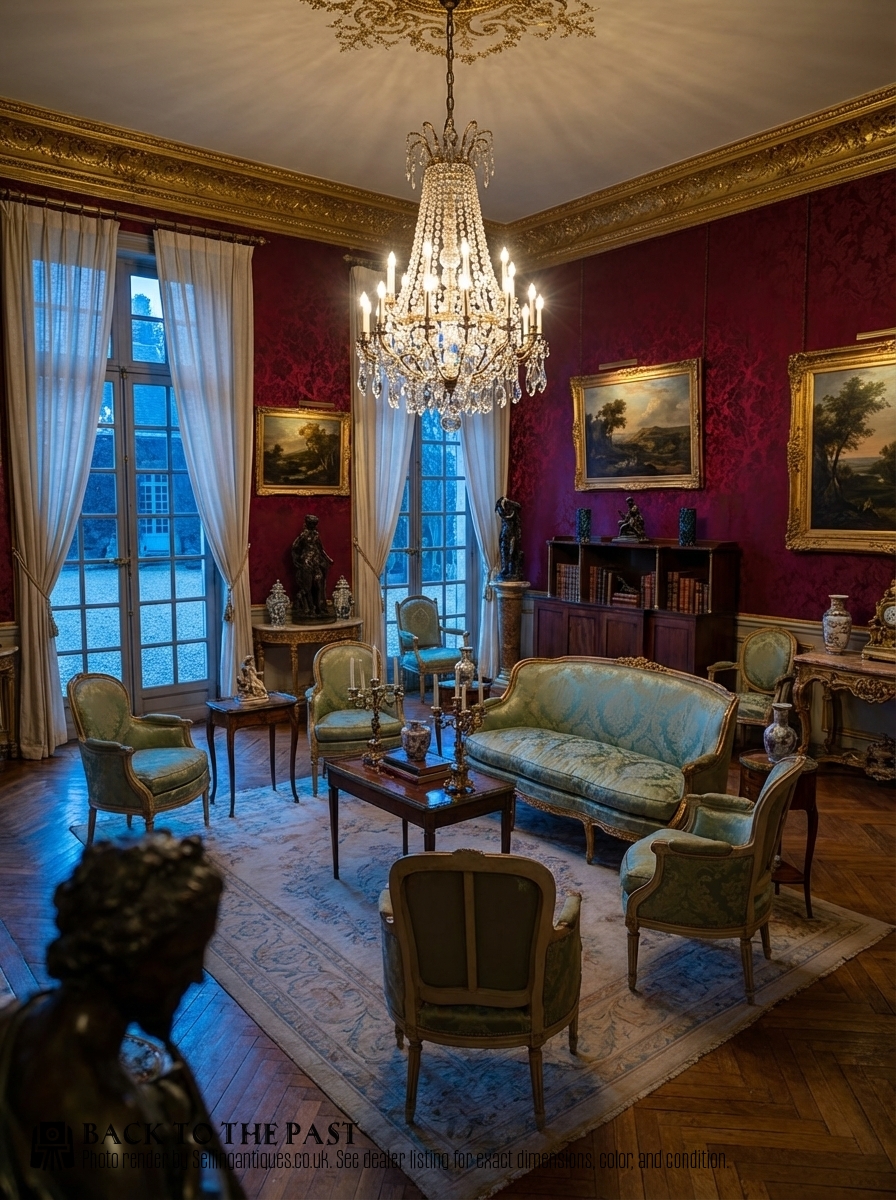
Antique Narrow Sideboard
An antique narrow sideboard brings shallow depth to smaller spaces, fulfilling the exact function of standard server furniture while preserving precious floor space. When you search for an antique narrow sideboard, you encounter forms spanning the eighteenth century through to the early twentieth century, with Victorian and Georgian iterations appearing most frequently.
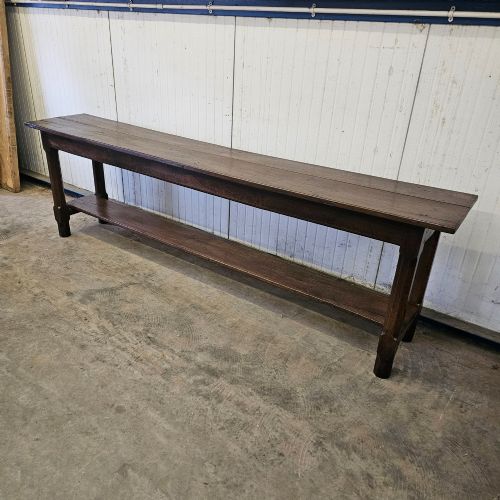
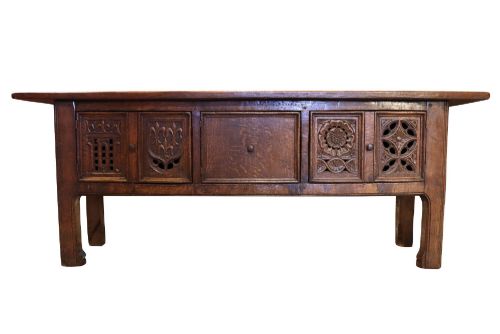
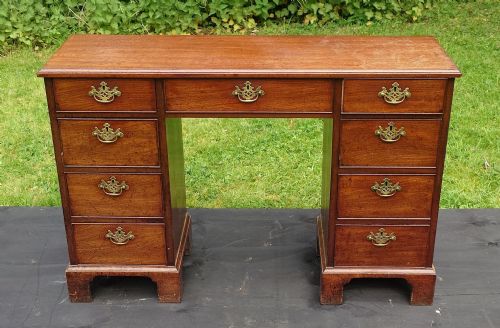
The selection here encompasses various utilitarian and formal formats, ranging from George III servers and William IV chiffoniers to Arts and Crafts oak cottage dressers and carved Gothic Revival dresser bases. These pieces typically present in timbers such as mahogany, oak, and burr walnut, often featuring tailored proportions designed specifically for tight passage rooms and restricted dining layouts.
Materials and construction
Cabinetmakers utilised dense hardwoods such as mahogany and oak to ensure structural integrity across restricted depths, applying burr walnut and rosewood veneers for decorative effect on prominent surfaces. Solid timber construction underpins the longevity of these items, allowing slender frames to support daily use without warping or losing stability.
Inlay work in ebony and brass mounts, alongside ormolu details, indicates the heightened skill applied to formal reception pieces, while simpler country workshops relied on pegged joints and hand-planed panels. The intersection of these timbers and traditional joinery methods produces the distinct visual weight expected from period case pieces of shallow proportions.
Antique Narrow Sideboard Retail Price Guide 2026
Typical asking prices for narrow sideboard among the pieces listed under this phrase on Sellingantiques today, from the lower quarter to the upper quarter. They describe what is for sale here now, not the wider market.
Cutlery boxes of the eighteenth century occasionally travelled with their owners, doubling as miniature sideboards for the exceedingly mobile diner.
Distinctions in quality
Quality rests upon the proportion of the timber figure and the restraint of the secondary woods used in the carcass linings and drawer bottoms. Superior examples display continuous grain matching across the drawer fronts and doors, whereas lesser pieces reveal mixed timber selections and heavier secondary woods.
The precision of the dovetail joints and the integrity of the original backboards separate standard utility items from high-status furniture. Original brass hardware and uncompromised veneer surfaces elevate a piece above examples that have undergone extensive replacement work or unsympathetic timber substitution.
The Antique Narrow Sideboard Glossary
- Chiffonier
- A low sideboard or cabinet with a raised back, commonly utilised in nineteenth-century parlours for storing dining silver and glassware. These pieces offer exceptionally shallow footprints.
- Dresser base
- The lower section of a kitchen or dining dresser, constructed without the upper plate rack to function as a standalone serving table. They frequently incorporate potboards or lower shelving.
- Pier cabinet
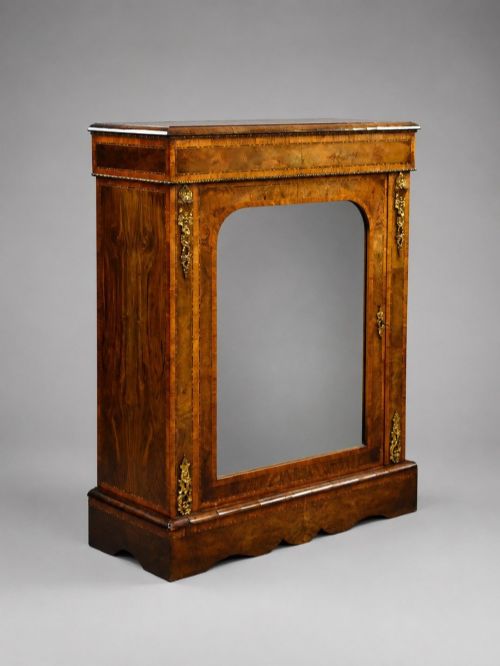
- A slender display cabinet designed to fit the narrow wall space, or pier, situated between windows or architectural doorways. They often feature glass doors and elaborate marquetry.
- Server
- A minimalist side table or sideboard intended exclusively for dishing food rather than heavy storage. They possess clean lines and minimal drawer depth.
- Serpentine
- A curved cabinet front characterised by a convex central section flanked by two concave curves. This contour requires advanced woodworking skill to execute properly on shallow frames.
Antique Narrow Sideboard: Frequently Asked Questions
Where should I place a narrow sideboard?
These compact pieces suit entrance halls, narrow dining rooms, and landings where standard furniture obstructs foot traffic. Their shallow depth allows them to sit flush against walls in restricted spaces.
They function effectively as serving stations during meals or as decorative display surfaces beneath mirrors and paintings in domestic interiors.
How do I distinguish Georgian from Victorian pieces?
Georgian examples generally exhibit restrained classical lines, rectilinear proportions, and simpler timber selections without heavy applied ornamentation. The joinery relies on hand-cut dovetails and understated brass pulls.
Victorian pieces frequently display darker woods, burr veneers, elaborate inlays, and sometimes Gothic or Jacobean revival motifs. The scale can range from formal parlour cabinets to robust country oak dressers.
Can I use a chiffonier as a hall table?
A chiffonier works well in a hallway due to its built-in shallow storage and flat top surface for correspondence and keys. The enclosed cupboards keep small items concealed while maintaining a tidy corridor.
Their narrow profile ensures they do not impede movement when placed against main passage walls.
What maintenance do these antique timbers require?
Regular dusting with a dry, soft cloth prevents particulate accumulation on polished mahogany and oak surfaces. Occasional application of quality wax feeds the wood and preserves the natural lustre without building up heavy chemical layers.
Keep these cabinets away from direct heat sources and strong sunlight to prevent the timber from splitting and the veneers from lifting.