
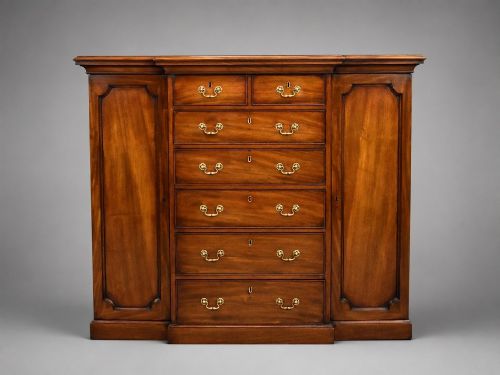
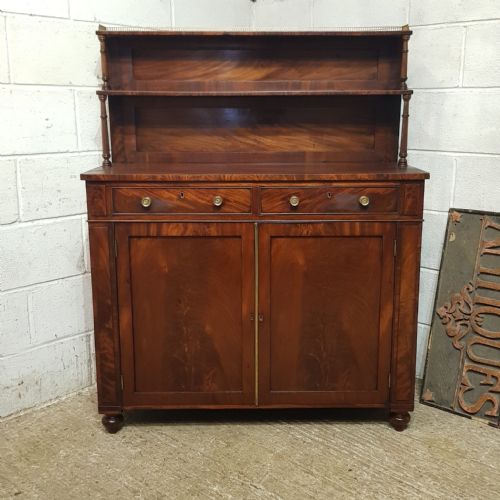


Georgian Wooden Chiffonier
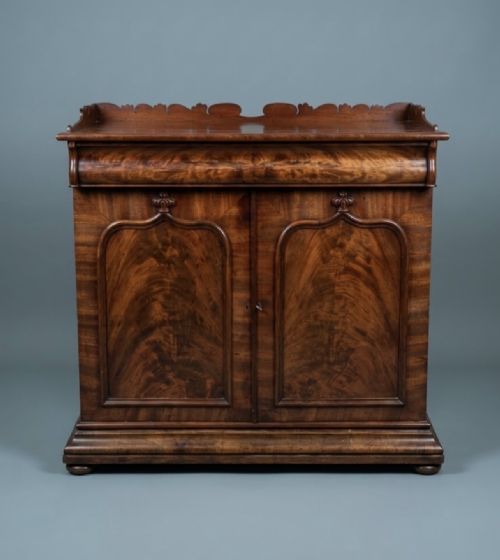
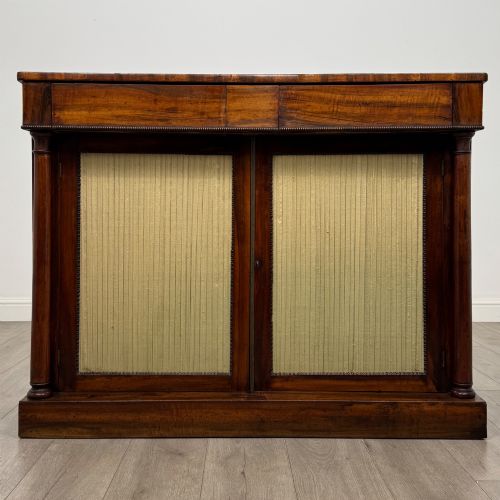
A georgian wooden chiffonier offers compact low storage topped with shelves, combining practical utility with refined cabinetwork.
Georgian Wooden Chiffonier
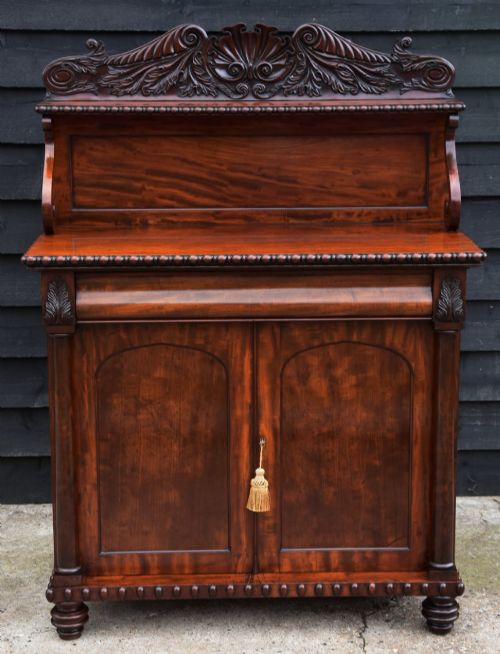
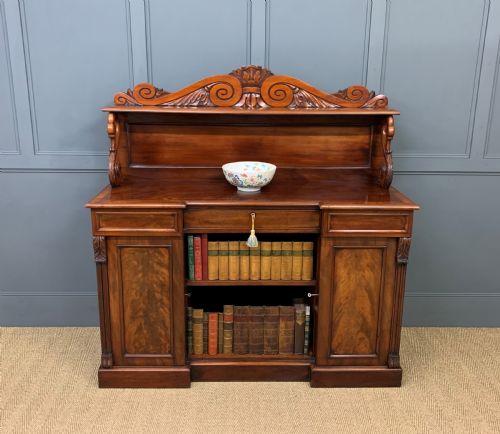
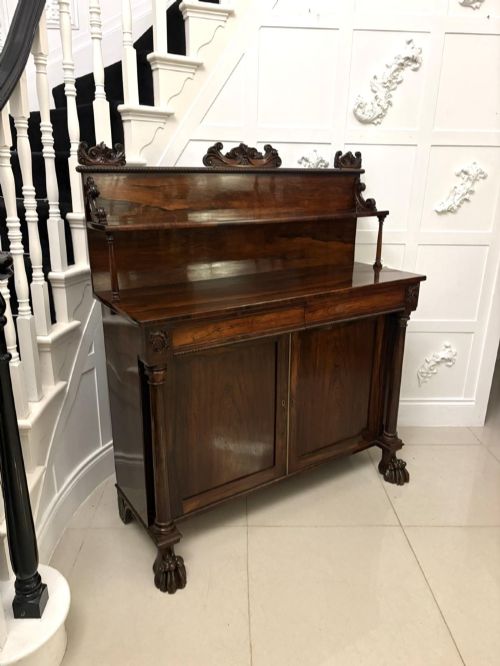
A georgian wooden chiffonier is a low cabinet designed for domestic utility, frequently featuring enclosed lower doors and upper shelving tiers. These pieces evolved during the late eighteenth and early nineteenth centuries to serve dining rooms and parlours.
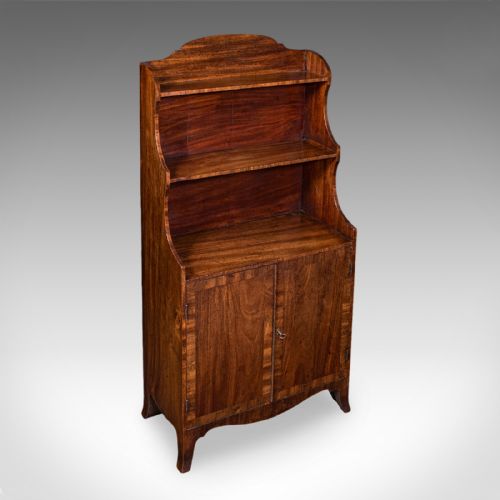
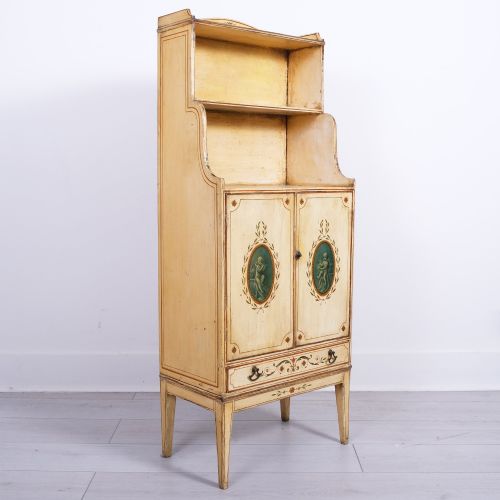
The versions met on this page span the Georgian, Regency, and William IV periods, crossing into early Victorian production. They appear alongside side cabinets and waterfall bookcases sharing similar low proportions.
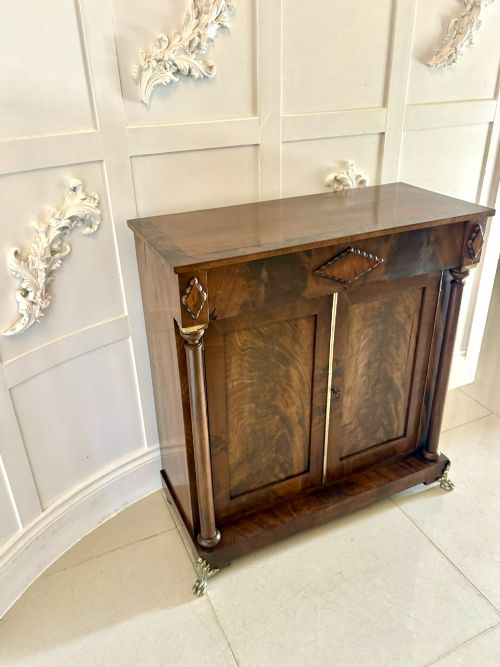
Makers utilised timber varieties suited to formal reception rooms, ranging from flame mahogany veneers to rosewood and oak. Buyers encounter both simple two-door cupboards and elaborate pieces fitted with brass inlay or writing drawers.
Construction and Materials
Cabinetmakers constructed these pieces primarily from solid mahogany and pine carcasses embellished with figured veneers such as flame mahogany or rosewood. Timber selection dictated the visual weight and grain pattern of the finished carcase.
Fine examples incorporate precision brass inlay, gallery rails, and turned wooden columns supporting upper shelves. Joinery techniques ensured stability across wide sideboards and compact cabinets alike.
Some models hide a sliding writing drawer behind the frieze, ready for sudden correspondence.
Distinctions in Quality
The standard of a georgian wooden chiffonier depends on the selection of timber veneers and the crispness of applied brass work. Uniform grain patterns across twin doors distinguish superior examples from simpler utilitarian cupboards.
Gillows
The Georgian Wooden Chiffonier Glossary
- Chiffonier
- A low sideboard or cabinet featuring a two-door cupboard base, often surmounted by one or more display shelves. This form became popular during the Regency period for dining and drawing rooms.
- Flame Mahogany
- A veneer cut from the fork of the mahogany tree, producing a distinctive leaping flame pattern. Cabinetmakers prized this figure for principal door panels.
- Regency
- A British design era spanning the early nineteenth century, characterised by classical restraint and archaeological influence. Pieces from this period frequently display brass inlay and dark timbers.
- Rosewood
- A dense, heavily figured exotic timber utilised for high-status cabinets and sideboards. Its dark colour and striking grain made it a favourite for formal drawing room furniture.
Georgian Wooden Chiffonier: Frequently Asked Questions
What is a georgian wooden chiffonier used for?
These low cabinets served dining rooms and drawing rooms for storing glassware, linens, and writing materials.
The upper shelves held books or decorative objects while the enclosed cupboard concealed functional items.
How do I distinguish Regency from Georgian pieces?
Georgian examples tend to display straightforward rectilinear forms in solid mahogany or oak.
Regency pieces introduce bolder veneers, brass inlay, and structural elements like tiered shelf backs.
Are all chiffoniers fitted with shelves?
Many examples feature a two-tier shelf back supported by columns above the main cupboard base.
Others take the form of simple low side cabinets without superstructure.
How should I care for a rosewood cabinet?
Protect antique polished surfaces from direct sunlight and maintain stable indoor humidity levels.
Occasional waxing preserves the depth of the timber grain.