
19th Century Mahogany Credenza
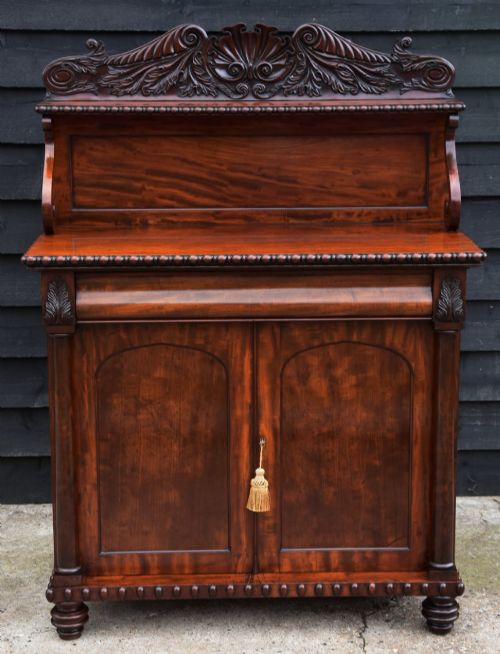
A 19th century mahogany credenza brings grand timber and precise period craftsmanship directly into a reception room.
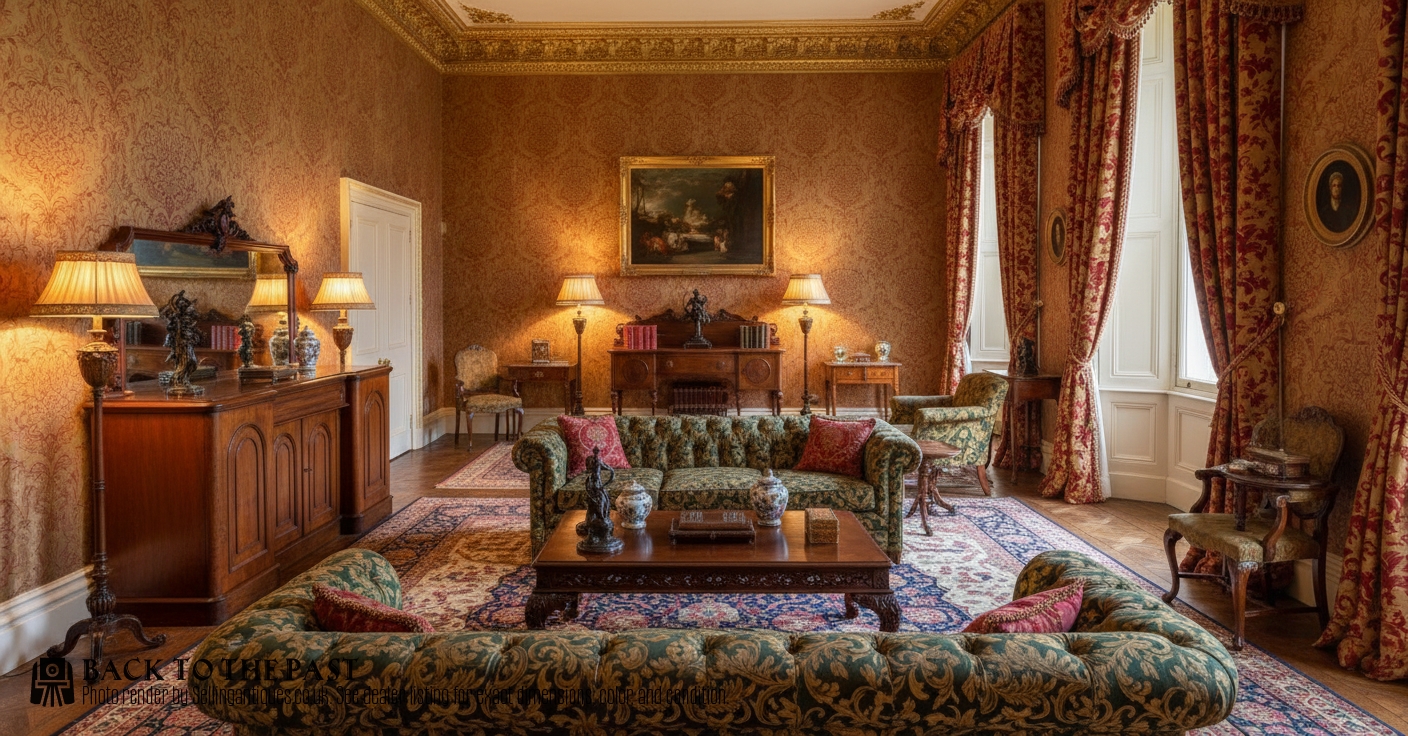
19th Century Mahogany Credenza
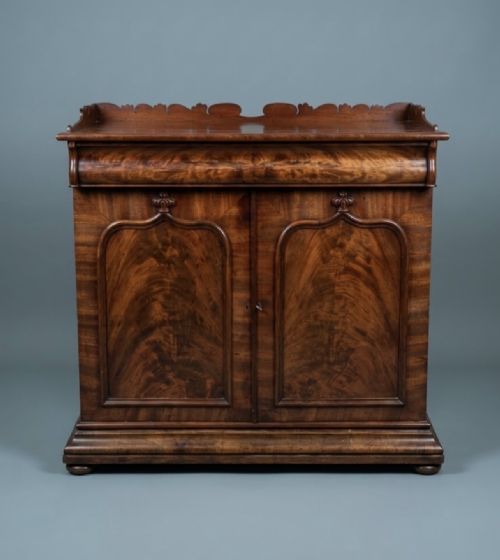
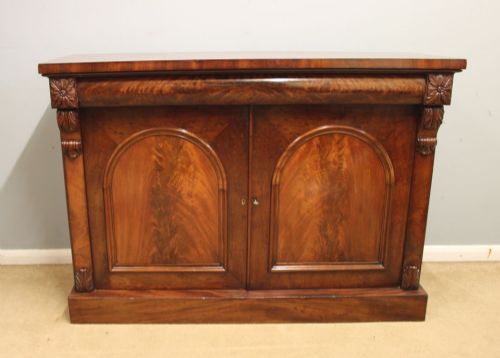
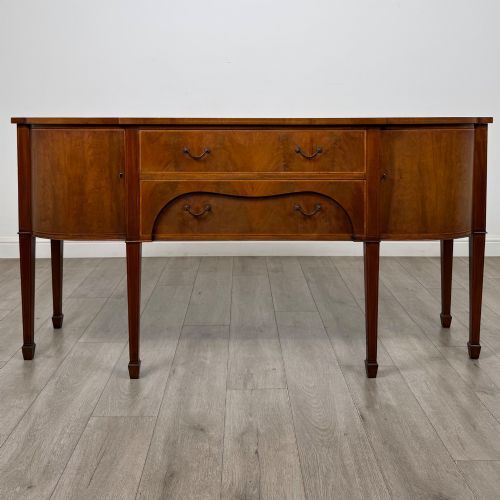
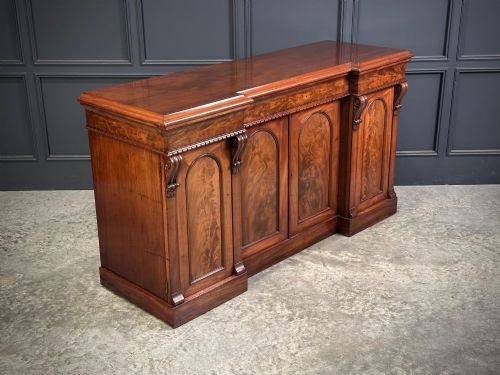
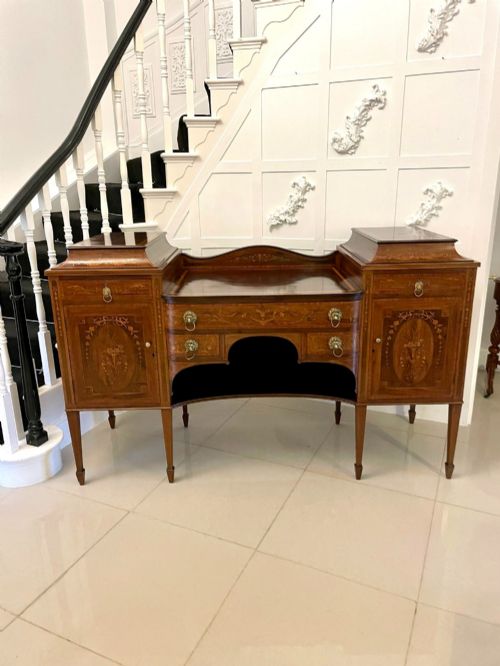
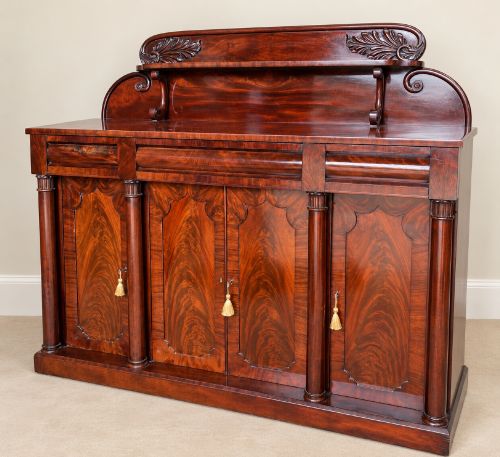
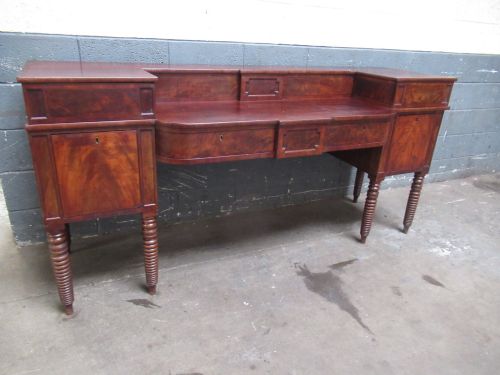
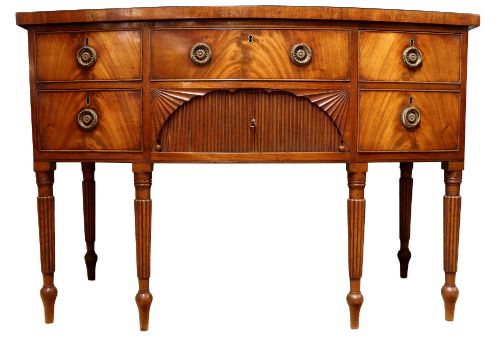
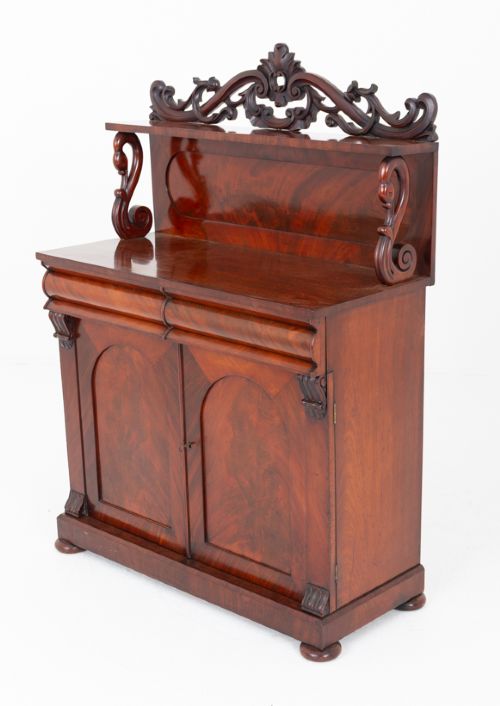
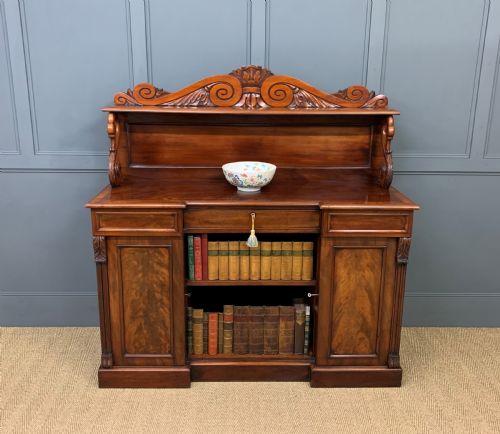
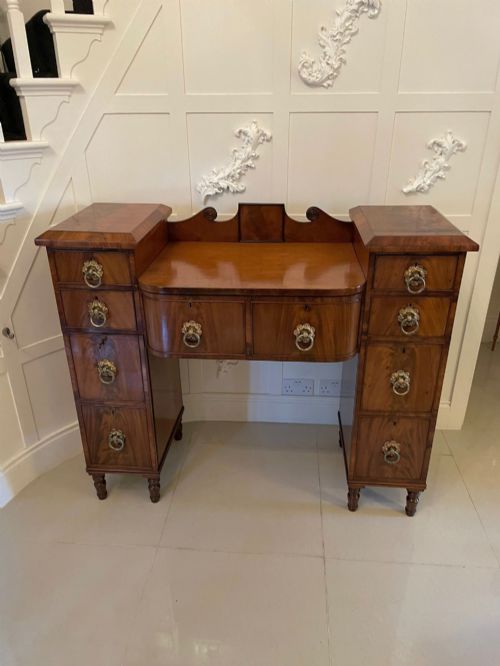
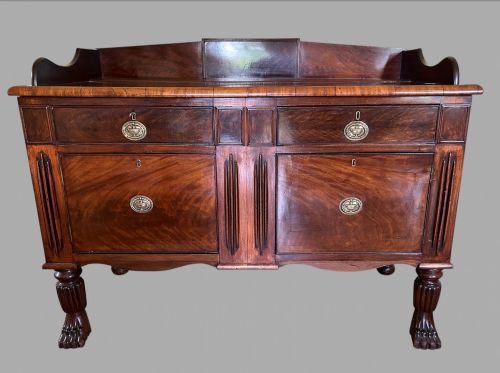
A 19th century mahogany credenza encompasses substantial sideboards, chiffoniers, and display cabinets designed for formal dining rooms and parlours. These heavy storage pieces emerge primarily in Regency, William IV, and Victorian periods, often taking bow-front, breakfront, or pedestal formats.
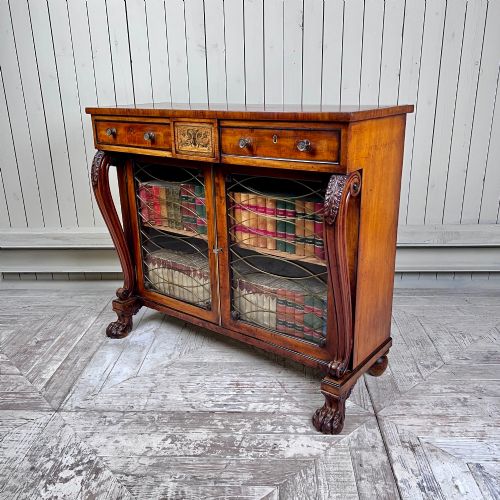
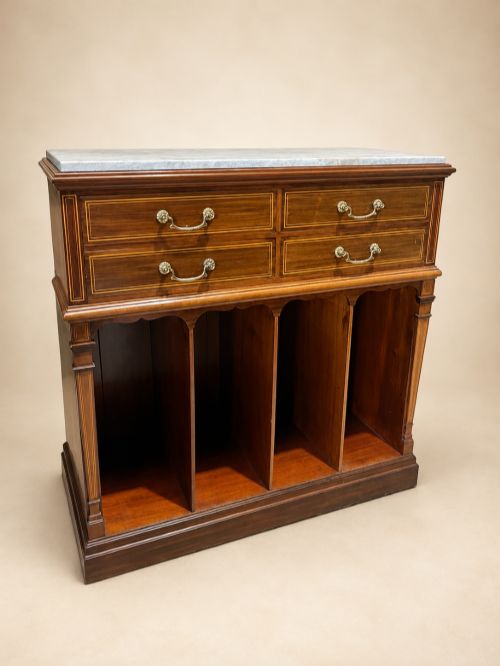
The versions most commonly met on this page span the early 1800s through the late Victorian era, built with multiple doors, enclosed cupboards, and occasional open shelving or glass panels. Makers utilise the expansive top surfaces and interior compartments for serving or displaying china.
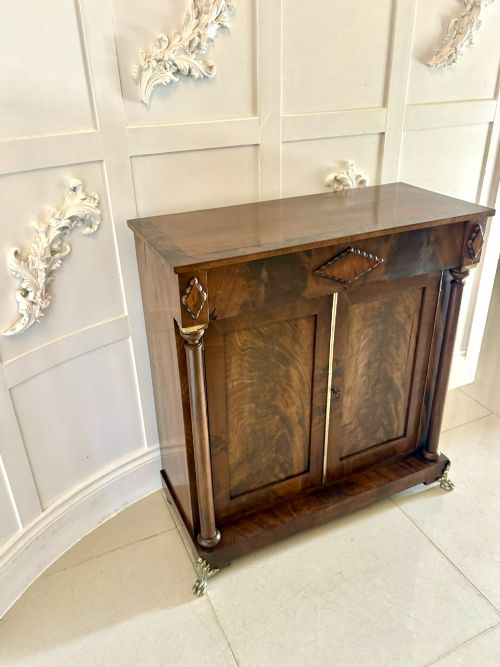
Distinguishing these cabinets relies on observing structural proportions, such as the low profile of a chiffonier compared against the commanding stature of a pedestal sideboard or bookcase.
Materials and construction
Cabinet makers construct these large items using solid timber frames overlaid with flame mahogany veneer to create deep, rippling grain patterns across the primary doors and drawer fronts. Secondary woods support internal shelving and carcase backs.
Ornamentation relies on contrasting materials including brass inlay, ebony stringing, ormolu mounts, and clear or mirrored glass panels. Master workshops finish the surfaces with polished French polish to protect the timber and deepen the natural red-brown colour.
Listings feature multiple cabinet variations spanning Regency, William IV, and Victorian periods, constructed from solid mahogany and flame mahogany veneer.
Distinctions in craftsmanship
Superior examples display continuous, book-matched veneer selection across large expanses, ensuring the grain mirrors symmetrically from the centre outwards. Lesser pieces rely on random patching or plain timber without figured depth.
Hardware integration and internal joinery separate standard production from master workshops. Hand-cut dovetailing in the drawers, heavy cast brass fixtures, and seamless integration of delicate ebony or brass stringing denote high-tier construction.
Hewetsons London·Gillows·Henry Dasson·Weisweiler
The 19th Century Mahogany Credenza Glossary
- Flame mahogany
- A veneer cut from the fork of the mahogany tree where the branch meets the trunk. This method produces a striking, flickering flame pattern highly prized by period cabinet makers.
- Chiffonier
- A compact sideboard equipped with enclosed lower cupboards and often an upper shelf supported by pillars. This form gains popularity during the Regency and Victorian eras.
- Ormolu
- Gilded bronze used for decorative mounts and accents on elite nineteenth century furniture. It provides a bright metallic contrast against dark polished mahogany.
- Pedestal sideboard
- A heavy dining room server featuring central drawers flanked by distinct architectural pedestals or cupboards. These often conceal cellarettes for wine storage.
19th Century Mahogany Credenza: Frequently Asked Questions
Where did people place a credenza?
These large cabinets typically stood against the main wall of a dining room or formal parlour, serving as a surface for food presentation or displaying decorative ceramics.
In domestic settings, the enclosed cupboards stored fine porcelain, silver, and table linens while keeping the room orderly.
How do I date a mahogany cabinet?
Dating relies on examining the secondary timbers, the style of the brass hardware, and the specific veneer patterns used on the primary surfaces. Regency pieces often feature bold brass inlay, whereas Victorian examples tend toward heavier carved details and mirror backs.
Construction methods inside the drawers also provide clues, as hand-cut dovetails give way to machine assistance later in the century.
What is the difference between a sideboard and a credenza?
While both terms describe dining room storage furniture, a traditional sideboard focuses heavily on serving surfaces and cutlery drawers. A credenza traditionally sits lower and incorporates enclosed cupboards across the entire front elevation.
Nineteenth-century makers often blurred these definitions, leading to overlapping terms in historical records.
How do I care for antique mahogany wood?
Protecting the finish requires keeping the cabinet away from direct sunlight and maintaining stable room humidity to prevent the veneer from splitting or lifting. Routine dusting with a soft, dry cloth preserves the polished surface.
Applying specialised wax sparingly helps nourish the timber without clouding the historical French polish.