
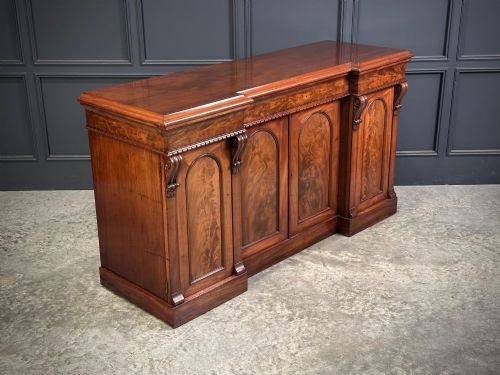


Victorian 4 Door Sideboard
A victorian 4 door sideboard delivers substantial storage and presence, anchoring a dining room or hallway with period character.
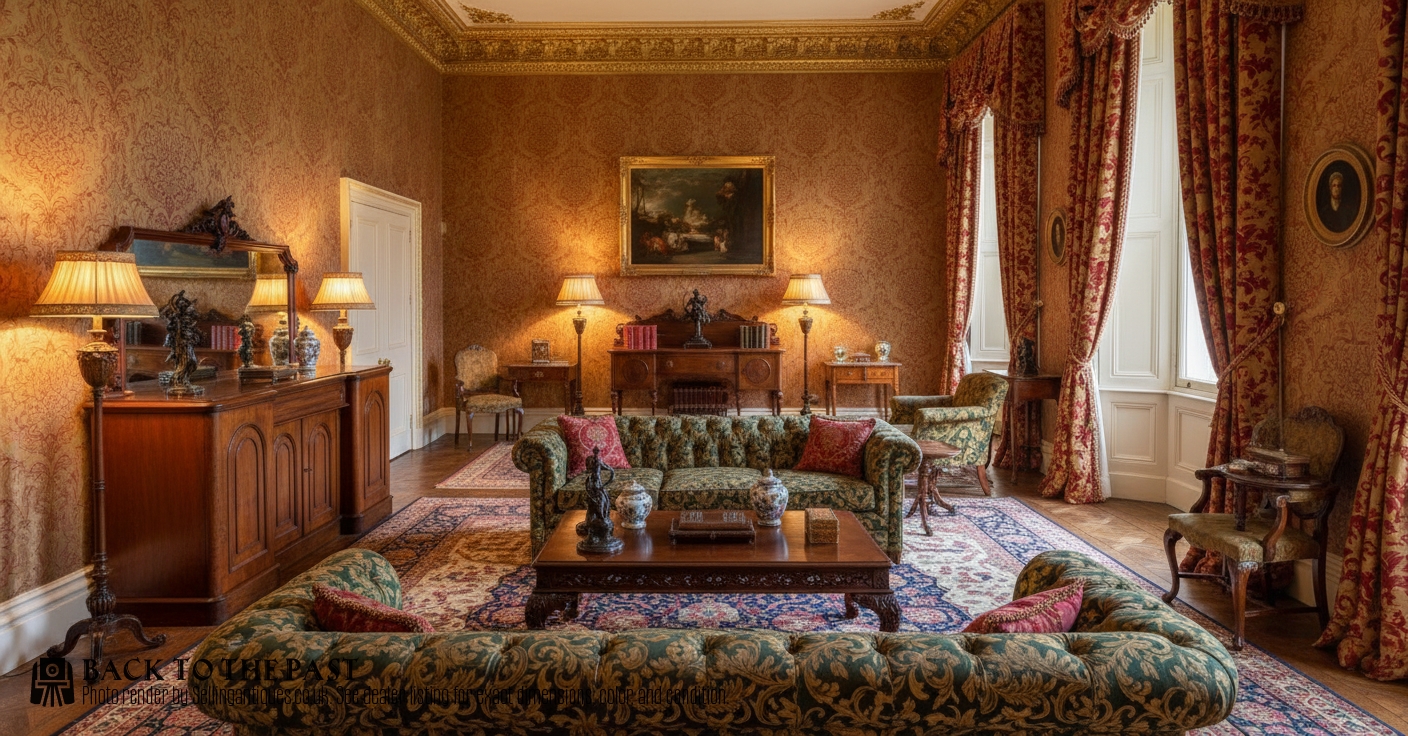
Victorian 4 Door Sideboard
A victorian 4 door sideboard is a substantial dining room or hallway piece designed for service and storage, typically encountered in deep mahogany, flame mahogany, or figured mahogany. These large case pieces offer an expansive top surface alongside paired central and flanking cupboard doors, often concealing interior drawers and shelves.
While many examples span the broader Victorian period and the nineteenth century, the specific four-door configuration frequently emerges in substantial mahogany formats. Alongside these grand mahogany servers, the wider evidentiary record encompasses related credenzas, chiffoniers, and pine dresser bases from the same eras.
Materials and construction
Cabinet makers utilised dense native and imported timbers, relying heavily on solid mahogany, flame mahogany, and figured mahogany for carcass construction and drawer linings. Surface decoration often involved careful wood veneers, floral marquetry, and contrasting inlay work using ebony or rosewood.
Structural embellishments incorporated cast brass mounts, ormolu, and mirrored glass panels, particularly on credenzas and cabinets. Pine served as a common secondary timber for internal shelving and drawer construction behind the primary hardwood facades.
Several grand nineteenth-century sideboards retain deep, velvet-lined cellaret drawers originally built to keep wine bottles cool near the dining table.
Factors determining quality
Quality rests in the selection of the timber figure, such as the depth of flame in mahogany or the intricate grain patterns of burr walnut. Superior pieces demonstrate exceptional matching of veneers across all four doors and meticulous hand-carving on structural pilasters and backsplashes.
Construction integrity defines the upper tier, visible in solid mahogany drawer linings, tight dovetail joints, and original brass or ormolu hardware. Maker attribution, such as stamps from firms like Gillows, elevates a piece through documented workshop provenance.
The Victorian 4 Door Sideboard Glossary
- Credenza
- A low cabinet or sideboard, frequently featuring glass or mirrored doors and ormolu mounts, popular in Victorian drawing rooms. These pieces often lack the full four-door capacity of dining room servers but share overlapping stylistic traits.
- Chiffonier
- A compact Victorian sideboard or cabinet equipped with enclosed lower cupboards and often a raised shelf or mirror back. They appeared widely in rosewood and mahogany during the nineteenth century.
- Ormolu
- Gilded bronze furniture mounts cast in ornate decorative patterns and applied to cabinet doors and friezes. This technique added opulent metallic contrast to dark woods like walnut and mahogany.
- Marquetry
- The art of applying decorative veneer pieces in wood to form intricate floral or geometric patterns. Skilled cabinet makers utilised this technique on high-end Victorian credenzas.
- Breakfront
- A cabinet design where the central section projects forward from the flanking outer cupboards. This architectural layout creates depth and shadow across a four-door elevation.
Victorian 4 Door Sideboard: Frequently Asked Questions
What rooms suit a four door sideboard?
These large nineteenth-century pieces require generous wall space and ceiling height to sit comfortably without dominating a room. Dining rooms and wide hallways provide the traditional setting where their surface and internal capacity function practically.
Placing one in a spacious living area also works well, provided surrounding furniture remains proportionate to the scale of the timber carcass.
How do I maintain mahogany finishes?
Routine dusting with a soft, dry cloth preserves the polished surface without building up residue. Applying traditional beeswax periodically feeds the timber and maintains the natural lustre of the nineteenth-century polish.
Keep these items away from direct heat sources and strong sunlight to prevent the timber from drying out or the polish from fading unevenly.
Did cabinet makers sign these pieces?
Many nineteenth-century pieces remain unmarked because workshops relied on distinctive construction methods and regional styles rather than signatures. Maker marks, when present, typically appear stamped inside drawer runners or on the back edge of a timber panel.
Attribution often depends on documented hardware, specific wood selections, and known structural quirks associated with prominent nineteenth-century firms.
Are interior fittings original?
Interior configurations often saw alteration over generations to suit changing household storage needs. Fixed shelves, sliding trays, and cellaret drawers frequently show adaptations or replacements made decades after manufacture.
Examining the secondary timber inside cupboards helps determine whether partitions and shelf supports match the primary period of the outer cabinet.