
Louis XV Occasional Table
These pieces are louis xv occasional table designs, bringing curved lines and rich veneers to any room.
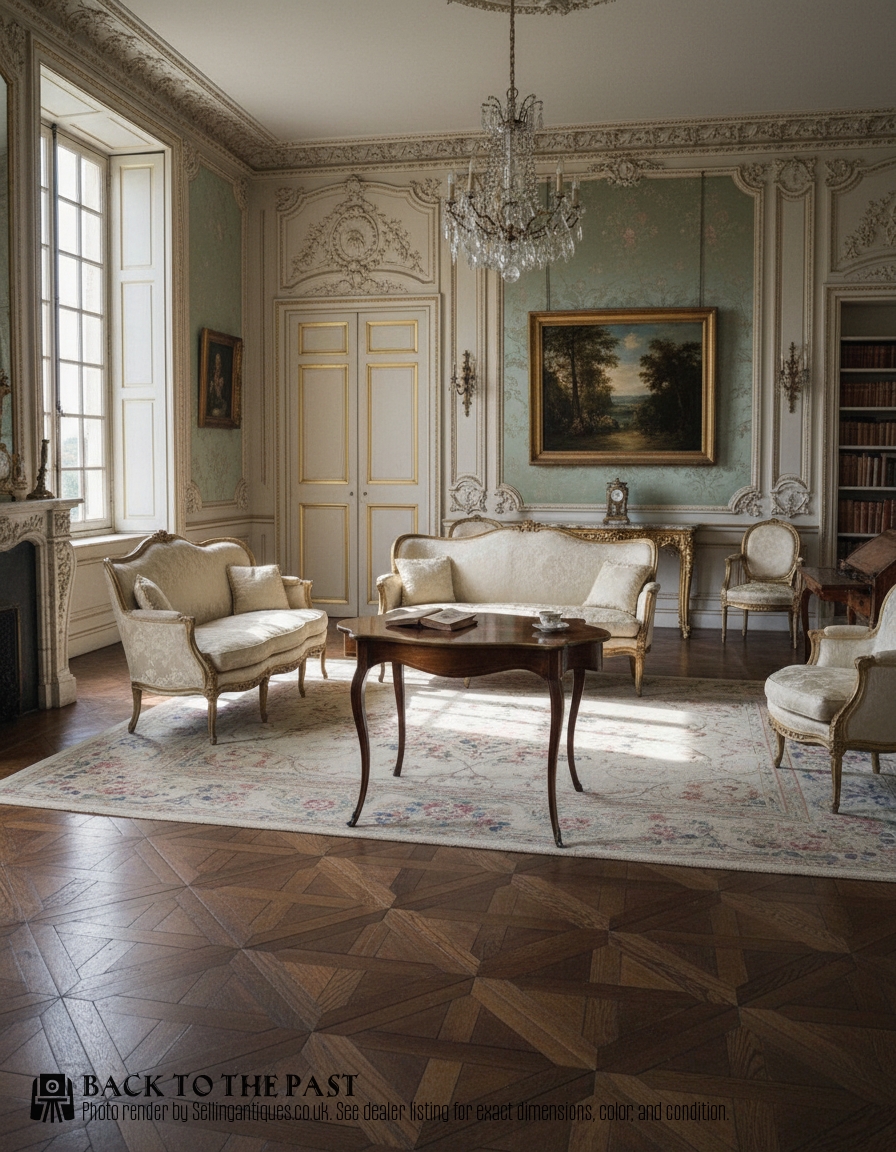
Louis XV Occasional Table
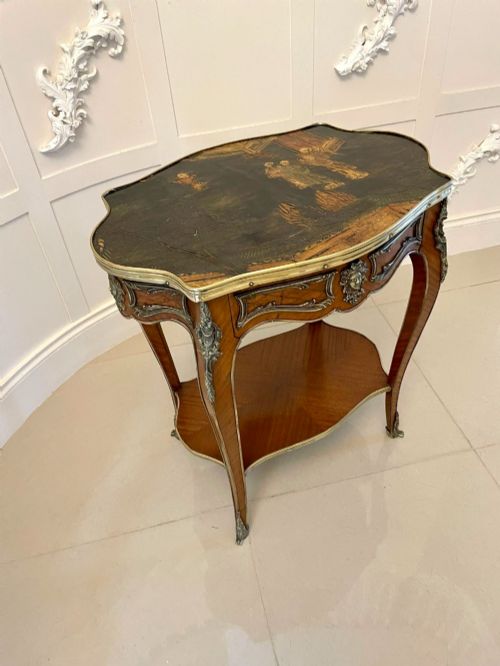
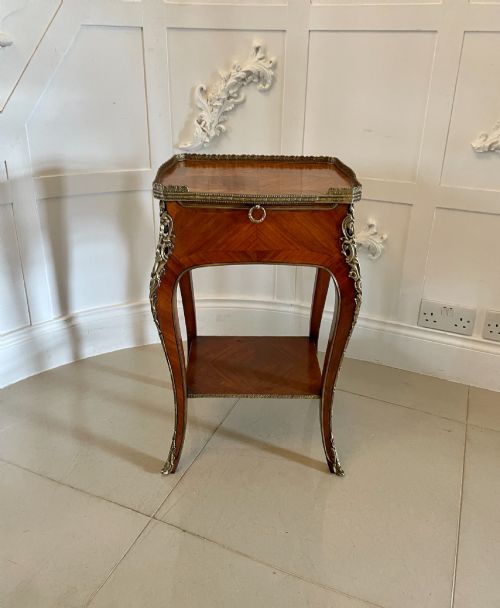
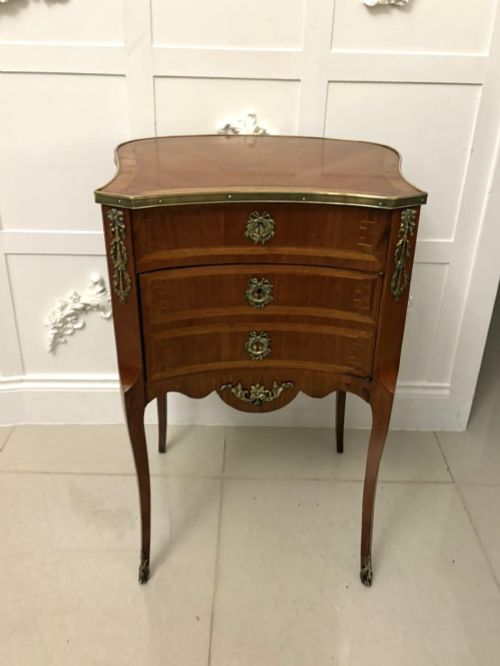
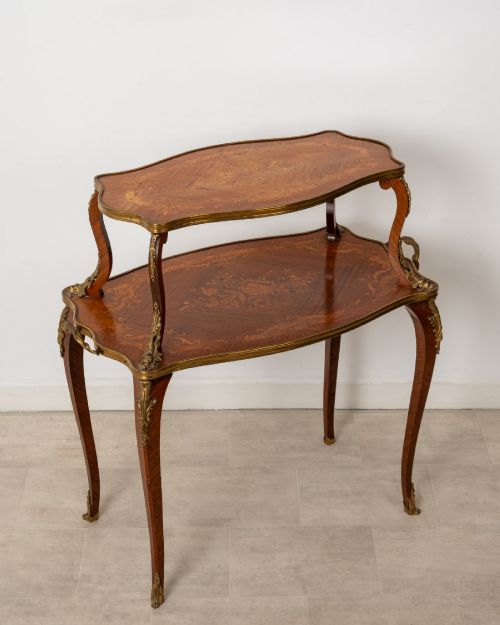
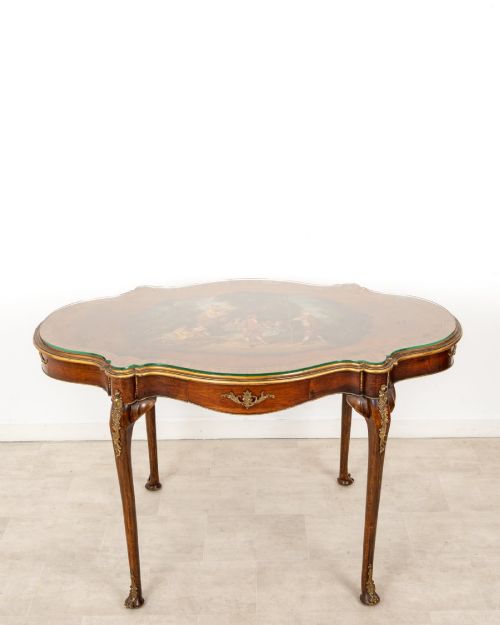
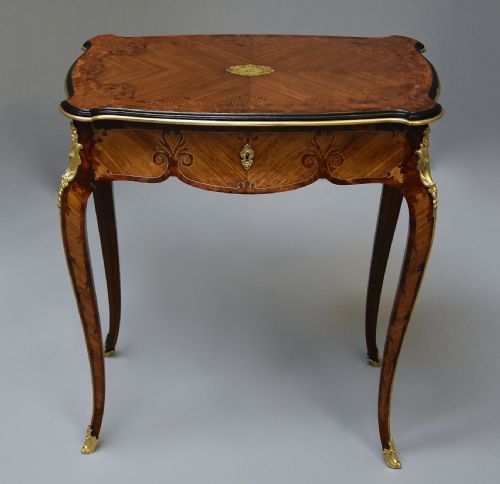
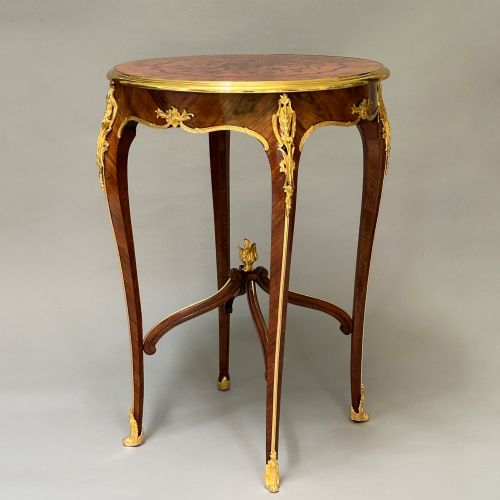
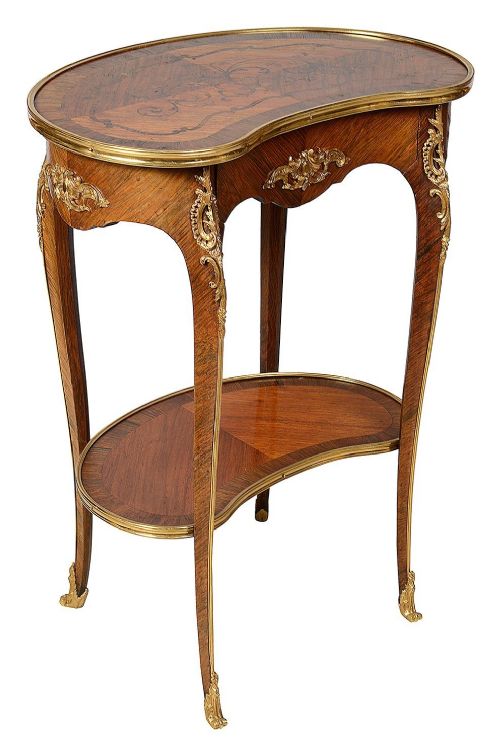
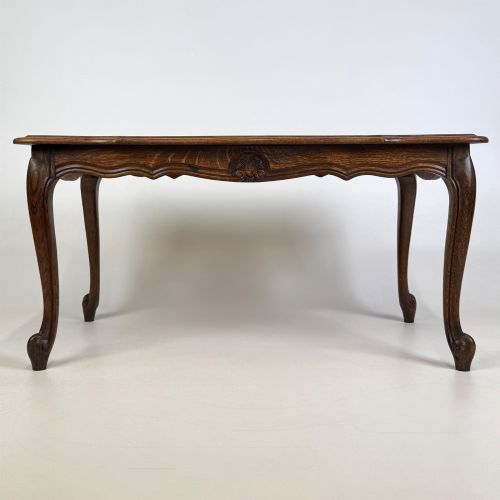
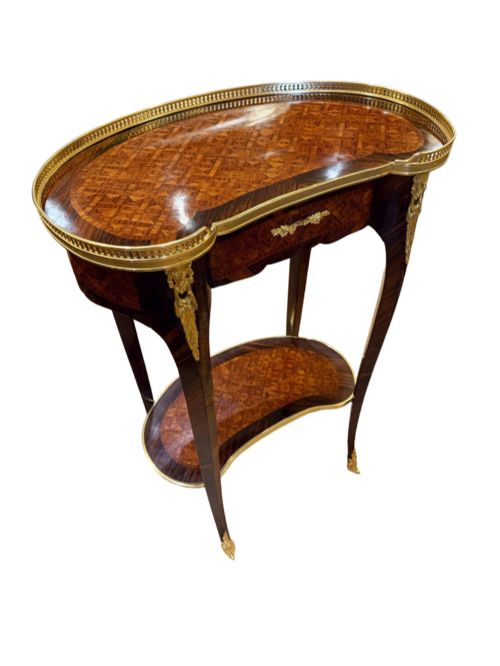
A louis xv occasional table typically appears in forms such as centre tables, writing tables, two-tier étagères, and lamp tables. These compact tables served functional roles in period drawing rooms and boudoirs for holding small objects, books, or tea.
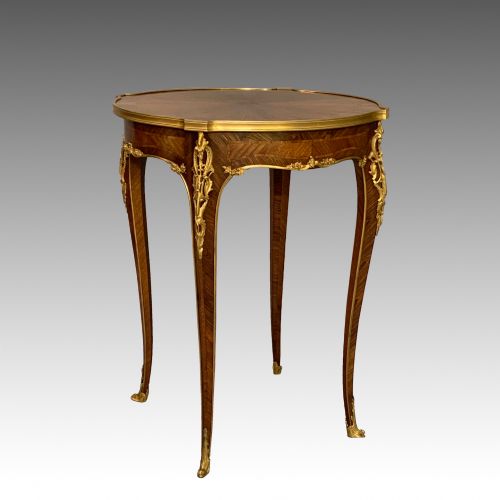
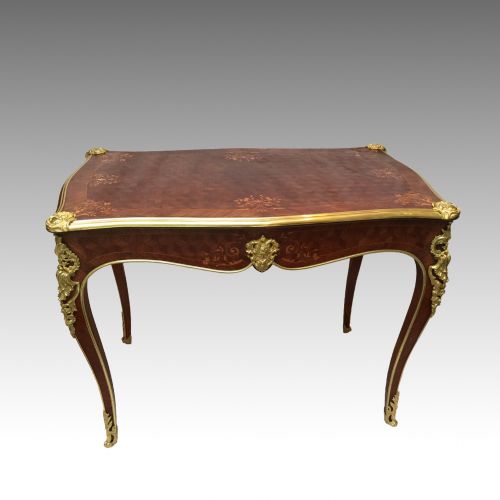
The versions most frequently met on this page belong to the nineteenth century, spanning Victorian and Napoleon III revivals. They display the characteristic cabriole legs and serpentine outlines associated with French Rococo taste.
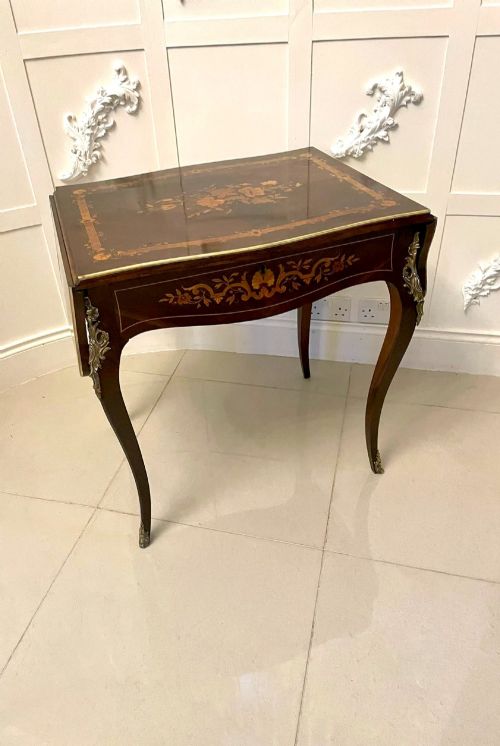
Originating predominantly from French workshops, these tables often incorporate sophisticated mechanisms or drop leaves. The selection ranges from modest walnut and mahogany examples to elaborately decorated marquetry centrepieces.
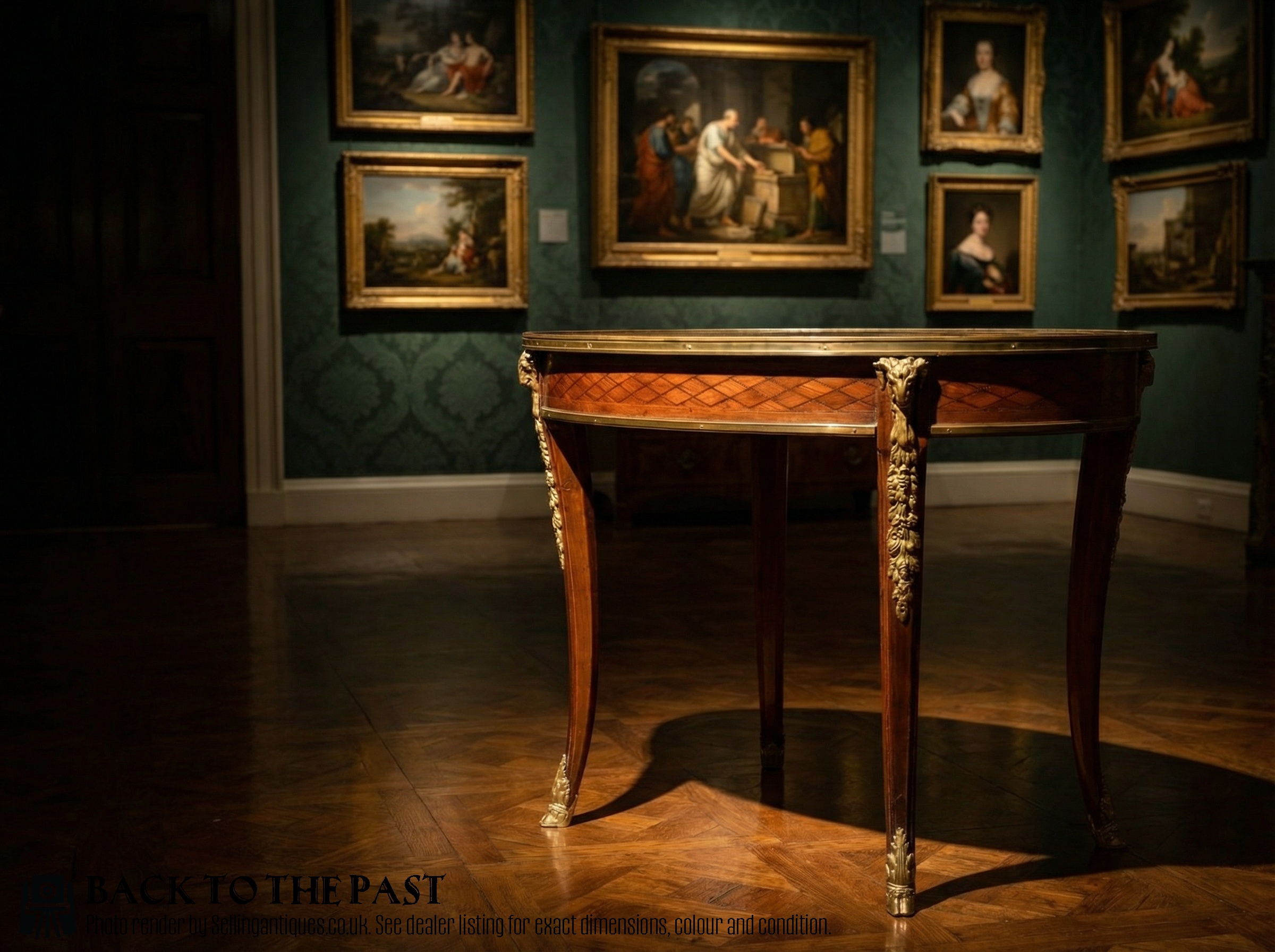
Materials and construction methods
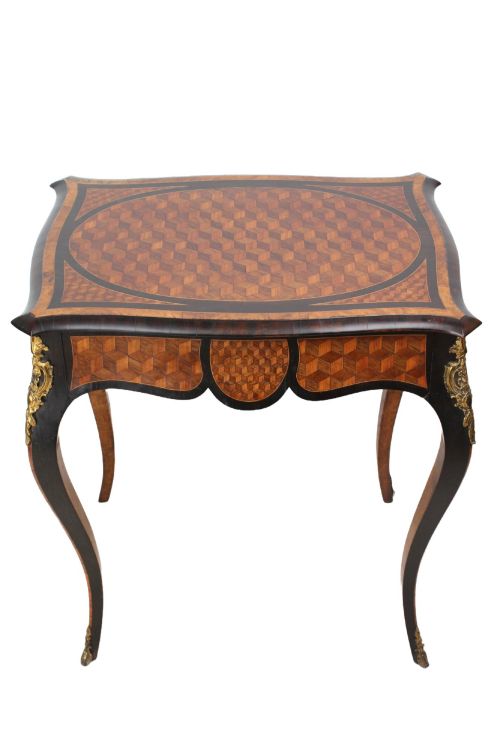
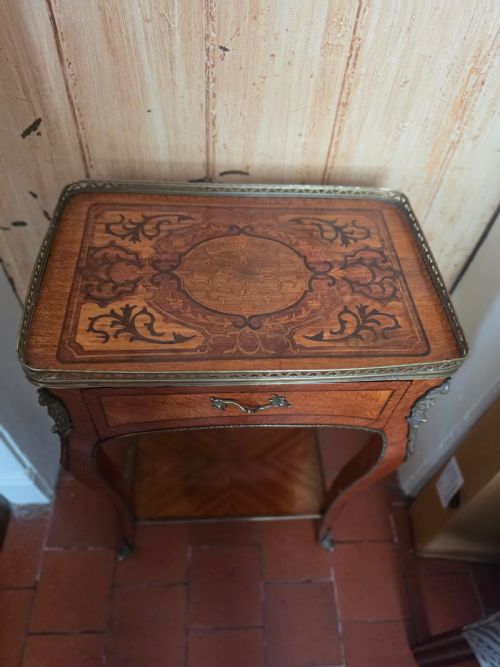
Cabinetmakers built these tables using foundational timbers like mahogany and walnut, overlaid with decorative veneers of kingwood, rosewood, and tulipwood. Parquetry and floral marquetry patterns decorate the surfaces, utilising contrasting natural grain tones.
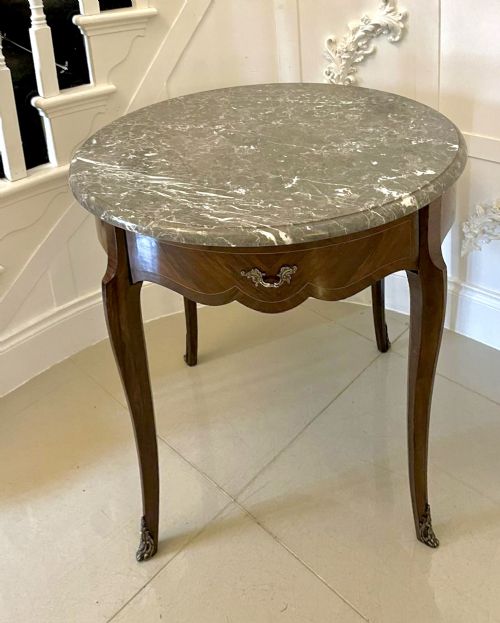
Cast ormolu and gilt bronze mounts accentuate the curves of the aprons and frame the corners, complemented by brass details. Polished marble tops appear on several pieces, fitted snugly into wooden bezels.
Louis XV Occasional Table Retail Price Guide 2026
Typical asking prices for louis xv occasional table among the pieces listed under this phrase on Sellingantiques today, from the lower quarter to the upper quarter. They describe what is for sale here now, not the wider market.
Listings feature walnut, mahogany, and kingwood timbers alongside marble tops and ormolu mounts.
Distinguishing craftsmanship and finish
The distinction between standard production and top-tier pieces rests on the precision of the marquetry and the weight of the cast bronze mounts. Finer examples display crisper chasing on the ormolu and highly detailed, varied wood veneers.
Structural sophistication also sets pieces apart, seen in complex internal mechanisms and substantial solid marble tops. Maker attribution and workshop signatures elevate the standing of an individual table.
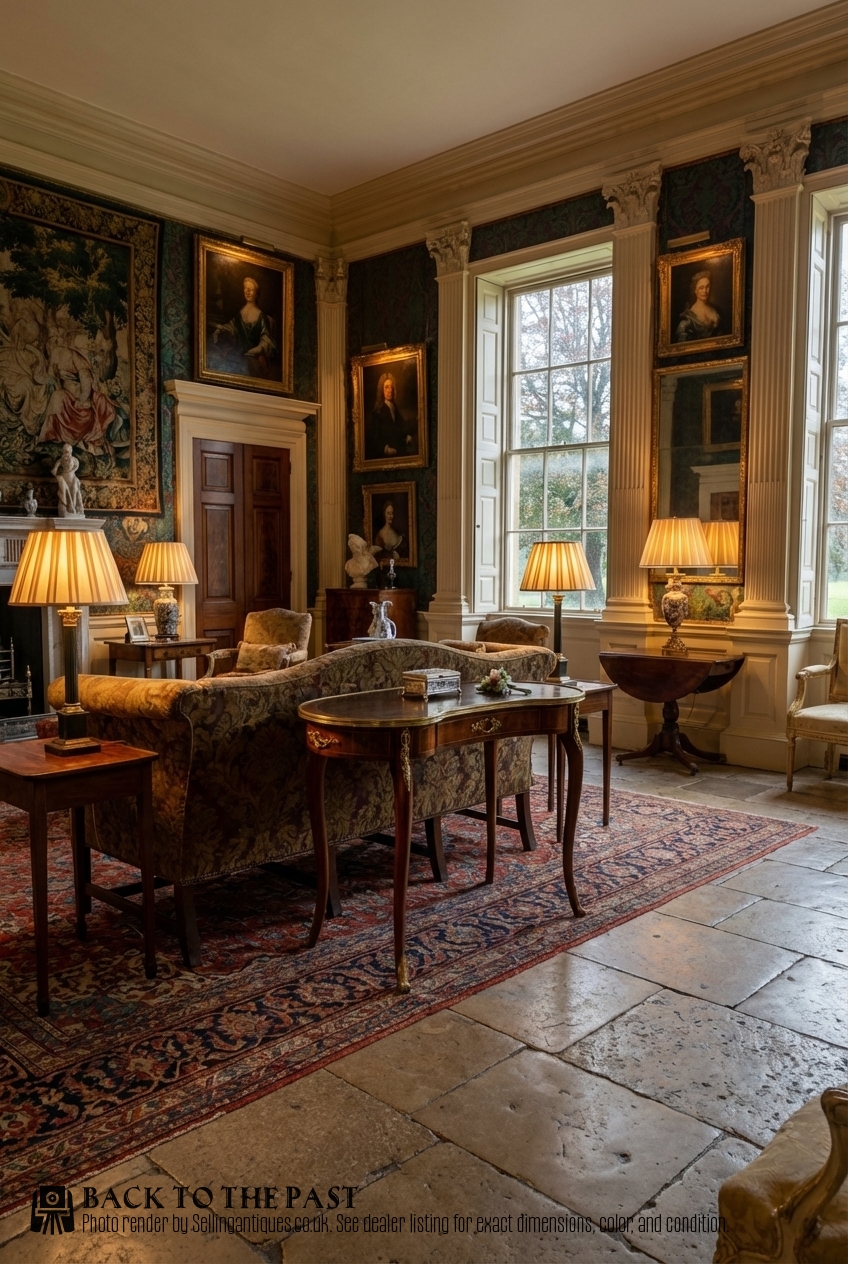
JAS Shoolbred·Joseph-Emmanuel Zwiener·François Linke·Millet·L.Martin of Paris
The Louis XV Occasional Table Glossary
- Kingwood
- A dense, heavy Brazilian timber with dark violet-brown streaks used extensively for veneering. It forms the primary visual surface on many nineteenth-century French tables.
- Ormolu
- Gilded bronze applied as decorative mounts to protect and adorn furniture corners and legs. The metal is cast and then hand-chased for sharpness.
- Marquetry
- Inlaid wood veneers arranged in pictorial or geometric patterns across table tops. Different tinted timbers create contrasting motifs without paint.
- Étagère
- An open tiered piece of furniture designed for display or holding small items. These tables feature multiple shelves supported by slender uprights.
- Cabriole leg
- A furniture leg that curves outward and then tapers inward to a foot, mimicking animal limbs. It defines the profile of Louis XV revival design.
Louis XV Occasional Table: Frequently Asked Questions
What is a louis xv occasional table used for?
These tables provide a decorative surface for lamps, books, or small decorative items within a principal room.
Historically, they functioned as movable pieces for tea, writing, or card games depending on the specific tabletop design.
How do I identify a louis xv occasional table?
Look for characteristic serpentine edges, asymmetrical floral marquetry, and slender cabriole legs that sweep downward.
Most surviving examples date from the nineteenth-century revival periods, incorporating ormolu mounts and exotic veneer woods.
Are marble top tables original?
Solid marble tops are frequently found on nineteenth-century centre and games tables, fitted specifically to handle heavier daily use.
They sit within recessed wooden rebates designed to support the stone slab securely.
How do I care for kingwood and rosewood veneers?
Keep these tables away from direct sunlight and strong heat sources to prevent the underlying veneer from drying or cracking.
Apply high-quality wax polish sparingly and buff gently with a soft cloth to maintain the surface sheen.