
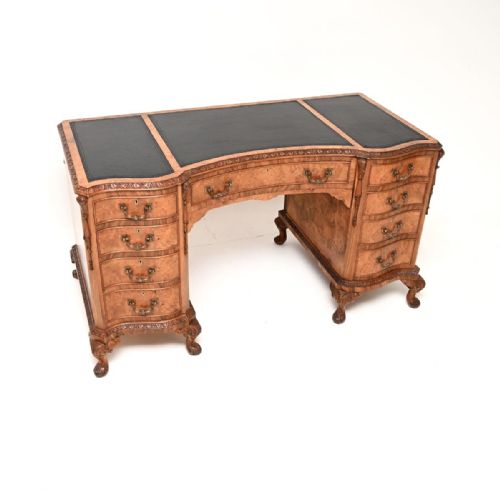
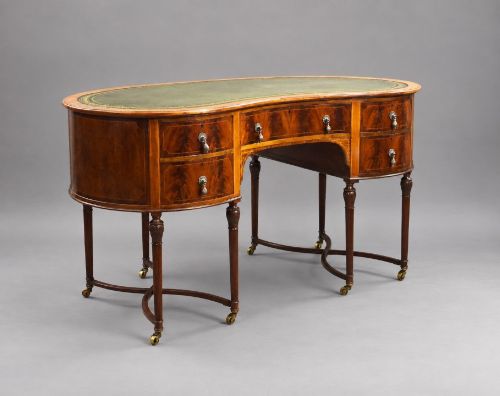
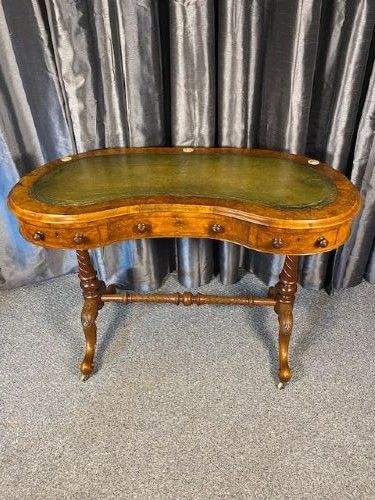

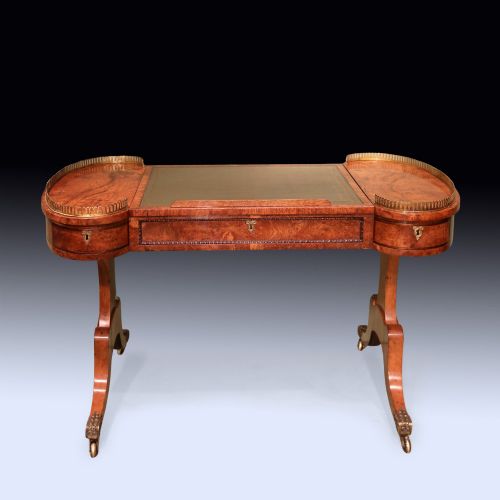
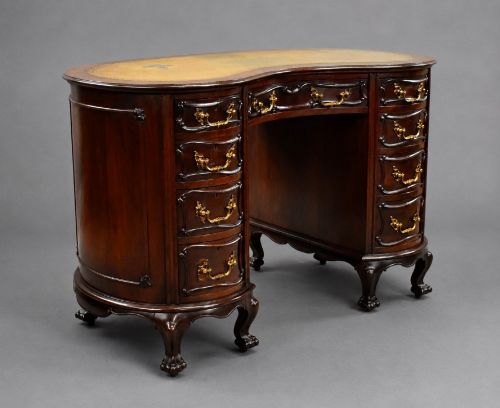


Leather Top Kidney Desk
A leather top kidney desk brings a curved silhouette and a writing surface together, offering both elegance and utility.
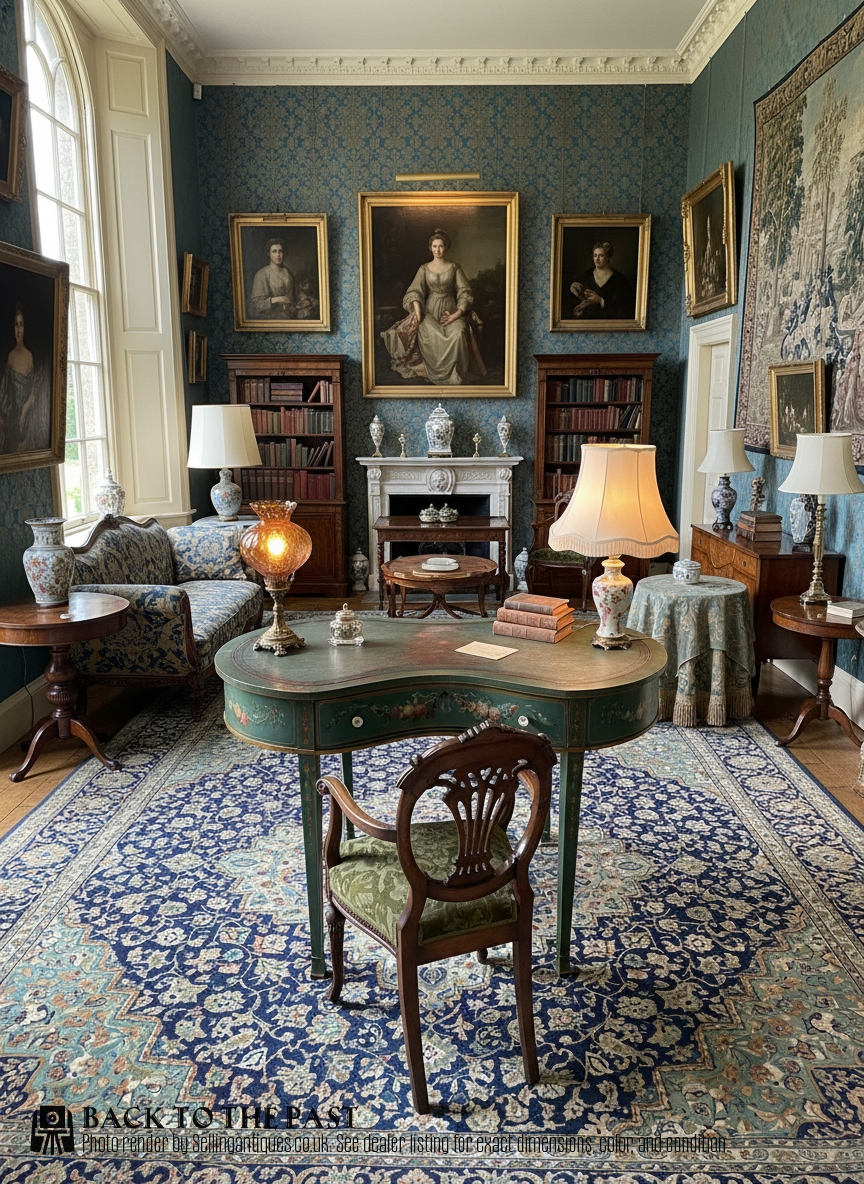
Leather Top Kidney Desk
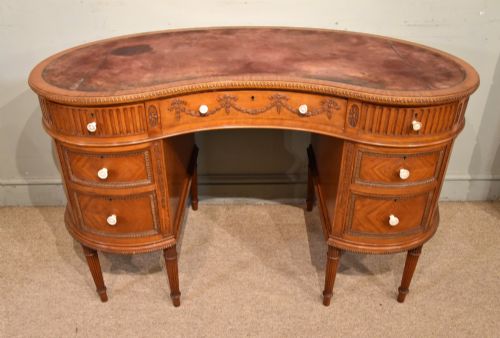
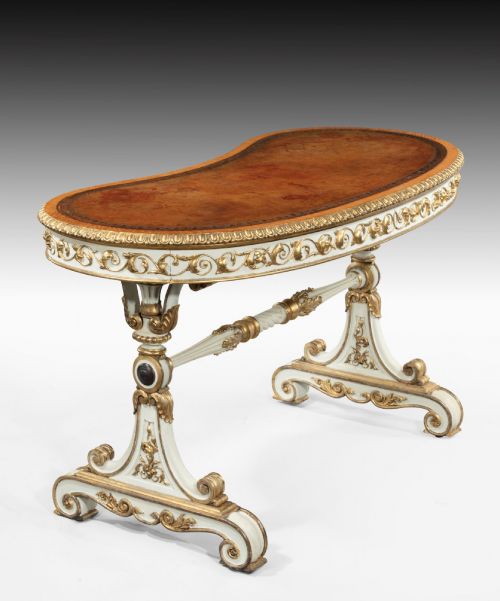
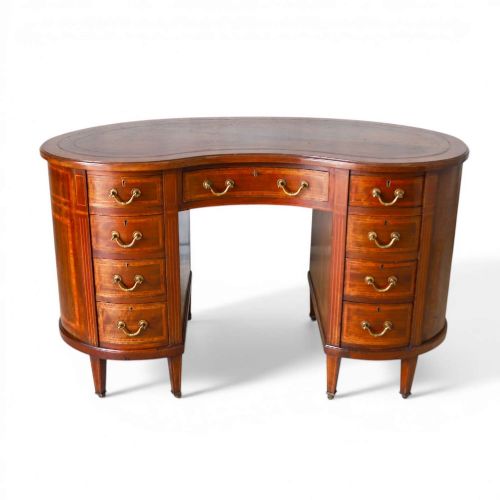
A leather top kidney desk is a specialised writing table defined by its distinctive indented curve, designed to sit snugly against the user. When searching for a leather top kidney desk, you encounter pieces primarily from the Victorian and Edwardian eras, alongside items originating in the nineteenth century.
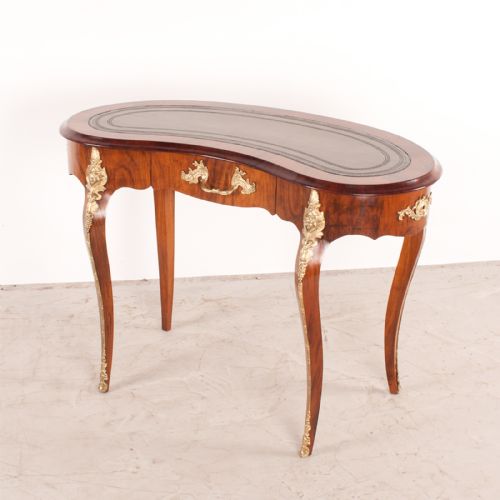
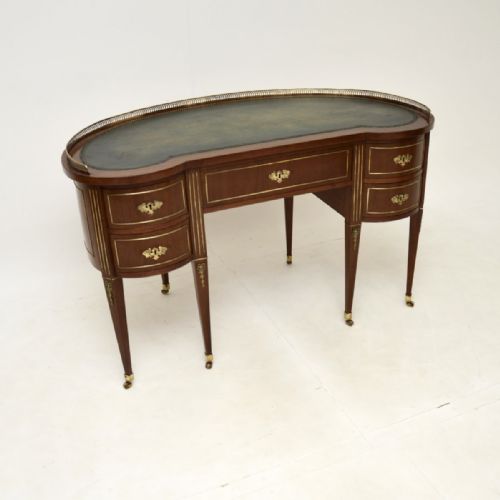
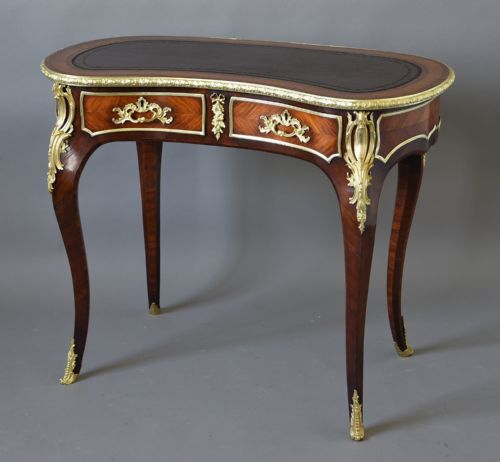
The form appears across various revival aesthetics, including Sheraton, Queen Anne, French, and Austrian Empire styles. These desks serve as compact writing stations or freestanding display pieces within a room.
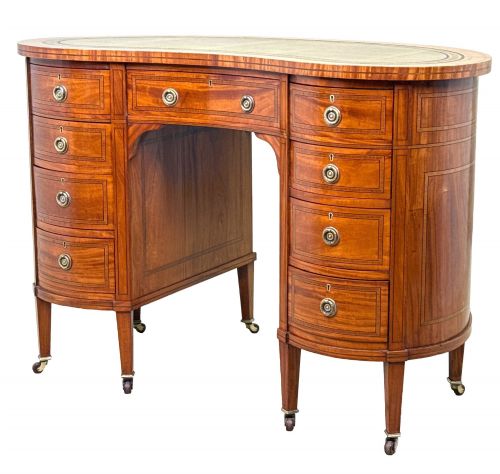
Mahogany and burr walnut dominate the examples recorded here, frequently enhanced by satinwood, rosewood, and kingwood veneers. The writing surface itself consists of inset leather, often bordered by subtle tooling.
Materials and construction methods
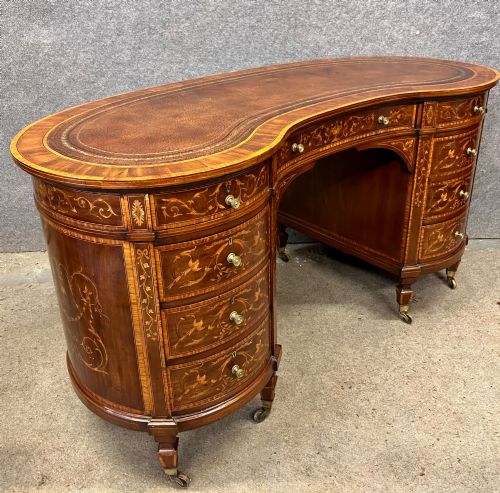
Cabinet makers built these frames using solid hardwoods like mahogany and walnut, applying figured veneers such as burr walnut and flame mahogany to the outer curves. Marquetry inlay and contrasting stringing frequently decorate the drawer fronts and tops.
Brass handles, locks, and occasional ormolu mounts punctuate the timber surfaces. The inset writing surfaces utilise leather, which is secured to the wooden panel and finished with gilt tooling around the perimeter.
Listings span the Victorian and Edwardian periods, stretching back to the nineteenth century and incorporating Regency and William IV influences.
Distinctions in craftsmanship
Quality rests in the precision of the curved joinery and the selection of timber veneers. Finely figured burr walnut or flame mahogany exhibits depth and grain movement that lesser timbers lack.
The crispness of marquetry inlay and the weight of cast brass hardware indicate the workshop standards behind the piece. Integrated finishing details, such as polished mahogany drawer linings and neat leather tooling, separate standard production items from superior examples.
Maple & Co·Wolfe & Hollander·Shapland & Petter·Gillows
The Leather Top Kidney Desk Glossary
- Kidney desk
- A writing table shaped with a concave front curve resembling a kidney bean. This form allows the user to sit closer to the centre drawers.
- Burr walnut
- Timber taken from the warted growths of walnut trees, yielding complex swirling grain patterns. Cabinet makers prized this wood for decorative veneering.
- Marquetry
- The art of applying decorative pieces of veneer to a structure to form intricate pictures or geometric designs. This technique decorates many Edwardian and Victorian surfaces.
- Ormolu
- Gilded bronze mounts applied to furniture for decorative effect. These metal accents appear on French style and nineteenth century pieces.
- Satinwood
- A durable hardwood with a lustrous, yellow sheen. It serves as a contrasting timber for stringing and crossbanding.
Leather Top Kidney Desk: Frequently Asked Questions
Where should a kidney desk be placed?
Because many examples feature finished backs and polished timber throughout, they suit placement in the centre of a room rather than pushed directly against a wall.
The curved front invites use from a matching chair, positioning the piece effectively as a freestanding writing table.
How do I care for the leather top?
The inset leather surface responds well to gentle cleaning and occasional waxing with neutral leather balms to maintain flexibility and colour.
Avoid using harsh chemical cleaners or excessive moisture on both the leather and the surrounding wood veneer.
Are these desks suitable for daily writing?
These tables provide a stable writing platform and functional drawer space designed for correspondence and light administrative tasks.
Their compact footprints make them practical alternatives to large pedestal desks in smaller residential spaces.
How do I distinguish Victorian from Edwardian examples?
Victorian pieces tend to feature heavier timbers, deep burr walnut veneers, and robust construction with darker finishes. Edwardian versions frequently display lighter satinwood inlays, painted decoration, and refined proportions associated with revival styles.