
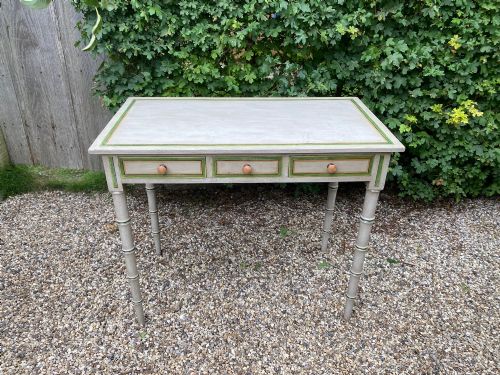
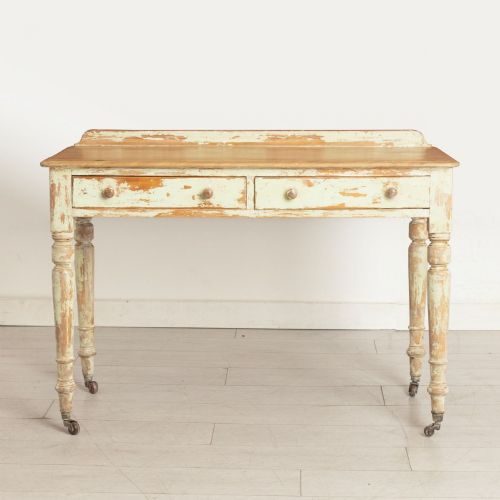


Green Painted Dressing Table
A green painted dressing table brings painted wooden charm and useful bedroom storage from periods spanning the nineteenth century through the nineteen-thirties.
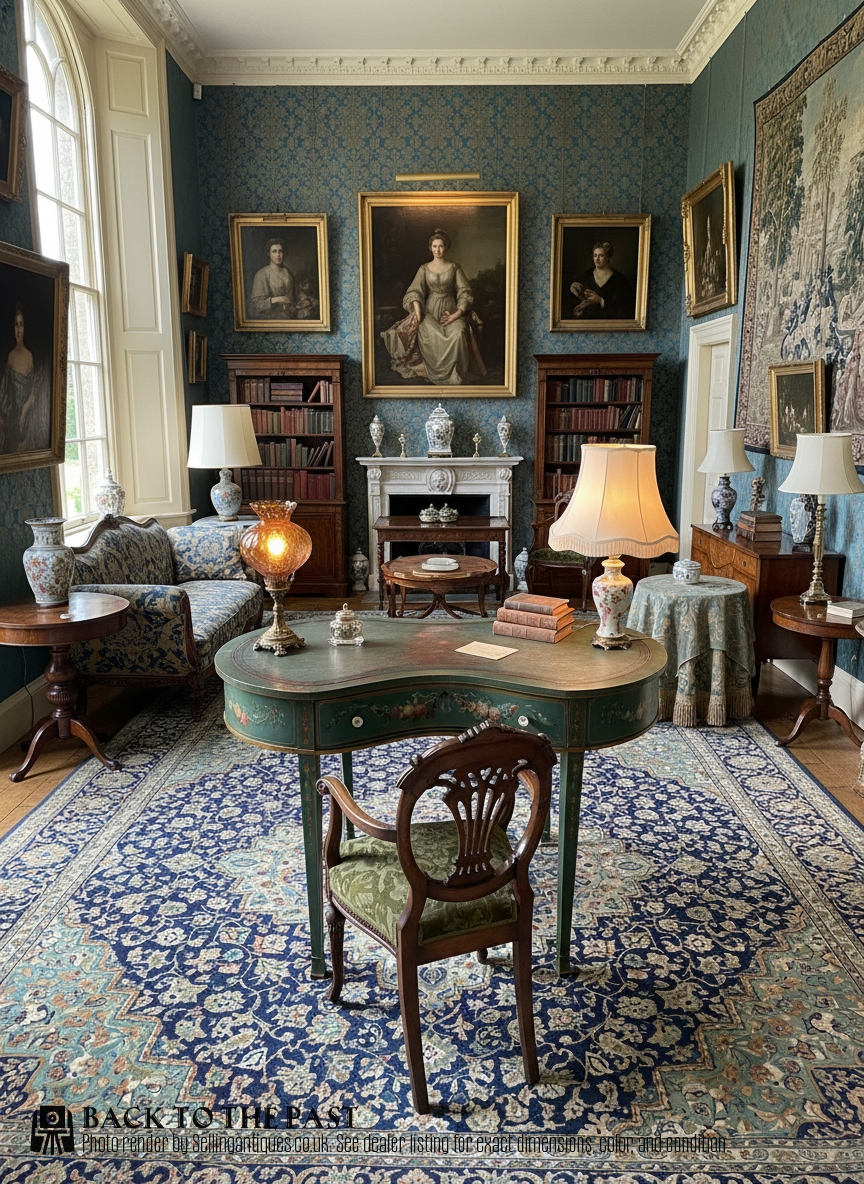
Green Painted Dressing Table
A green painted dressing table combines functional surface space with decorative painted finishes, often emerging in periods like the Victorian era, nineteen-hundred, nineteen-twenty and nineteen-thirty. These pieces serve bedroom and dressing room spaces with formats ranging from kidney-shaped desks to larger French provincial or rococo revival forms.
The green painted dressing table variations available include nineteenth-century examples alongside later nineteen-twenties and nineteen-thirties interpretations. Buyers encounter diverse regional influences, from French decorative schemes to Italian lacquer work and Chinoiserie styles.
Associated bedroom suite items, side tables, stools and writing desks frequently accompany these dressing tables in the evidence. Such items share the characteristic wood, softwood, birch, paint and brass materials found across the inventory.
Materials and construction methods
Makers utilised woods such as birch, oak and softwood as the primary structural body for these tables and related bedroom furniture. Metal elements like brass frequently provide hardware or decorative accents.
Decorative surfaces rely on paint, lacquer and original decorative paintwork to achieve the characteristic green coloration. Gilding also appears on nineteenth-century French pieces alongside specialised techniques like faux bamboo moulding.
Listings feature periods from eighteen-eighty to nineteen-thirty, incorporating birch, softwood, brass, paint and lacquer.
Factors that distinguish quality
The survival and integrity of original decorative paintwork separate standard pieces from superior examples. Evidence of untouched nineteenth-century or early twentieth-century surfaces enhances the character of a dressing table or mirror.
Refinement in style, such as kidney-shaped forms or detailed French rococo revival carving, indicates higher workshop ambition. The integration of quality materials like birch and brass fittings further elevates a piece.
Whytock and Reid
The Green Painted Dressing Table Glossary
- Chinoiserie
- European decorative style reflecting Chinese artistic traditions, often featuring painted motifs on lacquer or wood surfaces.
- Faux bamboo
- Wood turned or carved to imitate the segmented appearance of natural bamboo stalks, popular in nineteenth-century furniture.
- Kidney-shaped
- Describing a desk or table top curved in a concave kidney bean outline, seen on late Victorian examples.
- Rococo Revival
- Nineteenth-century stylistic movement reviving the ornate, asymmetrical scrolling forms of the eighteenth-century French rococo period.
- Lacquer
- A durable resinous finish applied in multiple layers and polished, common on Italian keepsake boxes and decorative tables.
Green Painted Dressing Table: Frequently Asked Questions
What periods do these dressing tables come from?
The evidence shows items originating from the nineteenth century, the Victorian era, nineteen hundred, and the nineteen-twenties and thirties.
Specific dates within listings range from eighteen-eighty through to nineteen-thirty.
What materials were used to make them?
Construction relies predominantly on wood, softwood and birch, finished with paint, lacquer and occasionally gilt.
Additional components include brass hardware and decorative elements.
Are matching bedroom pieces available?
Complete bedroom suites and paired items such as stools appear alongside individual dressing tables and writing desks.
Side tables and console tables also share similar decorative painted finishes.
How do styles differ across the pieces?
Styles range from French provincial and rococo revival to Chinoiserie, neoclassical and rustic farmhouse.
Late Victorian kidney-shaped desks represent another distinct aesthetic found in the listings.