

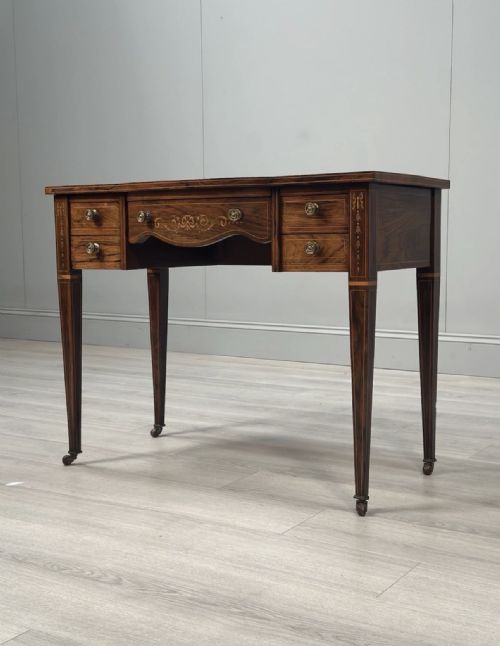
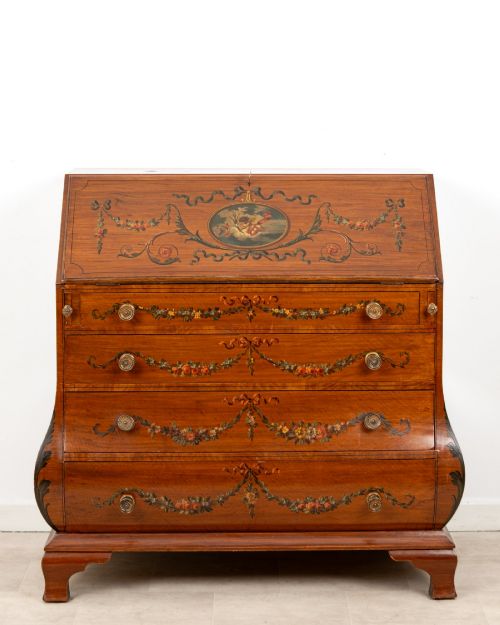
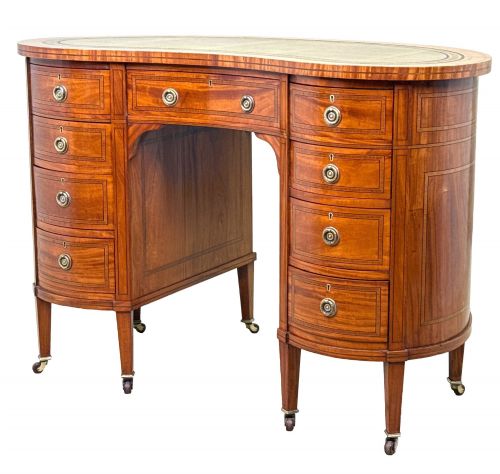
Sheraton Revival Writing Desk
A sheraton revival writing desk brings neoclassical grace and refined inlay to the study, echoing eighteenth-century elegance through nineteenth- and twentieth-century craftsmanship.
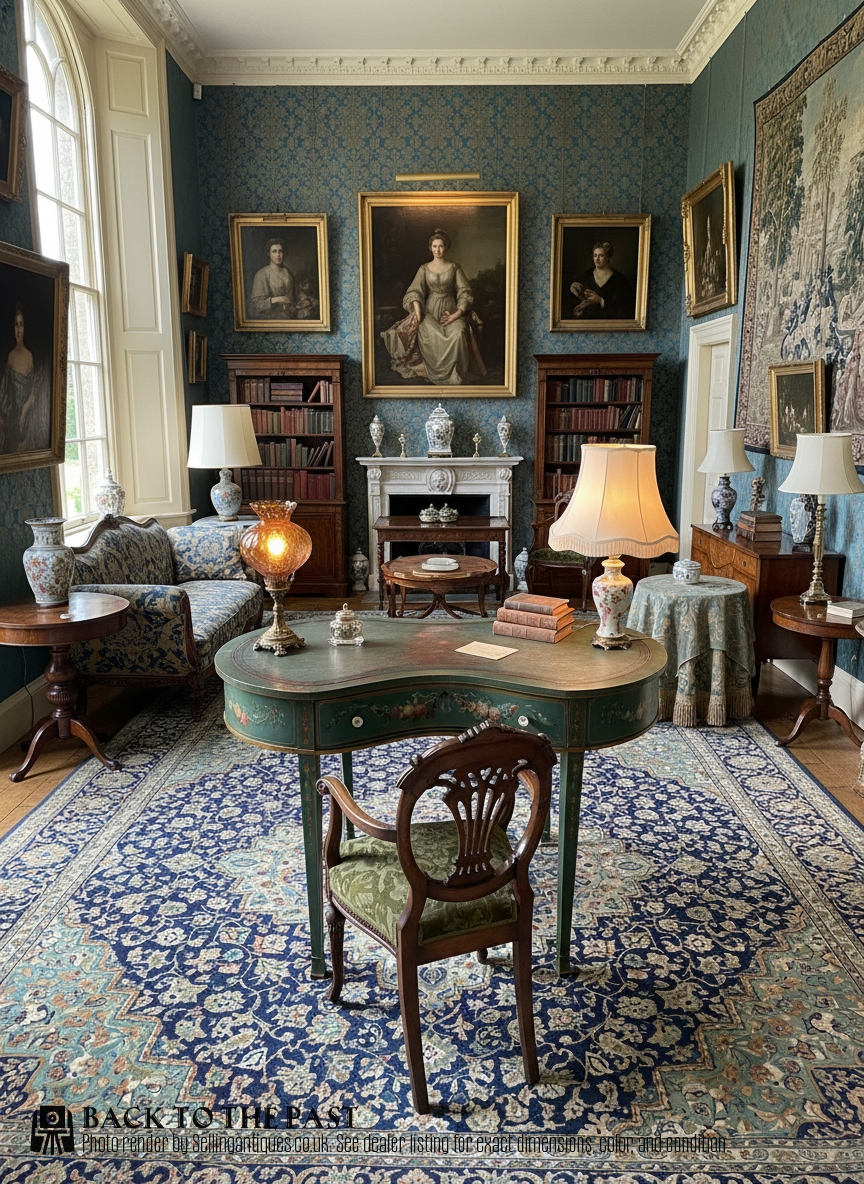
Sheraton Revival Writing Desk
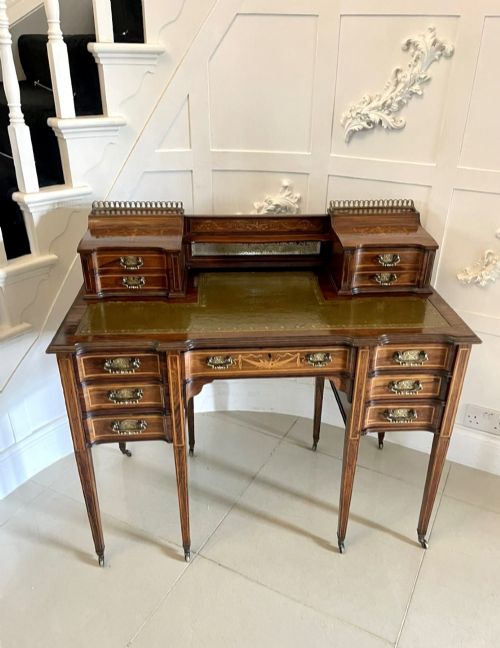
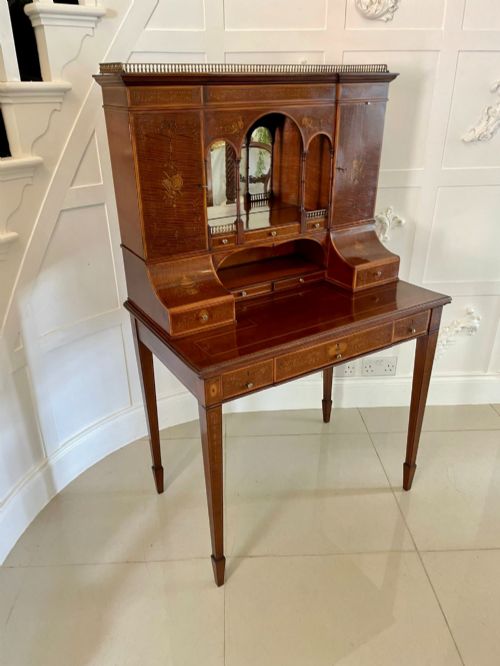
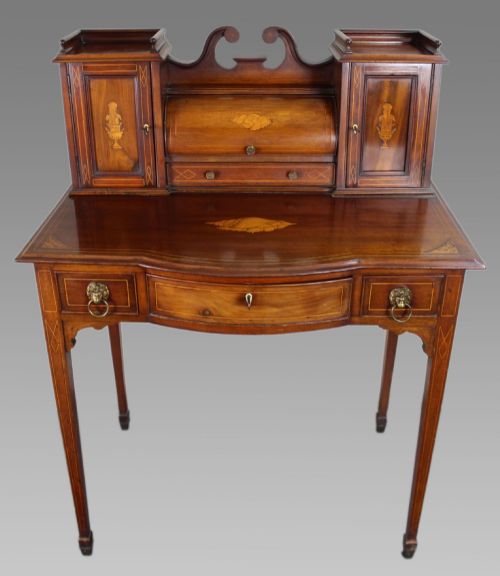
A sheraton revival writing desk is a piece of furniture designed for correspondence and paperwork, drawing heavily on the lighter forms and geometric inlay popularised by Thomas Sheraton. These tables, writing desks, and bureau bookcases span the late nineteenth century and the Edwardian period, emerging in both mahogany and satinwood.
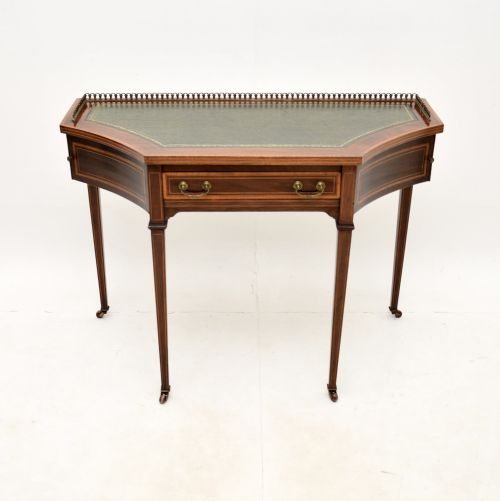
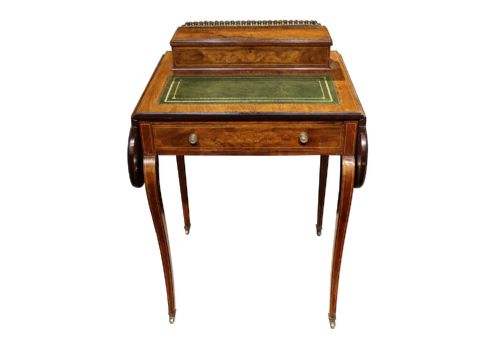
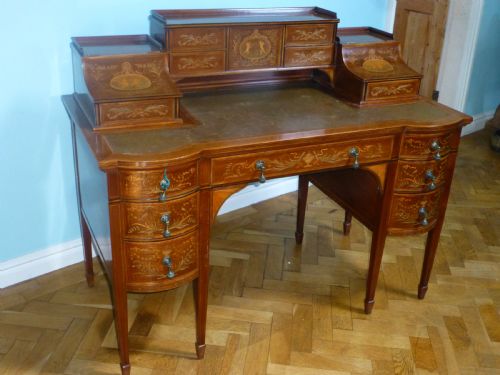
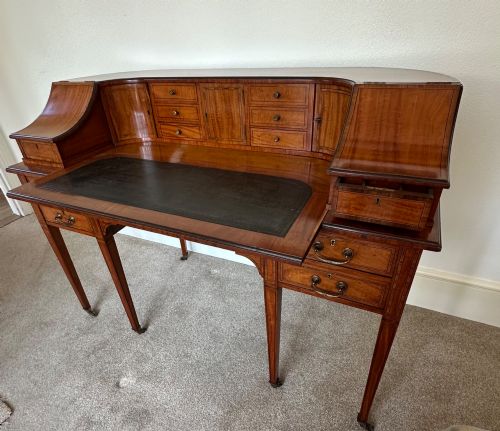
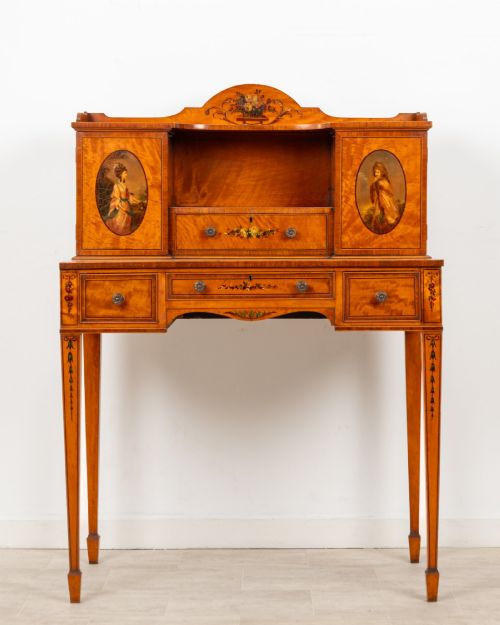
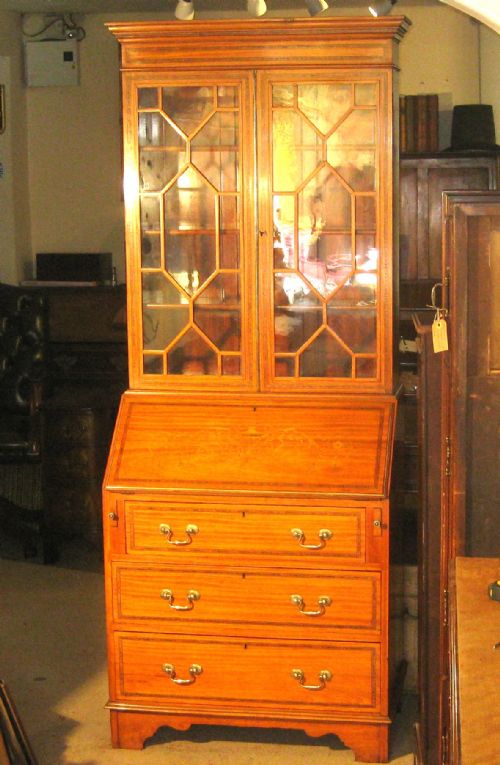
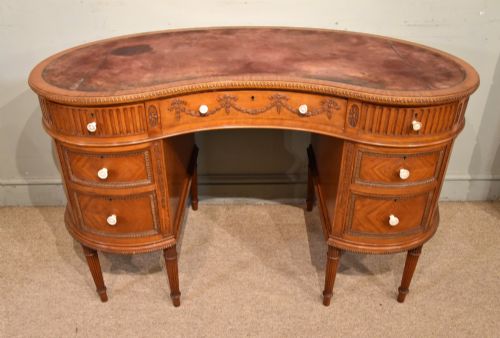
The versions most commonly met on this page date from the Victorian and Edwardian eras, often featuring delicate satinwood inlay, rosewood timbers, or leather writing surfaces. Forms range from compact ladies' writing tables and kidney-shaped desks to substantial Carlton House desks and bureau bookcases.
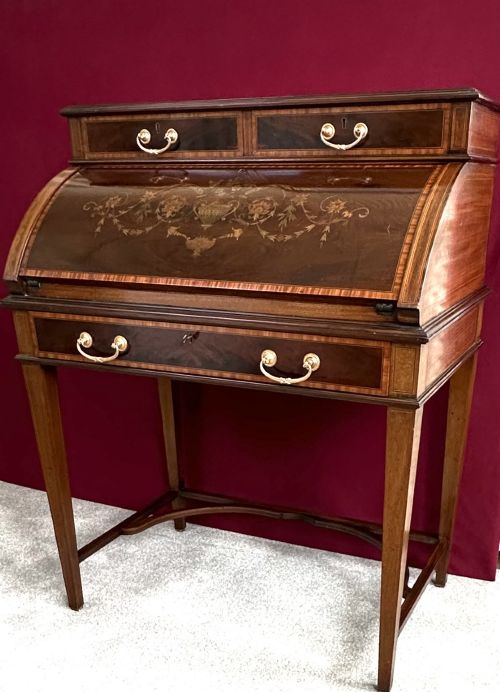
Makers of the period adapted earlier neoclassical designs for modern homes, producing freestanding tables, cylinder desks, and Davenport writing desks with fitted interiors. These pieces combine utility with decorative marquetry, hand-painting, and brass hardware.
Materials and construction
Cabinet makers constructed these desks using solid and veneered timbers, predominantly selecting mahogany, satinwood, and rosewood for their grain and colour. Marquetry and satinwood inlay provided intricate contrasting decoration across drawer fronts, tabletops, and fall-front writing surfaces.
Detailed embellishments included boxwood stringing, hand-painted floral motifs, and pen-work alongside inset leather writing panels. Brass handles, galleries, and glass doors completed the construction of fitted interiors, bureau bookcases, and pedestal desks.
Listings feature pieces spanning the late 19th century through the Edwardian period, utilising mahogany, satinwood, and rosewood.
What separates the finer examples
Quality rests in the precision of the marquetry and the choice of primary timbers, where carefully figured satinwood or rich rosewood elevates a piece above standard mahogany production. The complexity of the desk type also dictates its standing, with Carlton House desks and fully fitted interiors demanding greater joinery skill than simple writing tables.
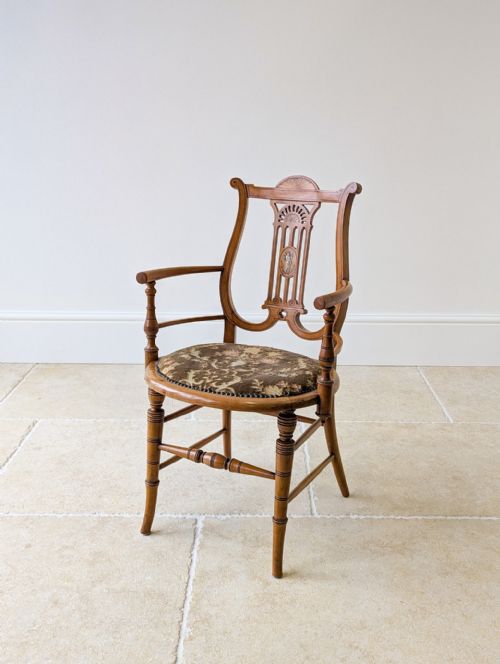
The involvement of notable workshop names and cabinet makers adds distinction to the surviving pieces, as does the preservation of original leather tops, hand-painted decoration, and matching desk chairs. Finer examples maintain crisp inlay work and fully operational drawers and writing compartments without structural compromise.
Maple & Co·Edwards and Roberts·James Shoolbred·Shapland & Petter
The Sheraton Revival Writing Desk Glossary
- Carlton House desk
- A form of writing desk featuring a stepped superstructure of small drawers and compartments curving around the back and sides of the writing surface.
- Kidney shape
- A desk configuration featuring a curved, kidney bean-shaped top that provides an ergonomic cutout for the user.
- Marquetry
- Decorative patterns formed by inserting thin pieces of wood, shell, or ivory into a veneered surface to create pictorial or geometric designs.
- Satinwood
- A lustrous, hard timber native to the tropics, frequently used in high-end late nineteenth-century cabinet making for its golden sheen and smooth finish.
- Davenport writing desk
- A compact box-form desk with a sloped, hinged writing surface and drawers accessed from the side.
Sheraton Revival Writing Desk: Frequently Asked Questions
How do I tell Victorian from Edwardian pieces?
Victorian examples generally date from the 1880s and 1890s, often displaying darker mahogany or rosewood timbers alongside rich marquetry inlay. Edwardian pieces, dating from around 1900 to 1910, frequently showcase brighter satinwood and lighter painted decorations.
Construction details and registration marks can also help pinpoint the era of manufacture. Many Edwardian workshops continued traditional Sheraton motifs with a slightly more delicate execution.
Were these desks used for daily writing?
Yes, these desks served as functional furniture for correspondence, household accounts, and letter writing before the widespread adoption of modern office technology. Fitted interiors provided designated slots for stationery, inkwells, and envelopes.
Ladies' writing tables and bureau bookcases were placed in drawing rooms and parlours for private correspondence. Larger pedestal and Carlton House desks functioned as primary writing surfaces in studies.
How do I care for a satinwood surface?
Satinwood benefits from regular dusting with a soft, dry cloth to prevent particulate accumulation on the polished finish. Avoid placing the desk in direct sunlight or near heat sources to protect the delicate veneers and natural wood tones.
Occasional application of appropriate furniture wax helps maintain the lustre of the timber. Keeping indoor humidity stable prevents the inlaid elements from lifting over time.