




Painted Ladies Writing Desk
A painted ladies writing desk brings delicate colour and refined proportion to a room, offering a dedicated surface for correspondence.
Painted Ladies Writing Desk
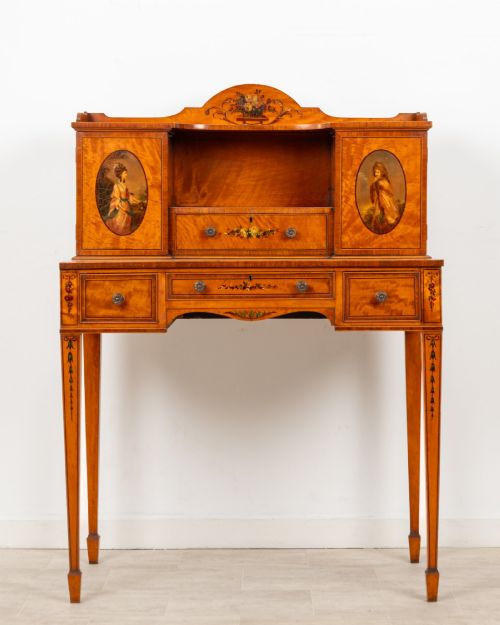
A painted ladies writing desk is a compact and decorative writing surface designed primarily for private correspondence and light administrative tasks. These pieces frequently emerge from the Victorian and Edwardian eras, as well as the later nineteenth century, reflecting periods of refined domestic craftsmanship.
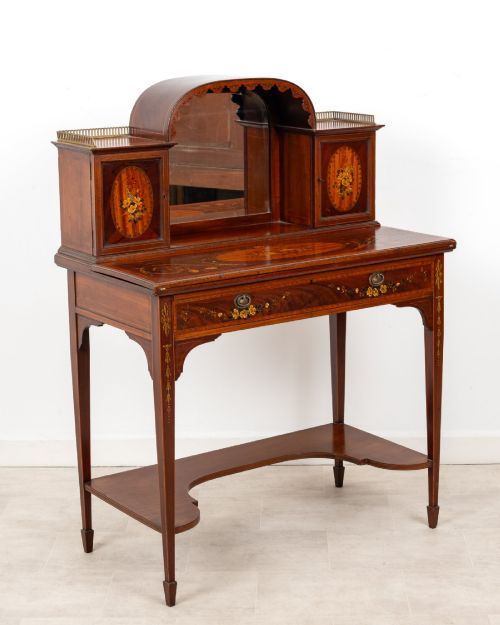
The version most commonly encountered on this page is the Edwardian satinwood writing desk or bonheur du jour, often embellished with hand-painted floral motifs and raised superstructures. Alongside these, buyers find kidney-shaped tables and French revival secretaires featuring painted panels.
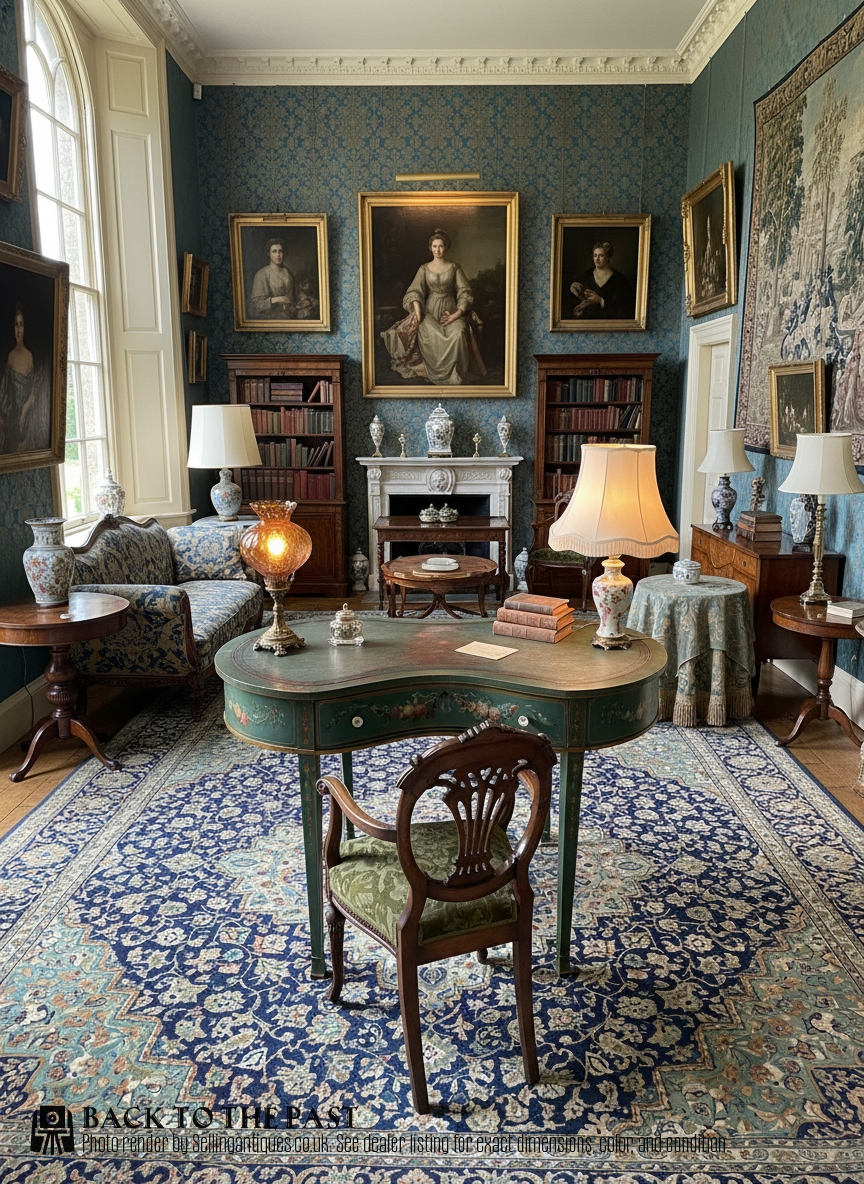
Forms range from freestanding tables with leather-inset writing surfaces to elaborate Carlton House desks and cabinets with mirrored backs or secret drawers. Materials like mahogany, walnut, and kingwood frequently serve as the structural canvas for these painted and inlaid surfaces.
How they were made
Cabinet makers constructed these desks using fine timber carcases of satinwood, mahogany, or walnut, often applying decorative veneers and elaborate cross-banding. Surfaces intended for painting received a smooth priming layer to accept detailed floral scrolls or figurative scenes.
Ornate metalwork such as cast brass or ormolu mounts enhanced the structural corners and drawer fronts, particularly on pieces influenced by French styles. Leather inserts, often gold-tooled, provided a durable and traditional writing surface framed by the polished wood.
Glazing, mirrored glass, and inset marble tops appeared on superstructures and cabinets, adding reflective depth and contrasting textures to the painted woodwork.
Materials appearing across these desks include satinwood, mahogany, kingwood, walnut, brass, ormolu, and leather.
What varies in quality
The refinement of the painted decoration marks the primary distinction between standard pieces and exceptional examples. Hand-painted floral details, delicate brushwork, and original polychrome panels demonstrate a higher level of artisan skill than mass-produced transfer printing.
The choice of primary timber and secondary framing woods dictates the structural integrity and visual depth of the desk. Finely figured satinwood or kingwood veneers paired with substantial mahogany carcases indicate superior workshop standards.
The integration of complex superstructures, such as fitted drawers, mirrored galleries, and working secret compartments, separates simpler writing tables from ambitious cabinetwork.
The Painted Ladies Writing Desk Glossary
- Bonheur du jour
- A small, light ladies writing table featuring a raised superstructure of drawers and shelves on the top surface. This French form gained popularity in the eighteenth century and saw a revival in Victorian and Edwardian drawing rooms.
- Carlton House desk
- A form of writing desk characterised by a permanent fitted superstructure that curves around the back and sides of the desk. It typically houses numerous small drawers, pigeonholes, and compartments.
- Vernis Martin
- A type of simulated Japanese lacquer developed by the Martin brothers in eighteenth-century France, known for its translucent and luminous finish. Nineteenth-century revival pieces often utilise this technique on panels depicting romantic or pastoral scenes.
- Ormolu
- Gilded bronze used for decorative mounts, feet, and handles on fine furniture. The technique involves applying a mercury and gold amalgam to cast bronze before heating.
- Satinwood
- A durable, yellowish-grey timber with a natural sheen that resembles satin, native to Ceylon and India. It served as a favoured wood for fine painted and inlaid furniture during the eighteenth and early twentieth centuries.
Painted Ladies Writing Desk: Frequently Asked Questions
What is a painted ladies writing desk?
A painted ladies writing desk is a small, decorative piece of antique furniture designed for personal correspondence and light paperwork. These desks often feature delicate floral motifs, satinwood veneers, and compact superstructures.
Originating largely in the Victorian and Edwardian periods, they were intended for private boudoirs and drawing rooms rather than grand libraries.
How were these desks used originally?
Owners used these desks for writing letters, managing household accounts, and keeping personal stationery in an era before digital communication. The small drawers and pigeonholes held inkwells, sealing wax, and notepaper.
Their compact proportions allowed them to sit comfortably in private sitting rooms where heavy oak or mahogany library desks would be unsuitable.
How do I distinguish Edwardian from Victorian pieces?
Edwardian painted desks, particularly those from around nineteen hundred, often showcase lighter satinwood timbers and bright, airy floral hand-painting in the Sheraton revival style. Victorian examples frequently lean towards heavier walnut constructions, darker tones, and Aesthetic movement influences.
Examining the secondary woods inside the drawers and the style of the hardware often helps clarify the manufacturing era.
Where should I place a painted desk at home?
These desks suit bright drawing rooms, studies, or bedrooms where their painted decoration and compact footprint can be fully appreciated. Placing them away from direct sunlight protects the delicate painted panels and timber veneers from fading.
Because many are finished on all sides as freestanding pieces, they can sit away from a wall rather than strictly against one.