
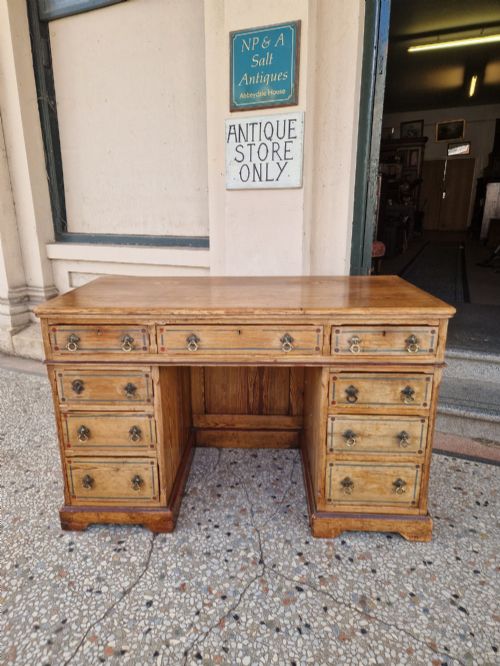

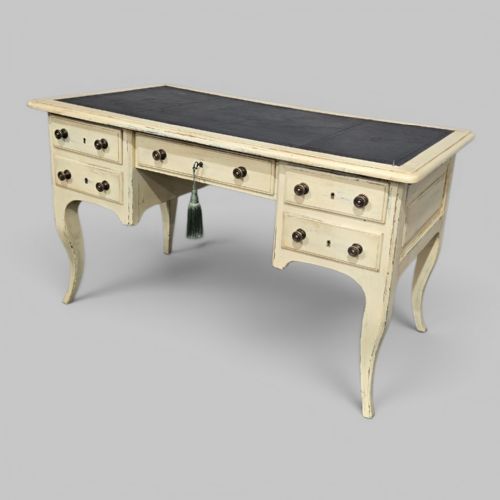
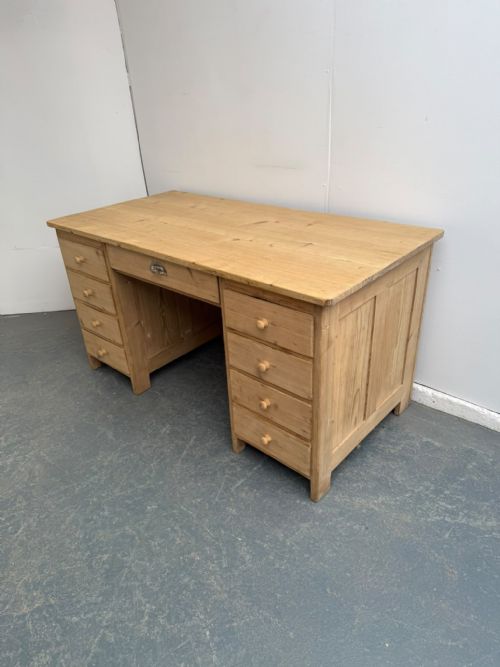


Antique Painted Kneehole Desk
An antique painted kneehole desk provides a compact writing workspace framed by banks of drawers, highly sought after for its decorative surface and utility.
Antique Painted Kneehole Desk
An antique painted kneehole desk combines a central recessed knee space with pedestals of small drawers, appearing across nineteenth-century and early twentieth-century periods. These pieces take the form of writing desks, dressing tables, and country dressers dressed in decorative paintwork.
The versions met on this page span Victorian, Regency, and Arts and Crafts origins, alongside French Provincial, Swedish Gustavian, and Chinoiserie styles. They utilise painted pine, satinwood, and lacquered wood finished by hand.
How they were made
Makers constructed these desks primarily from solid pine, pitch pine, and satinwood, often applying decorative paintwork or simulated finishes directly onto the timber. Brass hardware such as handles and escutcheons secured the drawers within their carcases.
Surfaces received hand-painted decoration, Chinoiserie lacquering, or wax treatments over the wood. Construction relied on traditional joinery methods suited to domestic furniture of the nineteenth century.
What varies in quality
Quality rests in the preservation of the original decorative paintwork and the selection of fine timber substrates like satinwood rather than basic pine. Hand-decorated surfaces displaying careful detail outlast simpler or later painted layers.
The precision of the drawer construction and the retention of original brass fittings distinguish superior pieces from standard workshop output.
The Antique Painted Kneehole Desk Glossary
- Kneehole
- A recessed space beneath the desk top for the user's legs, flanked by pedestals of drawers.
- Satinwood
- A hard, durable timber with a natural golden sheen, favoured for fine cabinet work and painted decoration.
- Chinoiserie
- A European artistic style reflecting Chinese motifs, commonly applied in lacquer on furniture.
- Gustavian
- A Swedish neoclassical style characterised by pale painted finishes and restrained classical ornamentation.
- Escutcheon
- A protective plate surrounding a keyhole, frequently cast in brass.
Antique Painted Kneehole Desk: Frequently Asked Questions
What is a kneehole desk?
A kneehole desk is a freestanding item of furniture featuring a central recess for sitting, flanked on both sides by vertical stacks of drawers. This layout allows the user to sit close to the writing surface while keeping stationery within reach.
Such desks evolved in size and decoration across the nineteenth century, moving from formal mahogany pieces to painted country versions.
How do I care for painted wood?
Painted wood requires protection from direct sunlight and excessive moisture to prevent the paint layer from cracking or fading. Dust the surface regularly with a soft, dry cloth rather than using chemical polishes.
Keeping the desk in a room with stable humidity preserves both the timber substrate and the decorative paintwork.
Are these desks suitable for daily work?
These desks serve well for modern writing and laptop use, provided the writing height matches your chair. Their compact footprint makes them practical for studies or bedrooms where space is limited.
Consider the internal depth of the drawers when planning storage for modern stationery or equipment.
How do I identify a Regency desk?
Regency desks typically display classical proportions, restrained mouldings, and specific decorative techniques such as simulated wood grain or painted finishes. They date from the early nineteenth century during the British Regency era.
Construction details and hardware from this period differ noticeably from later Victorian or Edwardian furniture.