

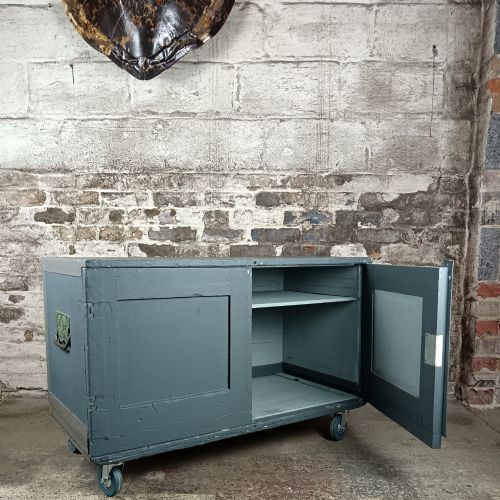
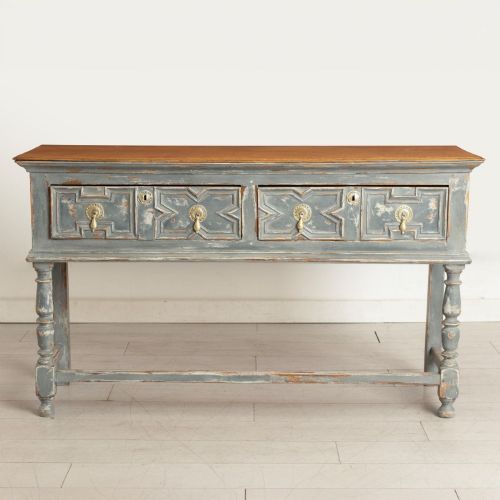
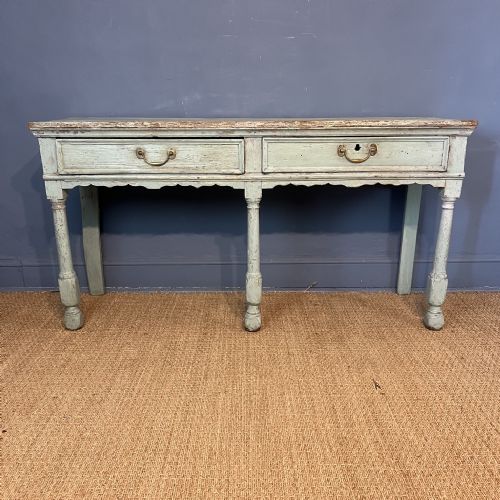
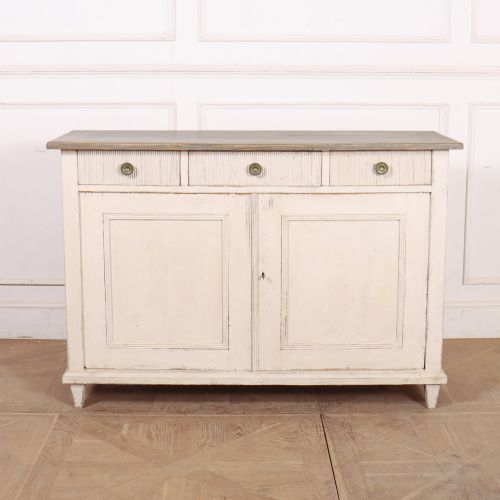
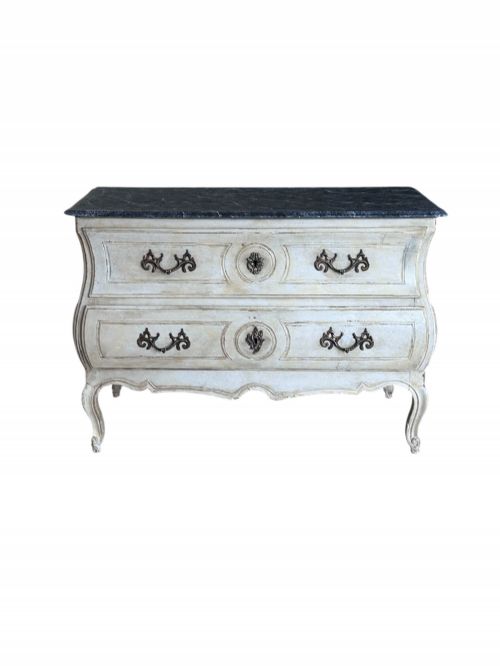

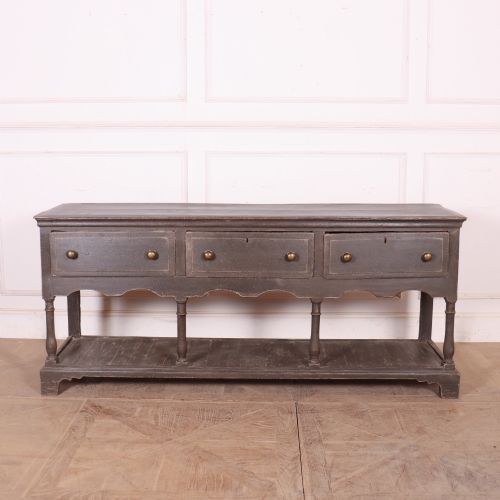


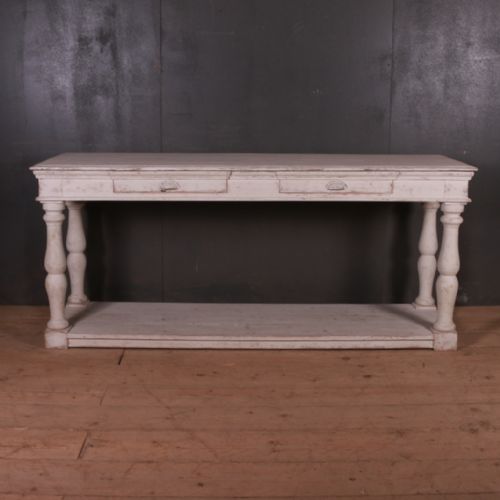

Grey Painted Sideboard
A grey painted sideboard brings provincial character and generous storage to a room, offering surface space and cupboards shaped by centuries of use.

Grey Painted Sideboard
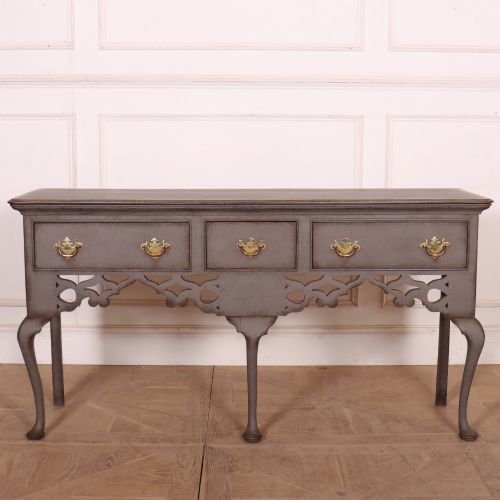
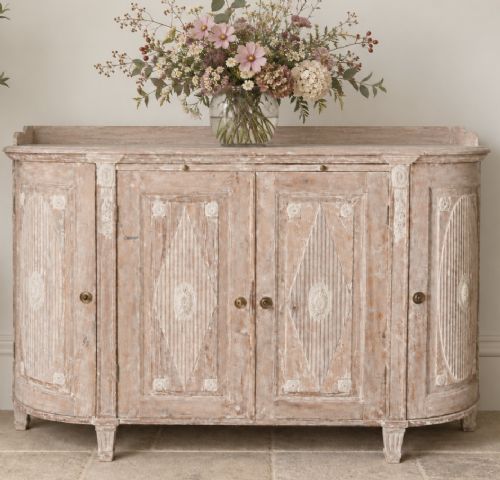
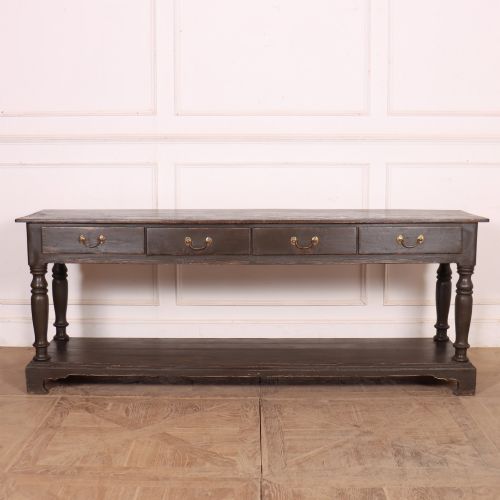
A grey painted sideboard encompasses storage furniture ranging from English dresser bases and potboard dressers to continental commodes, buffets, and enfilades. These pieces serve primarily to store household items while anchoring a dining room, hallway, or living space with substantial presence.
The versions most commonly met here stem from the eighteenth and nineteenth centuries, spanning regional English workshops alongside Scandinavian, French, and Italian provincial traditions. They often appear in forms such as sideboards, servers, cupboards, and commodes rather than strictly modern sideboard shapes.
Makers shaped these utilitarian objects from timber, applying decorative paint schemes that have weathered or been renewed over generations. Buyers seek them for practical storage capacity combined with the softer visual texture of painted wood surfaces.
Materials and construction
Carpenters constructed these pieces predominantly from solid timber such as oak and pine, often selecting softwoods for pieces destined to receive a painted finish. Iron and brass hardware, including drop handles and keyplates, secure doors and drawer fronts.
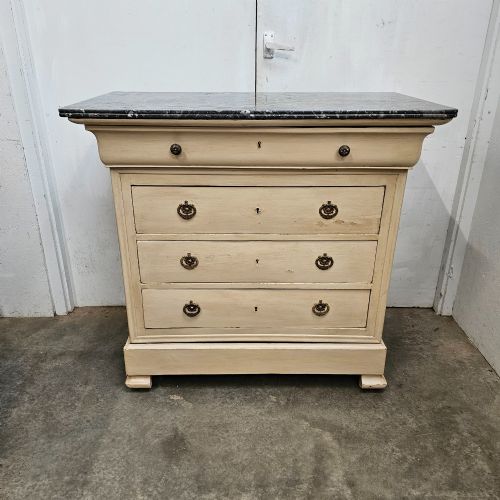
Painters applied layers of pigment directly to wood surfaces, sometimes leaving layers of original scraped paint visible beneath subsequent coats. Certain commodes and servers incorporate marble tops for durable, cool work surfaces.
Grey Painted Sideboard Retail Price Guide 2026
Typical asking prices for grey painted sideboard among the pieces listed under this phrase on Sellingantiques today, from the lower quarter to the upper quarter. They describe what is for sale here now, not the wider market.
Some nineteenth-century cupboards retain layers of original scraped paint, showing the exact shades previous owners painted them generations ago.
Distinctions in quality
The hierarchy of quality rests on structural integrity, timber selection, and the history of the painted surface. Pieces constructed with traditional joinery and stable pine or oak frames sit above later adaptations or overly restored examples.
Original or early painted surfaces command greater interest than modern repainting, particularly when the pigment shows natural wear, craquelure, or scraped layers that reveal the age of the piece.
The Grey Painted Sideboard Glossary
- Dresser base
- A low cabinet or sideboard derived from the lower section of a kitchen dresser, typically fitted with drawers and cupboards. They provide long horizontal surfaces and enclosed storage.
- Commode
- A low chest of drawers or cabinet originating in France, often featuring decorative serpentine fronts or marble tops. These pieces function well as sideboards in smaller spaces.
- Enfilade
- A long sideboard or buffet designed with multiple cabinet doors in a row, common in continental European traditions. They offer extensive internal shelving and surface area.
- Potboard
- An open shelf situated beneath the main body of an early dresser base, originally intended for storing earthenware pots. It adds stability to the legs while providing extra display room.
- Gustavian
- A Swedish neoclassical style characterised by restrained classical detailing and pale, luminous paint finishes. This aesthetic influences many of the lighter painted cupboards found here.
Grey Painted Sideboard: Frequently Asked Questions
What is a grey painted sideboard?
A grey painted sideboard is a storage item, such as a dresser base, commode, or buffet, finished with a grey paint layer. These items combine practical drawer and cupboard space with a decorative painted exterior.
They originate from various European traditions, bringing regional character and functional surface area into contemporary rooms.
How were these sideboards used originally?
Historically, these items served in kitchens, dining rooms, and hallways to hold tableware, linens, and provisions. Cupboards and drawers kept domestic goods out of sight while tabletops supported food preparation or serving.
Today, they perform similar storage functions while acting as focal points in living areas.
How do I care for a painted wooden surface?
Maintain painted furniture by dusting regularly with a dry or slightly damp soft cloth. Avoid harsh chemical cleaners that can strip or soften historic paint layers.
Keep pieces away from direct heat sources and strong sunlight to prevent the timber from warping and the paint from fading.
How can I tell the period of a sideboard?
Dating relies on examining construction techniques, timber types, and hardware fixtures. Hand-cut dovetails, timber shrinkage, and wear patterns indicate older manufacture.
Comparing stylistic details such as serpentine fronts or hardware styles against regional traditions helps narrow down the era.