
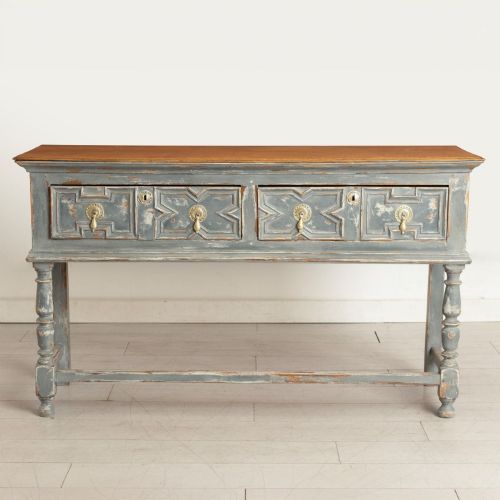
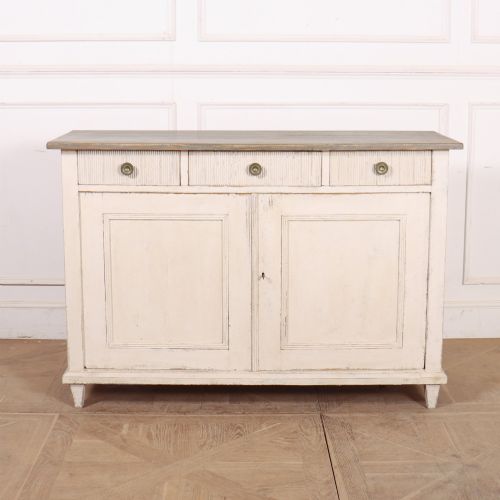
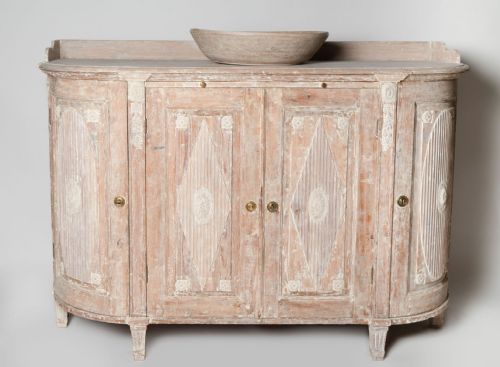


Grey Painted Buffet
These grey painted buffet pieces bring rustic charm and practical storage into a room, anchored in muted tones and historic timbers.
Grey Painted Buffet
A grey painted buffet serves as a substantial storage cabinet or sideboard, frequently originating from continental or British country houses. These pieces combine utilitarian form with decorative painted surfaces, offering deep cupboards and long surfaces for display.
The versions most commonly met on this page span the eighteenth and nineteenth centuries, including items from Swedish, English, and French traditions. They appear as dresser bases, enfilades, and sideboards, carrying historic paint finishes that range from scraped original layers to muted country tones.
Makers fashioned these storage items from sturdy timbers like oak and pine before applying protective and decorative coats of paint. Their presence in a room brings a grounded, time-worn character without dominating the scale of the interior.
How they were made
Cabinet makers constructed the foundational carcases of these pieces using durable regional woods such as solid oak and pine. Joinery techniques relied on traditional pegged and panelled assembly to ensure the heavy frames held firm through generations of domestic use.
Surfaces received layers of lead or oil-based paint, often built up over decades or refreshed in subsequent periods. Metal fittings in iron and brass provided functional hinges and handles, while select pieces incorporated heavy stone tops like marble for utilitarian prep work.
Some nineteenth-century cupboards preserve traces of original scraped paint beneath decades of later neutral coats.
What varies in quality
The hierarchy of quality rests primarily on the integrity of the original construction and the preservation of historic paint surfaces. Pieces retaining genuine scraped early paint layers command greater attention than those with later, heavy-handed modern overpainting.
Proportion and the handling of mouldings distinguish regional vernacular work from finer metropolitan pieces. The weight of the timber and the subtlety of the painted finish determine whether a piece feels genuinely historic or merely decorative.
The Grey Painted Buffet Glossary
- Buffet
- A sideboard or cabinet used for storing and serving food or displaying china. These pieces traditionally feature low profiles with cupboards or drawers.
- Enfilade
- A long sideboard or cabinet suite, often associated with French dining rooms. The term describes a sequence of rooms or connected cabinet doors aligned in a straight line.
- Dresser Base
- The lower section of a traditional kitchen or dining dresser, fitted with drawers and cupboards below a flat serving top. They stand independently without the upper plate rack.
- Gustavian
- The Swedish interpretation of neoclassical style, characterised by lighter proportions, muted grey and white paint finishes, and restrained carved details. It developed during the reign of King Gustav III.
- Scraped paint
- A conservation term for paint surfaces where later layers have been carefully removed to reveal the original historical pigment underneath. This reveals the authentic early colouration of the timber.
Grey Painted Buffet: Frequently Asked Questions
What is a grey painted buffet?
A grey painted buffet is a historic storage cabinet or sideboard finished in historic or muted grey paint. These items function as practical serving surfaces and deep cupboards for dining rooms.
They originate from various European traditions, including English country houses and Swedish rural workshops, spanning the eighteenth and nineteenth centuries.
How do I use a buffet in a modern home?
These pieces provide substantial storage for tableware, linens, and dry goods while offering a wide surface for lamps or decorative objects. Their muted tones integrate easily into contemporary dining rooms, kitchens, or hallways.
The deep cupboards help conceal everyday clutter while maintaining a historic aesthetic.
Are these pieces made of solid wood?
Makers constructed these storage units using heavy solid timbers such as oak and pine. These robust woods provided the structural strength required for daily domestic use over centuries.
Secondary woods may appear in less visible areas like drawer linings and backboards.
What periods do these pieces come from?
The pieces available span the eighteenth and nineteenth centuries, with examples from the Georgian era through to the early twentieth century. Each period brings distinct regional characteristics in joinery and proportion.
Swedish, French, and English workshops each developed their own vernacular interpretations during these eras.