


Grey Credenza
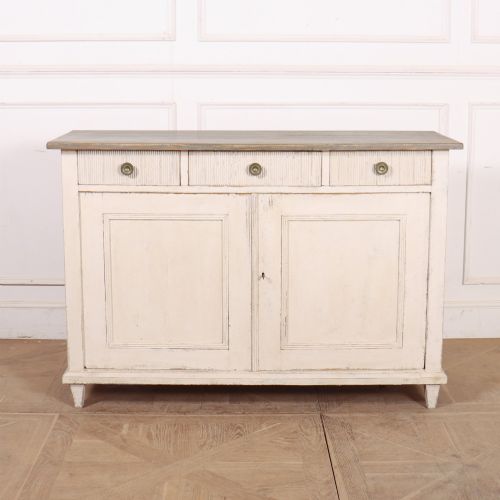
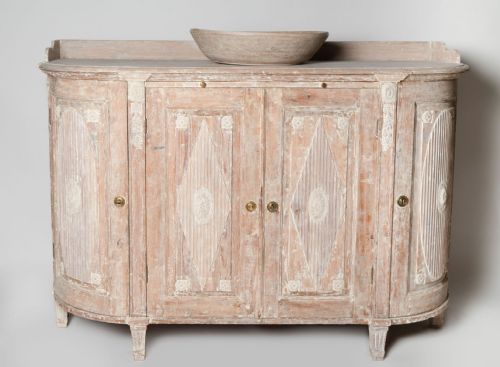
A grey antique credenza brings stately storage and subtle regional character into a room.
Grey Credenza
When you search for a grey antique credenza, you are looking at substantial storage furniture including sideboards, enfilades, buffets, and cupboards dressed in painted or natural finishes. The listings show forms ranging from 18th-century English dresser bases to 19th-century Swedish cupboards and French Empire style enfilades.
You are most likely to meet 19th-century Scandinavian painted pieces on this page, alongside Georgian and 18th-century English examples. These items serve primarily as dining room or hallway storage, combining surface display space with enclosed cupboards or drawers.
The regional variety spans from Swedish country pieces to Dutch commodes and English oak furniture. Each type reflects the domestic storage needs and cabinet-making traditions of its specific origin.
Materials and construction methods
Makers utilised solid timbers such as oak, pine, walnut, and burr elm for the foundational structure of these cabinets. Joinery methods relied on traditional techniques suited to the period and region, creating durable carcases designed to withstand daily domestic use.
Surfaces frequently display painted finishes, including original scraped paint on Scandinavian pine, alongside polished wood and fitted marble tops. Brass and iron hardware such as handles, hinges, and locks provide functional and decorative contrast to the timber and paint.
Some Swedish cupboards wear their original scraped paint like an old winter coat, refusing to hide the brushstrokes of the past.
Assessing quality in antique storage
Quality reveals itself in the integrity of the timber selection and the retention of original surface treatments. Pieces with untouched historic paintwork stand apart from later repainted surfaces, showing honest patination accumulated over generations.
The refinement of proportions and the execution of carved or inlaid details distinguish standard regional workshop production from finer cabinet-making. Balanced joinery, smooth drawer operation, and heavy materials like integrated marble slabs further separate the better examples.
The Grey Credenza Glossary
- Enfilade
- A suite of rooms aligned in a row, or a long sideboard designed to stand against a wall in a formal dining space. The term often describes long French or continental storage furniture.
- Commode
- A low chest of drawers or cabinet originating in France. They frequently feature decorative veneers and marble tops.
- Dresser base
- The lower section of a traditional kitchen or dining room dresser, featuring cupboards and drawers beneath a solid wooden surface. These pieces often function independently as sideboards.
- Gustavian
- The Swedish neoclassical style developed during the late 18th century. It is known for restrained classical proportions and pale painted finishes.
Grey Credenza: Frequently Asked Questions
What is a grey antique credenza?
A grey antique credenza is a historic storage piece, such as a sideboard, buffet, or cupboard, finished in weathered paint or natural tones. These items provide functional surface and enclosed space while bringing period character to modern interiors.
They encompass various regional forms, including Scandinavian painted cupboards and English dresser bases, united by their substantial proportions and historic utility.
How were these credenzas used historically?
Historically, these storage pieces served dining rooms, halls, and parlours for holding tableware, linens, and food supplies. Their tops provided a surface for serving dishes or displaying decorative objects during gatherings.
In country houses and urban dwellings alike, they formed the backbone of domestic organisation before fitted kitchen cabinetry became common.
How do I fit one into a modern room?
A large antique sideboard or cupboard works well as a focal point in a dining room, living area, or wide hallway. Its neutral painted or timber finish allows it to anchor modern interior schemes while offering deep storage.
Ensure you measure both floor space and ceiling clearance carefully, as these historic pieces often feature heavy proportions and integrated marble tops.
How do I distinguish regional styles?
Regional styles appear through distinct construction traits, hardware choices, and paint treatments. Swedish and continental pieces frequently show lighter painted pine and Gustavian influence, while English examples lean towards oak and Georgian proportions.
Examining the internal timbers and backboards helps confirm the geographic origin and period of manufacture.