



Edwardian Satinwood Pedestal Desk
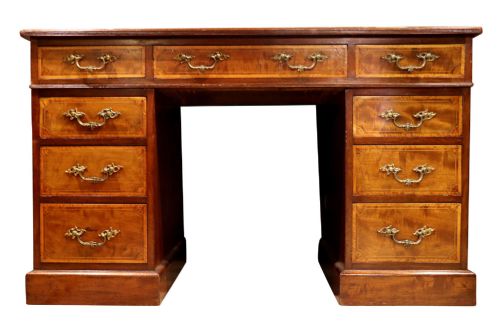
An edwardian satinwood pedestal desk brings refined timber figuring and practical workspace together in a substantial piece for the study.
Edwardian Satinwood Pedestal Desk
An edwardian satinwood pedestal desk typically pairs a central writing surface with banks of drawers below, reflecting the cabinet-making standards of the early twentieth century and late nineteenth century.
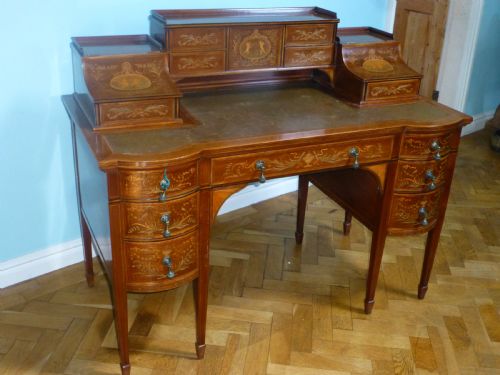
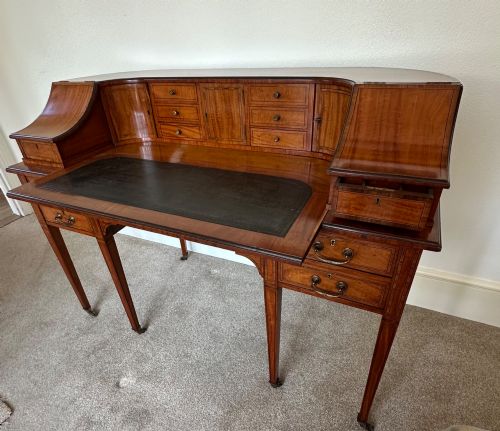
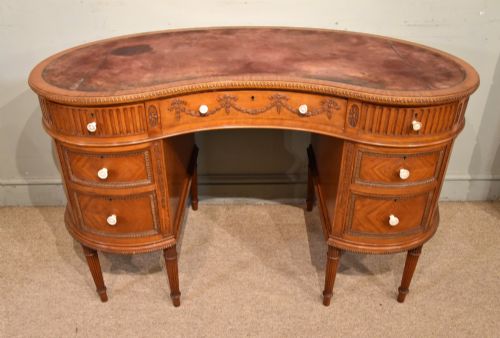
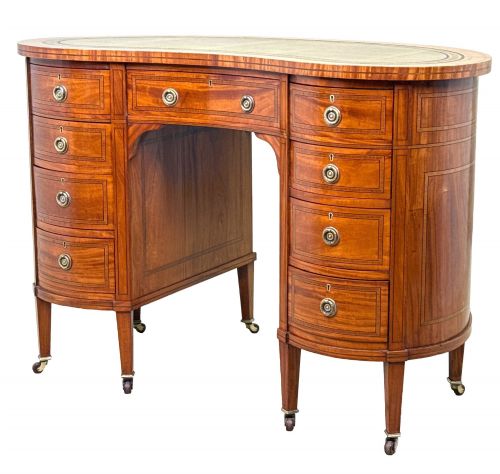
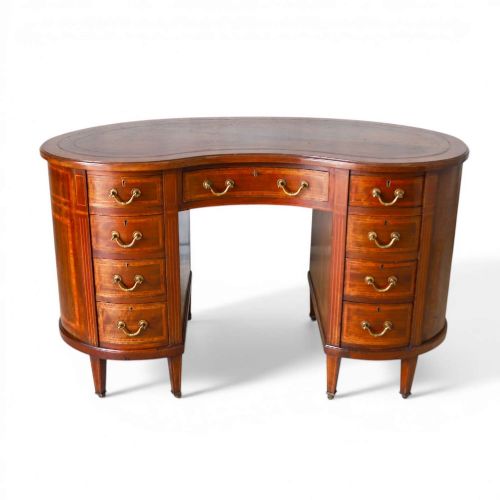
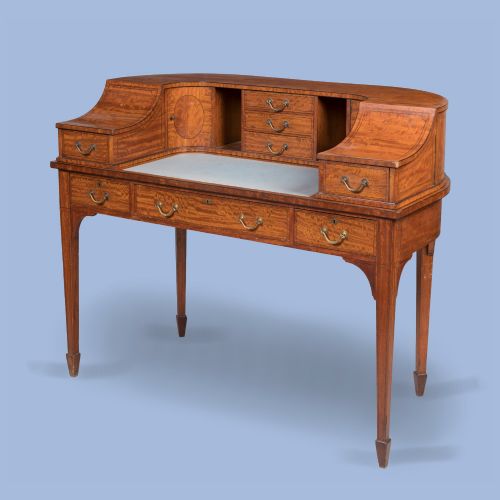
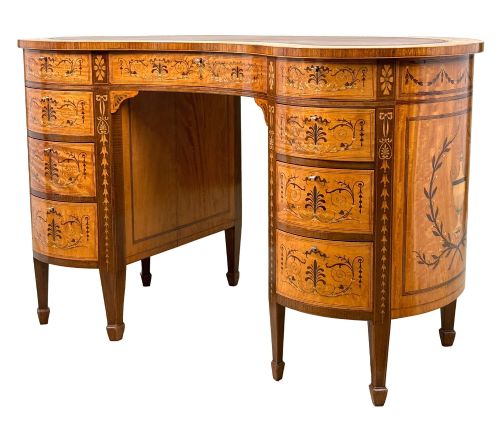
Makers of this period also produced kidney-shaped writing tables and Carlton House desks in satinwood, alongside classic pedestal configurations built from mahogany with satinwood banding.
Surviving examples span the Victorian and Edwardian eras, often showing Sheraton Revival influence through classical inlay and symmetrical proportions.
Materials and technique
Cabinet-makers constructed these desks using solid mahogany or oak frameworks lined with oak for the drawers, then applied finely figured satinwood veneers and crossbanding.
Surfaces frequently incorporate inset leather writing panels, while decorative enrichment relies on marquetry inlay, brass handles, and glass protections.
Carpentry techniques include dovetailed drawer construction and precise crossbanding that frames the grain of the primary timber.
The listings on this site combine satinwood with mahogany, oak, rosewood, and brass hardware across multiple decades.
Gradations in manufacture
The distinction between standard workshop output and top-tier cabinet-making lies in the crispness of the marquetry inlay and the choice of secondary timbers like solid oak for drawer linings.
Retaining original brass hardware, fitted leather inserts, and uncompromised structural stability marks out the pieces produced by notable London firms from anonymous trade output.
Edwards & Roberts·Maple & Co·James Shoolbred of London·John Taylor of Edinburgh
The Edwardian Satinwood Pedestal Desk Glossary
- Pedestal desk
- A writing table supported by two pedestals containing banks of drawers. This configuration provides substantial storage beneath the main writing surface.
- Satinwood
- A lustrous hardwood native to Ceylon and India used for veneers and inlay. Its golden sheen reflects light distinctively across desk tops.
- Carlton House desk
- A horseshoe-shaped writing desk with a raised superstructure of small drawers and compartments. Edwardian makers revived this complex eighteenth-century form.
- Crossbanding
- A strip of veneer laid around the border of a panel with the grain running perpendicular to the centre. This technique frames the primary satinwood surface.
- Marquetry
- Decorative patterns formed by fitting together contrasting veneers of various timbers. Floral and classical motifs often decorate the top surfaces.
Edwardian Satinwood Pedestal Desk: Frequently Asked Questions
What is a pedestal desk?
A pedestal desk comprises a flat top supported by two independent banks of drawers or cupboards. The user sits in the central kneehole space between them.
This form evolved to offer substantial surface area and secure document storage within a single, freestanding item of library or office furniture.
How do I identify Edwardian satinwood?
Edwardian satinwood exhibits a pale, golden-yellow hue with a natural chatoyancy that shifts in the light. It frequently appears as a veneer over mahogany or oak carcases.
Makers often combined it with darker crossbanding, such as rosewood or kingswood, to accentuate the borders of drawers and table tops.
How do I care for satinwood veneer?
Satinwood veneer requires protection from direct sunlight and excessive moisture to prevent fading and lifting of the delicate surface timber. Regular dusting with a dry, soft cloth maintains the finish.
Applying occasional specialist wax preserves the lustre of the wood without building up heavy residue on the antique polish.