
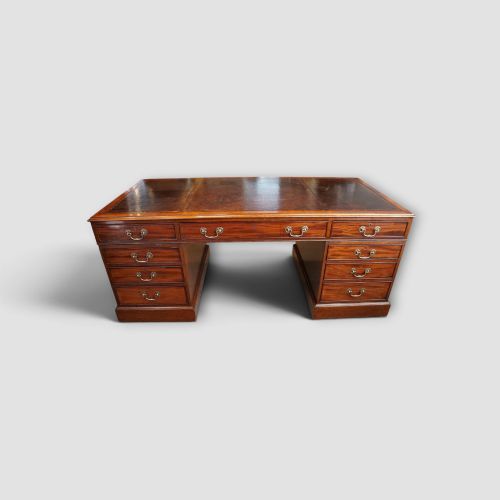

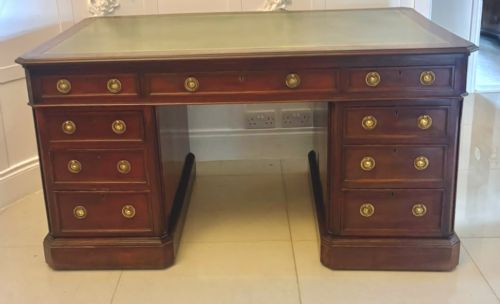
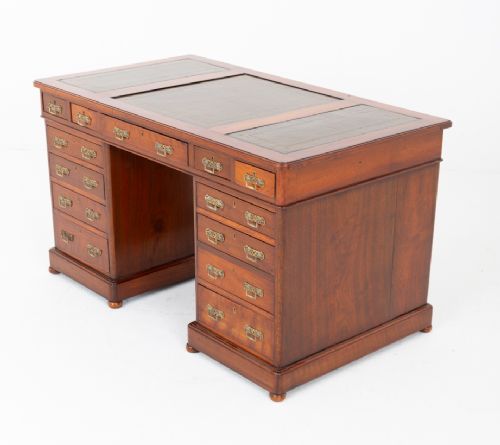
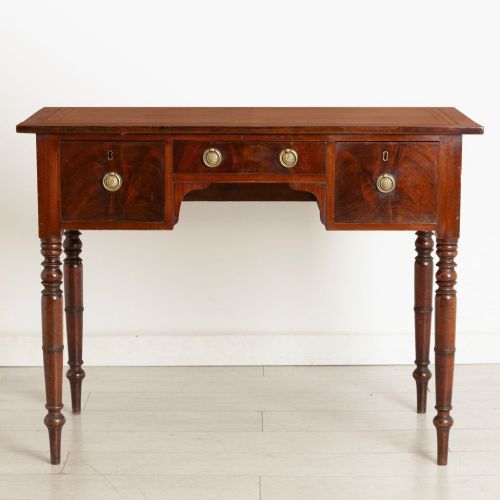

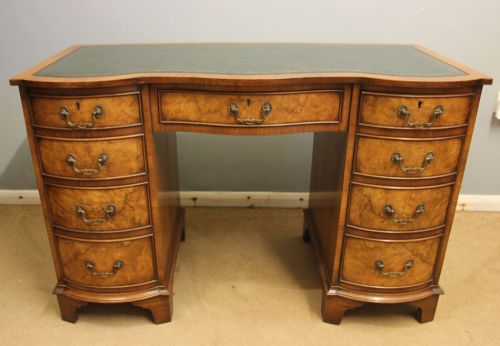
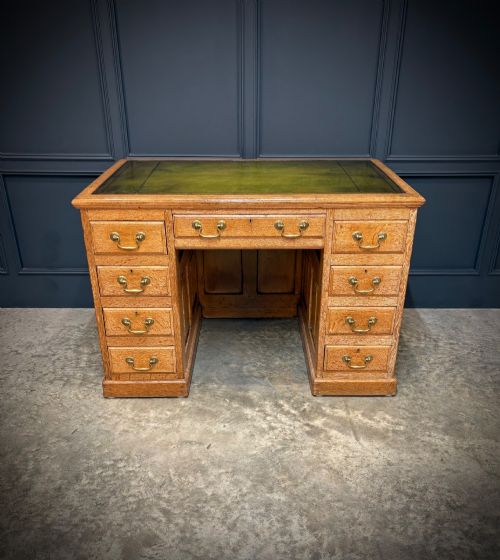
Leather Top Kneehole Desk
When you search for a leather top kneehole desk, you find a sturdy pedestal workspace designed for writing and storage, built to last through the centuries.
Leather Top Kneehole Desk
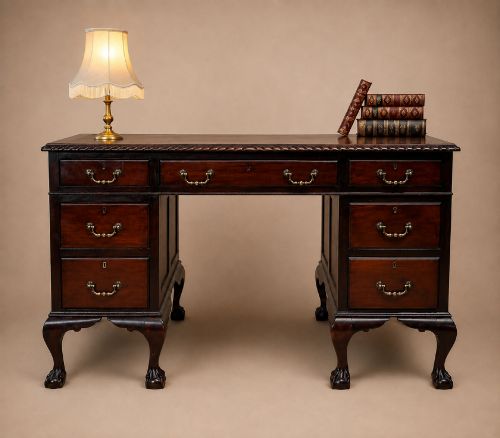
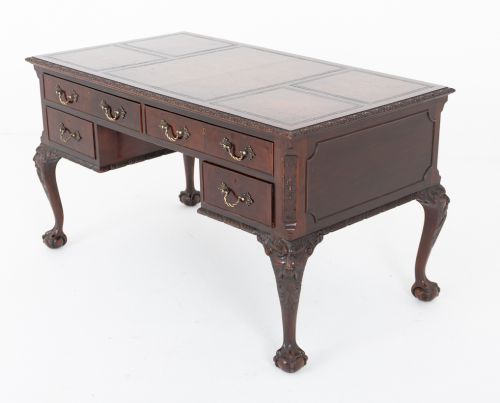
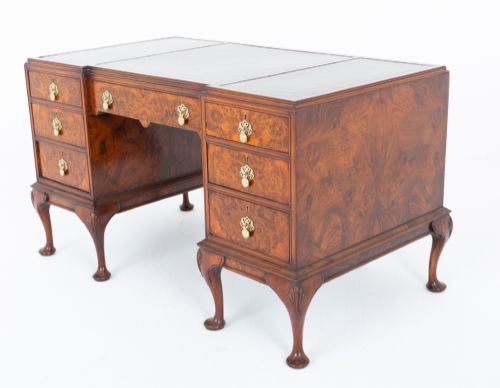
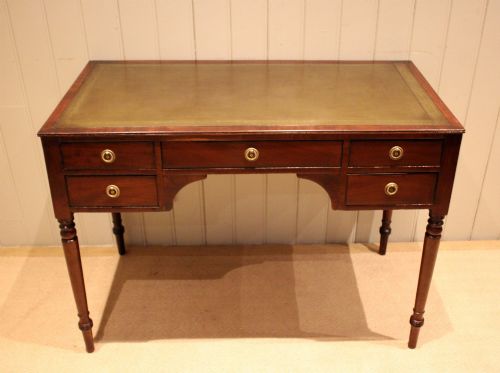
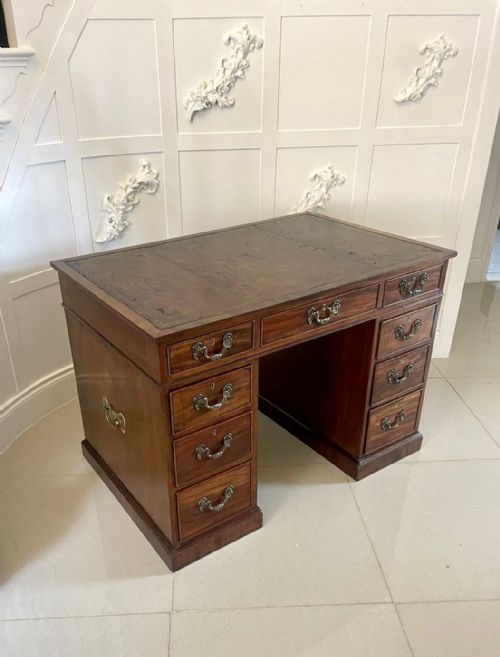
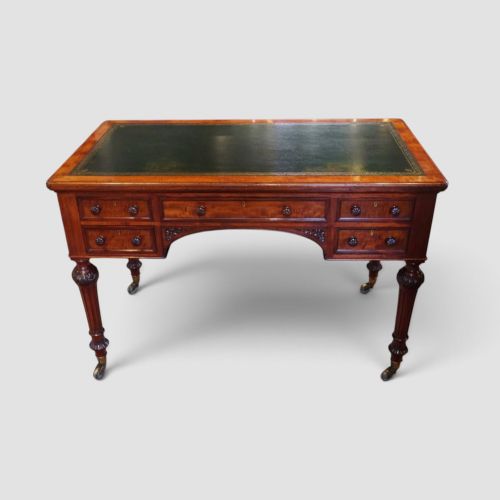
A leather top kneehole desk provides a central recess for the legs flanked by banks of drawers, forming a substantial freestanding pedestal workspace. The form spans the nineteenth and early twentieth centuries, drawing on Victorian, Edwardian, and revival styles.
Makers and retailers such as Edwards and Roberts, Gill & Reigate, and Trollope & Sons shaped these utilitarian yet elegant pieces for offices and homes.
How They Were Made
Cabinetmakers constructed these desks primarily from solid timber and sturdy veneers such as mahogany, walnut, and oak. They frequently incorporated brass hardware, fitted stationery drawers, writing slides, and hand-tooled leather writing surfaces.
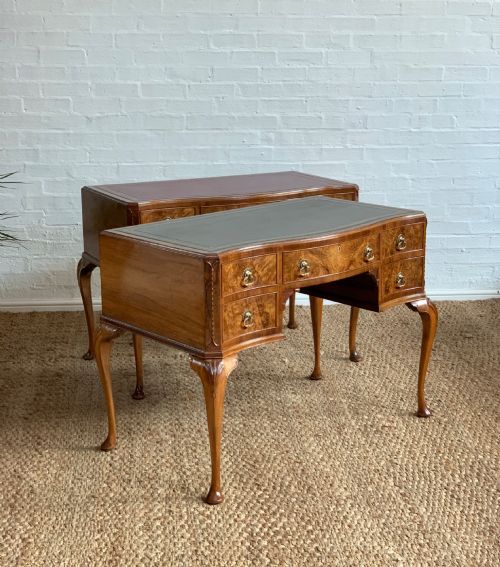
Surfaces were shaped using traditional joinery techniques, sometimes featuring satinwood inlay, French painted finishes, or serpentine fronts. The leather inserts were glued directly into recessed wooden writing beds and bordered with gold tooling.
Listings feature mahogany, burr walnut, and oak across Victorian, Edwardian, and Georgian revival periods.
What Varies in Quality
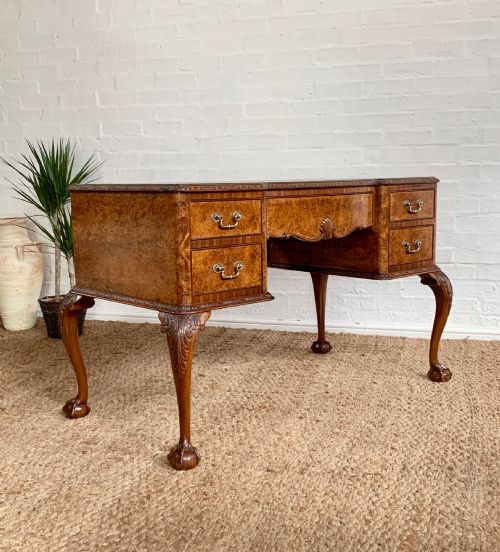
The distinction between standard commercial pieces and the finest examples rests on the choice of timber figure, such as richly grained burr walnut or high-grade mahogany. Superior pieces demonstrate exceptional crispness in carved details like Chippendale or Gothic revival motifs.
Construction integrity and provenance elevate specific desks, particularly those bearing the stamps or signatures of notable cabinetmakers and retailers. The quality of the original brass handles, secret locking mechanisms, and the depth of the hand-tooled leather insert also define the upper tier.
Trollope & sons desk·Holland & Sons·Wylie & Lochhead Glasgow·Gill & Reigate·Edwards and Roberts·James Shoolbred of London
The Leather Top Kneehole Desk Glossary
- Kneehole desk
- A writing desk with a central recess for the legs, positioned between two pedestals containing drawers. This layout became standard in domestic and office furniture during the eighteenth and nineteenth centuries.
- Partners desk
- A large pedestal desk designed with drawers and cupboards on both sides so two people can work facing each other. These were commonly used in banks, libraries, and administrative offices.
- Pedestal desk
- A heavy freestanding desk consisting of a top supported by two separate pedestals or cabinets of drawers. It offers substantial storage capacity alongside a wide writing surface.
- Writing slide
- A pull-out shelf located above the drawers, traditionally used to hold ink, paper, or candles while keeping the main surface clear. They slide back into the desk frame when not in use.
- Tooled leather
- Leather decorated by pressing heated metal tools into the surface to create decorative gold or blind-stamped borders. This traditional treatment provides a durable writing surface.
Leather Top Kneehole Desk: Frequently Asked Questions
What is a kneehole desk?
A kneehole desk is a piece of furniture featuring a central open space for the legs with banks of drawers on either side. This configuration allows the user to sit comfortably while keeping files and stationery within reach.
The form emerged to provide organised storage and a dedicated writing surface without requiring an overly bulky frame.
How were these desks used?
These desks served as administrative hubs for estate managers, office workers, and domestic writers. They provided secure storage for documents in pedestal drawers alongside a flat surface for daily correspondence.
Many incorporate pull-out writing slides or stationery compartments to manage paperwork efficiently.
How do I care for the leather top?
The leather top requires gentle maintenance using specialised leather balms to prevent drying and cracking. Avoid using harsh chemical cleaners or placing hot cups directly on the surface.
Protecting the leather from direct sunlight helps preserve the colour and the gilded tooling.
How do I distinguish Victorian from Edwardian desks?
Victorian desks tend to feature heavier proportions, dark mahogany timbers, and robust carving inspired by earlier revival styles. Edwardian examples often display lighter satinwood inlays and a more refined, delicate aesthetic.
Examining the construction methods and secondary timbers inside the drawers can also help confirm the period.