
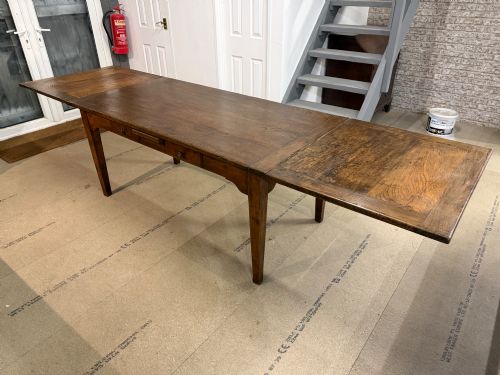
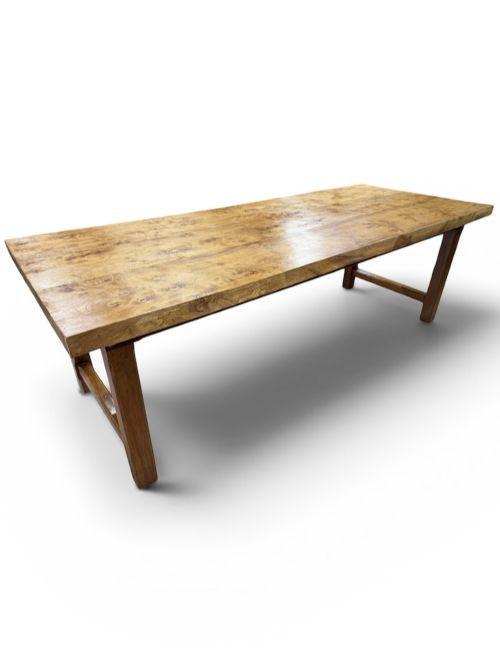
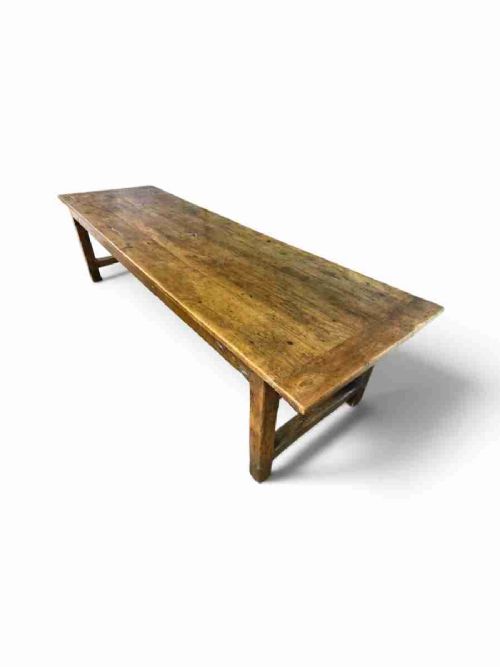
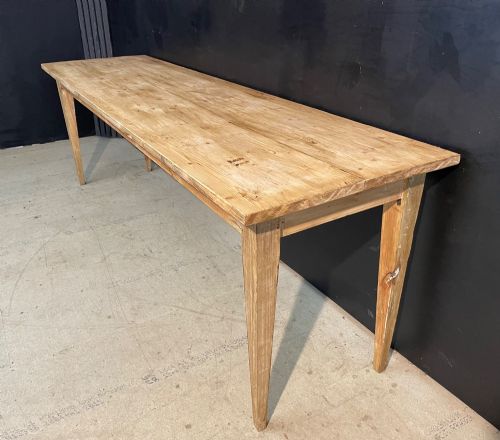
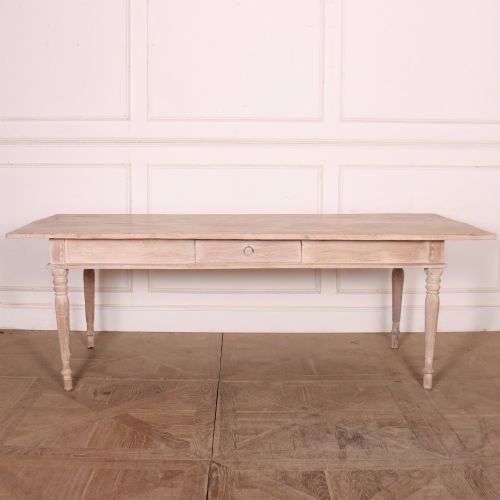
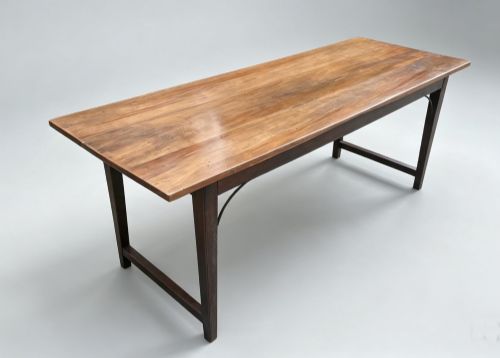
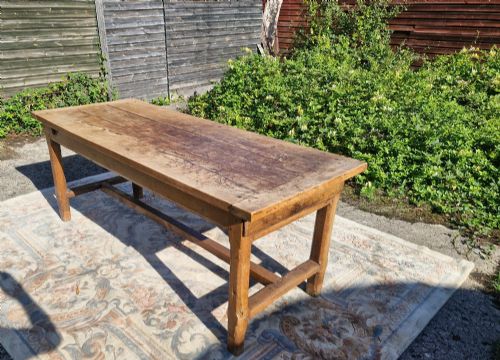
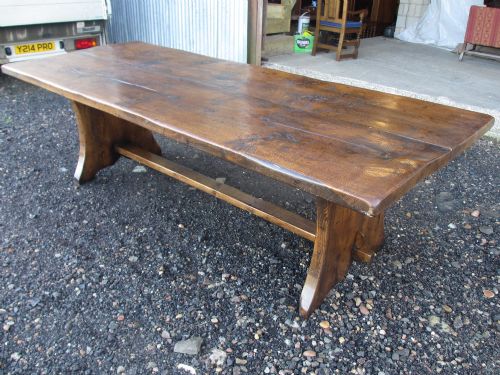
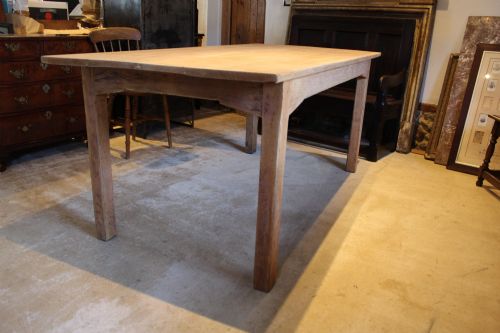
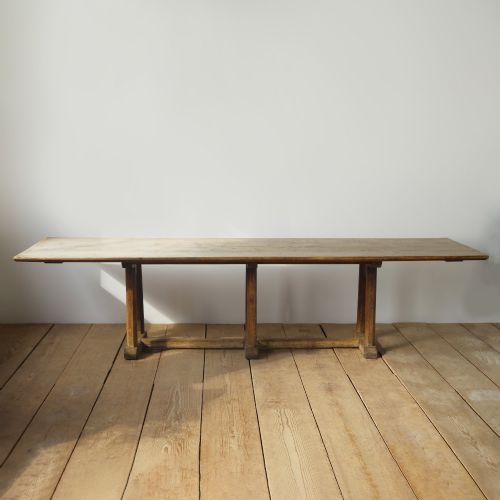
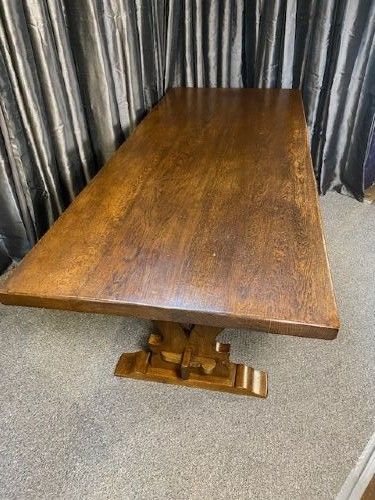
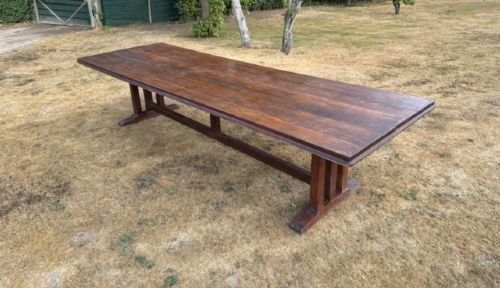
Large Wooden Refectory Table
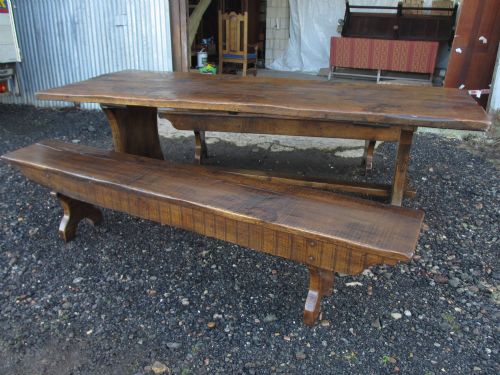
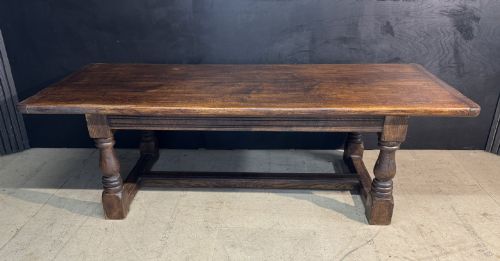
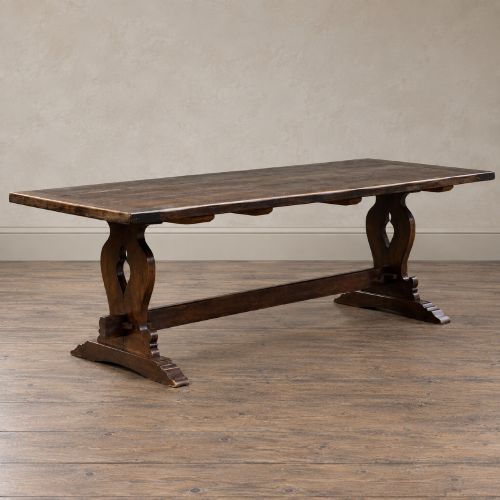
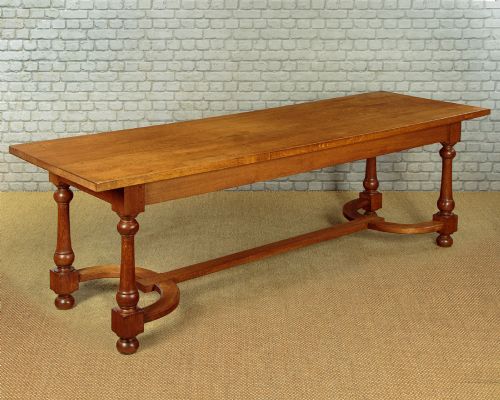
A large wooden refectory table grounds a room with scale and substance, offering a surface built for gathering.
Large Wooden Refectory Table
When you search for a large wooden refectory table, you encounter long, substantial dining surfaces designed for communal dining and heavy daily use. The pieces gathered here span centuries of craftsmanship, originating from various periods including the 17th century, 18th century, 19th century, Victorian era, and Edwardian period.
The version you are most likely to meet on this page is an oak refectory or farmhouse dining table from the 19th century or the Edwardian era. These tables often measure eight feet or more in length, accommodating multiple diners easily.
Alongside traditional refectory designs, the selection includes related forms such as library tables, console tables, and harvest tables. Origins range from English workshops to French provincial kitchens and Spanish rural houses.
Materials and construction
The primary material across these pieces is solid timber, with oak being the dominant choice for refectory tables. Cabinet makers also utilised pine, elm, cherrywood, walnut, beech, fruitwood, and pitch pine depending on regional availability and the intended function of the table.
Construction techniques involve robust joinery suitable for heavy daily demands, often pairing thick timber boards for the top with sturdy trestle ends, shaped supports, or four-legged frames. Some pieces incorporate wrought iron elements for structural reinforcement or stylistic contrast.
Surfaces show various historical treatments, ranging from waxed or painted finishes to bleached timber and natural grain patination accumulated through generations of use.
One historic public school library table hides centuries of studious elbow leaning beneath its sturdy oak top.
Distinctions in quality
Quality in these tables rests primarily in the selection of the timber and the integrity of the board construction. Single plank tops or carefully matched two-board tops demonstrate superior material selection compared to multi-jointed surfaces.
The weight and substance of the frame dictate the structural calibre of the piece. Tables featuring heavy oak construction with well-executed trestle ends or carved details represent the upper tier of craftsmanship within this category.
The Large Wooden Refectory Table Glossary
- Trestle ends
- Support structures at either end of a table consisting of vertical posts connected to a horizontal base. They provide stability for long tops without obstructing legroom.
- Harvest table
- A narrow wooden table traditionally used during agricultural seasons for feeding large groups of workers. They often utilise pine or elm timbers.
- Single plank top
- A tabletop constructed from one wide board of timber. This feature indicates a tree of significant maturity and adds value to older tables.
Large Wooden Refectory Table: Frequently Asked Questions
How are refectory tables different from standard dining tables?
Refectory tables are generally longer and narrower than standard dining tables, originating from communal dining halls where space efficiency along benches mattered.
Their sturdy trestle or four-legged frames were built to support heavy timber tops without requiring cumbersome corner legs.
What rooms suit a large wooden refectory table?
These tables suit spacious dining rooms, open-plan kitchens, and large libraries where their length and visual weight can anchor the space.
They pair well with long benches or mismatched dining chairs to create an informal, grounded seating arrangement.
How do I identify an older refectory table?
Older refectory tables reveal their age through timber patination, hand-tooled joinery marks, and the use of wide, single-board tops.
Construction details like pegged joints and historic wear patterns help distinguish 17th and 18th-century examples from later revival pieces.
Can I use a refectory table for daily family meals?
These tables were built precisely for daily communal use and handle regular family life with ease.
Their robust wooden surfaces absorb the marks of daily living while developing a deeper patina over time.