
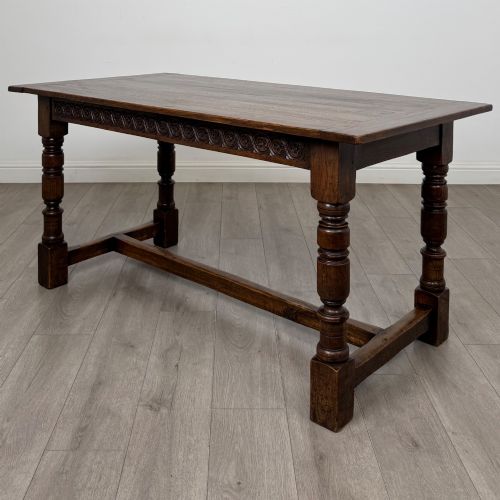
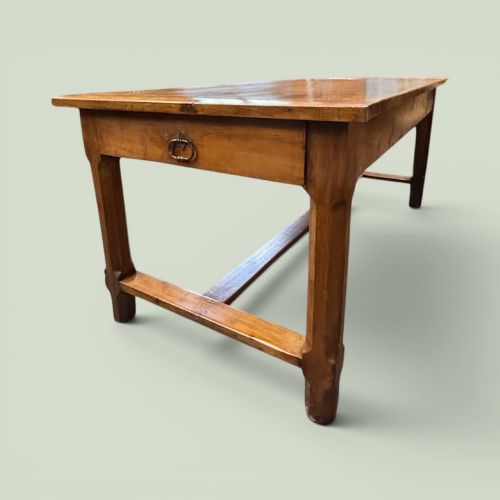

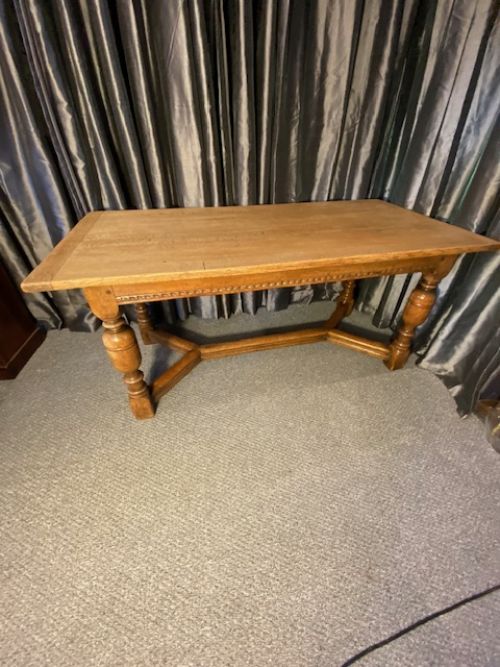


H Stretcher Dining Table
An h stretcher dining table grounds a room with robust timber and sturdy bracing, offering a surface built for daily hospitality and long gatherings.
H Stretcher Dining Table
An h stretcher dining table brings together heavy timbers and characteristic bracing that runs between the legs to provide structural rigidity. Buyers searching this phrase meet robust surfaces designed for communal dining, writing, and kitchen work.
The versions most common on this page span vernacular traditions such as rustic farmhouse, French provincial, and Arts and Crafts designs. These pieces often take the form of refectory tables, library tables, and kitchen tables.
Origins stretch from seventeenth and eighteenth century European workshops through to twentieth century revivals. Materials range from native English oaks and elms to continental walnuts, pines, and cherrywoods.
How they were made
Cabinet makers and joiners built these tables using solid hardwoods like oak, walnut, and elm, alongside softer timbers like pine for vernacular kitchen pieces. Planks formed the tops, often joined with breadboard ends to manage natural timber movement.
Frames relied on mortise and tenon joinery, securing the legs with horizontal bracing members connected in an H-shape configuration. Some examples incorporated wrought iron stretchers or turned wooden supports to add lateral strength.
Surfaces received simple wax, oil, or polished finishes that highlighted the grain and figure of the wood. Drawers, where present, utilised traditional hand-cut dovetails and running wooden guides.
Materials represented across the inventory include solid oak, walnut, elm, pine, cherrywood, and wrought iron.
What varies in quality
The integrity of the timber selection dictates the character of the piece, distinguishing uniform modern boards from centuries-old planks with distinct grain patterns and patination. Richness of surface colour and depth of polish develop through decades of use rather than artificial treatment.
Joinery execution separates robust examples from utilitarian ones, seen in the snugness of mortise and tenon joints and the stability of the central bracing. Weight and density in the structural frame ensure the table remains firm without lateral movement.
The H Stretcher Dining Table Glossary
- H stretcher
- A horizontal timber or metal rail connecting the four legs of a table in the shape of the letter H, providing lateral stability. This bracing prevents the legs from bowing outward under heavy downward pressure.
- Refectory table
- A long, narrow dining table originally used in monasteries and large halls for communal meals. Surviving examples often feature thick plank tops and substantial underframes.
- Breadboard end
- A transverse piece of wood attached to the end of a solid timber tabletop to prevent warping. It allows the main boards to expand and contract with seasonal humidity changes.
- Mortise and tenon
- A traditional woodworking joint where a projecting tongue fits snugly into a matching cavity. This method creates strong, durable connections without relying entirely on metal fasteners.
H Stretcher Dining Table: Frequently Asked Questions
What is an H stretcher?
An H stretcher is a horizontal bracing system running between the table legs, shaped like the letter H to reinforce the entire underframe. It adds considerable rigidity to long timber tables.
Historically, this construction method prevented heavy tables from wobbling on uneven stone floors during daily communal use.
How do I clean an antique wooden table?
Clean antique wood using a soft, dry cloth to remove dust and grit without scratching the aged surface. Avoid modern chemical sprays that can strip historic wax polishes.
Occasional application of natural beeswax nourishes dry timber and maintains a soft, protective sheen over the grain.
Are these tables suitable for everyday dining?
These sturdy tables were built specifically for heavy domestic use, making them durable surfaces for modern family dining and kitchen tasks. Solid timber construction handles daily wear resiliently.
Using heat-resistant mats protects historic finishes from hot serving dishes and moisture rings.
How can I tell an older refectory table apart?
Examine the construction marks underneath the top, tool textures on the timber, and the way the wood has aged and darkened over time. Hand-planed boards and pegged joints often indicate earlier craftsmanship.
Later revival pieces display more uniform machining marks and timber preparation methods typical of twentieth-century workshops.