



8ft Dining Table
An 8ft dining table gives a room presence and purpose, bringing people together around timber that carries the character of past centuries.
8ft Dining Table
An 8ft dining table provides substantial length for hosting, originating in domestic kitchens, dining rooms, and institutional spaces from the Georgian, Victorian, and later periods.
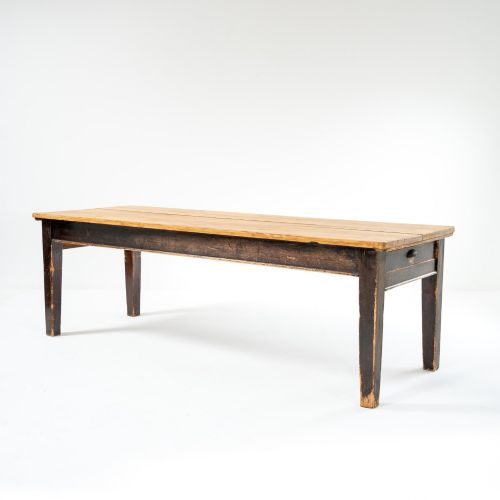
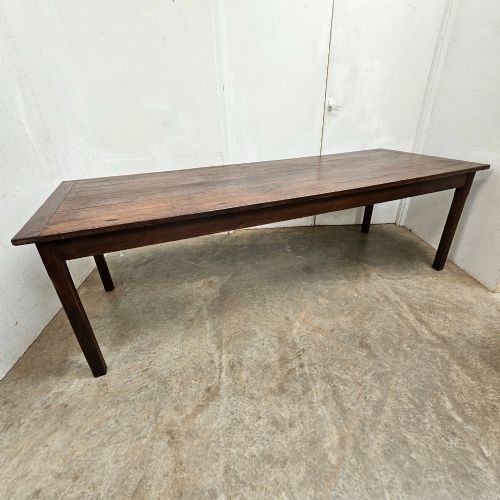
The versions most commonly met in this selection are sturdy pine and oak farmhouse or harvest tables alongside formal mahogany extending dining tables.
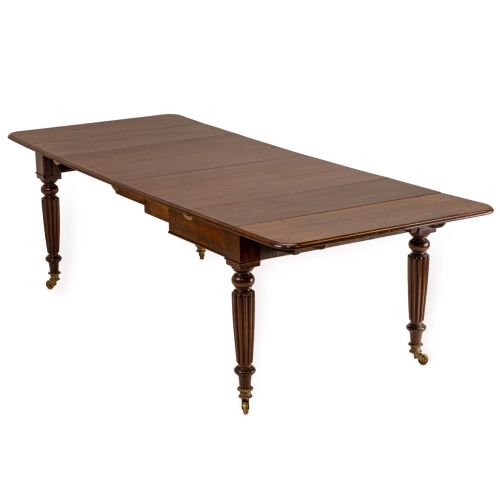
These forms range from rustic French and English country pieces with simple board tops to wind-out mahogany mechanisms designed for formal dining.
How they were made
Construction relies heavily on solid woods such as oak, mahogany, pine, and elm, often joined using traditional methods suited to long spans of timber.
Extending tables utilise internal mechanisms like wind-out screws or pillars to support multiple leaves, while refectory and harvest tables depend on robust trestle or cruciform bases.
Period origins span from the 17th century through the Georgian, Victorian, and Edwardian eras up to the 1930s.
What varies in quality
Quality rests in the selection of timber, such as figured flame mahogany veneers or dense old-growth oak, and the integrity of the underlying framing.
Refinement of detail, from hand-turned pillar supports to smooth mechanical extension systems, separates utilitarian kitchen pieces from formal dining room furniture.
Waring and Gillow·Joseph Fitter·Ashton Leach and Cumberbirch·James Morrison·Gillows
The 8ft Dining Table Glossary
- Wind-out
- A mechanical extending system operated by a handle that uses a central screw thread to open the table frame for extra leaves.
- Refectory table
- A long, narrow dining table traditionally built with sturdy timber legs connected by low stretchers for communal dining.
- Harvest table
- A utilitarian wooden table with overhanging ends, historically utilised for seasonal farm labour meals.
- Flame mahogany
- A veneer cut from the fork of the mahogany tree that produces a distinctive, flickering flame-like grain pattern.
- Pillar dining table
- A style where the tabletop rests on one or more central wooden columns supported by spreading legs.
8ft Dining Table: Frequently Asked Questions
How many people can sit at an 8ft dining table?
An 8ft dining table typically seats eight to ten people comfortably, depending on the width of the chairs and the presence of end legs.
Tables with central pillar supports often allow more legroom along the sides than traditional four-legged refectory designs.
What is a wind-out dining table?
A wind-out table uses a mechanical handle inserted into the side to separate the halves and insert additional leaves.
This system became popular during the Victorian period to accommodate large gatherings without keeping a massive table in the room daily.
How do I tell oak from mahogany tables?
Oak exhibits a prominent, open grain with visible medullary rays, commonly found in earlier farmhouse and refectory pieces.
Mahogany displays a tighter, smoother reddish-brown grain frequently associated with formal Georgian and Victorian extending tables.
How do I care for a antique wooden dining table?
Maintain antique timber by avoiding direct heat sources and using coasters or mats to protect the polished surface from moisture.
Regular application of suitable wax preserves the finish and nourishes the wood grain over decades of daily use.