
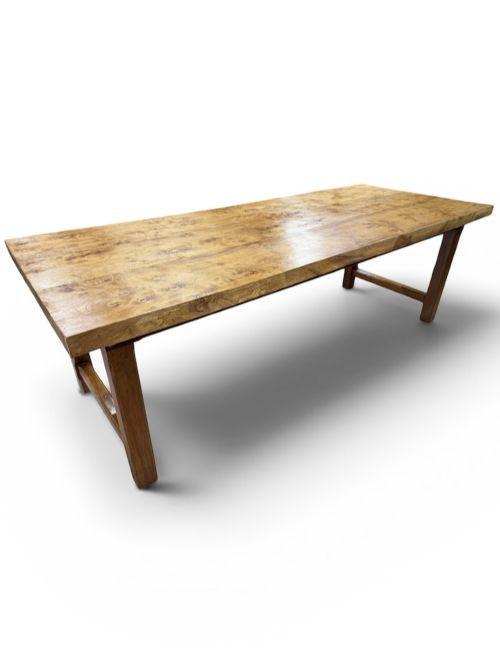
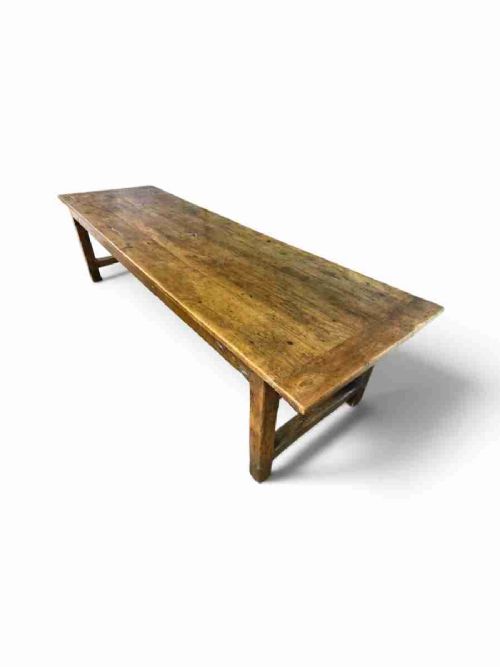
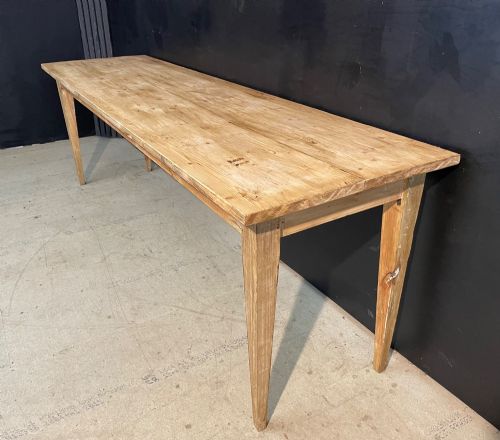
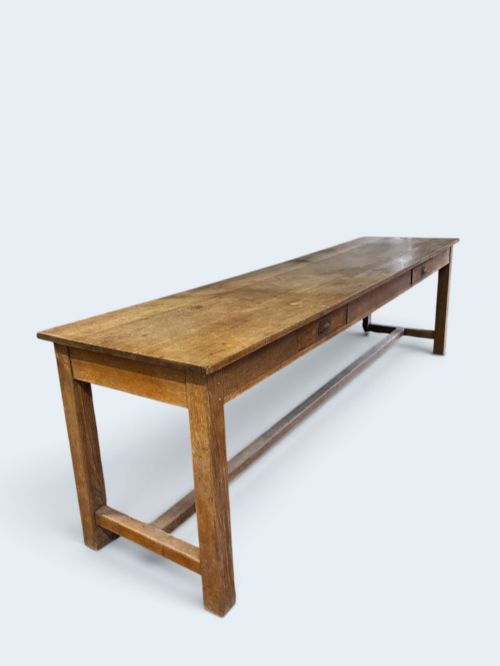

Long Refectory Table
A long refectory table brings historic scale and sturdy timber into modern dining spaces.
Long Refectory Table
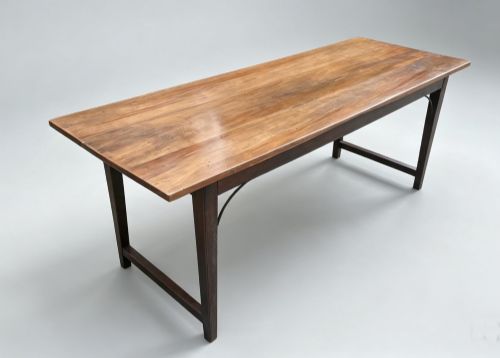
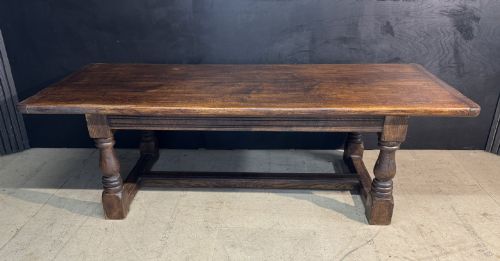
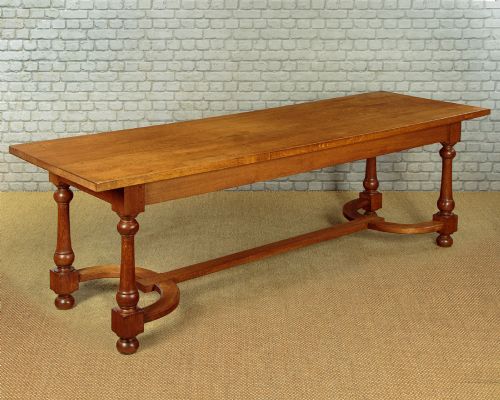
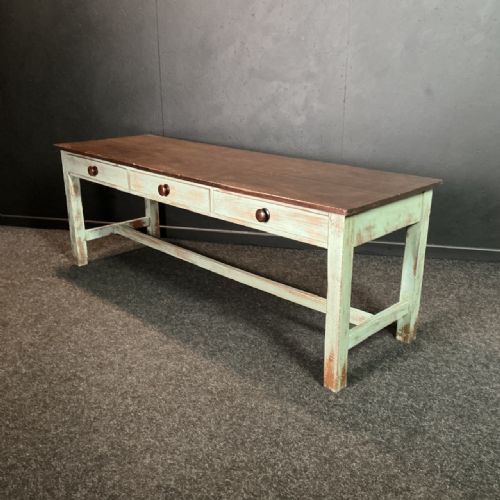
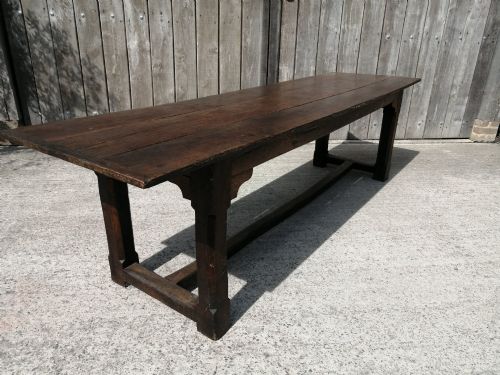
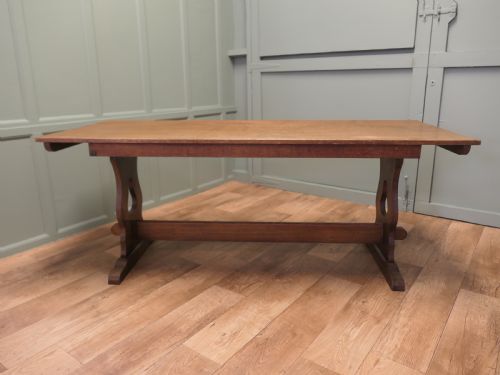
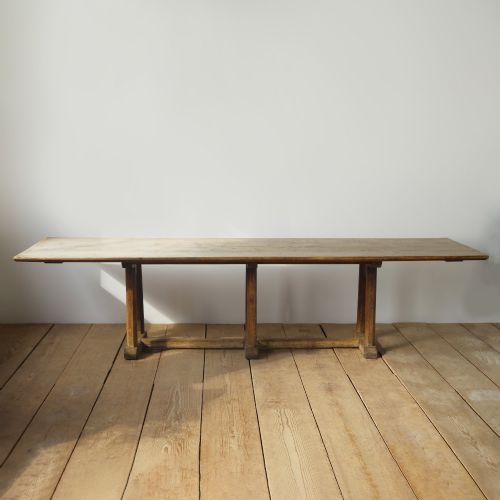
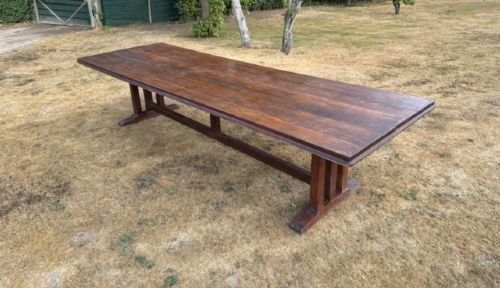
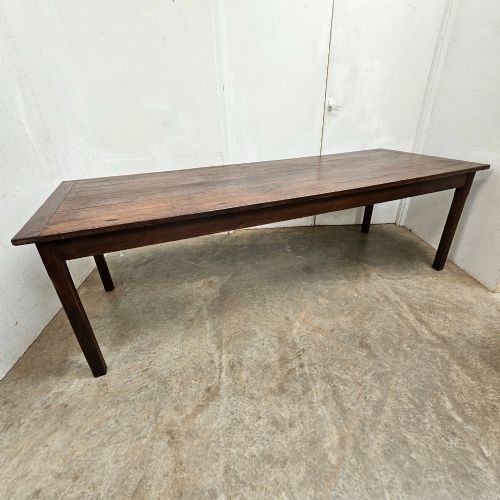
A long refectory table provides an expansive surface originally designed for communal dining in monastic halls and large country houses. These substantial pieces typically measure several metres in length, accommodating ten or more diners comfortably.
The versions most frequently met on this page span from the seventeenth century through to the early twentieth century. English and French examples appear regularly, fashioned primarily for domestic kitchens and dining rooms.
Makers utilised robust native timbers to build forms that range from simple plank-top boards on trestles to carved George I and Victorian dining tables.
How they were made
Carpenters constructed these tables using solid hardwoods and softwoods, frequently selecting oak, pine, elm, and fruitwoods like cherry and pear. Planks were joined meticulously to create wide, enduring surfaces capable of withstanding heavy daily use.
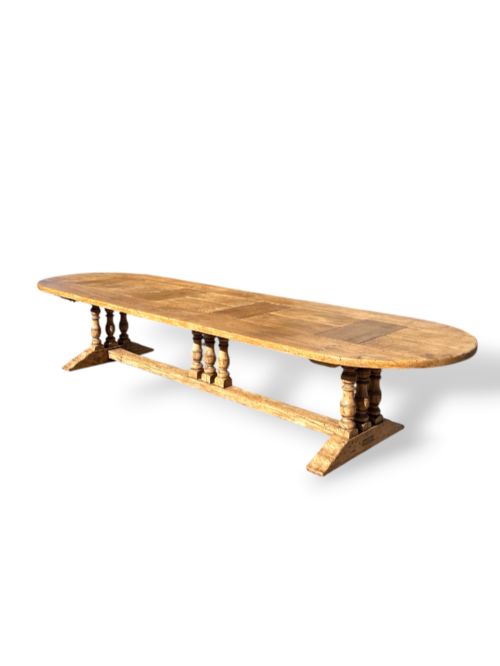
Undercarriages relied on sturdy stretcher bases, turned legs, or iron supports to stabilise the significant length of the timber tops. Joinery methods such as mortise and tenon joints ensured the structure remained rigid across large spans.
Some nineteenth-century pine and oak harvest tables arrive bearing faint ink stains and carved initials left by generations of past occupants.
What varies in quality
The grade of timber dictates the foundational character of each piece, with quarter-sawn oak and dense fruitwoods displaying superior grain patterns and stability over soft pine. Timber thickness and the number of planks used in the top also define the integrity of the surface.
The Long Refectory Table Glossary
- Refectory table
- A long, narrow dining table traditionally used in communal halls. This form prioritises length to seat large gatherings.
- Plank top
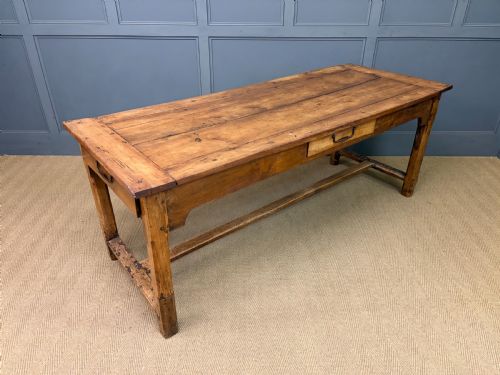
- A table surface constructed from parallel boards of timber joined side by side. Older examples often utilise just two wide planks.
- Stretcher
- A horizontal wooden brace connecting the legs of a table for added stability. These components often show wear from years of resting feet.
- Patina
- The surface sheen and colour developed through decades of handling, polishing, and natural ageing. This quality highlights the history of the timber.
- Trestle
- A support structure consisting of a horizontal beam held up by two pairs of sloping legs. This design maximises legroom along the length of the table.
Long Refectory Table: Frequently Asked Questions
How many people do they seat?
A long refectory table measuring eight feet or more typically accommodates eight to twelve diners comfortably. The absence of bulky central pedestal bases allows chairs to tuck in easily along the entire length.
Exact seating capacity depends on the distance between the legs and stretchers beneath the top. Buyers often measure leg clearance to ensure armchairs fit correctly at the ends.
Were these tables always used for dining?
While modern usage centres around dining and kitchen spaces, historical examples served multiple domestic and institutional purposes. Many functioned as serving tables, boardroom desks, or monastery work surfaces.
Large formats often doubled as prep spaces for food preparation in large country houses before moving into formal dining rooms.
How do I care for an old timber top?
Historic wood surfaces require simple maintenance using natural beeswax or nourishing oils to prevent the timber from drying out. Avoiding direct heat sources and excessive moisture preserves the antique finish.
Using placemats and coasters protects the historic patination from water rings while allowing the character of the wood to endure.
How can I tell an eighteenth-century table from a later one?
Earlier pieces from the seventeenth and eighteenth centuries display hand-cut joinery marks, pegged joints, and deep patination accumulated over generations. The grain and timber selection often reflect regional English or French woodland sources.
Nineteenth and twentieth-century interpretations often incorporate softer pine or standard milled lumber, sometimes featuring mechanical extension systems rather than fixed plank tops.